Who are the richest people in the world in 2026? From Elon Musk and Jeff Bezos to Bernard Arnault, Warren Buffett, Mukesh Ambani and Africa’s richest man Aliko Dangote, the world’s billionaire class has reached unprecedented levels of wealth.
According to Forbes’ 2026 World’s Billionaires ranking, a record 3,428 billionaires were identified worldwide, with a combined fortune of approximately $20.1 trillion. That was about $4 trillion more than the previous year. Forbes based the annual ranking on stock prices and exchange rates as of March 1, 2026.
This article examines the 100 highest-ranked individual billionaires in Forbes’ 2026 ranking, their estimated fortunes, countries and the businesses or investments responsible for their wealth.
There is, however, an important distinction between an annual billionaire ranking and a real-time ranking.
Forbes’ real-time billionaire tracker continues to update fortunes as share prices change. On August 11, 2026, for example, Forbes placed Elon Musk at approximately $826.2 billion, Larry Page at $281.9 billion, Jeff Bezos at $278.7 billion and Sergey Brin at $260.1 billion.
Consequently, the figures below should be understood as the verified Forbes 2026 annual benchmark, rather than a claim that every fortune remains exactly at the same level today.
Read Also: Aliko Dangote: Africa’s Billionaire Industrialist and His Empire
The Top 100 Richest People in the World
1. Elon Musk — $839 billion
Country: United States
Main source of wealth: Tesla, SpaceX, xAI and other technology ventures
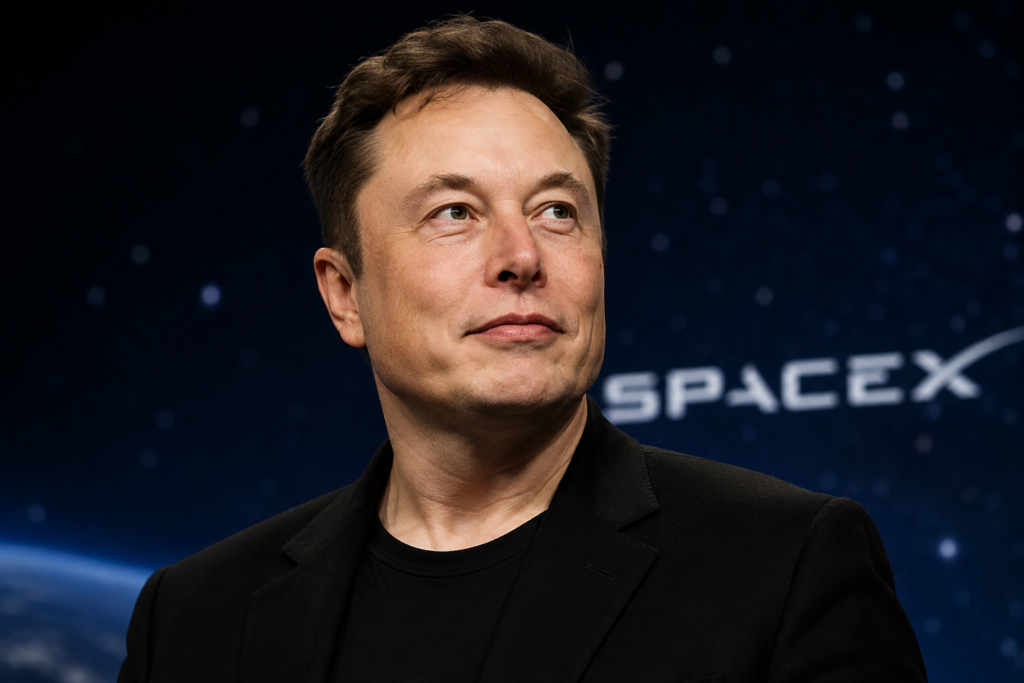
Elon Musk topped Forbes’ 2026 annual ranking by an enormous margin, with an estimated fortune of $839 billion as of March 1, 2026.
Musk’s wealth is closely associated with his stakes in Tesla and SpaceX, while his wider business empire includes artificial intelligence company xAI and other ventures. Forbes describes him as a cofounder of seven companies, including Tesla, SpaceX and xAI.
His position demonstrates how dramatically technology, artificial intelligence, electric vehicles and commercial space exploration have transformed the global wealth hierarchy.
2. Larry Page — $257 billion
Country: United States
Main source of wealth: Google/Alphabet
Google cofounder Larry Page ranked second with an estimated $257 billion.
Page stepped down as Alphabet’s CEO in 2019 but remains a board member and controlling shareholder. His fortune illustrates the extraordinary wealth created by Google’s dominance of internet search, digital advertising and technology.
3. Sergey Brin — $237 billion
Country: United States
Main source of wealth: Google/Alphabet
Sergey Brin, the other cofounder of Google, ranked third with approximately $237 billion.
Like Page, Brin stepped away from day-to-day executive leadership while retaining substantial ownership in Alphabet.
4. Jeff Bezos — $224 billion
Country: United States
Main source of wealth: Amazon
Jeff Bezos founded Amazon in 1994 and transformed it from an online bookseller into one of the world’s largest technology, retail and cloud-computing companies.
Forbes valued Bezos’ fortune at $224 billion in its March 2026 annual ranking.
5. Mark Zuckerberg — $222 billion
Country: United States
Main source of wealth: Meta Platforms
Mark Zuckerberg founded Facebook in 2004 while he was a teenager at Harvard.
The company later became Meta Platforms, the parent company of Facebook, Instagram and WhatsApp. Forbes estimated Zuckerberg’s wealth at $222 billion in March 2026.
6. Larry Ellison — $190 billion
Country: United States
Main source of wealth: Oracle
Larry Ellison is the cofounder of Oracle and one of the most successful figures in enterprise software.
Forbes estimated his fortune at approximately $190 billion, with Ellison owning roughly 40% of Oracle according to the annual ranking.
7. Bernard Arnault & family — $171 billion
Country: France
Main source of wealth: LVMH, luxury goods
Bernard Arnault built one of the world’s largest luxury empires through LVMH.
The group controls a vast collection of luxury brands, including Louis Vuitton and Sephora. Forbes estimated Arnault and his family’s fortune at $171 billion.
8. Jensen Huang — $154 billion
Country: United States
Main source of wealth: Nvidia
Jensen Huang cofounded Nvidia in 1993 and remains its CEO and president.
The extraordinary growth of artificial intelligence dramatically increased demand for Nvidia’s advanced chips, making Huang one of the world’s most spectacularly successful technology entrepreneurs. Forbes estimated his wealth at $154 billion.
9. Warren Buffett — $149 billion
Country: United States
Main source of wealth: Investments, Berkshire Hathaway
Known as the “Oracle of Omaha,” Warren Buffett built his fortune through decades of disciplined investing.
His Berkshire Hathaway conglomerate has ownership interests in numerous companies and investments around the world. Forbes placed his fortune at approximately $149 billion.
10. Amancio Ortega — $148 billion
Country: Spain
Main source of wealth: Zara/Inditex, fashion and retail
Spanish billionaire Amancio Ortega is the founder of the fashion empire associated with Zara.
His fortune of approximately $148 billion made him Europe’s wealthiest retail entrepreneurs and one of the richest people on Earth.
Read Also: Dolly Parton Death: The Queen of Country Music (1946-2026)
11–20: The Billionaire Elite
| Rank | Billionaire | Country | Estimated Net Worth | Main Wealth Source |
|---|---|---|---|---|
| 11 | Rob Walton & family | USA | $146B | Walmart |
| 12 | Jim Walton & family | USA | $143B | Walmart |
| 13 | Michael Dell | USA | $141B | Dell Technologies |
| 14 | Alice Walton | USA | $134B | Walmart |
| 15 | Steve Ballmer | USA | $126B | Microsoft |
| 16 | Carlos Slim Helu & family | Mexico | $125B | Telecom |
| 17 | Changpeng Zhao | Canada | $110B | Cryptocurrency |
| 18 | Michael Bloomberg | USA | $109B | Bloomberg |
| 19 | Bill Gates | USA | $108B | Microsoft, investments |
| 20 | Francoise Bettencourt Meyers & family | France | $100B | L’Oréal |
These fortunes demonstrate the variety of routes into the world’s wealthiest ranks.
The Walton family alone accounts for several members of the top 20 because of the enormous fortune created by Walmart founder Sam Walton. Michael Dell represents technology hardware, Steve Ballmer and Bill Gates represent Microsoft, while Carlos Slim’s fortune was built primarily around telecommunications.
Changpeng Zhao’s position is particularly notable because cryptocurrency is represented among the very highest levels of global wealth. Forbes estimated his fortune at $110 billion in the annual ranking.
21–30: Technology, Finance, Retail and Industry
| Rank | Billionaire | Country | Net Worth | Main Source |
| 21 | Mukesh Ambani | India | $99.7B | Reliance Industries |
| 22 | Giancarlo Devasini | Italy | $89.3B | Tether/Investments |
| 23 | Thomas Peterffy | USA | $82.9B | Interactive Brokers |
| 24 | Julia Koch & family | USA | $81.2B | Koch Industries |
| 25 | Charles Koch & family | USA | $73.8B | Koch Industries |
| 26 | Zhang Yiming | China | $69.3B | ByteDance/TikTok |
| 27 | Zhong Shanshan | China | $68.1B | Nongfu Spring |
| 28 | Jeff Yass | USA | $67.4B | Trading/Investments |
| 29 | Dieter Schwarz | Germany | $67.2B | Schwarz Group |
| 30 | Germán Larrea Mota Velasco & family | Mexico | $67.1B | Mining |
Mukesh Ambani is particularly important in Asia. He chairs Reliance Industries, whose businesses span petrochemicals, oil and gas, telecommunications, retail, media and financial services.
Zhang Yiming’s fortune is another striking example of how the internet has created new billionaire fortunes. He is the principal cofounder of ByteDance, the company behind TikTok.
Dieter Schwarz, meanwhile, built his fortune in discount retail through Schwarz Group, while Germán Larrea’s wealth comes predominantly from mining.
Read Also: Why Mike Tyson’s Right Hand Was So Lethal: The Science Behind His Devastating Knockout Power
31–40: Mining, Fashion, Technology and Food
| Rank | Billionaire | Country | Net Worth | Main Source |
| 31 | Gautam Adani | India | $63.8B | Infrastructure/diversified |
| 32 | Tadashi Yanai & family | Japan | $61.8B | Fast Retailing/Uniqlo |
| 33 | Ma Huateng | China | $53.8B | Tencent |
| 34 | Robin Zeng | Hong Kong | $53.2B | CATL |
| 35 | Iris Fontbona & family | Chile | $52.6B | Mining |
| 36 | Masayoshi Son | Japan | $51.5B | SoftBank |
| 37 | Ken Griffin | USA | $49.8B | Citadel |
| 38 | Jacqueline Mars | USA | $49.1B | Mars |
| 38 | John Mars | USA | $49.1B | Mars |
| 40 | Lukas Walton | USA | $48.9B | Walmart |
Robin Zeng is a particularly interesting name in the list because his fortune is tied to electric-vehicle batteries through CATL, showing how the transition toward electric transportation is creating immense fortunes.
Masayoshi Son’s SoftBank represents another route: technology investment and venture capital.
Meanwhile, Jacqueline and John Mars inherited stakes in the Mars food and pet-care empire, while Lukas Walton belongs to the family that owns a substantial portion of Walmart.
41–50: Global Business Dynasties
| Rank | Billionaire | Country | Net Worth | Main Source |
| 41 | Giovanni Ferrero | Italy | $48.8B | Ferrero |
| 42 | Li Ka-shing | Hong Kong | $47B | Diversified |
| 43 | Mark Mateschitz | Austria | $45.8B | Red Bull |
| 44 | Gianluigi Aponte | Switzerland | $44.5B | MSC |
| 44 | Rafaela Aponte-Diamant | Switzerland | $44.5B | MSC |
| 46 | Andrea Pignataro | Italy | $42.6B | ION Group |
| 47 | Klaus-Michael Kuehne | Germany | $41.9B | Logistics |
| 48 | Thomas Frist Jr. & family | USA | $41.1B | Healthcare |
| 49 | Alain Wertheimer | France | $39.4B | Chanel |
| 49 | Gerard Wertheimer | France | $39.4B | Chanel |
Giovanni Ferrero belongs to one of the world’s best-known food families. The Ferrero empire is associated with products such as Nutella and Ferrero Rocher.
Li Ka-shing is one of Asia’s legendary business figures, with interests spanning multiple industries.
The Aponte couple, Gianluigi and Rafaela, are unusual among the world’s wealthiest people because each owns half of Mediterranean Shipping Company, or MSC, one of the world’s largest shipping businesses.
The Wertheimer brothers, meanwhile, own Chanel, one of the world’s most recognizable luxury brands.
51–60: Steel, Finance, Cryptocurrency and Technology
| Rank | Billionaire | Country | Net Worth | Main Source |
| 51 | Savitri Jindal & family | India | $39.1B | Steel, infrastructure |
| 52 | Stephen Schwarzman | USA | $38.3B | Blackstone |
| 53 | Paolo Ardoino | Italy | $38B | Tether |
| 53 | Jean-Louis van der Velde | Netherlands | $38B | Tether/Bitfinex |
| 55 | William Ding | China | $37.9B | NetEase |
| 56 | Miriam Adelson & family | USA | $37.5B | Casinos |
| 57 | Alexey Mordashov & family | Russia | $37B | Steel |
| 58 | Colin Huang | China | $36.6B | PDD Holdings |
| 59 | Eduardo Saverin | Brazil | $35.9B | Meta/investments |
| 60 | Eric Schmidt | USA | $35.5B | Google/investments |
The list becomes increasingly diverse as it moves downward.
Stephen Schwarzman made his fortune by cofounding Blackstone, one of the world’s largest alternative investment firms.
Eduardo Saverin is notable as one of the original Facebook cofounders, while William Ding built NetEase into a major internet and gaming company.
Crypto also becomes more prominent in this section through Tether executives Paolo Ardoino and Jean-Louis van der Velde.
Read Also: N’Golo Kanté Biography: The Humble Genius Who Conquered World Football
61–70: Shipping, Manufacturing, Finance and Sports
| Rank | Billionaire | Country | Net Worth | Main Source |
| 61 | Idan Ofer | Israel | $34.6B | Diversified |
| 62 | Eyal Ofer | Israel | $33.6B | Shipping/real estate |
| 63 | He Xiangjian & family | China | $33.2B | Midea |
| 63 | Abigail Johnson | USA | $33.2B | Fidelity |
| 63 | Zheng Shuliang & family | China | $33.2B | Aluminum |
| 66 | Marilyn Simons & family | USA | $32.5B | Investments |
| 67 | Robert Pera | USA | $31.7B | Ubiquiti |
| 68 | Phil Knight & family | USA | $31.1B | Nike |
| 68 | Michal Strnad | Czech Republic | $31.1B | Manufacturing |
| 70 | Lakshmi Mittal | India | $31B | Steel |
This section contains several fascinating stories.
Phil Knight transformed athletic footwear through Nike. Robert Pera built Ubiquiti into a major wireless networking company. Abigail Johnson belongs to the family behind Fidelity Investments.
Lakshmi Mittal is one of the world’s most prominent steel magnates, while Michal Strnad represents a much younger generation of industrial wealth.
71–80: Billionaire Fortunes From Energy, Luxury and Automotive Industries
| Rank | Billionaire | Country | Net Worth | Main Source |
| 71 | Elaine Marshall & family | USA | $30.9B | Koch Industries |
| 71 | Shiv Nadar | India | $30.9B | HCL Technologies |
| 73 | Henry Samueli | USA | $30.8B | Broadcom |
| 74 | Melinda French Gates | USA | $30.3B | Microsoft/investments |
| 75 | Stefan Quandt | Germany | $30.1B | BMW |
| 75 | Reinhold Wuerth & family | Germany | $30.1B | Wuerth Group |
| 77 | Lyndal Stephens Greth & family | USA | $30B | Energy |
| 78 | Len Blavatnik | USA | $29.9B | Diversified |
| 79 | Susanne Klatten | Germany | $29.7B | BMW |
| 79 | Vladimir Potanin | Russia | $29.7B | Mining |
Shiv Nadar is one of India’s great technology pioneers, having cofounded HCL.
Henry Samueli became wealthy through semiconductor company Broadcom, while Melinda French Gates built her wealth through her Microsoft holdings and subsequent investments.
Germany is strongly represented in this section through BMW shareholders Stefan Quandt and Susanne Klatten and industrialist Reinhold Wuerth.
81–90: Oil, Luxury, Alibaba, Mining and Technology
| Rank | Billionaire | Country | Net Worth | Main Source |
| 81 | Vagit Alekperov | Russia | $29.5B | Energy |
| 81 | François Pinault & family | France | $29.5B | Kering |
| 83 | Jack Ma | China | $29.1B | Alibaba |
| 84 | Prajogo Pangestu | Indonesia | $28.6B | Diversified |
| 84 | MacKenzie Scott | USA | $28.6B | Amazon/investments |
| 86 | Aliko Dangote | Nigeria | $28.5B | Manufacturing |
| 87 | Peter Thiel | USA | $28.4B | Technology/investments |
| 88 | Emmanuel Besnier | France | $28.3B | Lactalis |
| 88 | Leonid Mikhelson & family | Russia | $28.3B | Natural gas |
| 90 | Daniel Gilbert | USA | $27.9B | Rocket Mortgage |
Aliko Dangote: Africa’s Billionaire Giant
For African readers, Aliko Dangote’s position is especially significant.
The Nigerian industrialist ranked 86th globally in Forbes’ 2026 annual list with an estimated fortune of $28.5 billion.
Dangote founded and chairs Dangote Cement, which Forbes describes as Africa’s largest cement producer. His business empire extends beyond cement into manufacturing, infrastructure and energy.
His position also makes him the most prominent African individual in the global top 100.
Forbes’ dedicated 2026 Africa billionaires list placed Dangote at number one in Africa, ahead of South Africa’s Johann Rupert and Abdulsamad Rabiu of Nigeria.
Jack Ma, meanwhile, remains one of the most recognizable Chinese entrepreneurs in the world. He cofounded Alibaba in 1999 after previously working as an English teacher.
MacKenzie Scott’s fortune is another important story. She received a substantial Amazon stake following her divorce from Jeff Bezos and subsequently became one of the world’s most prominent philanthropists.
91–100: The Final Billionaires in the Top 100
| Rank | Billionaire | Country | Net Worth | Main Source |
| 90 | Lei Jun | China | $27.9B | Xiaomi |
| 90 | Andreas von Bechtolsheim & family | Germany | $27.9B | Technology |
| 93 | Pham Nhat Vuong | Vietnam | $27.7B | Diversified |
| 94 | Vicky Safra & family | Greece | $27.1B | Banking |
| 95 | Jay Y. Lee | South Korea | $27B | Samsung |
| 95 | Cyrus Poonawalla | India | $27B | Healthcare |
| 97 | Rick Cohen & family | USA | $26.3B | Wholesale |
| 98 | Israel Englander | USA | $25.8B | Hedge funds |
| 99 | Suleiman Kerimov & family | Russia | $25.7B | Investments |
| 100 | Dilip Shanghvi | India | $25.6B | Pharmaceuticals |
The final positions in the top 100 are still occupied by people with extraordinary fortunes.
Lei Jun built Xiaomi into a global technology brand. Jay Y. Lee leads Samsung Electronics, one of South Korea’s most important corporations.
Cyrus Poonawalla founded the Serum Institute of India, one of the world’s largest vaccine manufacturers by doses.
Dilip Shanghvi built Sun Pharmaceutical Industries after borrowing just $200 from his father to begin his pharmaceutical business in 1983. Forbes valued his fortune at approximately $25.6 billion.
What Do the World’s 100 Richest People Actually Own?
The word “billionaire” can sometimes give the impression that these individuals have billions of dollars sitting in bank accounts.
That is generally not how billionaire wealth works.
Most of the fortunes are largely made up of ownership stakes in companies, shares, investment portfolios, private businesses, real estate and other assets.
If a billionaire owns 20% of a company valued at $100 billion, that stake alone may be worth $20 billion on paper. If the company’s stock rises, the billionaire becomes wealthier. If the stock falls, the billionaire becomes poorer.
This is why billionaire net worth figures can change by billions of dollars in a single trading session.
Forbes’ real-time methodology says publicly traded holdings are generally updated every five minutes while markets are open, subject to a 15-minute stock-price delay. Fortunes significantly tied to private companies are updated differently, generally once a day.
Read Also: Master of the Frozen Realm: The Life, Science, and Extreme Exploits of Wim Hof
Technology Dominates the Global Billionaire Race
Perhaps the most obvious feature of the 2026 ranking is the enormous role played by technology.
Consider the names near the top:
- Elon Musk — Tesla and SpaceX
- Larry Page — Google
- Sergey Brin — Google
- Jeff Bezos — Amazon
- Mark Zuckerberg — Meta
- Larry Ellison — Oracle
- Jensen Huang — Nvidia
- Michael Dell — Dell Technologies
- Steve Ballmer — Microsoft
- Bill Gates — Microsoft
- Zhang Yiming — ByteDance
- Ma Huateng — Tencent
Many of these fortunes were created within just a few decades.
The rise of artificial intelligence has also created a new dimension to the technology wealth story.
Nvidia’s spectacular growth turned Jensen Huang into one of the world’s richest people, while AI-related optimism has simultaneously benefited other technology billionaires through their holdings in major technology companies.
Forbes said the 2026 billionaire boom was driven in part by the explosion of AI and strong financial markets.
But Technology Is Not the Only Route to Extreme Wealth
It would be misleading to suggest that technology is the only way people become extraordinarily rich.
The world’s top 100 also contains enormous fortunes from:
Retail
The Walmart fortune remains one of the biggest family fortunes in the world.
The Walton family has several members among the highest-ranked billionaires.
Luxury fashion
Bernard Arnault, Amancio Ortega, François Pinault, Alain and Gerard Wertheimer and others demonstrate how luxury and fashion can generate multibillion-dollar fortunes.
Mining
Germán Larrea, Iris Fontbona, Gautam Adani, Lakshmi Mittal and several others derive substantial fortunes from natural resources and industrial commodities.
Finance
Warren Buffett, Thomas Peterffy, Ken Griffin, Stephen Schwarzman, Jeff Yass, Michael Bloomberg and others demonstrate the extraordinary wealth-creation potential of finance and investing.
Energy
Oil, gas, power generation and energy infrastructure remain important sources of billionaire wealth.
Food and beverages
The Mars, Ferrero, Red Bull, Lactalis and other family fortunes demonstrate that consumer products can generate enormous wealth when built at global scale.
Healthcare
Cyrus Poonawalla and other healthcare billionaires show that pharmaceuticals and medical products can also produce enormous fortunes.
Who Is the Richest Woman in the World?
The answer depends on the date and methodology being used.
In Forbes’ March 2026 annual ranking, Alice Walton was ranked among the world’s wealthiest people at approximately $134 billion, largely because of her Walmart fortune. Francoise Bettencourt Meyers was also near the very top with approximately $100 billion.
The ranking can change because share prices change.
This is one reason a serious article about billionaire wealth should always state the date on which the net worth was measured.
Who Is the Youngest Person in the Top 100?
The 2026 Forbes list contains several surprisingly young billionaires.
Among them is Mark Mateschitz, heir to the Red Bull fortune, who was listed at age 33 with approximately $45.8 billion.
Michal Strnad, also 33, had an estimated $31.1 billion fortune.
Lukas Walton, at 39, was worth approximately $48.9 billion.
These cases demonstrate the enormous role of inheritance in the upper reaches of the global wealth hierarchy.
How Much Wealth Is Concentrated at the Top?
Forbes’ 2026 research reveals just how extraordinary the concentration of wealth has become.
The 3,428 billionaires identified by Forbes collectively controlled approximately $20.1 trillion according to the annual ranking.
That was an increase of about $4 trillion compared with the previous year.
The United States had the largest number of billionaires, with 989 people on the list.
China, including Hong Kong, had approximately 610, while India had 229.
The numbers underline the extraordinary economic power concentrated in a relatively small group of individuals.
Why Billionaire Rankings Change So Quickly
A common misconception is that if someone is worth $100 billion today, they have somehow earned or spent $100 billion in cash.
Net worth is different from income.
A billionaire’s wealth may consist of:
- shares in publicly traded companies;
- private-company ownership;
- investment funds;
- real estate;
- family businesses;
- bonds and other financial assets;
- trusts and other holdings.
Therefore, a billionaire can theoretically become $5 billion richer without receiving $5 billion in cash.
Suppose an individual owns a large stake in a technology company. If that company’s share price rises dramatically, the value of the billionaire’s stake rises as well.
The reverse is also true.
That is why Forbes’ real-time list can look significantly different from its annual list.
Read Also: Seyyid Barghash: The Lion of Zanzibar Who Fought the Tides of Empire
Elon Musk’s Extraordinary Lead
The most dramatic example is Elon Musk.
Forbes’ annual March 2026 ranking placed Musk at $839 billion.
But Forbes’ real-time tracker had his estimated fortune at approximately $826.2 billion on August 11, 2026.
At that same August 11 snapshot, Larry Page was estimated at $281.9 billion, Jeff Bezos at $278.7 billion and Sergey Brin at $260.1 billion.
This illustrates why headlines claiming that someone is “worth exactly $X billion” should always be treated as time-sensitive.
The African Story: Dangote Leads the Continent
Africa remains underrepresented in the global top 100 compared with North America, Europe and Asia.
But the continent does have one exceptionally prominent representative.
Aliko Dangote ranked 86th globally in Forbes’ March 2026 list with an estimated fortune of $28.5 billion.
Dangote’s story is particularly relevant to Africa because his wealth has been built primarily through industrial businesses rather than technology companies.
His empire includes cement manufacturing and other major industrial interests.
Forbes’ Africa ranking identified Dangote as the continent’s richest person, followed by Johann Rupert and Abdulsamad Rabiu.
For African entrepreneurs, Dangote’s rise is significant because it demonstrates that enormous fortunes can be created from industries such as cement, manufacturing, infrastructure and energy.
The Biggest Lesson From the World’s Richest People
There is no single formula for becoming one of the world’s richest people.
The top 100 contains:
- technology founders;
- investors;
- industrialists;
- retailers;
- heirs;
- mining magnates;
- pharmaceutical entrepreneurs;
- luxury-goods owners;
- shipping magnates;
- telecommunications tycoons;
- food and beverage entrepreneurs.
But one common characteristic appears repeatedly:
ownership at scale.
Most of these fortunes were not created simply by earning high salaries.
They were created by owning substantial portions of businesses that became enormously valuable.
Jeff Bezos did not become one of the world’s richest people because Amazon paid him a huge salary.
Mark Zuckerberg did not become extraordinarily wealthy because of his Facebook salary.
Larry Page and Sergey Brin did not become billionaires because Google paid them ordinary executive compensation.
They became extraordinarily wealthy because they retained significant ownership in businesses whose values grew dramatically.
That distinction is crucial.
Verified Does Not Mean Personally Audited Bank Balances
It is also important to understand what “verified billionaire” means.
Forbes does not claim to have access to every billionaire’s personal bank account.
Instead, Forbes estimates wealth using publicly available information, ownership records, company valuations, stock prices, private-company estimates and other financial information.
Its methodology tracks public holdings frequently and adjusts private-company valuations according to available market and industry information.
Therefore, the figures should properly be described as Forbes estimates of net worth, not as independently audited statements of every individual’s complete personal balance sheet.
That distinction makes the article more credible and avoids overstating what billionaire rankings can actually prove.
Final Ranking: The 100 Richest Individuals
For quick reference, the Forbes 2026 annual ranking produces the following top 100 individuals when tied positions are counted individually:
- Elon Musk — $839B
- Larry Page — $257B
- Sergey Brin — $237B
- Jeff Bezos — $224B
- Mark Zuckerberg — $222B
- Larry Ellison — $190B
- Bernard Arnault & family — $171B
- Jensen Huang — $154B
- Warren Buffett — $149B
- Amancio Ortega — $148B
- Rob Walton & family — $146B
- Jim Walton & family — $143B
- Michael Dell — $141B
- Alice Walton — $134B
- Steve Ballmer — $126B
- Carlos Slim Helu & family — $125B
- Changpeng Zhao — $110B
- Michael Bloomberg — $109B
- Bill Gates — $108B
- Francoise Bettencourt Meyers & family — $100B
- Mukesh Ambani — $99.7B
- Giancarlo Devasini — $89.3B
- Thomas Peterffy — $82.9B
- Julia Koch & family — $81.2B
- Charles Koch & family — $73.8B
- Zhang Yiming — $69.3B
- Zhong Shanshan — $68.1B
- Jeff Yass — $67.4B
- Dieter Schwarz — $67.2B
- Germán Larrea Mota Velasco & family — $67.1B
- Gautam Adani — $63.8B
- Tadashi Yanai & family — $61.8B
- Ma Huateng — $53.8B
- Robin Zeng — $53.2B
- Iris Fontbona & family — $52.6B
- Masayoshi Son — $51.5B
- Ken Griffin — $49.8B
- Jacqueline Mars — $49.1B
- John Mars — $49.1B
- Lukas Walton — $48.9B
- Giovanni Ferrero — $48.8B
- Li Ka-shing — $47B
- Mark Mateschitz — $45.8B
- Gianluigi Aponte — $44.5B
- Rafaela Aponte-Diamant — $44.5B
- Andrea Pignataro — $42.6B
- Klaus-Michael Kuehne — $41.9B
- Thomas Frist Jr. & family — $41.1B
- Alain Wertheimer — $39.4B
- Gerard Wertheimer — $39.4B
- Savitri Jindal & family — $39.1B
- Stephen Schwarzman — $38.3B
- Paolo Ardoino — $38B
- Jean-Louis van der Velde — $38B
- William Ding — $37.9B
- Miriam Adelson & family — $37.5B
- Alexey Mordashov & family — $37B
- Colin Huang — $36.6B
- Eduardo Saverin — $35.9B
- Eric Schmidt — $35.5B
- Idan Ofer — $34.6B
- Eyal Ofer — $33.6B
- He Xiangjian & family — $33.2B
- Abigail Johnson — $33.2B
- Zheng Shuliang & family — $33.2B
- Marilyn Simons & family — $32.5B
- Robert Pera — $31.7B
- Phil Knight & family — $31.1B
- Michal Strnad — $31.1B
- Lakshmi Mittal — $31B
- Elaine Marshall & family — $30.9B
- Shiv Nadar — $30.9B
- Henry Samueli — $30.8B
- Melinda French Gates — $30.3B
- Stefan Quandt — $30.1B
- Reinhold Wuerth & family — $30.1B
- Lyndal Stephens Greth & family — $30B
- Len Blavatnik — $29.9B
- Susanne Klatten — $29.7B
- Vladimir Potanin — $29.7B
- Vagit Alekperov — $29.5B
- François Pinault & family — $29.5B
- Jack Ma — $29.1B
- Prajogo Pangestu — $28.6B
- MacKenzie Scott — $28.6B
- Aliko Dangote — $28.5B
- Peter Thiel — $28.4B
- Emmanuel Besnier — $28.3B
- Leonid Mikhelson & family — $28.3B
- Daniel Gilbert — $27.9B
- Lei Jun — $27.9B
- Andreas von Bechtolsheim & family — $27.9B
- Pham Nhat Vuong — $27.7B
- Vicky Safra & family — $27.1B
- Jay Y. Lee — $27B
- Cyrus Poonawalla — $27B
- Rick Cohen & family — $26.3B
- Israel Englander — $25.8B
- Suleiman Kerimov & family — $25.7B
- Dilip Shanghvi — $25.6B
The ranking above counts people individually where Forbes assigns the same rank to multiple individuals. Forbes itself displays some of these as tied positions, which is why the numerical rank shown by Forbes does not always correspond one-for-one with the number of people listed.
Conclusion
The 2026 list of the world’s richest people provides a remarkable picture of where economic power is concentrated.
Technology remains the dominant wealth-creation engine, with Musk, Page, Brin, Bezos, Zuckerberg, Ellison and Huang occupying the highest levels of the ranking. But retail, luxury goods, finance, mining, manufacturing, telecommunications, healthcare, energy and shipping continue to produce fortunes of extraordinary size.
Perhaps the most striking fact is the scale.
The world’s 3,428 billionaires were collectively worth approximately $20.1 trillion according to Forbes’ 2026 annual assessment.
And even within that extraordinary group, the top 100 stand apart.
From Elon Musk’s hundreds of billions to the $25.6 billion estimated fortune of the person occupying the 100th individual position, these fortunes represent some of the largest concentrations of private wealth ever recorded.
Yet the ranking is constantly moving.
As stock markets rise and fall, companies are revalued, currencies fluctuate and private businesses change in value, today’s richest person may not be tomorrow’s richest person.
That is why the most responsible way to report billionaire wealth is to identify the source, methodology and date of the estimate.
For the purposes of this article, the benchmark is Forbes’ 2026 World’s Billionaires list, based on wealth as of March 1, 2026, supplemented by Forbes’ real-time tracker to explain subsequent changes.
Never Miss a Story: Join Our Newsletter