




Seyyid Barghash: The Lion of Zanzibar Who Fought the Tides of Empire
In the late 19th century, as European powers carved up Africa with the cold precision of cartographers drawing lines on maps, one man stood at the crossroads of empires. Seyyid Barghash bin Said...

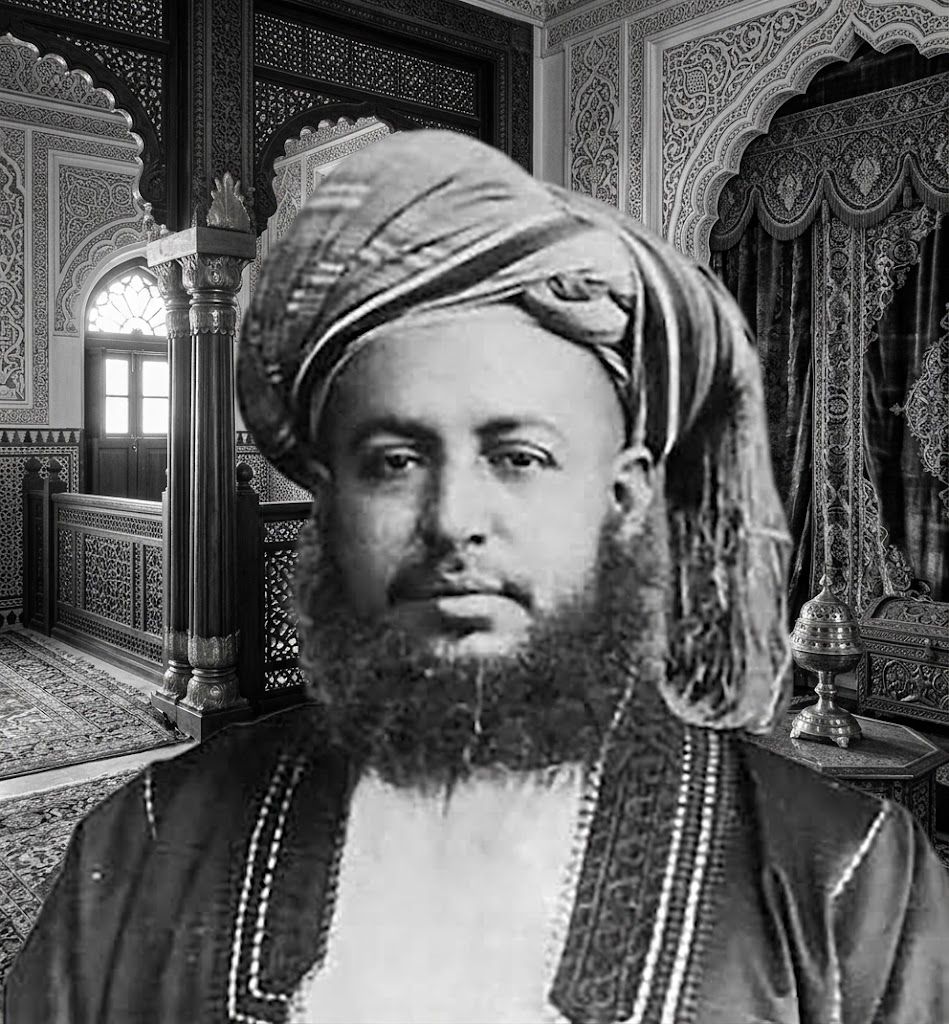
In the late 19th century, as European powers carved up Africa with the cold precision of cartographers drawing lines on maps, one man stood at the crossroads of empires. Seyyid Barghash bin Said Al-Busaidi, the second Sultan of Zanzibar, ruled from 1870 to 1888 and left an indelible mark on East African history. His story is one of exile, betrayal, modernization, diplomacy, and ultimately, the tragic disintegration of his empire as the European scramble for Africa reached its zenith. He was perhaps the last Sultan to maintain a measure of true independence from European control, a ruler of sharp wit and charm who crossed swords with diplomats from Britain, America, Germany, France, and Portugal—and often succeeded in playing one country off against another .
Table Of Content
The Making of a Sultan: Birth, Exile, and Ambition
Barghash was born around 1836 to Sayyid Said bin Sultan, the powerful Sultan of Oman and Zanzibar, and an Ethiopian concubine . As the son of a ruler who had built a vast trading empire stretching from the Arabian Peninsula to the East African coast, Barghash was raised in a world of immense wealth, political intrigue, and constant competition for power. He was described by contemporaries as having a sharp and charming character, but also a fierce ambition that would define his life .
His early life was marked by a bitter rivalry with his elder half-brother, Majid bin Said. When their father died in 1856, a succession dispute erupted that would shape Barghash’s destiny. In 1859, Barghash openly contested Majid’s right to the throne. He was supported by his sister, Sayyida Salme (who would later become known as Emily Ruete after fleeing to Europe and converting to Christianity), who acted as secretary for Barghash’s faction at the tender age of fifteen .
The rebellion, however, was short-lived. With the help of a British gunboat, Majid’s forces swiftly crushed the insurrection. Barghash was arrested for treason and sent into exile in Bombay, India, where he spent two years away from the political turmoil of Zanzibar . This period of exile would prove formative, exposing him to British colonial governance and perhaps fueling his later ambitions for modernization. He would return to Zanzibar a changed man—one who had witnessed the power of European administration firsthand and understood the need to adapt if his kingdom was to survive.
Read Also: King Mwanga II: The Buganda King Who Fought Christianity, Defied Britain and Ended His Life in Exile
The Accession and Consolidation of Power
When Majid died on October 7, 1870, Barghash’s exile ended dramatically. He succeeded his half-brother as Sultan and immediately began consolidating his power with a ruthlessness that shocked even his own family .
One of his first acts as Sultan was to imprison his younger brother, Khalifah, who stood next in line for the throne. According to Emily Ruete’s 1886 account:
“It is a well-known fact in Zanzibar that Barghash, as soon as he had ascended the throne in 1870, suddenly and without any cause cast our second youngest brother Chalîfe into prison. The poor fellow had to languish there for three long years in the dungeon, in heavy iron fetters weighed with chains! And why? No one could say. It may have been feared that Chalîfe, being next in succession to the throne, might plot the same treacherous plans as Barghash himself had once tried against Madjid” .
According to Ruete, Barghash did not release Khalifah until one of their sisters prepared to set out on a pilgrimage to Mecca. The Sultan “did not want to bring down upon himself a curse pronounced in the Holy City of the Prophet. But his sister did not pardon him before he had set free the innocent Chalîfe” .
Barghash’s initial relationship with the British was tense and confrontational. He dropped all pretense of courtesy in his dealings with the British consul, Churchill, leaving letters unanswered for days and referring to him dismissively in official correspondence. The new Sultan also aligned himself with the conservative Mlawas faction, who influenced his administration and pushed for policies that challenged British interests, including proposals to eject Indian merchants from plantations and restrict their trading activities.
Yet despite his ruthless consolidation of power, Barghash proved to be a visionary ruler. As one historian notes, while his father Sayyid Said “simply introduced the prevailing political and economic order of Muscat to his new capital at Zanzibar, Sayyid Barghash conscientiously and actively sought changes in the ideological realm. It is for this reason that he is remembered on the coast as the first modernizer in coastal history” .
The Modernizer of Stone Town
Barghash is credited with transforming Stone Town, the capital of Zanzibar, into a modern city with infrastructure that rivaled many colonial capitals . His ambitious infrastructure projects included:
- Piped water systems that brought fresh water to the city’s residents
- The Hamamni Persian Baths, public baths that became a symbol of his commitment to public welfare
- A police force to maintain law and order
- New roads, parks, and hospitals
- Large administrative buildings, including the iconic Bait el-Ajaib (House of Wonders) —which would later become the first building in Zanzibar to have electricity
These projects reflected Barghash’s determination to modernize his realm and project an image of a progressive, capable ruler to both his subjects and the European powers whose influence was rapidly growing. The House of Wonders, in particular, stood as a testament to his vision—a grand palace that symbolized Zanzibar’s ambitions and its place in the modern world.
The Struggle Against the Slave Trade
Barghash’s reign coincided with an intensifying international campaign to abolish the East African slave trade. The British had been pressuring Zanzibari sultans to end the trade for decades, and Barghash found himself caught between his economic interests, the demands of powerful slave-trading factions within his realm, and British diplomatic pressure.
His commitment to abolition was complex and ambiguous. While he signed a treaty with the British in 1870 to stop the slave trade, his commitment was not always scrupulous. In the late 1860s, he was suspected of accepting money from slave traders to allow them to continue operating, a double deal that persisted for years. The British naval vessel HMS Daphne liberated approximately 2,000 slaves in the Indian Ocean during this period, many near Zanzibar .
The decisive moment came in June 1873, when John Kirk was acting British Consul and received simultaneous and contradictory instructions from London: one ordering him to issue an ultimatum to Barghash to close the slave market or face a blockade, and the other instructing him not to enforce a blockade that might push Zanzibar toward French protection . Kirk, in a calculated diplomatic maneuver, showed only the first instruction to Barghash.
The Treaty of 1873
The strategy worked. Within two weeks, Barghash capitulated, signing a treaty with Britain on June 5, 1873, that prohibited the slave trade in his kingdom and immediately closed the great slave market . The treaty’s provisions were comprehensive:
- Article I declared that “from this date the export of slaves from the coast of the mainland of Africa, whether destined for transport from one part of the Sultan’s dominions to another or for conveyance to foreign parts, shall entirely cease” .
- Article II stipulated that “all public markets in his dominions for the buying and selling of imported slaves shall be entirely closed” .
- Article III required the Sultan to “protect to the utmost of his ability all liberated slaves, and to punish severely any attempt to molest them or to reduce them again to slavery” .
Barghash’s ratification of the treaty, written in his own hand, declared: “We have looked into and considered this treaty, and we agree to it and accept it, and we confirm everything which it sets forth, in all its provisions and articles… In confirmation of which we hereto affix our seal and our signature with our own hand” .
On June 8, 1873, the Sultan issued a proclamation to his subjects: “Know that we have prohibited the transport of slaves by sea in all our harbours, and have closed the markets which are for the sale of slaves through all our dominions. Whosoever, therefore, shall ship a slave after this date, will render himself liable to punishment, and this he will bring upon himself” .
The British reinforced their diplomatic victory with a show of force. By June 1873, a formidable naval squadron anchored in Zanzibar harbor, consisting of HMS Glasgow (flagship), HMS Wolverine, HMS Briton, HMS Daphne, and HMS Nimble—”to show the Sultan that a blockade was seriously intended, had not he and his advisers given way over the slave-trade question” .
It was a significant victory for the abolitionist cause, though it came at a considerable cost to Barghash’s authority and economic power. The closing of the slave market severed one of the most profitable veins of Zanzibar’s economy, and the Sultan’s compliance marked the beginning of the end of his independence.
Read Also: Seyyid Said bin Sultan: The Lion of Oman and Architect of a Maritime Empire
The Diplomat: Crossing Wits with Empires
Throughout his reign, Barghash demonstrated remarkable diplomatic skill. He consulted with European “advisors” who had immense influence, but he remained the central figure they wrestled to control . He crossed wits with diplomats from Britain, America, Germany, France, and Portugal, often able to play one country off against another.
This diplomatic balancing act was essential to his survival. As European powers encircled his dominions, Barghash understood that his only hope of maintaining independence lay in exploiting their rivalries. His strategy was not always successful—as the German adventurer Carl Peters would demonstrate when he began convincing African chiefs on the Tanganyika mainland to sign documents placing their territories under German “protection” . But Barghash fought every inch of the way, refusing to surrender his sovereignty without a struggle.
The Decline and Disintegration of Empire
The final years of Barghash’s reign were marked by tragedy as his empire crumbled around him. The Scramble for Africa, which began in earnest in the 1880s, would prove devastating for Zanzibar’s sovereignty.
In 1884, the German adventurer Carl Peters arrived on the Tanganyika mainland and began convincing local chiefs to sign treaties that placed their territories under German “protection” . These lands had long been under Zanzibar’s sovereignty, and Barghash watched helplessly as his empire was carved up without his consent. In February 1885, the German government ratified Peters’ acquisitions through an imperial decree of protection.
Barghash had been perhaps the last Sultan to maintain a genuine measure of independence from European control. Yet despite his diplomatic skills, he could not prevent the inevitable. Great Britain and Germany divided most of Zanzibar’s territory on the African mainland between them and secured economic control over the remaining coastal strip . The sultanate was reduced, its once-vast dominions shrinking to little more than the island of Zanzibar itself.
Legacy and Death
Seyyid Barghash died on March 26, 1888, in Zanzibar . He was succeeded by his brother, Khalifah bin Said.
His legacy is a complex tapestry of achievement and loss:
- As a modernizer, he transformed Stone Town into a city with infrastructure that rivaled many colonial capitals. He is remembered on the coast as the first modernizer in coastal history .
- As a scholar, he proved that an Eastern ruler could be intellectually accomplished and engaged with the broader Islamic intellectual tradition.
- As a diplomat, he navigated the treacherous waters of late-19th-century imperialism with considerable skill, playing the great powers against one another.
- As an abolitionist, his role remains ambiguous—he signed treaties and closed the slave market, but had earlier been complicit in the trade.
His son, Khalid bin Barghash, would later seize the throne upon the death of his uncle in 1896, only to be deposed by the British in the Anglo-Zanzibar War—famously known as the shortest war in recorded history, lasting less than an hour .
In many ways, Barghash’s reign represents the final chapter of Zanzibar’s independence. When he died, the island’s sovereignty was already severely compromised. Within decades, it would become a British protectorate, its once-mighty sultans reduced to figureheads.
Barghash was a man who came to power through treachery and exile, ruled with a combination of ruthlessness and vision, and watched helplessly as the world he knew crumbled around him. He was, perhaps, the last of the great Omani sultans—a ruler who fought the tides of empire and, though ultimately defeated, left an enduring mark on the history of East Africa.
Further Reading
For those interested in learning more about Seyyid Barghash and his era, the following sources provide valuable additional information:
- Emily Ruete’s Memoirs (Sayyida Salme) offer a firsthand account of the Omani royal family from an insider’s perspective
- Travels and Researches Among the Lakes and Mountains of Eastern & Central Africa by J. Frederic Elton provides contemporary observations of Barghash’s reign
- The British Foreign Office records contain detailed diplomatic correspondence from the period
- John Kirk’s papers offer insight into the negotiations surrounding the 1873 treaty
Never Miss a Story: Join Our Newsletter