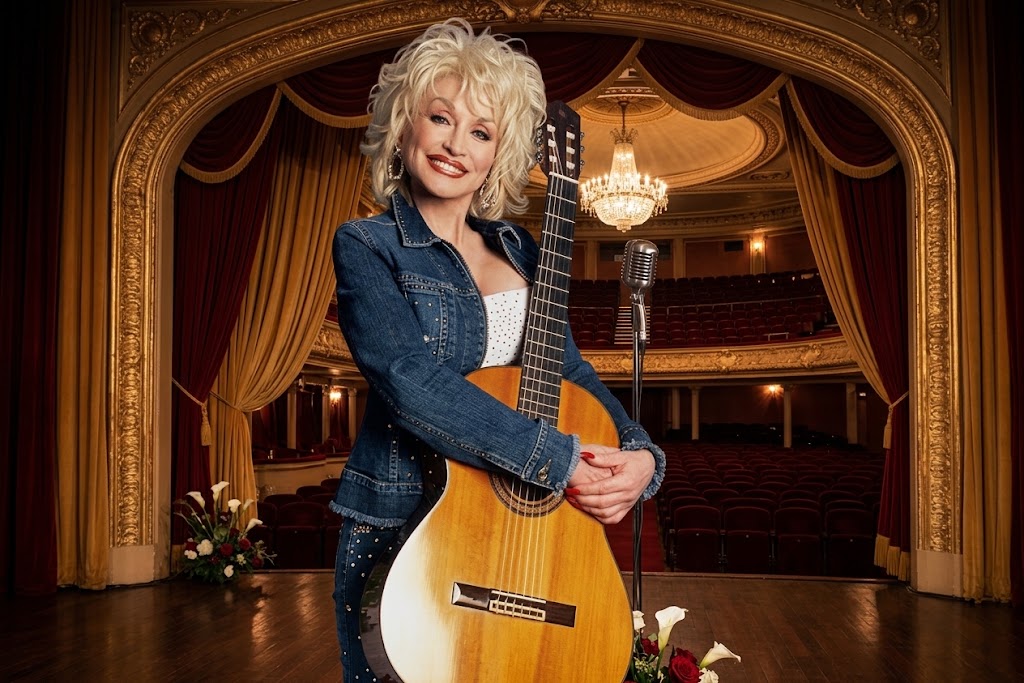
Dolly Rebecca Parton Dean, the iconic singer, songwriter, actress, and philanthropist, passed away peacefully on August 25, 2026, at the age of 80. She died at the Vanderbilt-Ingram Cancer Center in Nashville, Tennessee, surrounded by loved ones, following a brief battle with cancer. Her death, coming roughly 17 months after the passing of her beloved husband of 59 years, Carl Thomas Dean, marked the end of an era in American music and culture.Parton’s legacy as the “Queen of Country” is monumental. Over her seven-decade career, she sold more than 100 million records, wrote over 3,000 songs, and collected 11 Grammy Awards. She was inducted into the Country Music Hall of Fame in 1999 and the Rock and Roll Hall of Fame in 2022, a rare honor that cemented her influence across musical genres. But her story is also one of remarkable personal triumph, rising from profound poverty in the Smoky Mountains to become a global icon of music, business, and philanthropy.
Read Also: Saddam Hussein: The Rise, Rule, and Ruin of Iraq’s Tyrant
Early Life in the Smoky Mountains
Dolly Rebecca Parton was born on January 19, 1946, in a one-room cabin in Pittman Center, Tennessee, located in the heart of the Great Smoky Mountains. She was the fourth of 12 children born to Robert Lee Parton Sr., a sharecropper and tobacco farmer, and Avie Lee Caroline Owens. The family lived in extreme poverty; Parton would later recount that her father paid the doctor who delivered her with a sack of cornmeal.
Despite their financial struggles, the Parton household was rich with music. Her mother, Avie Lee, was a singer who filled the home with Appalachian ballads and folk songs, while her grandfather, Jake Owens, was a Pentecostal preacher. Music was central to their lives, and Parton was deeply influenced by the hymns and gospel songs she heard in church. She began performing publicly at the age of six, singing in the local church, and by her early teens, she was appearing on local radio and television programs. She learned to play the guitar from her uncle, Bill Owens, who would become an early musical collaborator. Her childhood experiences of poverty, family, and faith would become the bedrock of her songwriting, providing the emotional depth and authenticity that would later resonate with millions.
Parton has spoken about her childhood with a sense of fondness and pride, never hiding her humble origins. “I think my childhood made me everything I am today,” she once said. “I would trade nothing for being brought up in the Great Smoky Mountains. I’ve never been ashamed of my people no matter how poor or dirty we might have been”. This deep connection to her roots would remain a defining characteristic of her life and career.
A Personal Fashion Statement Born from a “Town Tramp”
During her teenage years, Parton began to craft the iconic look that would become her trademark: big blonde hair, heavy makeup, and flashy, revealing clothes. In a famous interview, she revealed that her style inspiration came from a woman she called the “town tramp”.
While her mother and others dismissed this woman as “trash,” Parton was captivated by her beauty and confidence. “I thought she was the most beautiful thing I’d ever seen… I thought, ‘that’s what I want to be when I grow up!'”. This early and deliberate choice to define her own image was an act of defiance and a shrewd strategy for getting noticed in the competitive world of show business. She used her appearance as a “coat of armour,” a way to control her narrative and disarm critics before they could attack. For anyone who suggested she tone down her look, she had a quick and simple response: “Go to hell”.
A Star is Born: The Nashville Years
At 18, the day after graduating from high school, Parton packed her bags and moved to Nashville, the undisputed capital of country music, to pursue her dreams. Her very first day in the city proved to be a turning point in her life on two accounts. While outside a laundromat, she met Carl Thomas Dean, a man who saw her and warned her she might get sunburned. It was a moment she later described as “love at first sight”. They married two years later on May 30, 1966. Dean, who chose to remain out of the public eye, was her steadfast partner for nearly six decades.
On the career front, Parton quickly made her mark. At 19, she signed with Monument Records, where she was initially marketed as a bubblegum pop singer, a genre she felt was not a good fit for her voice. She pushed to record country music, and in 1967, her first country single, “Dumb Blonde,” reached No. 24 on the Billboard country chart. The song, with its defiant lyrics, was a perfect introduction to the fiercely independent woman she was becoming. Her debut album, Hello, I’m Dolly, was released the same year.
Read Also: Aliko Dangote: Africa’s Billionaire Industrialist and His Empire
The Porter Wagoner Years
Parton’s big break came in 1967 when she was invited to join the popular television show and road show of established country star Porter Wagoner. It was a pivotal moment that would define the next seven years of her career. The partnership was initially a challenge; Wagoner’s audience was loyal to his previous female star, Norma Jean, and they often chanted for her at live shows, making it difficult for Parton.
However, her talent and charisma soon won them over. The duo became one of country music’s most beloved acts, releasing a string of hit duets, and Parton began to build a massive fanbase of her own. “The Porter Wagoner Show” gave her national exposure and a platform to showcase her original songwriting. It was during a tour with Wagoner that she wrote one of her most iconic songs, “Coat of Many Colors” on the back of one of his dry-cleaning receipts.
While the partnership was professionally successful, it was also fraught with tension. As her solo career began to rise, Wagoner saw her success as a “threat”. The relationship became complicated, and the tension was fueled by rumors that their professional partnership was a romantic one, which both denied. Seeking to establish her independence and creative freedom, Parton made the difficult but courageous decision to leave Wagoner’s show in 1974 to focus on her solo career. The song she wrote to say goodbye to him, a simple and beautiful ballad titled “I Will Always Love You,” would become one of the most famous songs in music history and a number-one country hit. Despite the professional split, Parton maintained that Wagoner was a great influence on her early career. Upon hearing the song for the first time, Wagoner himself reportedly wept, saying “That’s the prettiest song I ever heard”.
The “Jolene” Years and International Stardom
The early 1970s marked Parton’s ascent to solo superstardom. In 1971, she had her first number-one hit with the song “Joshua”. But it was the release of “Jolene” in 1973 that turned her into an international sensation. The song, with its driving beat and unforgettable, pleading chorus, quickly topped the country charts and later became a top-10 hit in the UK, breaking her into the mainstream international market. The song’s subject, a beautiful woman who a lover is obsessed with, has inspired countless interpretations and remains one of the most covered songs in the world.
She followed “Jolene” with “I Will Always Love You,” a song that not only became a massive hit in its own right but would achieve a second life and an even larger global fame 18 years later. The release of these two songs in rapid succession cemented her status as a songwriter of extraordinary talent who could write about both specific, personal situations and universal feelings of heartbreak and devotion.
By the late 1970s, Parton’s appeal had grown far beyond the country music audience. In 1977, she released the crossover hit “Here You Come Again,” which topped the country charts and reached the top three on the pop charts, firmly establishing her as a mainstream pop star. Her songwriting, often rooted in personal experiences and observations about ordinary life, gave her music a universal quality that allowed her to connect with listeners from all walks of life.
Read Also: Seyyid Barghash: The Lion of Zanzibar Who Fought the Tides of Empire
Queen of All Media: Movies, Business, and the Dollywood Empire
Parton’s ambition and entrepreneurial spirit knew no bounds. In the 1980s, she successfully parlayed her musical fame into a career in Hollywood. Her first major acting role was alongside Jane Fonda and Lily Tomlin in the hit 1980 film *9 to 5*, about three secretaries who get revenge on their sexist boss. Parton not only starred in the film but also wrote and performed its title song, “9 to 5,” which became a massive crossover hit and a working-class anthem. The film was a commercial success and cemented her as a triple threat: a singer, songwriter, and actress.
She followed *9 to 5* with roles in other successful films, including The Best Little Whorehouse in Texas in 1982, starring alongside Burt Reynolds, and the beloved ensemble drama Steel Magnolias in 1989. She continued to act in films and television shows throughout her career, often playing versions of herself in comedies and dramas, including appearances in The Simpsons, Designing Women, and the hit Disney Channel series Hannah Montana with her goddaughter, Miley Cyrus. She also starred in her own Netflix documentary series, Dolly Parton: Here I Am, in 2019.
Her greatest business venture, however, was Dollywood. In the 1980s, Parton bought a stake in a theme park in her home county called Silver Dollar City. In 1986, she rebranded it as Dollywood, and the park has since become one of the most popular tourist destinations in the southeastern United States. Dollywood is not just a theme park but also a major economic driver for her home region, providing thousands of jobs and revitalizing the local economy. “I wanted to come back to my part of the country and do something great, something that would bring a lot of jobs into this area,” she said of the venture. Her business savvy extended beyond Dollywood to include hotels, restaurants, and other entertainment production companies, making her a multimillionaire and a role model for female entrepreneurs everywhere.
I Will Always Love You: The Whitney Houston Cover
One of the most remarkable chapters in Parton’s career came in 1992 when Whitney Houston recorded “I Will Always Love You” for the soundtrack of the film The Bodyguard. Houston’s powerful, soaring version became an instant global sensation, spending 14 weeks at number one on the Billboard charts and becoming one of the best-selling singles of all time.
Parton’s response to Houston’s success was as gracious and generous as her songwriting. In a famous interview, Parton said she was so touched by Houston’s version that she nearly cried. She recounted how much money the recording made her, saying, “It was so much money, I just couldn’t believe it… I was so happy and excited for [Houston]”. She also had a memorable quote about the moment she received her first royalty check from the song: “I said, ‘Alright, God, if you’re gonna give me more, I’m ready. I’ll take it all, it’s yours, I’ll do what’s right with it.’ And He gave me a lot more”.
Her humility and appreciation for Houston’s talent endeared her even more to a global public. The song’s massive resurgence, completely out of her control, is a testament to the timeless quality of her songwriting. It also demonstrated her extraordinary grace; she never expressed resentment that a younger, pop star had eclipsed her original version. Instead, she celebrated the success and welcomed the windfall, which only multiplied her personal fortune.
Philanthropy: The Imagination Library and Beyond
While Dolly Parton was a titan of industry and entertainment, her legacy was perhaps most profoundly defined by her humanitarian work. Her philanthropy was rooted in a deep sense of responsibility to give back, especially to the children of her home community. In 1995, she launched the Imagination Library in Sevier County, Tennessee, a program that provides a free, age-appropriate book each month to every child in the county from birth to age five. The program was inspired by her father’s illiteracy, and it has since expanded dramatically, distributing hundreds of millions of books to children across multiple countries.
Her generosity was not limited to promoting literacy. In 2020, at the height of the COVID-19 pandemic, Parton donated $1 million to Vanderbilt University Medical Center to fund research into a potential vaccine. Her donation helped support early-stage research that contributed directly to the development of the Moderna COVID-19 vaccine. Her family later announced that in lieu of flowers at her funeral, she requested that donations be made to the Imagination Library, ensuring her commitment to literacy would continue.
Later Life, Legacy, and Death
In her later years, Parton remained a vital and active figure in public life, though she began to curtail her performing schedule due to health problems. In her final years, she dealt with a variety of health issues, including a diagnosis related to cancer. She postponed and later canceled a planned Las Vegas residency in 2025 to deal with these health challenges.
Her beloved husband, Carl Dean, died in March 2025 at the age of 82. The couple had been married for 58 years. His death was a profound personal loss for Parton, with whom she had been inseparable since their first meeting in Nashville. She later admitted that his death had “stalled” her ability to write songs, such was the depth of her grief. The pair had no children, but Parton was deeply invested in the lives of her extended family, especially her many nieces and nephews. One of them, Bryan Seaver, who served as her head of security for more than two decades, was tasked by Parton with announcing her death, a task he did with great emotion on August 25, 2026.
“Sadness lies with us, not with Dolly,” Seaver said in his video announcement. “Dolly has lived in the light and is in the arms of Jesus, surely met by Carl, her parents and countless others who have watched her and longed to meet her in the heavens”. President Donald Trump ordered flags to be flown at half-staff in her honor, recognizing her as a figure of unparalleled national significance.
Dolly Parton’s life is a testament to the power of self-belief, hard work, and unwavering generosity. She turned a childhood of poverty into a story of unimaginable wealth and fame, while never forgetting the people and the place that shaped her. Her legacy is not just in the countless songs she wrote and performed—some of which are cornerstones of American music—but in the millions of children who learned to read through her books and the scientists whose research was funded by her generosity. She was a storyteller, a businesswoman, an actress, and a philanthropist, but above all, she was a symbol of the American Dream—a “little girl from up in East Tennessee” who opened doors for generations of artists, musicians, and dreamers.
Never Miss a Story: Join Our Newsletter