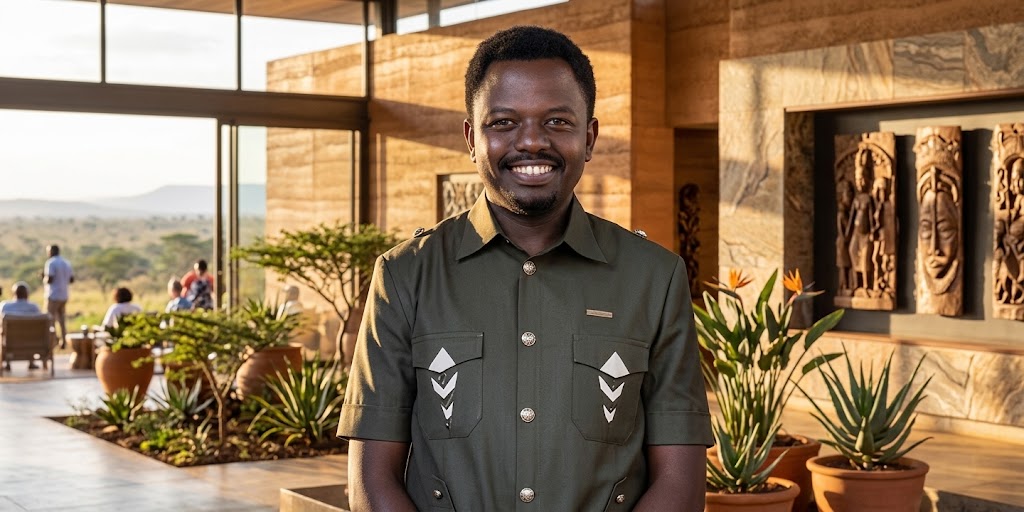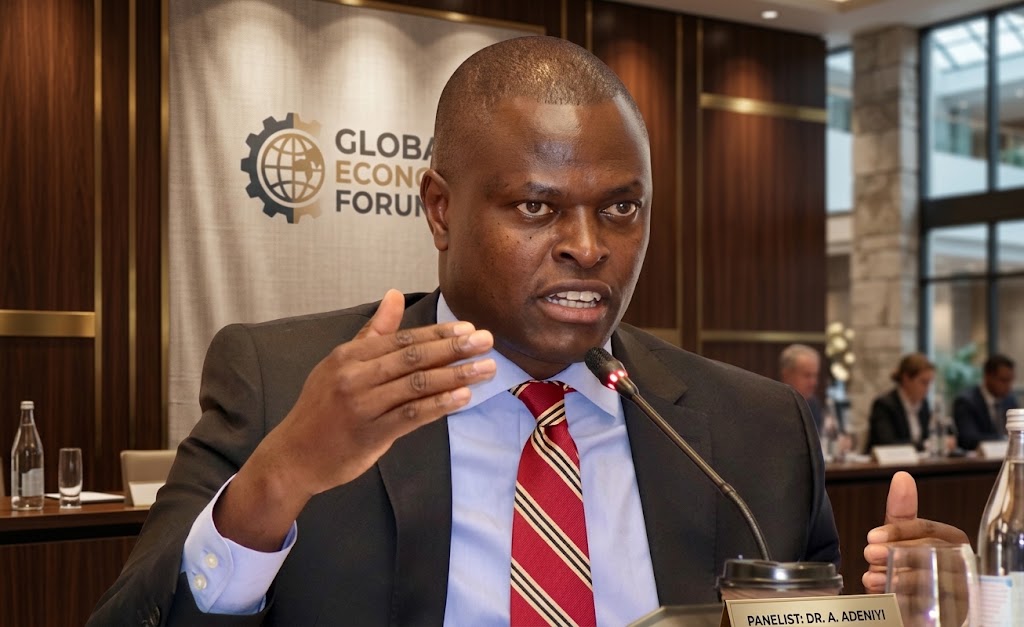
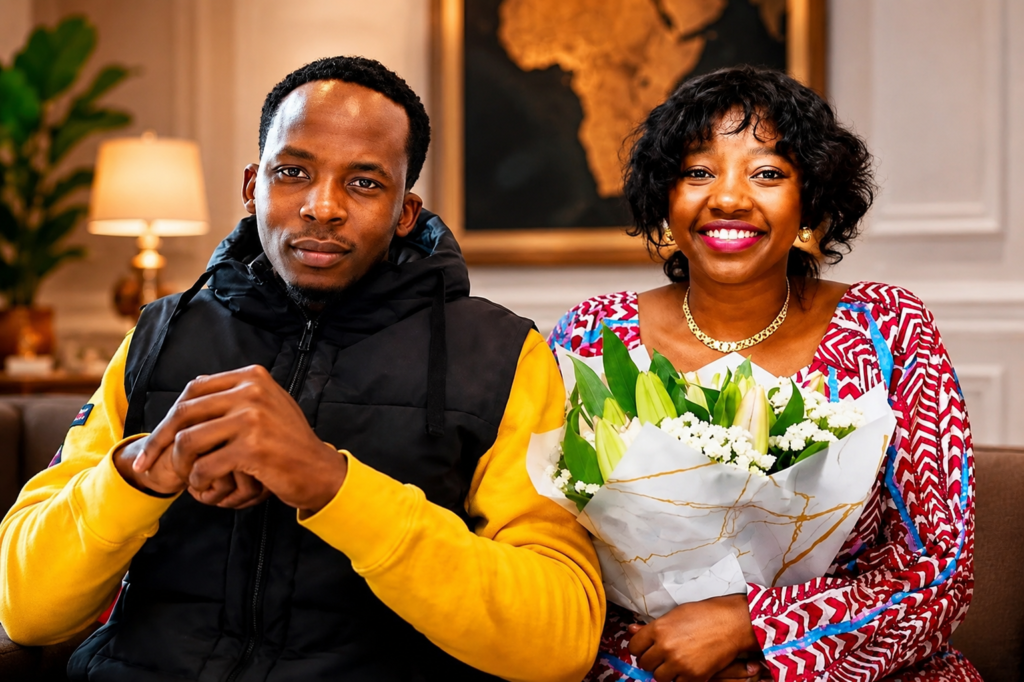
When Tanzanian entrepreneur Isaya Yunge stepped into the spotlight alongside Charlene Ruto, Kenya suddenly had a new reason to Google his name.
But there is something important about Yunge that can easily get lost in the excitement surrounding his relationship with the daughter of President William Ruto:
He was already an interesting man before he became Charlene Ruto’s fiancé.
Yunge’s story stretches from a difficult childhood in Mwanza to youth advocacy, international diplomacy, technology entrepreneurship and some of Africa’s most prestigious young-leader awards.
At only 17, he was already speaking to world leaders at the G8 Summit in Germany.
Years later, he would build a technology platform designed to help African students find scholarships, be recognised by Forbes Africa and receive the Queen’s Young Leader Award.
Today, his interests extend into artificial intelligence, smartphones, smart-home technology and digital inclusion.
So, who exactly is Isaya Yunge?
Who is Isaya Yunge?
Isaya Yunge is a Tanzanian technology entrepreneur, social innovator and youth advocate.
He was born and raised in Mwanza, the Tanzanian city on the shores of Lake Victoria.
His date of birth is widely reported as March 23, 1990, which would make him 36 in 2026. Because that date is principally reproduced in biographical profiles rather than a readily accessible official government record, it is better treated as a widely reported biographical detail rather than an independently verified public record.
But his age is perhaps the least interesting thing about him.
His childhood is where the remarkable story begins.
A childhood far removed from privilege
Yunge’s biography reads very differently from what one might expect of someone who would eventually become a high-profile technology entrepreneur.
According to Ashoka, which elected him a Fellow in 2019, Yunge was raised in Mwanza after his parents divorced when he was young.
He moved between foster homes and did not begin formal education until around the age of seven.
Before that, he reportedly spent time herding animals while children his age were already attending school.
At one point, he also lived on the streets of Mwanza.
Rather than allowing those experiences to define his future, however, they became the foundation of his early activism.
Ashoka says that after eventually entering school, Yunge began spending his free time bringing street children together and teaching them English and basic mathematics.
That experience would eventually take him somewhere few teenagers from Mwanza could have imagined.
At 16, he put street children on radio
One of the most fascinating episodes in Yunge’s early life happened when he was still a teenager.
At about 16, he worked with Sauti ya Watoto Club, an organisation focused on young people.
He persuaded Radio Free Africa to create a radio segment in which street children could talk about their lives.
The idea was simple but powerful.
Instead of society merely seeing street children as a problem, the programme gave them a voice.
Ashoka says the programme became successful enough to attract UNICEF support and continued for several years.
It was this work that helped propel Yunge into international youth advocacy.
The teenager who spoke at the G8 Summit
This is probably the most extraordinary item on Yunge’s résumé.
In 2007, when he was around 17, Yunge participated in the Junior 8 Summit, the youth counterpart to the G8 gathering.
The official German government archive confirms that African youth were among the J8 delegates and specifically records Isaya Yunge of Tanzania speaking during the G8 session in Heiligendamm, Germany.
His message was direct:
African countries needed greater investment in education.
The official G8 account records Yunge arguing that education was crucial to tackling other problems facing Africa, including HIV/AIDS and malaria.
Think about that for a moment.
A teenager from Mwanza who had experienced disrupted education was standing before some of the world’s most powerful political leaders arguing for greater investment in education in Africa.
That theme would later become central to his business career.
Read Also: The Richest Man Who Ever Lived: A Deep Dive into the Life, Wealth, and Legacy of Mansa Musa
His meeting with Angela Merkel
The J8 programme gave young people an unusual opportunity to interact directly with world leaders.
Yunge was among the young delegates who engaged with leaders during the 2007 summit, where German Chancellor Angela Merkel hosted the youth delegation.
His participation was not simply ceremonial.
The official German government record says the J8 delegates presented their concerns directly to G8 leaders, with education in Africa among their major priorities.
It was an early glimpse of what would become a recurring theme in Yunge’s career:
using technology and platforms to give young Africans access to opportunities.
From youth advocacy to university
Yunge later enrolled at Tanzania’s Institute of Finance Management (IFM), where he pursued a Bachelor of Science degree in Insurance and Risk Management, according to an interview published by The Citizen.
University introduced him to another problem.
He discovered that many young people were looking for scholarships, international conferences and educational opportunities but simply did not know where to find them.
Yunge himself had experienced the difficulty.
He had searched extensively for scholarship opportunities but struggled with the process of finding suitable programmes and preparing successful applications.
That frustration eventually became a business idea.
Then came SomaApp
Yunge created SomaApp, a technology platform designed to help students find scholarship and educational opportunities.
“Soma” is a Swahili word associated with studying.
The idea was to use technology to solve an information problem:
There were scholarships available, but many African students didn’t know they existed.
SomaApp was designed to match students with opportunities based on their academic backgrounds and interests.
It also provided application support and resources.
Ashoka describes the platform as a system designed to connect disadvantaged African students with higher-education funding opportunities that might otherwise remain inaccessible to them.
Read Also: Elijah Masinde wa Nameme: The Prophet Who Defied Empires
The numbers behind SomaApp
SomaApp’s early results were significant.
The Citizen reported in 2019 that, within roughly two years of its beta launch, more than 2,000 students were using the application daily, while around 450 scholarships worth more than $850,000 annually had been won by students in Tanzania, Nigeria, Uganda and Rwanda.
Earlier accounts gave other figures as the platform expanded.
Ashoka later reported that approximately 15,000 students across Tanzania, Zambia, Rwanda, Nigeria and South Africa had used the application and that scholarships worth about $850,000 had been won through the platform.
The figures vary according to the year and the metric being measured, so they should not be treated as a single lifetime total.
But the underlying achievement is clear:
Yunge had turned his own frustration with finding educational opportunities into a technology platform serving other African students.
Forbes Africa came calling
In 2018, Yunge was included in Forbes Africa’s 30 Under 30 list in the technology category.
The published list identifies him as a 28-year-old Tanzanian entrepreneur and founder of SomaApps Technologies Company Limited.
This was an important moment.
He was no longer simply a young Tanzanian activist who had spoken at an international summit.
He was now being recognised as part of a generation of African technology entrepreneurs attempting to build businesses around African problems.
The Queen’s Young Leader Award
That same period brought another prestigious recognition.
In 2018, Yunge received the Queen’s Young Leader Award.
The official list of recipients includes him among the Tanzanian awardees for that year.
The programme recognised young people from across the Commonwealth who were making a positive impact in their communities.
Yunge’s recognition was linked to his work using technology to expand access to educational opportunities.
This is worth emphasising because it wasn’t an award he received because of his relationship with any political family.
He had already built a reputation as a young African changemaker.
Ashoka Fellowship
Yunge’s credentials went a step further in 2019 when he was elected an Ashoka Fellow.
Ashoka describes its Fellows as social entrepreneurs working on innovative solutions to major social problems.
Its profile of Yunge says he was selected because of his work making higher education more accessible to disadvantaged African students.
Ashoka’s 2019 education report describes his model as one that used technology to match students with scholarships suited to their talents and qualifications.
The system also incorporated tools such as sample essays and application resources.
For a man now famous in Kenya because of his relationship with Charlene Ruto, this part of his résumé is particularly important.
Yunge had established an international social-entrepreneurship reputation years earlier.
Read Also: The Wealth of Empires vs. The Valuation of Equity: Comparing History’s Richest Figures
He didn’t stop at scholarships
SomaApp was only the beginning.
Yunge began experimenting with hardware and consumer technology.
One of his projects was SomaFit, a smart wearable designed around health and fitness applications.
A 2018 Citizen profile described a smartwatch capable of functions including heart-rate monitoring, sports tracking, GPS-related features and smartphone connectivity.
Another account from NYU Africa House described SomaFiti as a smart bracelet aimed at health and wellbeing.
The project illustrates an important characteristic of Yunge’s career:
he has repeatedly tried to combine software with physical technology.
Smart Kaya: Building an African smart home
Another of his ventures is Smart Kaya.
The company describes itself as developing hands-free smart speakers with an ambition to help turn African homes into smart homes.
Its current website identifies Yunge as co-founder and CEO.
The concept is bigger than a speaker.
It is about building technology around African consumers and African environments rather than simply importing products designed elsewhere.
That African-first approach appears repeatedly throughout Yunge’s career.
GOODSAM and the smartphone ambition
Yunge’s more recent technology venture is GOODSAM Technologies.
Avance Media listed him as CEO of GOODSAM Technologies when it named him among Tanzania’s 50 Most Influential Young Tanzanians in 2019.
The company has since positioned itself around affordable consumer technology.
Its current website describes GOODSAM as developing affordable premium smartphones for Africa, with AI-powered software, local-language support and a community-driven distribution model.
One particularly interesting part of the current model is the Shangazi Agent Network, a women-led distribution and digital-entrepreneurship initiative.
The company says the model is designed not merely to sell smartphones but also to create income opportunities and digital skills for women.
That connects Yunge’s technology ambitions to another theme that has appeared throughout his career:
technology as a tool for economic inclusion.
His African-first technology philosophy
Yunge’s businesses reveal a fairly consistent philosophy.
He is not simply interested in technology for technology’s sake.
His projects have repeatedly attempted to solve African problems:
SomaApp:
How can African students discover educational funding?
SomaFit:
How can wearable technology support health and fitness?
Smart Kaya:
How can smart-home technology be adapted to African consumers?
GOODSAM:
How can quality smartphones and AI become more accessible to African consumers?
That is a surprisingly coherent career trajectory.
Read Also: The Truth About Hair Growth Treatments: Can Bald Heads Really Grow Hair Again?
A major funding mystery
There is another fascinating piece of Yunge’s business history that readers will probably enjoy.
Digest Africa reported in 2018 that the startup behind SomaFit had raised $2.4 million from an undisclosed investor.
The publication said Yunge acknowledged the funding but declined to disclose further details about the investment.
This is important, but it should not be exaggerated.
It does not mean that Yunge personally received $2.4 million.
It refers to funding associated with the startup.
That distinction is essential when discussing his wealth.
How rich is Isaya Yunge?
This is where the internet becomes unreliable.
There are claims online describing Yunge as a future billionaire or attaching impressive dollar figures to his personal wealth.
But there is no reliable public financial statement establishing his personal net worth.
And that distinction matters.
A startup’s valuation is not the same as its founder’s wealth.
Company funding is not personal income.
Company assets are not necessarily the founder’s personal property.
Therefore, the most responsible answer is:
Isaya Yunge’s exact personal net worth is not publicly established.
What can be established is that he has founded or led several technology ventures and has attracted international recognition for his entrepreneurial and social-impact work.
His education beyond university
Yunge’s professional biography also includes international training.
His profiles list programmes including:
- Leading Change at the University of Cambridge
- Training in sustainable business models through the Swedish Institute
- The Harvard Ministerial Leadership Program
His LinkedIn profile confirms his Cambridge involvement through the Leading Change programme for Queen’s Young Leaders.
His technology-company profiles also identify him as an alumnus of the Harvard Ministerial Leadership Program and Swedish Institute training.
These credentials fit with the combination of technology, social entrepreneurship and leadership that has characterised his career.
Read Also: The Silent Epidemic: Why Dementia Is Quietly Becoming Kenya’s Next Public Health Crisis
He has also been recognised in Tanzania
In 2019, Avance Media named Yunge among its 50 Most Influential Young Tanzanians.
The organisation listed him as CEO of GOODSAM Technologies and highlighted his work developing technology products and promoting digital innovation in Tanzania.
That recognition is significant because it places his reputation within Tanzania itself rather than relying entirely on international awards.
So what kind of businessman is Isaya Yunge?
Yunge doesn’t fit neatly into the traditional image of an African businessman whose primary interest is real estate, construction, banking or manufacturing.
His career has been built largely around ideas.
His products tend to begin with a question:
What problem are African people facing, and can technology solve part of it?
That approach has taken him from education technology to wearables, smart homes and smartphones.
He is essentially a technology entrepreneur with a strong social-impact orientation.
And then there is Charlene Ruto
This is where his story suddenly intersects with Kenya’s political establishment.
Charlene Ruto, the daughter of President William Ruto and First Lady Rachel Ruto, has built her own public profile around youth empowerment, agriculture, climate action and entrepreneurship.
Yunge has spent much of his career working around:
- youth;
- education;
- entrepreneurship;
- technology;
- innovation;
- digital inclusion.
That overlap is striking.
It means the relationship is not simply a case of a Tanzanian businessman marrying into a Kenyan political family.
The two have considerable thematic overlap in the causes they publicly champion.
The August 2026 Koito
Charlene and Yunge’s relationship entered a new phase on August 8, 2026, when their families held a traditional Koito ceremony at the Ruto family’s Intonna Heritage Farm in Kilgoris, Narok County.
The ceremony attracted considerable political and social attention because of Charlene’s status as the President’s daughter.
For Yunge, however, the event represents only the latest chapter in a career that began long before he entered Kenya’s presidential family circle.
It is also important to distinguish a traditional Koito ceremony from the completion of a civil marriage. The former is a major traditional step toward marriage, but it should not automatically be reported as proof of a completed legal marriage without separate confirmation.
From Mwanza’s streets to Kenya’s State House orbit
There is an extraordinary contrast in Yunge’s life story.
As a child, he experienced family disruption, foster care and periods of life on the streets.
As a teenager, he advocated for street children.
At 17, he was addressing leaders at an international summit.
As a university student, he became obsessed with the problem of educational opportunity.
He then turned that problem into a technology company.
Forbes Africa recognised him.
Queen Elizabeth II’s Queen’s Young Leader programme recognised him.
Ashoka selected him as a Fellow.
He moved into hardware, smart technology and digital inclusion.
And now, at 36, he is preparing for a new personal chapter with one of Kenya’s most closely watched young public figures.
That is a remarkable journey.
Read Also: Are You Really “Too Acidic”? A Deep Dive Into the 5 Different Acids That Control Your Health
Isaya Yunge and the question of political influence
There is another question readers will inevitably ask:
Does marrying Charlene Ruto mean Yunge is entering Kenya’s political establishment?
At this point, that would be speculation.
Yunge has an established technology career of his own.
There is no basis for describing him as a Kenyan politician simply because of his relationship with Charlene.
But his future visibility in Kenya will almost certainly increase.
His technology interests could also potentially create new opportunities for cross-border East African business and innovation.
Whether that happens remains to be seen.
Could Isaya Yunge become a major East African business figure?
He already has some of the ingredients.
He has:
- international recognition;
- experience in technology;
- social-enterprise credentials;
- exposure to global leaders;
- experience building startups;
- an African-focused product philosophy;
- networks in East Africa and beyond.
His biggest challenge is perhaps the same one facing many African technology entrepreneurs:
turning promising innovations into large, sustainable businesses capable of competing at continental scale.
His current smartphone ambitions suggest that he is attempting exactly that.
The man behind the headlines
Perhaps the most interesting thing about Isaya Yunge is that his relationship with Charlene Ruto may actually be the least surprising part of his biography.
Long before Kenyans began asking who Charlene’s fiancé was, Yunge had already spent years trying to solve problems involving African youth, education and technology.
His life story contains poverty, activism, international diplomacy, entrepreneurship and technological experimentation.
And there is a striking symmetry between the man and the woman now preparing to build a life together.
Charlene has built a public identity around young people, agriculture and climate action.
Yunge has built his around young people, education and technology.
Their relationship therefore brings together two young East Africans whose careers, despite coming from different directions, have repeatedly revolved around one common idea:
Africa’s young people should have greater access to opportunity.
That may ultimately prove to be more interesting than the presidential connection that first brought them into the headlines.
Isaya Yunge at a glance
Full name: Isaya Yunge
Nationality: Tanzanian
Born: March 23, 1990 — widely reported
Age: 36 in 2026
Hometown: Mwanza, Tanzania
Education: Institute of Finance Management; Cambridge Leading Change programme; other leadership/business programmes reported in his professional profiles
Known for: Technology, social entrepreneurship, youth advocacy
Best-known early venture: SomaApp
Current technology interests: Smartphones, AI, smart-home technology and digital inclusion
Companies/projects associated with him: SomaApp, GOODSAM Technologies, Smart Kaya and earlier SomaFit initiatives
Awards/recognition: Queen’s Young Leader Award (2018), Forbes Africa 30 Under 30 (2018), Ashoka Fellow (2019), among Tanzania’s 50 Most Influential Young People (2019)
Major early milestone: Spoke at the 2007 G8 Summit as a J8 youth delegate
Relationship: Charlene Ruto
Latest milestone: Traditional Koito ceremony with Charlene Ruto, August 8, 2026
Read Also: What Your Stool Says About Your Health: 10 Essential Insights
The bottom line
Isaya Yunge is not famous because he is marrying Charlene Ruto.
He was already an internationally recognised Tanzanian social entrepreneur and technology innovator.
His relationship with Charlene has simply introduced his story to a much larger Kenyan audience.
And now, for the first time, many Kenyans are discovering the remarkable journey of the man who went from Mwanza’s difficult childhood to the G8 Summit — and eventually into Kenya’s presidential family circle.
Editor’s note
Figures concerning the reach of SomaApp have changed over time as the platform expanded, and some online biographies repeat older numbers. Newsly has therefore avoided presenting historical user and scholarship figures as current totals. Likewise, no reliable public source establishes Yunge’s personal net worth, so sensational online estimates have not been repeated.
Primary and institutional references: Ashoka profile on Isaya Yunge · German Government archive of the 2007 G8/J8 meeting · The Citizen’s profile of SomaApp · SOMAPP Foundation · GOODSAM · Smart Kaya
Never Miss a Story: Join Our Newsletter