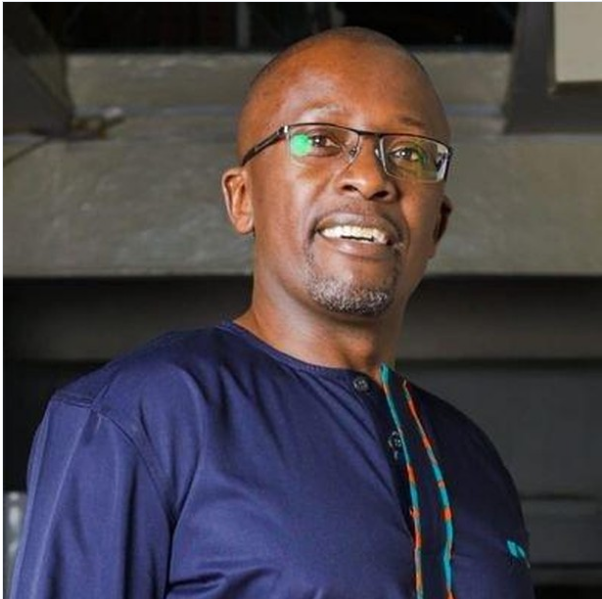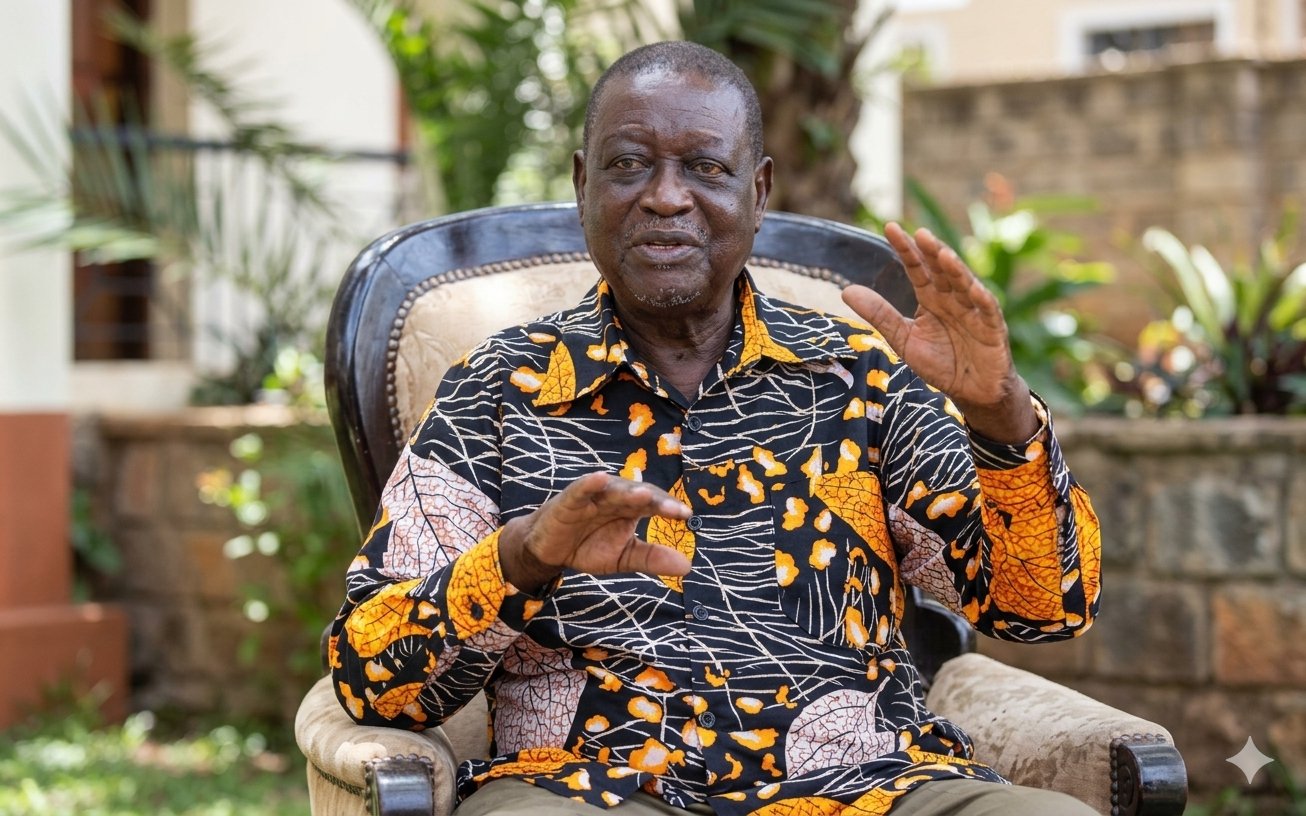
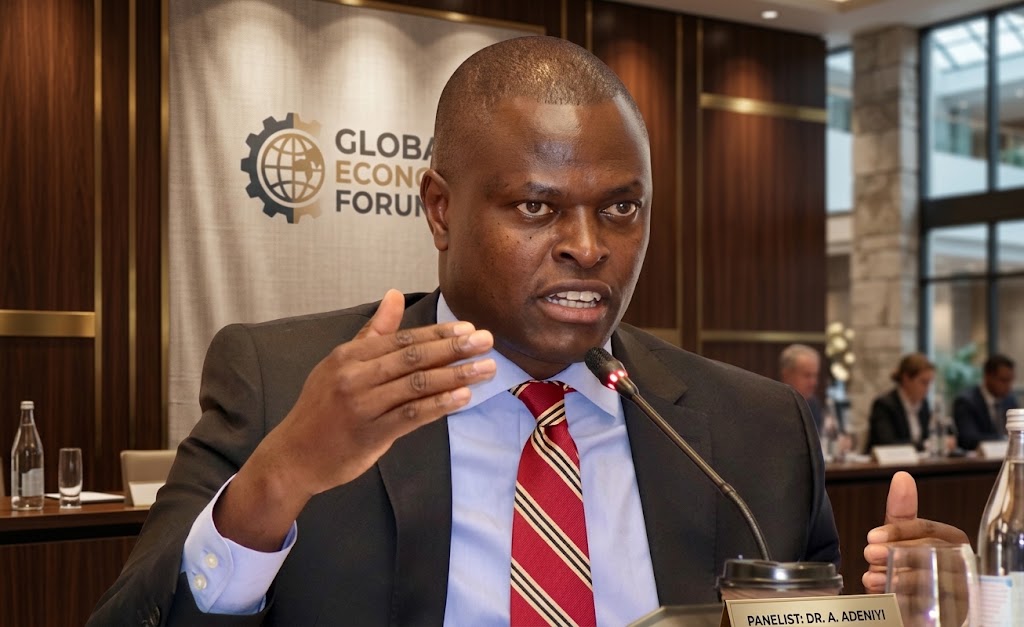
Samson Ndindi Nyoro is a Kenyan politician, economist, entrepreneur and investor who has risen from relatively modest beginnings in rural Murang’a to become one of the country’s most prominent young political figures.
He is the Member of Parliament for Kiharu Constituency in Murang’a County, a position he first won in 2017 and successfully defended in the 2022 General Election. His public profile has been built around three overlapping areas: politics, economics and business.
Unlike many politicians whose professional careers began in politics, Nyoro had already accumulated experience in business and financial services before entering Parliament. His official parliamentary profile records previous senior positions in telecommunications and investment management, while identifying economic discourse as one of his special skills and economy, financial services and governance as his principal areas of interest.
His academic journey has followed a similar trajectory. After earning a Bachelor of Arts degree in Economics from Kenyatta University, Nyoro went on to obtain two master’s degrees in economics in 2025—one from the University of Nairobi and another from Kenyatta University.
For a politician who has spent considerable time debating Kenya’s public finances, taxation, borrowing, investment and economic growth, that combination of commercial experience and formal economics training has become an important part of his public identity.
Who Is Ndindi Nyoro?
Ndindi Nyoro was born Samson Ndindi Nyoro on December 12, 1985, and grew up in Murang’a County.
He attended Gathukiini Primary School before proceeding to Kiambugi Secondary School, where he completed his secondary education in 2003. According to the official parliamentary record, he subsequently joined Kenyatta University in 2005 and graduated in 2009 with a Bachelor of Arts degree in Economics.
His early life has frequently been described as one of financial hardship and entrepreneurship. Accounts of his childhood describe a young Nyoro engaging in small-scale commercial activities and manual work while pursuing his education.
One frequently told episode concerns a small village kiosk he established while still young. The business did not survive after his father intervened, an experience that Nyoro has subsequently recounted as part of his early entrepreneurial journey.
Rather than ending his interest in business, the experience appears to have reinforced an inclination that would later become central to his career: creating income through enterprise and understanding how money can be invested and multiplied.
Education and the Making of an Economist
Nyoro’s formal academic journey began in rural Murang’a and eventually took him to one of Kenya’s leading public universities.
He studied economics at Kenyatta University between 2005 and 2009. The subject would later become particularly important in his political career because much of his public profile has centred on government spending, taxation, debt, investment and economic policy.
His university years were also significant for another reason: student leadership.
Nyoro became involved in student politics while at Kenyatta University, giving him an early introduction to campaigning, organisation, representation and public debate.
His interest in economics was not confined to the classroom. Reports about his university years indicate that he developed an interest in the Nairobi Securities Exchange and began learning about share trading and financial markets.
That early exposure to investment would become an important foundation for his later career in financial services.
Two Master’s Degrees in Economics
In 2025, Nyoro substantially expanded his academic credentials.
He completed a Master of Arts in Economics at the University of Nairobi in September 2025 and subsequently graduated from Kenyatta University in December 2025 with a master’s degree in Economics (Policy and Management).
The unusual aspect of the achievement was that he pursued the two postgraduate programmes almost concurrently.
Nyoro explained that the decision was motivated partly by his desire to improve his understanding of economic policy and decision-making after his experience in Parliament, particularly while serving in the Budget and Appropriations Committee.
This is particularly relevant when examining his career because Nyoro’s political influence has increasingly been associated with economic policy rather than simply constituency politics.
Ndindi Nyoro’s Business Career Before Politics
One of the most distinctive aspects of Nyoro’s biography is that business preceded political prominence.
The official Parliament profile records that he served as Managing Director of Afrisec Telecoms Limited from 2006 to 2010 and subsequently as Managing Director of Stockbridge Capital from 2010 to 2017.
His earlier parliamentary records also document positions associated with investment and financial services, including leadership roles at Investaa Capital and Sahara Capital.
These records are important because they demonstrate that his interest in economics and investment was not developed solely after becoming an MP.
He had already spent years working within business and financial services before his election to Parliament.
From Stock Trading to Investment Management
Nyoro’s story is often presented as that of a politician who entered the financial world at a relatively young age.
Reports from his pre-political career describe his involvement with the Nairobi Securities Exchange and stockbroking. He also worked part-time in the financial sector while studying at university.
His business interests subsequently expanded beyond financial services.
A 2014 profile by Nairobi Business Monthly described Nyoro as having interests in several companies and reported that his business activities had expanded into areas including communications, construction, civil works and other commercial ventures.
It is worth treating historical estimates of his wealth cautiously, however. Figures reported in media profiles at different points in time are not equivalent to independently audited statements of current net worth.
The Transition From Entrepreneur to Politician
Nyoro’s transition into politics was not entirely sudden.
His involvement in student leadership at Kenyatta University gave him an early experience of political organisation. Later, he became involved in constituency-level development activities in Kiharu.
Before becoming an MP, he served in leadership associated with the Kiharu Constituency Development Fund, giving him exposure to grassroots development projects and the practical challenges of allocating public resources.
That experience would later become particularly relevant when he entered Parliament.
In 2017, Nyoro contested the Kiharu parliamentary seat on a Jubilee Party ticket.
He won the election, defeating a field that included more established political figures. At approximately 31 years old, he became one of the younger MPs in the 12th Parliament.
His victory marked the beginning of the national political career that would eventually make him one of the most closely watched politicians in Kenya.
Winning Kiharu for a Second Time
Nyoro successfully defended his parliamentary seat in the 2022 General Election, this time on a United Democratic Alliance ticket.
He secured 68,256 votes, while his closest challenger, Karanja Mburu Wamatangi of Jubilee, received 9,425 votes.
The scale of the victory demonstrated the strength of his support within Kiharu and gave him a second parliamentary mandate.
It also positioned him for a much more influential role in national politics.
Rise Within Kenya’s Political Establishment
Following the formation of the Kenya Kwanza administration after the 2022 election, Nyoro became one of the young politicians associated with President William Ruto’s political camp.
His influence grew substantially when he became chairman of the National Assembly Budget and Appropriations Committee.
The position was particularly powerful because the committee plays a central role in examining government expenditure and budget proposals.
For an economist with a background in financial services, the role provided Nyoro with an opportunity to operate at the intersection of economics, public policy and politics.
It also exposed him directly to the machinery of government finances.
Nyoro himself later said that chairing the committee gave him an unusually close understanding of how the different arms, departments and agencies of government interact and how macroeconomic parameters relate to one another.
Why the Budget Committee Was Important to His Career
The Budget and Appropriations Committee is not simply another parliamentary committee.
Kenya’s national budget determines how billions of shillings are allocated across sectors such as education, health, infrastructure, security, agriculture and government administration.
As chairperson, Nyoro became one of the most visible legislators involved in discussions surrounding government spending and fiscal policy.
The position consequently transformed his public profile.
He was no longer viewed simply as the MP for Kiharu.
He increasingly became identified with debates about Kenya’s debt, taxation, government expenditure, economic growth and fiscal sustainability.
His experience in the committee also appears to have influenced his decision to deepen his academic training in economics.
From Government Insider to Economic Critic
Nyoro’s relationship with the Kenya Kwanza administration subsequently became more complicated.
After initially being regarded as an important figure within Ruto’s political camp, he increasingly adopted positions that were critical of aspects of government economic policy.
The change became particularly visible after he was removed from the chairmanship of the Budget and Appropriations Committee in 2025.
His subsequent public interventions increasingly focused on concerns about government borrowing, taxation and the country’s economic direction.
This evolution has made Nyoro an interesting figure in Kenyan politics because he occupies an unusual position: he has extensive knowledge of the government’s fiscal machinery while also increasingly positioning himself as a critic of some of its economic decisions.
Ndindi Nyoro and Kenya’s Public Debt
Debt has become one of the subjects most closely associated with Nyoro’s economic commentary.
He has repeatedly argued that Kenya needs to be more cautious about borrowing and ensure that borrowed funds generate sufficient economic value.
This position reflects a broader argument in Kenyan economic debates: government borrowing is not automatically harmful, but excessive borrowing can create pressure through interest payments, taxation and reduced fiscal space.
Nyoro’s background in economics and investment gives his arguments an additional dimension because he approaches public finance partly through the lens of capital allocation.
The underlying question is simple:
If Kenya borrows money, what return does the country receive from that capital?
That is fundamentally an investment question.
Ndindi Nyoro as an Investor
For someone interested in investment advice, this may be the most relevant part of Nyoro’s biography.
His professional history shows that he was involved in investment-related businesses before entering Parliament. His official parliamentary record lists Stockbridge Capital, while earlier parliamentary records identify Investaa Capital and Sahara Capital among his professional affiliations.
His experience therefore spans several layers of finance:
- Economics
- Stock-market investing
- Stockbroking
- Investment management
- Corporate management
- Public finance
- Government budgeting
- Economic policy
That combination is unusual among Kenyan politicians.
It also explains why Nyoro is frequently consulted or listened to when economic and financial issues are being debated.
However, there is an important distinction between having investment experience and being a licensed personal financial adviser. Anyone considering an investment decision should independently verify the regulatory status of any person or institution providing specific financial advice.
His Approach to Economics
Nyoro’s public economic arguments generally revolve around several recurring themes.
1. Fiscal discipline
He has frequently emphasised the need for government to control expenditure and borrowing.
2. Productive investment
A recurring question in his economic thinking is whether expenditure produces tangible economic returns.
3. Debt sustainability
Nyoro has expressed concern about the consequences of excessive borrowing and the burden it can place on future generations.
4. Economic growth
He has consistently linked government policy to employment, investment and broader economic expansion.
5. Financial literacy
His own journey from stock-market interest to investment management and eventually economics and public policy has made financial literacy a recurring feature of his public identity.
Development Work in Kiharu
Although Nyoro’s national profile is increasingly associated with economics and politics, his parliamentary career has also been shaped by constituency development.
One of the initiatives associated with his tenure is the Masomo Bora education programme, which has focused on supporting public day secondary schools in Kiharu.
The programme has been described as involving interventions around school fees, feeding programmes, learning infrastructure and other educational support.
Education is particularly significant in understanding Nyoro’s constituency politics because his own childhood experience involved financial difficulties surrounding schooling.
His political narrative therefore frequently connects personal experience with education policy.
Political Style
Nyoro represents a generation of Kenyan politicians who combine traditional grassroots politics with considerable interest in economic policy.
His communication style is often heavily data-driven, particularly when discussing government budgets, taxation and public debt.
This has helped him develop an image considerably different from the stereotypical constituency politician.
At the same time, his political career has demonstrated that economic expertise alone does not determine political influence.
His rise has also depended on grassroots mobilisation, party politics, relationships within national political coalitions and his ability to maintain a strong electoral base in Kiharu.
Ndindi Nyoro’s Political Future
Nyoro’s age is one of the most important factors when assessing his political trajectory.
Born in 1985, he entered Parliament while still in his early thirties. He therefore has potentially several decades of political life ahead of him.
His combination of economics, business experience, parliamentary exposure and grassroots political support makes him a politician worth watching beyond his current constituency.
His future could potentially involve increasingly senior parliamentary positions, national economic policymaking or a broader national political role.
But Kenyan politics is highly fluid.
Political alliances change quickly, and Nyoro’s own relationship with the current administration has already demonstrated how rapidly a politician can move from being a close ally of a government to becoming an internal critic.
For that reason, his long-term political trajectory should not be treated as predetermined.
Personal Life
Publicly available biographical accounts identify Nyoro as married to Sophia Wambui.
However, compared with his political and professional activities, he has generally kept much of his private family life away from the centre of his public profile.
The most extensively documented parts of his biography remain his education, business career, parliamentary work and economic views.
Ndindi Nyoro’s Legacy So Far
It is still too early to speak definitively about Nyoro’s historical legacy because he remains an active politician.
Nevertheless, several elements already stand out.
First is his economic background.
Unlike politicians who acquire economic influence solely through political appointments, Nyoro entered national politics after years of involvement in business and financial services.
Second is his rapid political rise.
He entered Parliament in 2017 and within several years became one of the most visible young politicians in the country.
Third is his interest in continuous education.
His decision to pursue two economics master’s degrees almost simultaneously in 2025 illustrates the extent to which he has attempted to strengthen the academic side of his economic expertise.
Finally, there is his evolving position on government economic policy.
His journey from government ally and budget committee chair to a more critical voice illustrates the complicated relationship between political loyalty, economic conviction and national interest in Kenyan politics.
Why Ndindi Nyoro Is Important to Kenya’s Economic Debate
Ndindi Nyoro’s biography is ultimately more than the story of a young politician who became an MP.
It is the story of an individual who moved through entrepreneurship, financial markets, economics, student leadership, constituency politics and national fiscal policymaking.
That combination explains much of his appeal.
For supporters, Nyoro represents a younger generation of Kenyan leaders who understand business and economics.
For critics, his political evolution and policy positions deserve scrutiny like those of any other influential public figure.
But regardless of political affiliation, his professional journey offers an interesting case study in how education, entrepreneurship, investment knowledge and political opportunity can intersect in modern Kenya.
At a time when millions of Kenyans are searching for ways to protect their savings, build wealth and invest intelligently, figures with backgrounds spanning economics, business and public finance naturally attract attention.
That may ultimately be one of the most interesting aspects of Ndindi Nyoro’s story: before he became a prominent politician discussing Kenya’s economy, he had already spent years learning how money, businesses and investments work.
Ndindi Nyoro Biography at a Glance
| Profile | Details |
|---|---|
| Full name | Samson Ndindi Nyoro |
| Born | December 12, 1985 |
| County | Murang’a County, Kenya |
| Constituency | Kiharu |
| Current role | Member of Parliament, Kiharu |
| First elected MP | 2017 |
| Re-elected | 2022 |
| University | Kenyatta University |
| Undergraduate degree | B.A. Economics |
| Master’s degrees | Economics / Economics (Policy and Management) |
| Business background | Investment management, telecommunications and entrepreneurship |
| Key parliamentary interest | Economy, financial services and governance |
| Special skill listed by Parliament | Economic discourse |
The official Parliament profile confirms his Kiharu constituency, educational history, professional background and stated interests in economics, financial services and governance.
Never Miss a Story: Join Our Newsletter