How to Play Shabiki Plane Game and Improve Your Chances of Winning
The Shabiki plane game, commonly known as Aviator, looks deceptively simple: a plane takes off, a multiplier starts climbing, and you decide when to cash out before the plane flies away. That...

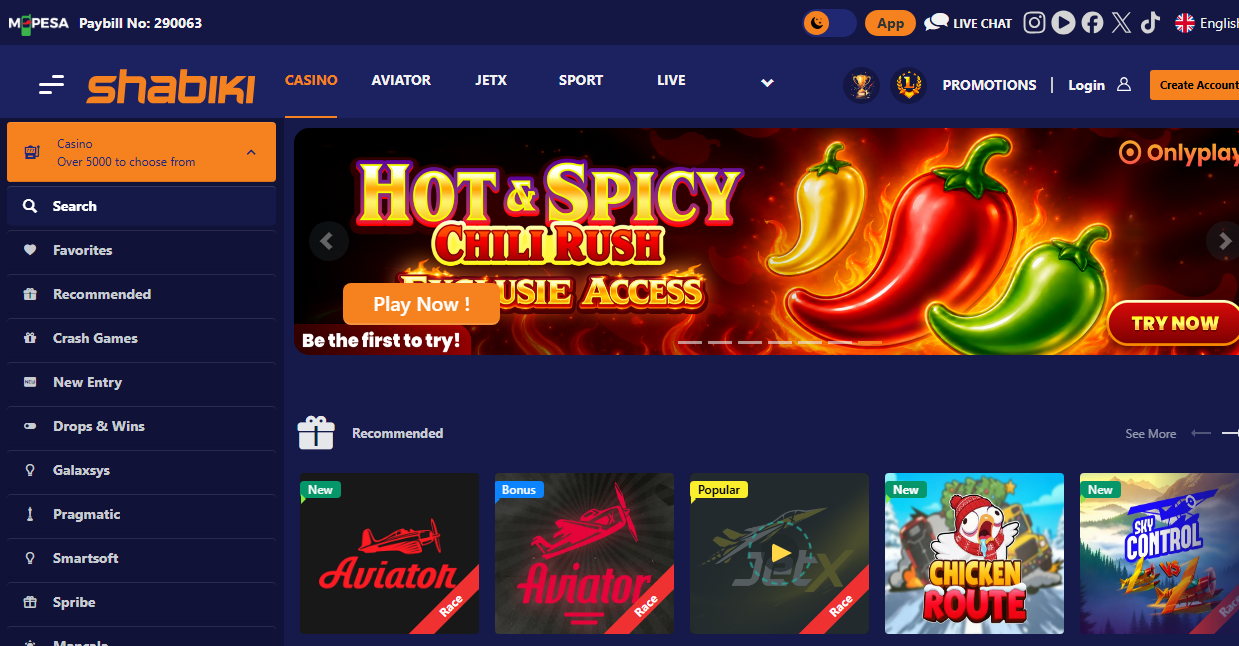
The Shabiki plane game, commonly known as Aviator, looks deceptively simple: a plane takes off, a multiplier starts climbing, and you decide when to cash out before the plane flies away.
Table Of Content
- What Is the Shabiki Plane Game?
- How Does the Plane Game Work?
- 1. Place your bet
- 2. The plane takes off
- 3. Decide when to cash out
- 4. The plane flies away
- The Most Important Thing to Understand: You Cannot Predict the Crash
- The “pattern” trap
- So How Can You Increase Your Chances of Winning?
- Strategy 1: Consider Smaller Cash-Out Targets
- Strategy 2: Use Auto Cash-Out If Available
- Strategy 3: Never Chase a Loss
- Strategy 4: Set a Maximum Amount Before You Start
- Strategy 5: Don’t Increase Your Bet Because You “Feel” a Big Multiplier Is Coming
- What About Watching Previous Results?
- Is There a Shabiki Plane Predictor?
- Beware of “guaranteed winning” claims
- Can You Actually Win?
- A Simple Example of Disciplined Play
- What You Should Never Do
- Don’t borrow money to gamble
- Don’t gamble to recover losses
- Don’t use essential money
- Don’t assume a big multiplier is “due”
- Don’t trust secret predictors
- Don’t play while angry or desperate
- The Best “Winning Strategy” May Be Knowing When to Stop
- Final Verdict: Can You Master the Shabiki Plane?
- Important Responsible-Gambling Note
That simplicity is exactly what makes the game exciting—and risky.
There is no secret button that makes the plane fly longer, and there is no reliable predictor that can tell you exactly when it will crash. The smartest approach is therefore not to search for a guaranteed winning formula, but to understand how the game works, how the mathematics works, and how to control your betting decisions.
This guide explains the Shabiki plane game from the ground up and shows how to approach it more intelligently.
What Is the Shabiki Plane Game?
The Shabiki plane game is a crash-style betting game. Before each round, you place a stake. A virtual plane then takes off and a multiplier begins increasing from around 1.00x.
For example, if you stake KSh 100 and cash out when the multiplier reaches 2.00x, the payout is KSh 200.
If you wait for 5.00x, the potential payout becomes KSh 500.
But there is a catch: the plane can fly away before reaching your desired multiplier. If that happens before you cash out, you lose your stake for that round.
Shabiki itself describes its service as real-money gambling and advises players to establish limits and stick to them. Its current responsible-gaming information also states that the platform is for people aged 18 and above.
Read Also: Seyyid Barghash: The Lion of Zanzibar Who Fought the Tides of Empire
How Does the Plane Game Work?
Every round follows essentially the same sequence.
1. Place your bet
You select the amount you want to stake before the round begins.
2. The plane takes off
The multiplier begins increasing.
You might see:
1.10x → 1.25x → 1.50x → 1.80x → 2.00x → 3.00x…
There is no guarantee that it will continue climbing.
3. Decide when to cash out
You can cash out while the plane is still flying.
If you cash out at 1.80x with a KSh 100 stake:
KSh 100 × 1.80 = KSh 180
If you cash out at 3.00x:
KSh 100 × 3.00 = KSh 300
4. The plane flies away
Once the round ends, anyone who has not cashed out loses the stake placed on that round.
That creates the fundamental decision in the game:
Do I take the smaller guaranteed payout now, or continue hoping for a larger multiplier?
The Most Important Thing to Understand: You Cannot Predict the Crash
This is where many players get into trouble.
You may see a sequence such as:
1.12x — 1.05x — 1.34x — 7.80x — 1.02x
A player might conclude:
“We’ve had several low numbers. The next one must be high.”
Not necessarily.
Likewise, if you see:
2.50x — 8.20x — 4.10x — 12.00x
you cannot conclude that the next round must be low.
Previous rounds do not give you a reliable prediction of the next crash point. Sources describing Aviator’s mechanics likewise emphasize that each round’s outcome is unpredictable and that historical results cannot guarantee what happens next.
This is one of the biggest misconceptions surrounding crash games.
The “pattern” trap
Suppose the last five rounds were:
1.01x
1.20x
1.08x
1.35x
1.10x
A player might think:
“Surely the next one has to reach 5x.”
No.
The previous five results don’t create an obligation for the next round to produce a high multiplier.
Similarly, five consecutive high multipliers don’t mean a low multiplier is “due.”
So How Can You Increase Your Chances of Winning?
There is an important distinction between increasing the probability of winning an individual bet and guaranteeing that you make money overall.
You cannot create a strategy that guarantees profit from a random crash game.
However, you can make decisions that reduce unnecessary exposure and improve your discipline.
Strategy 1: Consider Smaller Cash-Out Targets
The higher your target, the greater the risk of the plane flying away before you get there.
For example, suppose you stake KSh 100.
At:
1.50x = KSh 150 payout
2.00x = KSh 200 payout
5.00x = KSh 500 payout
10.00x = KSh 1,000 payout
The potential reward increases dramatically, but so does the possibility of losing the entire stake by waiting too long.
A player seeking smaller, more frequent cash-outs is taking a different level of risk from someone continually chasing 10x, 20x or 50x.
But remember: a lower cash-out target is not a guarantee of profit.
Read Also: Seyyid Said bin Sultan: The Lion of Oman and Architect of a Maritime Empire
Strategy 2: Use Auto Cash-Out If Available
One useful feature in crash games is auto-cash-out.
Instead of watching the plane and making an emotional decision, you can specify a multiplier at which your bet should automatically cash out.
For example, you might choose:
Auto cash-out: 1.50x
If the plane reaches 1.50x, the system automatically attempts to cash out your bet.
This can help eliminate one of the biggest problems with the game: greed in the moment.
You see:
1.50x
You think, “Let me wait for 2x.”
Then:
1.80x
“Maybe 3x.”
Then:
2.40x
“Surely it can reach 5x.”
And suddenly:
Plane flies away.
Your KSh 100 becomes KSh 0 for that round.
Auto-cash-out can prevent that kind of emotional escalation.
Strategy 3: Never Chase a Loss
This is arguably more important than your cash-out strategy.
Suppose you lose:
KSh 100
You decide to bet:
KSh 200
You lose again.
You bet:
KSh 400
Another loss.
Then:
KSh 800
This is essentially the Martingale-style approach—increasing your stake after losses in an attempt to recover everything with one win.
It can look attractive on paper.
But it becomes dangerous very quickly.
Starting with KSh 100, a sequence of losses produces:
| Round | Stake |
|---|---|
| 1 | KSh 100 |
| 2 | KSh 200 |
| 3 | KSh 400 |
| 4 | KSh 800 |
| 5 | KSh 1,600 |
| 6 | KSh 3,200 |
| 7 | KSh 6,400 |
Seven consecutive losses would mean KSh 12,700 staked cumulatively.
One more step would require KSh 12,800.
The strategy doesn’t eliminate risk. It can simply make the eventual loss much larger.
Strategy 4: Set a Maximum Amount Before You Start
This is one of the simplest ways to protect yourself.
Suppose you decide:
“Today I will only risk KSh 500.”
Once that KSh 500 is gone, the session ends.
Don’t add another KSh 500 because you’re convinced the next round will recover your money.
Likewise, you can establish a profit target.
For example:
Starting bankroll: KSh 500
Stop-loss: KSh 500
Profit target: KSh 200
If you reach your predetermined target, you stop.
The purpose isn’t to guarantee profit. It’s to prevent a short gambling session from turning into an uncontrolled attempt to recover or increase money.
Shabiki’s own responsible-gaming guidance recommends setting personal limits and sticking to them.
Read Also Behind Closed Doors: The Architecture of Compromise in the Modern Grooming Industry
Strategy 5: Don’t Increase Your Bet Because You “Feel” a Big Multiplier Is Coming
This is another common trap.
Imagine you’ve been watching the game and suddenly think:
“I have a feeling the next plane is going to 10x.”
You increase your normal KSh 100 bet to KSh 2,000.
The plane reaches:
1.03x
And disappears.
Your “feeling” has just cost you KSh 2,000.
The problem isn’t that you lacked courage.
The problem is that intuition is not a reliable prediction mechanism for a random game.
What About Watching Previous Results?
Watching previous results can help you understand the game interface and observe how volatile the rounds can be.
But it should not be confused with predicting the future.
For example:
1.02x
1.11x
1.07x
8.50x
doesn’t mean:
“Another big multiplier is coming.”
And:
12.30x
6.40x
9.20x
doesn’t mean:
“A crash at 1.01x is guaranteed next.”
The previous round is finished.
The next round is a new event.
Is There a Shabiki Plane Predictor?
You will find websites, videos, Telegram groups and social-media accounts claiming to offer:
- Aviator predictors
- Crash prediction software
- Guaranteed signals
- AI prediction bots
- Hack tools
- “Sure odds”
- Secret algorithms
- Guaranteed 10x signals
Treat such claims with extreme caution.
A predictor cannot legitimately guarantee the exact future crash point of a properly functioning random game.
If somebody genuinely possessed a system that could reliably predict every crash point, selling KSh 500 “signals” on social media would make little sense.
Beware of “guaranteed winning” claims
The phrase “100% winning strategy” should immediately raise a red flag.
There is no betting strategy that turns a random crash game into guaranteed income.
Can You Actually Win?
Yes, individual rounds can produce winning bets.
For example:
You stake KSh 100.
You cash out at 2.00x.
Your payout is KSh 200.
Your gross gain on that bet is KSh 100.
But winning individual rounds is different from having a guaranteed long-term profit strategy.
That’s an important distinction.
A player can win five rounds and still lose money overall if the sixth bet is substantially larger.
For example:
+KSh 100
+KSh 100
+KSh 150
+KSh 200
+KSh 100
−KSh 1,000
The player won five times—but finished down KSh 350.
This is why bet size matters just as much as win frequency.
A Simple Example of Disciplined Play
Imagine someone chooses a hypothetical KSh 500 session budget.
Instead of putting the entire amount into one bet, they decide beforehand that each round will involve only a small portion of the available bankroll.
They also establish:
- a maximum session loss;
- a maximum number of rounds;
- a predetermined cash-out approach;
- no chasing losses;
- no increasing stakes because of excitement;
- no borrowing money to continue.
If the predetermined loss limit is reached, they stop.
If they reach their predetermined profit target, they stop.
The important point is that the strategy controls the player—not the other way around.
What You Should Never Do
If you decide to play the Shabiki plane game, avoid these behaviours:
Don’t borrow money to gamble
Money needed for rent, food, school fees, bills or debt repayment should never become your gambling bankroll.
Don’t gamble to recover losses
“I lost KSh 2,000, so I need another KSh 2,000 to recover it” is one of the most dangerous thought patterns in gambling.
A loss is already a loss.
Trying to immediately recover it can turn KSh 2,000 into KSh 5,000, KSh 10,000 or more.
Don’t use essential money
Only gamble money you can genuinely afford to lose.
Don’t assume a big multiplier is “due”
It isn’t.
Don’t trust secret predictors
Especially those demanding payment for “guaranteed” signals.
Don’t play while angry or desperate
Your decision-making can become significantly worse when you’re emotionally trying to win money back.
The Best “Winning Strategy” May Be Knowing When to Stop
This sounds simple, but it is probably the most valuable lesson.
Suppose you start with KSh 500 and eventually reach KSh 800.
You now have a choice.
You could say:
“I’ve made KSh 300. Let me stop.”
Or:
“Let me keep going. Maybe I can make KSh 2,000.”
The second decision exposes the KSh 800 to further risk.
There is nothing wrong with enjoying a gambling game as entertainment if you are of legal age and can afford the loss. But it becomes dangerous when the objective changes from entertainment to solving financial problems through gambling.
Final Verdict: Can You Master the Shabiki Plane?
You can master your decisions, but you cannot master the plane.
You can learn:
- how the multiplier works;
- how cash-out works;
- how to use auto-cash-out;
- how to control your stake;
- how to set a stop-loss;
- how to avoid chasing losses;
- how to recognize misleading prediction claims;
- and how to walk away.
What you cannot reliably learn is exactly when the next plane will fly away.
That’s the fundamental reality of the game.
So if someone tells you:
“I know exactly when the Shabiki plane will crash.”
The safest response is:
“Show me the independently verifiable mathematics—not your screenshots of yesterday’s wins.”
The game can produce genuine wins, but there is no magic formula that turns it into a guaranteed money-making machine. The smartest player isn’t necessarily the one who waits for the biggest multiplier.
It’s the one who understands the risk, controls the bankroll and knows when to walk away.
Important Responsible-Gambling Note
Shabiki states that gambling should be controlled and that users should establish safe gambling limits. It also provides self-exclusion and responsible-gaming measures.
For anyone considering gambling with money they cannot afford to lose, the safest strategy is not to play at all.
Read Also: Vasco da Gama: The Navigator Who Forged the First Global Empire
Never Miss a Story: Join Our Newsletter