



Seyyid Said bin Sultan: The Lion of Oman and Architect of a Maritime Empire
If Seyyid Barghash was the Sultan who watched his empire crumble under the weight of European colonialism, his father, Seyyid Said bin Sultan, was the titan who built it. Said was the architect of...

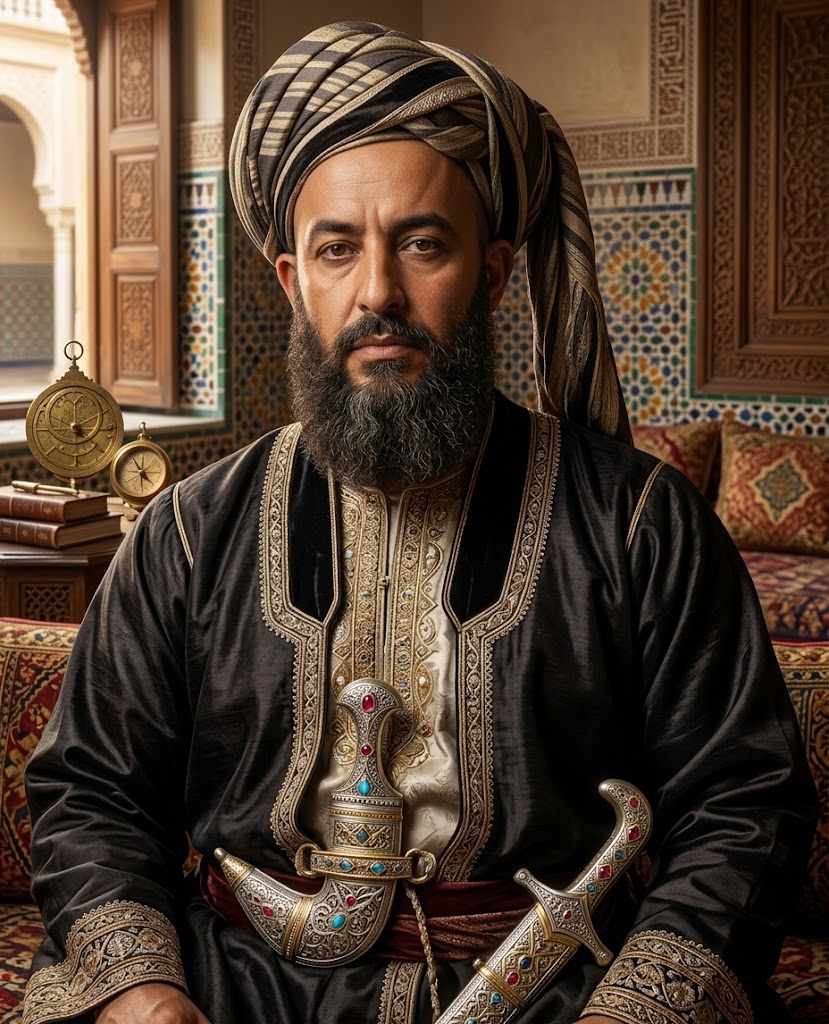
If Seyyid Barghash was the Sultan who watched his empire crumble under the weight of European colonialism, his father, Seyyid Said bin Sultan, was the titan who built it. Said was the architect of the Omani Empire’s golden age, a ruler of such vision and ambition that he shifted the center of his power from the Arabian desert to the African coast, creating a commercial empire that dominated the Indian Ocean and left an indelible mark on East Africa .
Table Of Content
To understand Said bin Sultan is to understand the rise of a dynasty and the zenith of Omani power—a story of bloodshed, trade, and a vision that bridged continents. He is remembered as the “Lion of Oman” and is widely regarded as one of the greatest Omani sultans in history .
The Bloody Rise to Power
Born on June 5, 1791, in Samail, Oman, Said bin Sultan was the son of Sultan bin Ahmad, who ruled Oman from 1791 to 1804 . His mother was Sayyida Ghanneyeh bint Saif Al-Busaidi . Said’s path to the throne was forged in the fires of brutal succession conflict.
His father died in 1804 on an expedition to Basra, appointing Mohammed bin Nasir bin Mohammed al-Jabry as Regent and guardian of his two young sons, Salim and Said . Almost immediately, Said’s uncle Qais bin Ahmad, the ruler of Sohar, attempted to seize power. Early in 1805, Qais and his brother marched along the coast to Muttrah, which they captured easily, before besieging Muscat . Mohammed bin Nasir called upon Badr bin Saif for help, and after a series of engagements, Qais was forced to retreat to Sohar .
Badr bin Saif became the effective ruler of Oman, but his alliance with the Wahhabis made him deeply unpopular . To remove potential rivals from his path, Badr appointed Salim bin Sultan governor of al-Masna’ah and Said bin Sultan governor of Barka .
In 1806, the fifteen-year-old Said lured Badr bin Saif to Barka and murdered him nearby . There are differing accounts of what happened, but it seems clear that Said struck the first blow, and his supporters finished the job . Said was acclaimed by the people as a liberator from the Wahhabis, who subsequently left the country . His uncle Qais bin Ahmad immediately gave his support to Said . Nervous of the Wahhabi reaction, Said blamed Mohammed bin Nasir for the murder . As one scholar wrote, he came to power “through bloodshed and perfidy,” yet this ruthlessness was the foundation upon which he built his empire.
Read Also: Seyyid Barghash: The Lion of Zanzibar Who Fought the Tides of Empire
The Formidable Regent
In a fascinating historical footnote, on July 31, 1806, Sayyida Aisha bint Sultan Al-Imam Ahmad bin Sa’id Al-Busaidi—a daughter of Sultan bin Ahmed and thus Said’s sister—assumed the regency on behalf of her younger brother . She was a formidable woman who conducted the affairs of government and frequently commanded her troops dressed in male clothing . Said became the sole ruler of Oman with the consent of his brother, a decision that their aunt—the daughter of Imam Ahmad bin Said al-Busaidi—appears to have influenced .
Forging a Commercial Empire
Said’s rule, which lasted for half a century, was characterized by a relentless pursuit of commercial and territorial expansion. He understood that power was built on trade, and he set out to dominate the most lucrative trade routes of the era.
The 1820s saw Said extending his reach. He launched a punitive expedition against the Bani Bu Ali tribe in 1820 with assistance from the British East India Company—it was defeated, but a larger Company force returned the following year and successfully defeated the tribe . In 1822, he signed the Moresby Treaty with the British, beginning a long but ambiguous relationship with the abolitionist movement by restricting the Zanzibar slave trade .
His expansion along the East African coast accelerated in the 1830s. In 1837, Said conquered Mombasa, bringing to an end the rule of the Mazrui family, who had been seeking independence from Oman . This victory consolidated his authority over a string of ports stretching from the Horn of Africa to Mozambique.
The American Connection
In 1835, Said ratified a treaty of amity and commerce with the United States on very favorable terms, originally negotiated at Muscat on September 21, 1833, by Special Agent Edmund Roberts and returned by the USS Peacock . This was a calculated diplomatic masterstroke. Said was effectively playing the great powers against each other .
The British took notice and debated whether Said had broken his treaties with them. In response, Said offered to amend or even break the treaty with the Americans if the British were displeased and even offered a vessel, the Liverpool, as a gift to the King of England . This willingness to entertain British complaints highlighted the fragile diplomatic position the Sultan occupied, yet it also demonstrated his ability to manipulate the delicate power dynamics of the era.
Simultaneously, a French frigate arrived at Zanzibar to negotiate new treaties, and Said was also forced to pay tribute in the Horn of Africa—in 1843 he nominated a representative in Mogadishu and was compelled to pay tribute to Sultan Yusuf Mahamud Ibrahim of the Sultanate of the Geledi . The Sultan was thus surrounded by European powers and regional rivals, yet he navigated these turbulent waters with considerable skill.
The Sultanah: An Arabian Embassy in New York
Perhaps the most colorful and astonishing episode of Said’s reign was his attempt to build a direct relationship with the United States through a dramatic maritime mission. The tale is almost too extraordinary to believe—but it happened.
Behind Said’s move to send a ship to America lay an audacious plan. Oman, heir to a thousand-year tradition of seafaring and trade, hoped to take over Mozambique from Portugal, with the ultimate goal of controlling Mozambique’s trade with China . To achieve this, the Sultan needed arms. However, he was hesitant to seek them from Great Britain or France, fearing that military dependence would allow those superpowers to strengthen their positions in the Gulf . Impressed by the Americans’ lack of political designs in the region, Said determined to open diplomatic relations with the United States, hoping to secure trade and arms purchases without incurring political obligations .
In the winter of 1840, the Sultanah, a three-masted, 80-foot wooden sailing ship and the pride of the Omani fleet, set out from Oman . Nearly three months later, it dropped anchor in New York. The ship was a wreck—its sails torn, its ropes frayed, and the crew, hired in India, was described as “gleanings of the toughest stuff” .
The scene that unfolded was one of high drama and absurdity. Ahmad ibn Na’aman, the Sultan’s envoy, stepped onto a New York wharf dressed in a bright turban, sparkling cashmere shawl, and long black caftan trimmed in gold . He raised the Sultan’s crimson ensign over the battered ship and calmly announced that this was Oman’s temporary embassy in the United States .
Adding to the exotic mystique were rumors that quickly spread that the Sultan had sent “two or three Circassian slaves of outstanding beauty” as gifts to President Martin Van Buren . In reality, the gifts were fine jewels, a silk Persian rug, a gold-mounted sword, and two slightly seasick Arabian horses . This presented the President with a quandary—the Constitution forbids an American President from accepting gifts, so the Congress, in a debate marked by enthusiasm for the Sultan, had to sell them at public auction and deposit the revenues in the U.S. Treasury .
Despite the legal complications, New York went wild. Crowds pressed against the Sultanah, police had to ward off souvenir hunters, and crewmen were followed by curious onlookers who would yank on their beards to verify their authenticity . Ahmad ibn Na’aman gamely capitalized on this curiosity, glad to inspect military parades and attend official functions, while also selling his cargo of Omani dates and cloves .
The mission was a milestone in U.S.-Arab relations. In 1933, President Franklin D. Roosevelt himself marked the centenary of the original treaty, noting that it was “one of the oldest agreements still in force between the United States and any other country” and had “continued uninterruptedly for a century to form the basis of relations between the two nations” .
Read Also: King Mwanga II: The Buganda King Who Fought Christianity, Defied Britain and Ended His Life in Exile
The Great Shift: Moving the Capital to Zanzibar
But the most significant act of his reign was yet to come. In 1840, Said made the momentous decision to move his capital from Muscat in Oman to Stone Town on the island of Zanzibar . This was more than just a relocation—it was a complete reorientation of his empire. He recognized that Zanzibar was perfectly positioned to become the commercial capital of the East African coast.
Said recognized Zanzibar’s suitable climate and soil for the cultivation of cloves, an essential meat preservative used in Europe prior to the invention of refrigerators . He initiated large-scale clove plantations, bringing immense prosperity to his new capital. To support this agricultural expansion, he established a ruling Arab elite and encouraged the development of the clove plantations using slave labor . Zanzibar’s commerce fell increasingly into the hands of traders from the Indian subcontinent, whom Said encouraged to settle on the island . He functioned as a liaison between Indian capital and the Arab caravans and plantations . The Omani Empire reached the zenith of its power and wealth during this period .
The Foundation of the Slave Trade
However, this prosperity came at a terrible human cost. Of all the forms of economic activity on Zanzibar, slavery was the most profitable, and the vast majority of the black population living on the island were either slaves taken from East Africa or their descendants . Slaves were brought to Zanzibar in dhows, packed in with no regard for comfort or safety, and many did not survive the journey .
Upon reaching the island, the slaves were stripped naked, cleaned, had their bodies covered with coconut oil, and forced to wear gold and silver bracelets bearing the name of the slave trader . Then they were forced to march nude in a line down the streets of Stone Town, guarded by loyal slaves carrying swords or spears, until a buyer expressed interest . A captain from the East India Company who visited Zanzibar in 1811 witnessed these marches and described how a buyer would examine the slaves . Said sent trading caravans deep into Africa, seeking ivory and slaves, and Zanzibar became the commercial capital of the East African coast .
A Man of Contradictions
Said bin Sultan was a figure of profound contradictions. Much loved by his children, he plays an important role in the memoirs of his daughter, Emily Ruete (born Sayyida Salme), who recalled him fondly:
“Being one of the youngest of my father’s children I only ever saw him with his venerable snow-white beard. Above average height, he possessed in his countenance something exceptionally winning and benevolent, yet he commanded respect in every aspect of his appearance… He valued justice above all else and in the event of an offence there was no difference for him between his own son and a simple slave” .
But this personal justice existed alongside a system of profound inhumanity that made him immensely wealthy. Said signed treaties in 1822 and 1845 restricting the slave trade, largely under British pressure, but these were often observed more in the breach than in the observance . The foundation of his commercial empire was built on the brutal exploitation of enslaved people.
The Dividing of the Realm and Death at Sea
In 1845, Said signed the Hamerton Treaty with the British, further restricting the Zanzibar slave trade . It was his last major treaty, a bow to an inexorable pressure that would only intensify.
Said died on October 19, 1856, aged 65, while en route to his beloved Zanzibar . His death took place at sea near the Seychelles . He was buried at the Makusurani Cemetery .
Rather than naming a single successor, he divided his vast realm between two of his sons: his third son, Thuwaini bin Said, was to rule Muscat and Oman, while his sixth son, Majid bin Said, was to rule Zanzibar . This division, formalized in 1861, was the beginning of the end for the unified Omani Empire. It created a political schism that left the East African and Arabian wings permanently separated, weakening both and making them vulnerable to the European powers then encircling the continent. His son Barghash, who would inherit the Zanzibar throne in 1870, would receive a smaller, weaker realm already facing the relentless pressure of British and German colonialism.
Legacy
Seyyid Said bin Sultan was a man of immense ambition and capability, a ruler who, in his time, successfully played the great powers against each other while building an empire of his own. His place in history is secured by his achievements: he consolidated Omani rule along the East African coast, moved the capital to Zanzibar, transformed it into a center of clove production, and was the first Arab ruler to establish formal diplomatic relations with the United States . He sent trading caravans deep into Africa, and Zanzibar became the commercial capital of the East African coast . He was a man remarkable for his sense of justice, tolerance, and humor .
He was the Lion of Oman, a title that honors his strength and vision. Yet the empire he built, founded on trade and human suffering, could not withstand the forces he had set in motion. In the end, his greatest weakness may have been his own children, whose rivalry undid his life’s work and paved the way for the tragic decline his son, Seyyid Barghash, would later experience.
Never Miss a Story: Join Our Newsletter