




Why Many Children in Gaza Have Stopped Talking: Gaza’s Children and the Sound of Trauma
In most places, childhood is noisy. It spills over with laughter, arguments, songs, questions—endless questions. But in Gaza today, something unsettling is happening. Children are going quiet. Not...

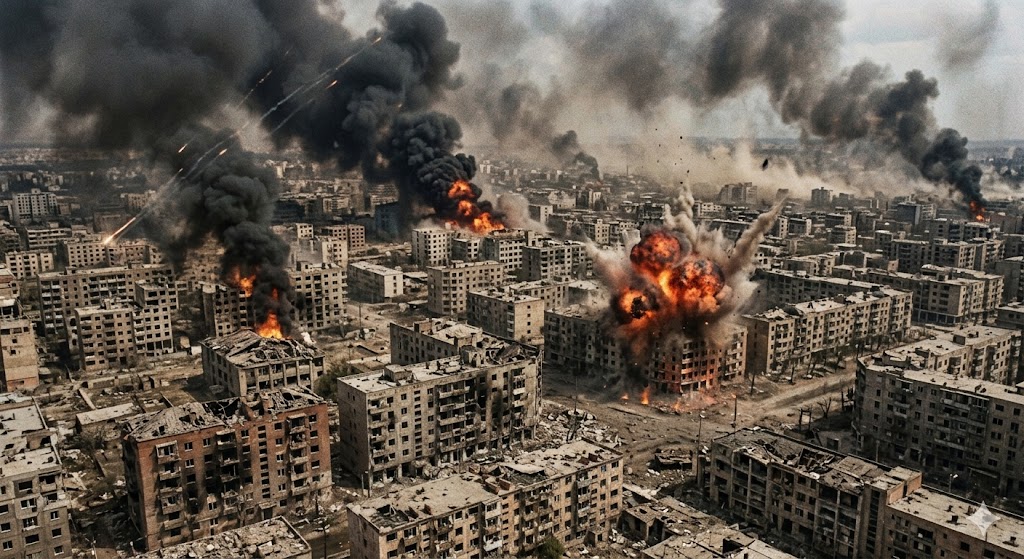
In most places, childhood is noisy. It spills over with laughter, arguments, songs, questions—endless questions. But in Gaza today, something unsettling is happening.
Table Of Content
Children are going quiet.
Not the kind of quiet that comes with sleep or shyness—but a deeper, more haunting silence. A silence that arrives suddenly, sometimes overnight. A silence that stays.
Across the region, doctors and therapists are witnessing a growing number of children who have stopped speaking altogether. Some were once playful and talkative. Now, they stare, gesture, or withdraw—unable, or perhaps unwilling, to form words.
This is not just a medical anomaly. It’s a language of trauma.
The Breaking Point of the Mind
For some children, the cause is visible—injuries from blasts, damage to the brain, the physical aftermath of war. But for many others, there is no wound you can point to.
Their silence comes from something harder to diagnose: overwhelming fear.
Imagine a mind still learning what safety means—then placing it in a world where safety disappears overnight. Explosions. Displacement. Loss. Repetition of terror with no clear end. For a child, this is not just frightening; it is incomprehensible.
And when something cannot be processed, sometimes the mind does the only thing it can: it shuts down part of itself.
Speech is often one of the first casualties.
Silence as Protection
Psychologists sometimes describe this kind of response as selective mutism or trauma-induced withdrawal. But those clinical terms don’t quite capture the reality on the ground.
These children are not simply “choosing” not to speak.
They are overwhelmed to the point where language itself becomes unreachable.
In many cases, silence becomes a shield—a way to retreat inward when the outside world feels too dangerous to engage with. Words require trust. They require a belief that someone is listening, that communication is safe.
War erodes both.
A Generation Growing Up Without Expression
The scale is staggering. Roughly a million children in Gaza are now estimated to need psychological support.
That number isn’t just about therapy—it represents a generation growing up under conditions where emotional development is constantly interrupted.
Speech is more than communication; it’s how children learn identity, relationships, and confidence. When that is disrupted, the effects ripple outward:
- Learning becomes harder
- Social bonds weaken
- Emotional regulation suffers
- Fear becomes internalized
And perhaps most tragically, stories go untold—because the storytellers can no longer speak them.
The Invisible Injuries of War
Physical destruction is visible. Buildings collapse. Infrastructure disappears. Those losses can be photographed, counted, measured.
But what is happening inside these children is far less visible—and arguably more enduring.
A child who loses their voice to trauma carries that silence long after the bombs stop. It follows them into adolescence, into adulthood, into relationships, into how they see the world.
War, in this sense, doesn’t just destroy the present. It reshapes the future—quietly.
Can the Silence Be Broken?
There are efforts—small, fragile, but vital.
Therapists, aid workers, and caregivers are trying to create moments of safety: through play, art, routine, and human connection. Sometimes, a child who hasn’t spoken for months will begin again with a single word. Sometimes not.
Recovery is possible. But it requires something that remains scarce in conflict zones:
- Stability
- Time
- Consistent care
- A sense of safety
Without those, healing becomes uncertain.
What This Really Means
This story isn’t just about children losing their ability to speak.
It’s about what happens when an environment becomes so overwhelming that even the most basic human functions—like communication—begin to collapse.
It’s about how trauma rewrites the body.
And it’s about a quiet crisis that doesn’t make noise, doesn’t trend easily, and doesn’t always show up in headlines—but may define an entire generation.
Because when children fall silent, it’s not just their voices that are lost.
It’s their sense of the world—and their place in it.
Never Miss a Story: Join Our Newsletter