




Do You Really Own Your Phone? The Hidden Questions Behind Kenya’s “Lipa Mdogo Mdogo” Smartphone Revolution
Across Kenya, “Lipa Mdogo Mdogo” financing has changed how millions access smartphones. What once required a large upfront payment can now be acquired through a small deposit and manageable daily or...

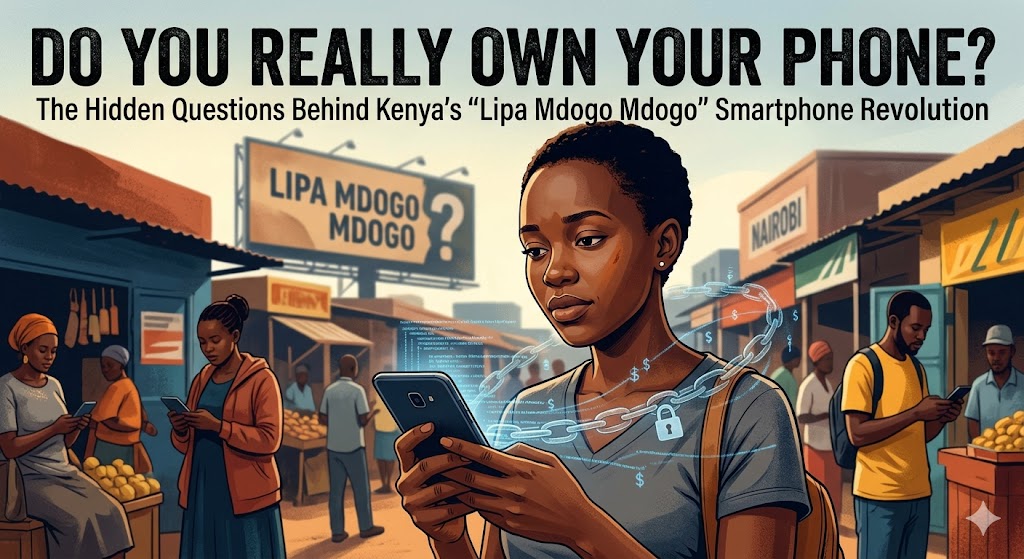
Across Kenya, “Lipa Mdogo Mdogo” financing has changed how millions access smartphones. What once required a large upfront payment can now be acquired through a small deposit and manageable daily or monthly installments.
Table Of Content
- If a company can remotely lock your phone, who truly controls the device?
- How “Lipa Mdogo Mdogo” Phones Actually Work
- The Question Many Kenyans Are Quietly Asking
- What Protections Exist for Consumers?
- 1. Android Security Protections
- 2. Reputation and Public Trust
- 3. Kenyan Consumer and Data Protection Laws
- The Bigger Problem Is Often Transparency
- What Users Can Do After Fully Paying Off a Device
- Check Device Administrator Permissions
- Request Official Delinking Confirmation
- Perform a Factory Reset
- Understand Permissions Before Accepting Them
Companies like M-KOPA and telecom-backed financing programs have helped many Kenyans connect to the digital economy, online banking, education platforms, and remote work opportunities. For many households, these programs have made smartphone ownership realistically achievable.
But beneath the convenience lies a deeper technological and ethical question:
If a company can remotely lock your phone, who truly controls the device?
That question has become increasingly relevant as financed smartphones rely on software systems capable of monitoring payment status and restricting device access when repayments stop.
How “Lipa Mdogo Mdogo” Phones Actually Work
Most financed smartphones use some form of Mobile Device Management (MDM) or device-control software. These systems are designed to:
- Track repayment compliance
- Send payment reminders
- Temporarily lock the device after prolonged missed payments
- Restore access once payments resume
From a business perspective, this makes sense. The company needs protection against defaults when offering devices to customers who may not qualify for traditional bank credit.
However, many users do not fully understand the level of software control these systems may possess.
In some cases, the financing software operates with elevated administrative permissions on the phone. That raises concerns about:
- Privacy
- Long-term device control
- Data access
- Consumer rights after full ownership is achieved
The Question Many Kenyans Are Quietly Asking
A growing number of users are beginning to ask:
“If a company can lock my phone remotely today, what guarantees do I have tomorrow?”
While there is no public evidence that major Kenyan financing companies intentionally sabotage paid-off devices, the concern itself reflects a broader global debate about digital ownership.
Could a rogue company theoretically:
- Disable phones remotely?
- Push harmful software updates?
- Restrict functionality?
- Force unnecessary upgrades?
From a purely technical perspective, some degree of remote influence is possible whenever privileged device-management systems remain active.
That does not mean abuse is happening — but it does highlight the importance of transparency and accountability.
What Protections Exist for Consumers?
1. Android Security Protections
Modern Android phones from manufacturers such as Samsung, TECNO, Infinix, and Xiaomi still operate within broader Android security frameworks.
Financing applications typically do not possess unlimited unrestricted control over the device. Systems like Google Play Protect continuously monitor suspicious software behavior and malicious applications.
Any large-scale abuse would likely attract rapid scrutiny from cybersecurity researchers, users, and regulators.
2. Reputation and Public Trust
Financing companies survive on trust.
If users began experiencing unexplained device failures or malicious restrictions after fully paying off their phones, social media exposure alone could severely damage the company’s reputation.
In today’s digital environment, reputational collapse can happen quickly.
3. Kenyan Consumer and Data Protection Laws
Kenya’s regulatory environment has also evolved significantly.
Institutions such as the Office of the Data Protection Commissioner and the Communications Authority of Kenya oversee aspects of data privacy and digital communications.
Under Kenya’s Data Protection Act (2019), companies handling user data are expected to:
- Process information lawfully
- Disclose data collection practices
- Respect user privacy rights
- Avoid unauthorized misuse of personal information
In principle, continued hidden control over a fully owned device could face legal and regulatory challenges.
The Bigger Problem Is Often Transparency
The real concern may not be dramatic “remote sabotage.”
Instead, experts increasingly point toward:
- Poor disclosure practices
- Excessive app permissions
- Persistent background management tools
- Lack of user awareness
Many customers never learn:
- What permissions they granted
- Whether the financing software remains active after repayment
- What data the software can access
- Whether remote-management capabilities are permanently disabled
This information gap is where trust becomes fragile.
What Users Can Do After Fully Paying Off a Device
Consumers can take several practical steps to protect themselves:
Check Device Administrator Permissions
On Android:
- Go to Settings
- Open Security or Privacy settings
- Review “Device Admin Apps” or “Special Access”
This helps identify apps with elevated privileges.
Request Official Delinking Confirmation
After full repayment, users can ask the financing company to confirm:
- The device is fully released
- Remote-lock features are disabled
- No active management restrictions remain
Perform a Factory Reset
A factory reset may remove some residual software controls, though deeply embedded firmware-level systems may require official removal by the provider.
Understand Permissions Before Accepting Them
Users should pay closer attention to requests for:
- SMS access
- Location tracking
- Contacts
- Installed app monitoring
- Device identifiers
Convenience often causes people to approve permissions without fully understanding the implications.
The Digital Ownership Debate Is Only Beginning
The concerns surrounding financed smartphones are part of a much larger global conversation.
Increasingly, ownership of modern technology is shaped not only by physical possession, but by software permissions and remote-control capabilities.
The same debate now affects:
- Smartphones
- Smart TVs
- Vehicles
- Laptops
- Gaming consoles
- Smart home systems
As technology becomes more connected, consumers are beginning to ask a fundamental question:
“Do we truly own our devices — or are we merely licensed to use them under certain conditions?”
Kenya’s “Lipa Mdogo Mdogo” revolution has undeniably expanded digital access and economic opportunity. Yet as financing technology grows more sophisticated, transparency, accountability, and user rights may become just as important as affordability itself.
Never Miss a Story: Join Our Newsletter