


BREAKTHROUGH OR BUFFER? THE UNPACKING OF THE US-IRAN DE-ESCALATION PACT
WASHINGTON — World markets responded with sharp volatility this week following the announcement of a landmark, yet highly precarious, memorandum of understanding (MoU) between the United States and...

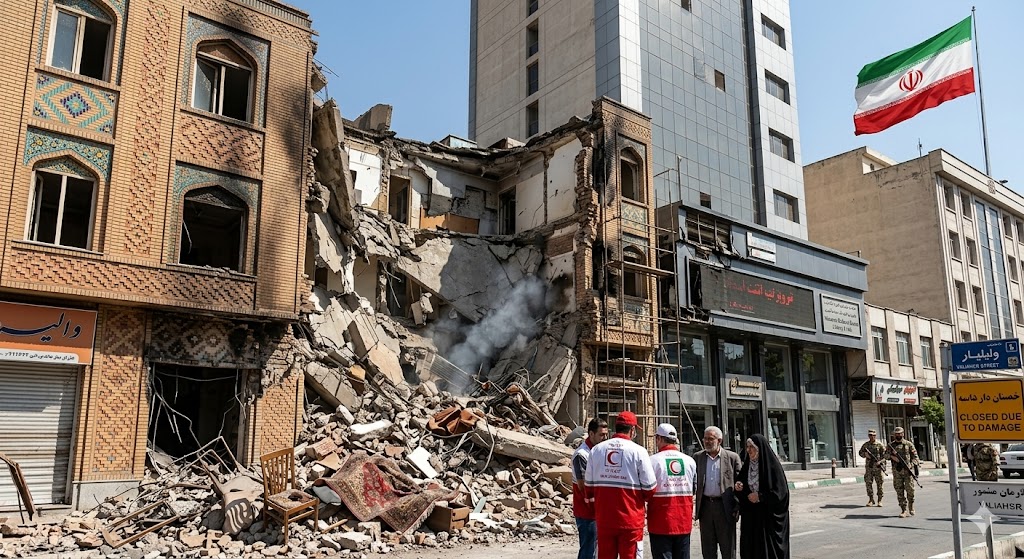
WASHINGTON — World markets responded with sharp volatility this week following the announcement of a landmark, yet highly precarious, memorandum of understanding (MoU) between the United States and Iran. Mediated by Pakistani Prime Minister Shehbaz Sharif, the framework aims to halt the destructive regional war that has upended global energy markets since early March.
Table Of Content
While President Donald Trump and officials in Tehran have both hailed the agreement as a historic path to peace, a closer look at the circulating draft reveals a delicate framework operating on a ticking clock, with several massive, unresolved geopolitical hurdles.
1. The Military Terms & Ceasefire Fronts
The most immediate impact of the MoU is a comprehensive, multi-front halt to hostilities. According to regional state media and official statements, the ceasefire extends across all active battlegrounds of the recent war, crucially including the heavily battered Israel-Hezbollah front in Lebanon.
                       [ MEDIATOR: PAKISTAN ]
                                 │
         ┌───────────────────────┴───────────────────────┐
         ▼                                               ▼
   UNITED STATES                                       IRAN
 ─────────────────                               ─────────────────
 • Lifts naval blockade                          • Reopens Strait of Hormuz
 • Releases $24B frozen assets                   • Enters 60-day nuclear talks
 • Demands toll-free shipping                    • Seeks $300B Gulf reconstruction
A major focal point of the declaration centers on the Strait of Hormuz, a vital maritime artery through which one-fifth of the world’s oil supplies pass. Under the terms:
- The United States has committed to immediately lifting its naval blockade on Iranian ports.
- Iran will reopen the Strait to civilian and commercial shipping within 30 days under “Iranian arrangements,” primarily focusing on clearing mines.
- President Trump has aggressively asserted that the waterway must remain permanently “toll-free.” The demand follows weeks of international concern regarding potential transit fees discussed by regional intermediaries like Oman.
While crude oil prices plunged to their lowest levels since early March on the news, energy analysts warn that actually restoring infrastructure damaged by drone strikes could take months.
2. The Nuclear Clock and Financial Unfreezing
The agreement does not permanently resolve the flashpoint of Iran’s nuclear program—which served as a primary catalyst for the conflict—but instead buys a fragile, 60-day negotiating window.
During this two-month period, bilateral teams are tasked with hammering out a final, verifiable settlement regarding Iran’s highly enriched uranium stockpile. Iran is currently believed to hold more than 400kg of material refined to near bomb-grade purity, much of it secured in heavily fortified underground sites.
To facilitate the talks, the framework includes provisionary terms to unfreeze approximately $24 billion in Iranian assets. However, this mechanism has already exposed deep friction between the two capitals:
The Immediate Timeline Standoff: Tehran has aggressively pushed for the upfront release of the $24 billion before formal nuclear negotiations resume. The White House has flatly rejected this sequence, insisting that asset access must occur simultaneously with, and depend on, verified diplomatic progress.
Furthermore, Western allies—including the “E4” coalition of the UK, France, Germany, and Italy—issued a joint statement emphasizing that any long-term lifting of economic sanctions remains strictly contingent upon clear, verifiable rollbacks of Iran’s nuclear capabilities. President Trump went a step further in a recent interview, warning that the U.S. military is prepared to resume active strikes if a comprehensive nuclear deal isn’t finalized before the 60-day clock runs out.
3. The Unresolved Blind Spots
Beyond the nuclear standoff, two major wildcards threaten to derail the peace process before the scheduled formal signing ceremonies:
- The Israel Wildcard: While U.S. and Pakistani officials explicitly stated that the ceasefire encompasses Lebanon, Israel was not a direct party to these bilateral negotiations. Israeli Prime Minister Benjamin Netanyahu has not formally accepted the framework. Continued military friction or unilateral strikes in Beirut—similar to an Israeli airstrike earlier this week that delayed the MoU announcement by several hours—could instantly shatter the agreement.
- The $300 Billion Question: Negotiators have floated the concept of a massive $300 billion reconstruction vehicle, heavily backed by investments from wealthy Gulf state neighbors, to rebuild shattered regional infrastructure. The U.S. delegation, however, remains unyielding: not a single dollar of international investment or reconstruction aid will flow unless Iran permanently and verifiably dismantles its nuclear weapons program.
With the first formal round of expanded talks scheduled to begin this Friday, diplomats are racing against time. The framework has successfully paused the guns, but whether it can forge a lasting security architecture—or simply acts as a brief intermission in a larger conflict—remains entirely to be seen.
Never Miss a Story: Join Our Newsletter