




Polygamous Women: Where It Exists and How It Shapes Society
Strictly speaking, there are no countries today where women can legally marry multiple husbands under formal state-recognized law. While polygyny (one man with multiple wives) is legally accepted in...

Strictly speaking, there are no countries today where women can legally marry multiple husbands under formal state-recognized law. While polygyny (one man with multiple wives) is legally accepted in several regions, polyandry has never been widely institutionalized in modern legal systems.
Table Of Content
However, anthropologists have documented a few historical and cultural cases where polyandry existed in practice, especially in mountainous regions of Asia.
Where Polyandry Has Existed
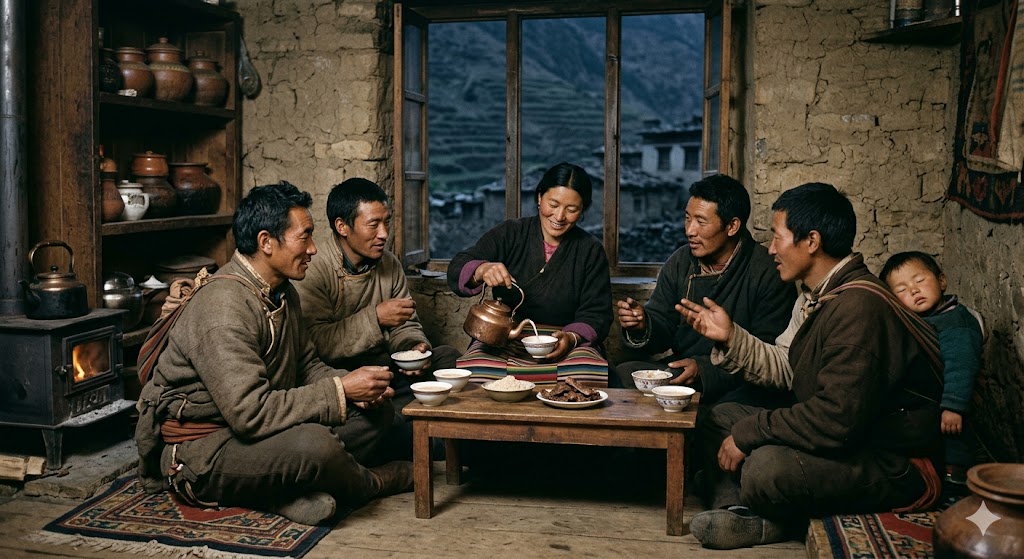
In Tibet, fraternal polyandry was historically practiced in some communities, where a woman would marry a group of brothers living under one household. The main reason was practical: to prevent the division of family land across generations. Although greatly reduced today and not formally supported under modern Chinese law, traces of the practice are still occasionally noted in remote areas.
In Nepal’s Himalayan regions, similar systems existed among certain ethnic groups. Harsh geography and limited arable land encouraged families to keep property intact by sharing one wife among brothers. Today, the practice is no longer legally recognized and continues only as a fading cultural memory.
In parts of northern India, particularly in areas like Jaunsar-Bawar in Uttarakhand, historical accounts also describe polyandrous arrangements. These, however, are no longer part of the legal or social mainstream and survive mainly in anthropological records.
Beyond these regions, polyandry has also been recorded in ancient Sri Lanka and some pre-modern Central Asian societies, but these are historical examples rather than living legal systems.
Why Polyandry Is Rare Today
Modern legal systems almost universally define marriage in ways that exclude polyandry. Most countries recognize either monogamy or, in some cases, polygyny. The absence of polyandry is linked to structural issues such as inheritance rules, patrilineal family systems, and legal frameworks that rely on clearly defined paternity.
Inheritance: Keeping Land Intact
Where polyandry existed, it functioned largely as an economic strategy. In mountainous agrarian societies, land was the most valuable and limited resource. If brothers divided inheritance among themselves, farms would become too small to sustain families.
By sharing one wife, brothers also shared one household and one line of heirs. Inheritance was therefore collective rather than individual, ensuring that land remained intact and economically viable across generations.
Children and Identity
One of the most distinctive features of polyandry is how children are socially understood. In fraternal polyandry, where the husbands are brothers, biological fatherhood is often uncertain. Instead of resolving this uncertainty, many societies simply treated all husbands as fathers.
Children belonged to the household as a whole rather than to an individual man. Their identity was tied more strongly to the family or clan than to biological paternity, and inheritance followed the collective household structure rather than individual lineage.
Family Structure and Daily Life
Polyandrous households typically functioned as tightly organized economic units. One wife shared her life with multiple husbands, usually brothers, living in a single household. The eldest brother often served as the nominal head, while others contributed through farming, trade, or seasonal labor migration.
This arrangement reduced internal rivalry and ensured that labor was pooled rather than divided. The wife occupied a central position within this system, linking the male members of the household and maintaining continuity in daily family life.
Social Function and Stability
Anthropologists often interpret polyandry as a system designed to reduce conflict and increase stability in difficult environments. Without it, brothers would likely divide land, compete for resources, and fragment family wealth. With it, property remained unified, labor was shared, and household survival was strengthened.
Decline in the Modern Era
Polyandry has largely disappeared due to modernization, education, migration, and legal systems that do not recognize the practice. Nuclear families have replaced extended household systems, and inheritance laws now favor clearly defined individual ownership and paternity.
Today, polyandry survives mostly as a cultural memory or an anthropological case study rather than a living social system.
Big Picture Insight
Ultimately, anthropologists view polyandry not as a romantic or relationship-based choice, but as an adaptive economic system shaped by environmental pressure. It emerged in places where land was scarce, survival was difficult, and keeping families economically unified mattered more than expanding them.
Never Miss a Story: Join Our Newsletter