




What is Duksis?
For many Kenyans outside of Northern Kenya or coastal regions, the term Duksi (often spelled Dugsi in Somali) is completely new. With the government’s recent discussions about integration, it is...

For many Kenyans outside of Northern Kenya or coastal regions, the term Duksi (often spelled Dugsi in Somali) is completely new. With the government’s recent discussions about integration, it is crucial to understand that a Duksi is not just a classroom—it is one of the oldest, most resilient indigenous educational systems in East Africa.
Table Of Content
Put simply, a Duksi is a traditional Somali Quranic school. It serves as the foundational educational institution for young children (usually starting between ages 4 and 6) to learn the Arabic alphabet, master reading and writing, and memorize the Quran.
The 4 Core Features of a Duksi
To understand how a Duksi operates daily, it helps to look at its unique tools, structure, and lifestyle:
1. The Looh (The Wooden Tablet)
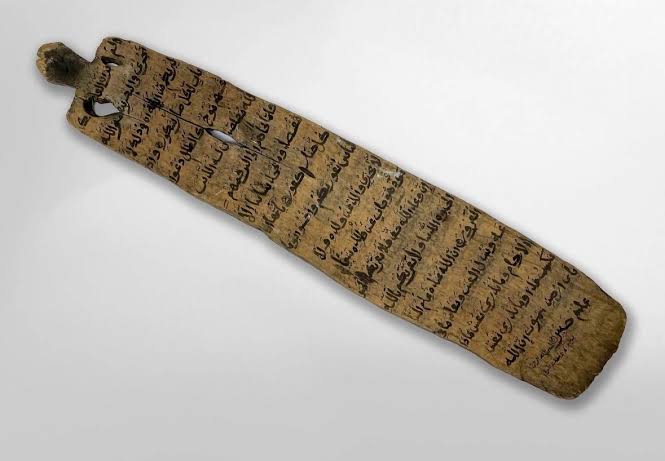
A Duksi does not rely on exercise books, textbooks, or iPads. Instead, the central learning tool is the Looh (or Loox), a smooth, hand-carved wooden plank made from local hardwood.
Students use a reed pen (Qalam) and homemade black ink (Khada) made from charcoal, water, and gum arabic to write their daily lessons directly onto the wood. Once a student memorizes the passage perfectly and recites it to the teacher, the board is washed clean with water, dried in the sun, and used again for the next lesson.
2. The Macallin (The Master Teacher)
The school is entirely anchored by a single spiritual teacher called the Macallin (pronounced Ma-ah-lim). The Macallin sits at the front of the room while children sit on mats on the floor.
There are no modern “class grades” (like Grade 1 or Grade 2). In a single Duksi room, you will find a 5-year-old learning the Arabic alphabet sitting right next to a 12-year-old memorizing complex chapters. Each student moves completely at their own individual pace.
3. Adapting to the Pastoralist Lifestyle
Historically, the Duksi was designed to be hyper-portable. Because Somali communities in Northern Kenya were traditionally nomadic pastoralists moving with livestock, the Duksi had to move with them.
- It requires no permanent building; it can be conducted under a large acacia tree, inside a temporary shelter, or around a campfire.
- Lessons are often held in the early mornings before sunrise or in the evening. This ensures that children are free during the day to help their families herd cattle, sheep, and camels.
4. Rote Memorization and Oral Tradition
The primary teaching method is auditory and repetitive. Students chant their verses aloud to master Tajweed (the precise rules of Arabic pronunciation). Because it relies on memory, a student who completes the entire curriculum successfully becomes a Haafiz—someone who has committed all 114 chapters of the Quran to memory.
How does it differ from a Madrassa?
While Kenyans often use the words interchangeably, they are structurally different within the community:
| Feature | Duksi (Dugsi) | Madrassa |
| Primary Focus | Memorizing the text of the Quran and basic literacy. | Deeper Islamic theology, law, Arabic grammar, and history. |
| Target Age | Young children (Early childhood to early teens). | Older children, teenagers, and young adults. |
| Structure | Informal, highly flexible, individual progression, portable. | Formal, structured like a standard school with classes and exams. |
Why it Matters Today
The Duksi is highly respected because it has achieved nearly 100% foundational literacy in the regions it serves for centuries, operating entirely independent of the formal state.
The current debate in Kenya arises because while a child finishes a Duksi with incredible memory skills and literacy in Arabic script, the current system doesn’t grant them a certificate to join a Kenyan secondary school or get a formal job. The government’s goal is to find a way to recognize this intense early learning so these children can transition into mainstream Kenyan education
Never Miss a Story: Join Our Newsletter