The Immortal Jellyfish: A Tiny Marvel Defying the Laws of Nature
In the vast and mysterious world of the ocean, there exists a creature so small it can fit on the tip of your fingernail, yet it possesses a power that has captivated scientists and storytellers...

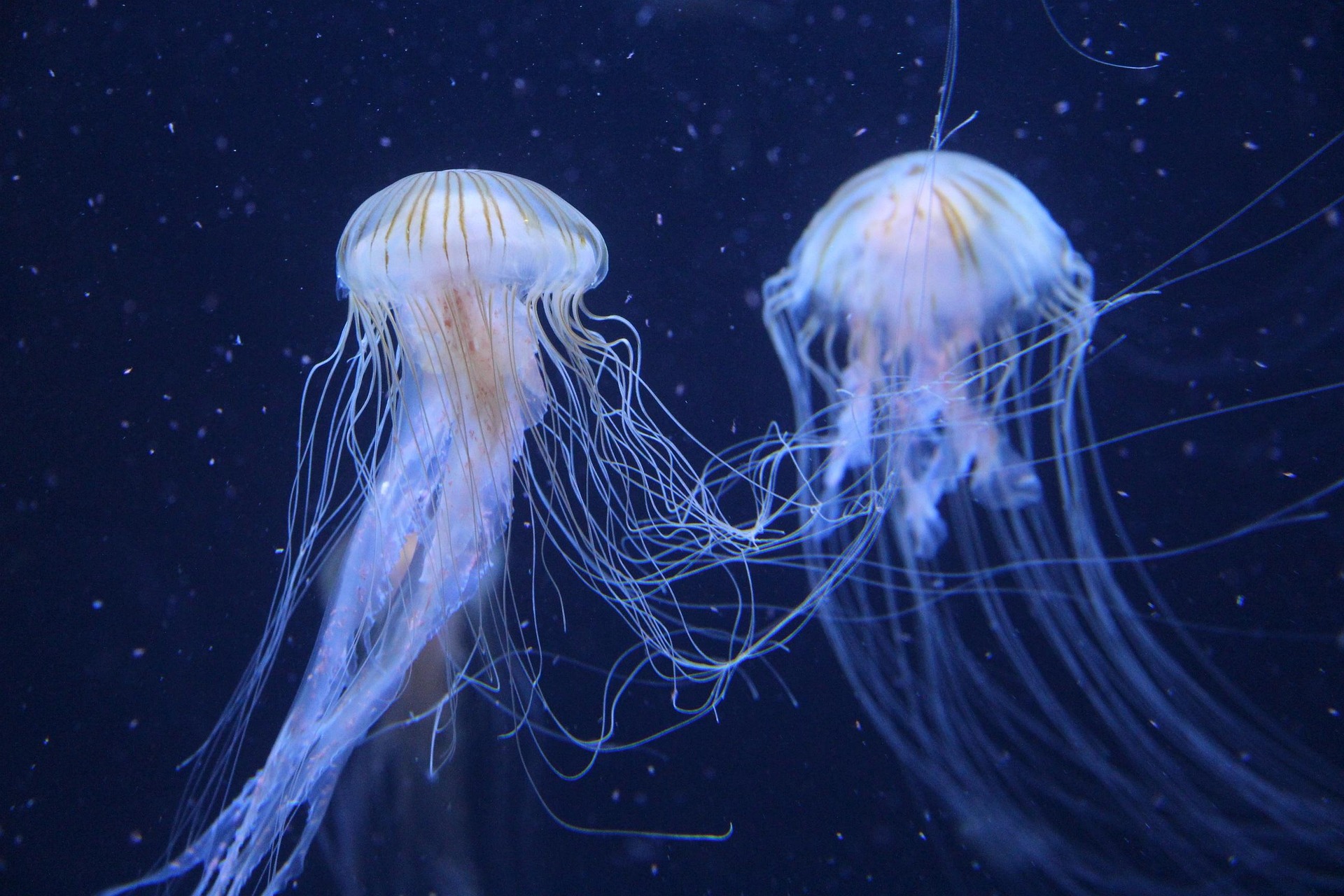
In the vast and mysterious world of the ocean, there exists a creature so small it can fit on the tip of your fingernail, yet it possesses a power that has captivated scientists and storytellers alike: the ability to cheat death. This is the story of Turritopsis dohrnii, more commonly known as the immortal jellyfish. While the name suggests a creature of myth, its existence is a fascinating, scientifically proven reality that is opening new doors in our understanding of biology, aging, and the very nature of life itself.
Table Of Content
A Serendipitous Discovery
The immortal jellyfish’s incredible ability was not discovered until the late 20th century, a century after the species was first identified in the Mediterranean Sea in 1883. In the 1980s, researchers Christian Sommer and Giorgio Bavestrello were collecting jellyfish for study when they inadvertently left a jar of specimens unattended over a weekend. Upon their return, they expected to find dead medusae. Instead, they observed a baffling sight: the adult jellyfish had not perished but had transformed into polyps, the juvenile, sessile stage of their life cycle.
This accidental observation was the first evidence of an organism reversing its development from a sexually mature stage back to a juvenile one without producing gametes and dying. Marine zoologist Stefano Piraino, who was present at the workshop where this discovery was announced, remarked that “it might be comparable to a butterfly that would be able to revert to the caterpillar stage”. This phenomenon challenged a fundamental dogma of biology: that life moves in a single, irreversible direction from fertilization to death.
The Life Cycle of a Biological Time Traveler
To understand the jellyfish’s remarkable feat, one must first understand its normal life cycle. Like most jellyfish, Turritopsis dohrnii begins as a tiny, free-swimming larva called a planula, which develops from a fertilized egg. The planula eventually settles on a hard surface like the ocean floor or a ship’s hull and grows into a cylindrical colony of polyps. These polyps, which are attached to a surface, are the first stage of a jellyfish’s life. Through a process called budding, the polyp colony spawns genetically identical, free-swimming medusae—the animals we recognize as jellyfish. These medusae grow to adulthood in just a few weeks.
Fully grown, Turritopsis dohrnii is only about 4.5 mm (0.18 inches) across, smaller than a pinky nail. It has a nearly transparent bell, a bright red stomach visible in the middle, and up to 90 white tentacles lining the edges. This is the stage where its unique story begins.
The Reversal: A “Benjamin Button” of the Sea
When faced with physical damage, starvation, or other environmental stress, the adult Turritopsis dohrnii does not die. Instead, it performs a biological miracle. Its bell contracts, its tentacles deteriorate, and it loses its ability to swim, transforming into a ball of tissue that settles on the sea floor. This is known as the cyst stage.
During this process, the jellyfish undergoes transdifferentiation, a rare and extraordinary cellular process. Specialized adult cells, such as those in muscles or nerves, effectively “reset” and transform into stem cells. Over the next 24 to 36 hours, these undifferentiated stem cells then repurpose themselves into the different cell types needed to form a polyp, bypassing the usual sexual reproduction stage. This new polyp colony will eventually bud and release new medusae that are genetically identical to the original adult.
This process is not a one-time event; it can be repeated indefinitely. Theoretically, this allows the jellyfish to escape death from old age or physical decline, making it biologically immortal. However, as scientists are quick to point out, they are not truly immortal. They can still be eaten by predators, succumb to disease, or be killed in other ways, which makes them “biologically immortal” but not invincible.
Unlocking the Genetic Secrets of Rejuvenation
The scientific community is intensely interested in Turritopsis dohrnii not for its ability to live forever, but for the potential it holds to unlock secrets about human aging and regenerative medicine. Recent genomic studies have started to pinpoint the genetic and molecular mechanisms behind this remarkable ability.
Researchers have sequenced the genome of T. dohrnii and compared it to a related but non-immortal jellyfish species, Turritopsis rubra. They found that the immortal jellyfish possesses unique variants and more copies of genes associated with key longevity processes. These include genes for:
- DNA Repair and Replication: The jellyfish shows enhanced capabilities for repairing DNA and maintaining genomic stability, a crucial factor in preventing aging at a cellular level.
- Oxidative Stress Response: It carries more copies of genes that help protect cells from damage caused by reactive oxygen species, a common byproduct of metabolism that contributes to aging.
- Telomere Maintenance: The jellyfish maintains telomeres, the protective caps on the ends of chromosomes that shorten with age in humans, leading to cellular senescence. The gene SIRT3, known to be involved in mitochondrial energy metabolism and protecting cells against oxidative stress, showed a sharp peak in expression in the cyst stage during the jellyfish’s reverse development. Another gene, SIRT6, which increases the efficiency of DNA repair and protects telomeres, peaked in the reversed polyp stage.
Researcher María Pascual-Torner noted that their study is “just like the first step,” acknowledging that there is much more to learn about how this species can help us understand aging. Another researcher, Joao Pedro Magalhaes, suggests that, “If evolution can select for animals that don’t age, then, in theory, at least, we could use technology to extend our longevity and prevent aging and its associated diseases”.
A Global Hitchhiker
The immortal jellyfish’s story is not confined to the Mediterranean. It has become a highly successful, if stealthy, global invader. Researchers have found genetically identical Turritopsis dohrnii populations in waters off Spain, Italy, Japan, the southeastern United States, and Panama.
It is believed that this silent invasion was facilitated by human activity. The jellyfish, particularly in its polyp stage, is an “excellent hitchhiker,” able to survive long journeys in the ballast water of cargo ships or attached to their hulls. This ability to survive harsh conditions during transit is a direct benefit of its biological immortality, allowing it to be a “perfect stowaway” and establish populations in new, far-flung environments.
This phenomenon raises another intriguing question: if all of an organism’s cells are replaced during transdifferentiation, is the resulting polyp and its subsequent medusae the same individual? In biology, the answer lies in the genes. Since the genetic makeup is identical, they are considered the same organism, making Turritopsis dohrnii a unique victor in the game of biological survival.
Conclusion: A Catalyst for Scientific and Philosophical Wonder
The immortal jellyfish is a testament to the incredible ingenuity of nature. While it cannot grant humans eternal life, its existence is a powerful catalyst for scientific discovery and philosophical reflection. It serves as a living laboratory, offering clues to combat age-related diseases, enhance tissue regeneration, and understand the fundamental limits of cellular aging. This tiny, translucent creature, barely visible in the vast ocean, holds a mirror to humanity’s oldest and most profound questions about life, death, and the possibility of renewal.
Never Miss a Story: Join Our Newsletter