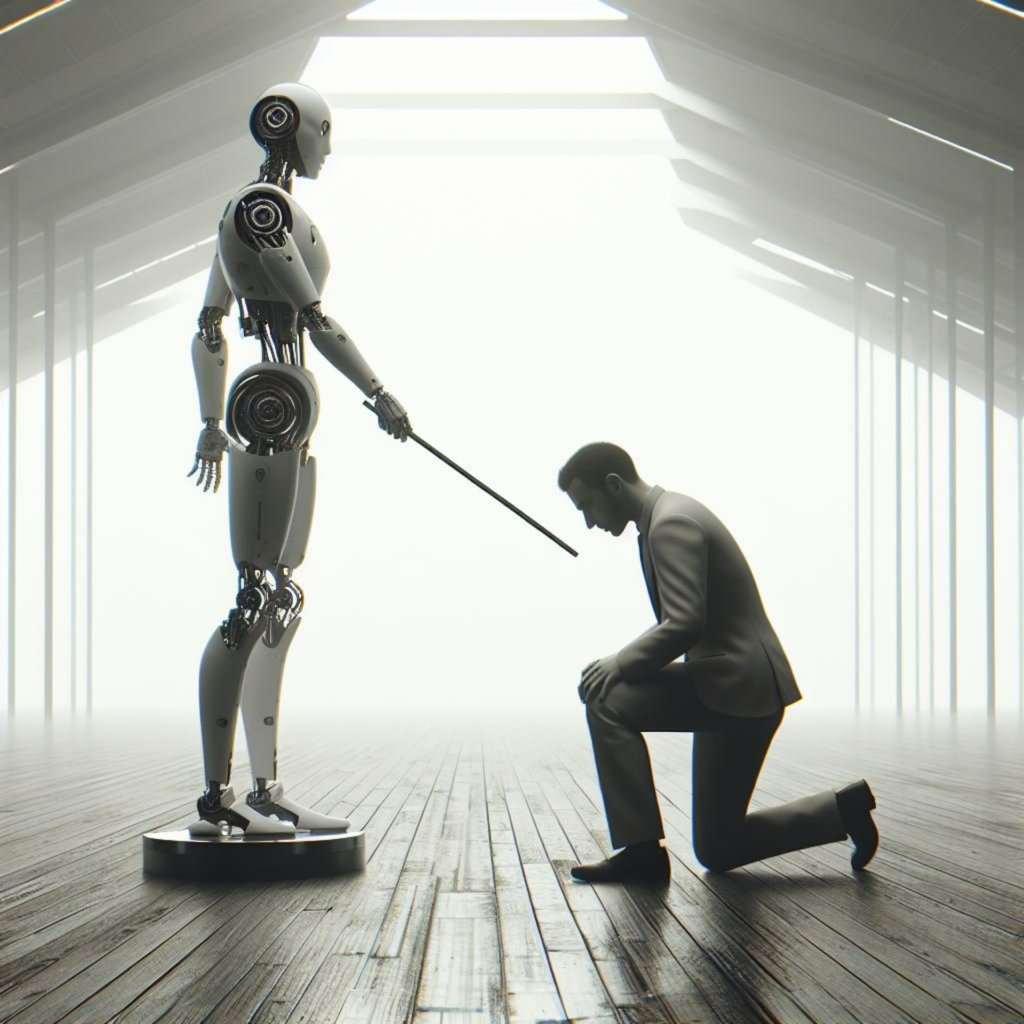
The heavy reliance of college students on generative AI is creating a critical phenomenon labor researchers and educators call “Cognitive Debt.” When learners outsource the heavy lifting of research, drafting, coding, and problem-solving to an algorithm, they achieve short-term efficiency at the expense of long-term neural scaffolding.
Without deliberate intervention, this dependency directly degrades the quality of professionals entering the workforce. Employers are already seeing entry-level graduates who can produce polished deliverables using AI tools, but lack the foundational depth to detect subtle hallucinations, debug complex systems, or reason through novel edge cases when the technology fails.
To ensure education continues to build enlightened, capable minds rather than passive system operators, universities and accreditation bodies are undergoing a fundamental redesign.
The Impact on Professional Quality: “The Illusion of Competence”
When a student uses AI to synthesize a complex case study or draft an essay, they bypass the cognitive friction—the struggling, rewriting, and critical filtering—where actual learning occurs.
- The Fallacy of the Polish: AI allows a student with C-level understanding to hand in an A-level paper. This creates a false confidence for the student and masks competency gaps from the instructor.
- Loss of First-Principles Thinking: Professionals who never learned to build arguments or code from scratch struggle with epistemic auditing—the ability to verify whether an AI output is actually logically sound, legally compliant, or mathematically accurate.
- Fragility in the Workplace: When real-world problems deviate from standard training data, workers who rely entirely on AI lack the mental model to innovate or troubleshoot independently.
5 Deliberate Safeguards to Reclaim Intellectual Rigor
To prevent skills erosion while still preparing students for an AI-integrated world, higher education is shifting toward a two-lane architecture: separating the demonstration of raw human competence from AI-assisted execution.
   [ Traditional Homework & Essays ] ──( Obsoleted by AI )──> [ Replaced By ]
                                                                   │
           ┌───────────────────────────────────────────────────────┴───────────────────────────────────────────────────────┐
           ▼                                                                                                               ▼
[ Lane 1: Secure & Baseline ]                                                                                  [ Lane 2: Open & Authentic ]
• In-person oral defenses (vivas)                                                                               • AI output auditing & debugging
• Supervised hand-written reasoning                                                                             • Complex, un-scripted local case studies
• Closed-environment "Friction Zones"                                                                           • Process-focused grading (tracking iterations)
1. The Revival of Oral Defenses and Live Demonstration
Written assignments submitted remotely can no longer serve as sole proof of student learning.
- Oral Vivas: Universities are increasingly bringing back oral examinations where students must present, defend, and field spontaneous questions about their work in real time.
- In-Person Synthesis: High-stakes assessments are moving back to supervised settings (chalk-talks, live lab demonstrations, and in-person bluebook analysis) to establish baseline individual competency.
2. Establishing “Cognitive Friction Zones”
Just as a runner cannot build physical endurance without physical exertion, a student cannot build mental capacity without unassisted problem-solving.
- Delayed AI Introduction: Top medical, engineering, and law programs are establishing strict “AI-free” foundational years. Students must master manual calculations, basic programming, or foundational legal analysis before being permitted to use AI co-pilots in advanced years.
3. Shift from Output Grading to Process Grading
When the final essay or code block can be generated in 5 seconds, the value of the final product as an assessment metric drops to zero.
- Version History & Iteration Logs: Students are graded on their research trails, preliminary outlines, revision history, and the evolution of their ideas over weeks, rather than a polished final draft.
- Socratic Debugging: Assignments are designed where the AI provides the initial answer, and the student’s job is to critique, find the subtle errors, challenge the biases, and improve upon the machine’s work.
4. “Authentic” and Hyper-Local Case Studies
Generic assignment questions (“Discuss the causes of the 2008 financial crisis”) are trivial for AI to answer with high marks.
- Unscripted Real-World Scenarios: Assessments are now built around local, real-time, or messy real-world data (e.g., analyzing a specific local municipality’s current budget crisis or a live, unindexed field study) where generative tools lack pre-trained answers.
5. Institutional Accreditation “Proof of Competency” Regulations
Regulatory bodies (such as TEQSA in Australia and similar accreditation boards globally) are enforcing mandates that require universities to explicitly map how every degree guarantees unassisted human learning outcomes alongside AI literacy.
How the Role of Education Is Evolving
| Educational Era | Core Metric of Success | Student Role | Assessment Focus |
| Traditional (Pre-AI) | Information retention & content creation | Consumer & Synthesizer | Essays, written exams, term papers |
| Current Transition | Unchecked AI speed & task completion | Prompt operator | High risk of cognitive debt & plagiarism |
| Future Safeguarded Model | Epistemic judgment, discernment & original thought | Auditor, Critic & Ethicist | Oral defense, live execution, process tracking |
The ultimate goal of education in an AI era is not to ban the technology, but to ensure it is used to raise the ceiling of human ambition rather than lower the floor of human effort. The most valuable professionals of the future will not be those who know how to ask an AI for an answer, but those who know enough to realize when the AI is wrong
Never Miss a Story: Join Our Newsletter