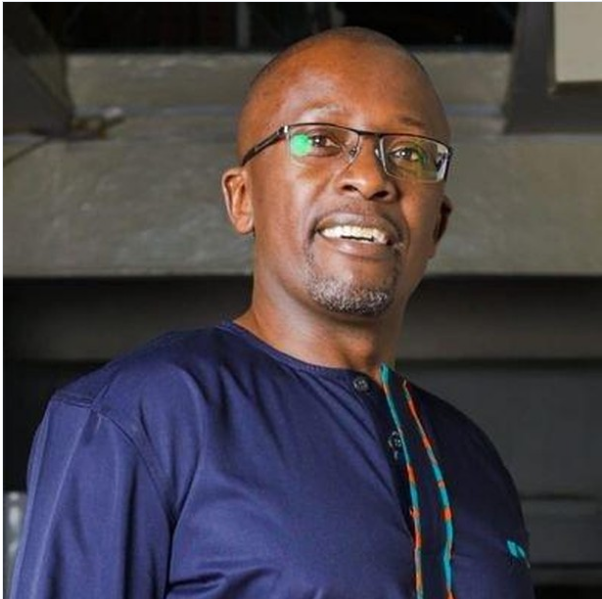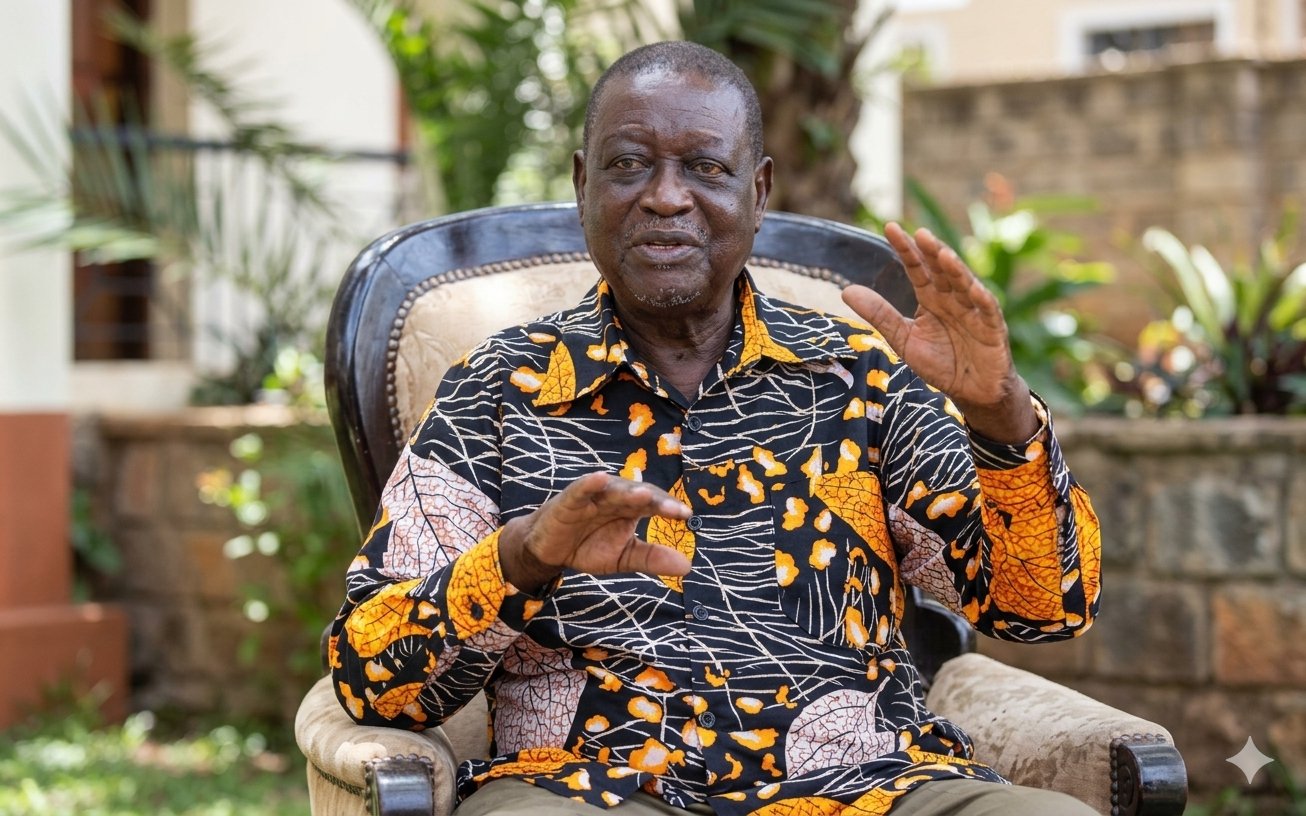

Zimbabwean businessman Wicknell Chivayo, popularly known as Sir Wicknell, and his wife, Lucy Muteke, were reported among six people killed when a helicopter crashed in the Marondera area, southeast of Harare, on Wednesday, September 30, 2026. The deaths were confirmed by a family spokesperson, according to reporting by The EastAfrican and other news organisations.
Zimbabwean authorities reported that the aircraft caught fire and that there were no survivors. Police said the victims’ remains were badly burned, making formal identification necessary. The precise cause of the crash had not been established in the initial reports, and the circumstances remained subject to investigation.
Chivayo’s death has drawn attention beyond Zimbabwe because he was not simply a wealthy entrepreneur. He had developed high-profile relationships with political leaders, including Zimbabwean President Emmerson Mnangagwa and Kenyan President William Ruto. He was also widely recognised for publicising luxury cars, private aviation and expensive gifts to celebrities, religious leaders and other recipients. His business dealings attracted scrutiny and allegations that he denied.
His death therefore closes a remarkable personal chapter while leaving important questions about his business legacy, the public contracts associated with his companies, and the relationship between private wealth and political influence in southern Africa.
From a difficult beginning to the heights of wealth and influence
1. The boy behind the name Sir Wicknell
Before he became one of Zimbabwe’s most recognisable wealthy businessmen, Wicknell Chivayo was a young man whose public account of his early life centred on financial hardship, interrupted education and the need to start earning money at an early age.
Chivayo was born in Zimbabwe, and published accounts place his birth in the early 1980s. Some reports identify November 22, 1982, while a recent profile gives a different birth year. His exact age at death therefore varies between reports, and the discrepancy should be resolved before publication.
According to accounts of his early life, Chivayo left school while young after his father’s death. He reportedly began working as a wages clerk at a bus company when he was about 15. Rather than following a conventional route through university or professional training, he entered the world of work early and subsequently became involved in foreign-exchange trading in Harare.
These beginnings became an important part of the story he told about his success. In his public narrative, his wealth was not simply a product of favourable circumstances; it was connected to perseverance, entrepreneurial ambition and his belief that a difficult childhood did not have to determine the rest of his life.
There is an important distinction, however, between a person’s account of their rise and an independently documented financial history. The broad outline of Chivayo’s early working life appears in published profiles, but a complete record of his childhood, family circumstances and first business transactions is not readily established from those accounts alone.
2. The early business years: foreign exchange and a criminal case
Chivayo’s early business life was not without serious setbacks. Before becoming a prominent entrepreneur, he was convicted in Zimbabwe in a fraud-related case involving a black-market currency transaction. He served a prison sentence at Chikurubi Maximum Security Prison in the early 2000s, when he was in his early twenties. His conviction was later overturned on appeal, according to published accounts.
This episode is an essential part of any serious account of his life. Omitting it would leave readers with an incomplete picture, while presenting the original conviction without mentioning its reversal would also be misleading.
Prison was a major interruption in the early career of a young man who would later build a public identity around business success. The available reporting establishes the conviction, imprisonment and subsequent appeal outcome, but it does not justify inventing private conversations, prison experiences or personal transformations that Chivayo himself did not reliably document.
His later success raises a question familiar in many entrepreneurial biographies: how does someone recover from an early professional and legal setback and go on to pursue much larger commercial opportunities?
In Chivayo’s case, the next major chapter involved infrastructure, energy and government-linked business.
3. Intratrek Zimbabwe: the company that changed his public profile

Chivayo founded Intratrek Zimbabwe, an engineering and infrastructure company that became the principal business associated with his name. Published profiles place its establishment in 2008. Its activities included energy and infrastructure projects, bringing the company into a sector where contracts can be extremely valuable and where relationships with public institutions are commercially significant.
The energy sector presented opportunities on a scale very different from small-scale trading. Large infrastructure projects can involve financing, technical partners, government approvals, procurement procedures, engineering expertise and years of implementation. Winning such work can place an entrepreneur at the centre of national development plans, but it also exposes the company to intense scrutiny over delivery, public expenditure and contractual obligations.
Intratrek’s growing prominence helped transform Chivayo’s public identity. He was no longer merely a businessman known within commercial circles. His name became associated with major public projects, political relationships and debates over the allocation of government contracts.
That combination would eventually make him a recognisable figure well beyond Zimbabwe.
4. The Gwanda solar project: ambition, controversy and unanswered questions
One of the most significant projects associated with Chivayo was the Gwanda Solar Project, a proposed 100-megawatt solar power plant in Zimbabwe. The project was valued at approximately US$172 million to US$173 million in published accounts, although reported figures vary slightly. It was intended to contribute to the country’s electricity supply through renewable energy.
The project placed Intratrek in a strategically important part of Zimbabwe’s energy sector. Solar generation can help diversify electricity sources, reduce dependence on some conventional fuels and support long-term power supply. For a company seeking to establish itself in major infrastructure, a project of this scale could represent a defining commercial opportunity.
However, the Gwanda project became controversial because of delays, questions over implementation and scrutiny of payments and contractual arrangements. The debate extended beyond whether the proposed power station would be delivered on schedule. It also raised broader questions about how public bodies select contractors, how large projects are supervised and how taxpayers can assess whether public money is producing the promised results.
Chivayo’s legal history in relation to the project needs careful treatment. Reporting in The Times states that he was acquitted in a criminal case involving allegations of fraud connected to the contract and that related civil litigation over the contract’s validity was resolved in his favour in 2023.
Those outcomes matter. Allegations, delayed projects and questions about procurement are not interchangeable with proof of criminal wrongdoing. Equally, the resolution of a legal case does not automatically answer every question about project performance, value for money or public accountability.
For readers, the Gwanda story illustrates the complicated relationship between entrepreneurship and public procurement. A contractor can pursue a commercially legitimate opportunity while the public still has a legitimate interest in the project’s progress, cost, governance and eventual delivery.
It also helps explain why Chivayo’s business career generated both attention and controversy.
5. How he became a symbol of extraordinary wealth

As his business profile grew, Chivayo developed a public image built around conspicuous wealth. Luxury cars, designer clothing, expensive watches, private aviation and photographs with influential people became recurring features of his social media presence. He was not the kind of wealthy entrepreneur who preferred to remain behind the scenes. He made his lifestyle part of his public identity.
The nickname Sir Wicknell became widely associated with him, and his online presence attracted audiences well beyond the traditional business community. For some followers, he represented a dramatic example of an African entrepreneur who had risen from modest circumstances to enjoy a life of extraordinary material comfort.
His wealth was also a form of public entertainment. Photographs of luxury vehicles, announcements of expensive gifts and accounts of encounters with powerful people generated attention because they offered a glimpse into a world that most ordinary citizens rarely experience.
Yet the display of wealth raised a more difficult question: what does the public really know about the financial foundations of a businessman whose lifestyle is so visible?
A social media post can establish that someone displayed a particular vehicle or announced a gift. It cannot, by itself, establish the full extent of that person’s net worth, the source of every asset or the profitability of the businesses behind the lifestyle. Reliable reporting on Chivayo’s life must therefore distinguish what he publicly displayed from what independent financial records establish.
His public image was powerful partly because he made wealth visible. The business structures and financial arrangements behind it were much less transparent to the average observer.
6. The man who gave away luxury cars
One of the most distinctive aspects of Chivayo’s public life was his habit of announcing substantial gifts. He became known for giving vehicles and money to musicians, football figures, religious leaders, public personalities and individuals who attracted his attention online. Some recipients were ordinary people whose stories or social media interactions had brought them into his orbit.
These gifts helped turn him into a celebrity in his own right. A conventional business announcement might attract attention for a day, but a luxury car presented to an individual could circulate across social media for much longer. The recipient’s reaction, the value of the gift and the identity of the giver all contributed to the publicity.
For some recipients, such gifts could have a meaningful effect on their lives. A vehicle might support a business, improve mobility or provide an asset that would otherwise have been difficult to acquire. Cash assistance could help meet immediate needs. The individual circumstances and actual outcomes, however, would need to be established case by case.
Chivayo presented his generosity as an expression of his Christian faith and his own experience of growing up without financial privilege. His public statements connected giving with gratitude, religious conviction and the desire to help people.
There was also a clear public-relations dimension to the practice. The gifts were frequently announced or documented publicly, giving them a reach beyond the people who received them. That visibility helped sustain his celebrity and reinforced his image as a man who could change someone’s circumstances with a single decision.
This does not mean the generosity was necessarily insincere. Personal generosity and public image-building can coexist. The important distinction is between documenting the gifts and assuming that every motive behind them is known.
7. Faith, religion and his public identity
Religion featured prominently in Chivayo’s self-presentation. Reporting on his life described his Christian faith, including his association with the Apostolic tradition in Zimbabwe, and his public social media identity included the phrase “team Jesus”. He linked his generosity to his religious convictions and to the hardships he said he had experienced earlier in life.
This connection between wealth and faith was significant in a society where churches and religious leaders occupy important positions in community life. By giving to religious figures and presenting his success in spiritual terms, Chivayo connected his business story with a familiar theme: that prosperity should be accompanied by gratitude and generosity.
For some supporters, this framing helped explain why he gave away expensive possessions rather than simply accumulating them. Others questioned the relationship between conspicuous generosity, political proximity and the public presentation of wealth.
Both the religious dimension and the public debate deserve a place in his biography. It would be unfair to dismiss his faith as merely a publicity device without evidence. It would be equally incomplete to treat religious explanations as answers to every question about his business activities.
His story shows how faith can form part of a public figure’s personal identity while also becoming part of the way audiences interpret wealth, influence and philanthropy.
8. His relationship with Emmerson Mnangagwa
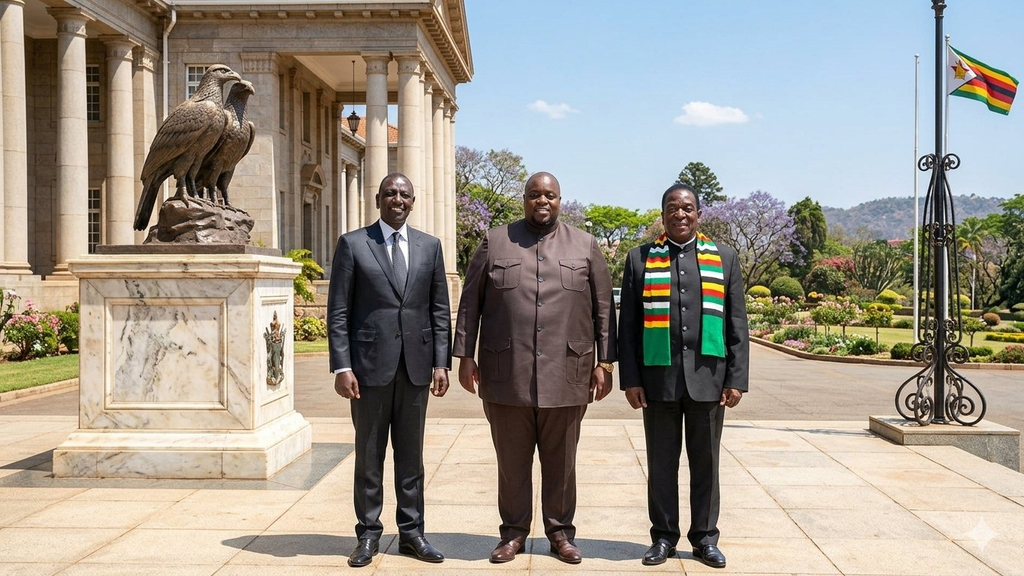
Chivayo’s relationship with Zimbabwean President Emmerson Mnangagwa was one of the most consequential features of his public profile. He was widely described as an ally of the president and a figure with close connections to Zimbabwe’s ruling political establishment. He also publicly supported Mnangagwa and made substantial gifts associated with the president’s political circle.
Such relationships matter in countries where the state is a major purchaser of infrastructure, energy and other services. Access to senior decision-makers can put a businessperson in proximity to significant opportunities, although proximity alone does not establish that any particular contract was improperly awarded.
Chivayo’s political associations consequently became part of the debate about his wealth. Critics raised questions about government procurement, the allocation of contracts and the possibility of influence over public decisions. Chivayo denied allegations of wrongdoing.
The wider issue extends beyond one individual. Across many economies, major infrastructure contracts depend on interactions between private businesses and government institutions. The public interest lies in whether those relationships operate under transparent rules, with competitive procurement, adequate oversight and clear accountability.
Chivayo’s prominence made him a particularly visible example of the questions that arise when a private entrepreneur enjoys close relationships with political leaders.
9. From Zimbabwe to Kenya: his relationship with William Ruto
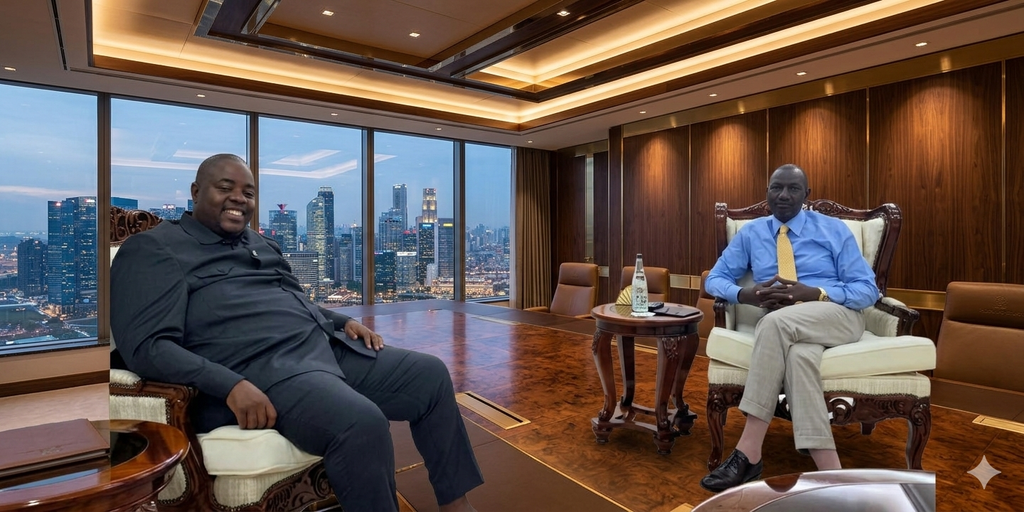
Although Chivayo built his reputation primarily in Zimbabwe, his connections increasingly attracted attention elsewhere in Africa, particularly in Kenya. He was photographed with President William Ruto and appeared at high-profile meetings and social occasions associated with the Kenyan leader. These encounters attracted public interest because of the contrast between Chivayo’s private business status and the visibility of his access to a sitting president.
The relationship became especially visible through social media posts showing interactions between the two men. Chivayo publicly described his relationship with Ruto in personal terms and denied seeking favours, tenders or undue benefits through it, according to The Times.
His Kenyan connections also intersected with business announcements involving energy and infrastructure. Reports in 2026 linked his business interests to proposed or announced projects in the region, including a reported agreement involving Intratrek and China’s Chint Group for electricity transmission projects in Kenya and Tanzania. Such announcements should be distinguished from completed investments: the signing of an agreement does not, on its own, establish that the entire project was financed, built or operational.
For Kenyan readers, this aspect of his life provides an important regional angle. Chivayo was not simply a Zimbabwean celebrity whose extravagant lifestyle attracted curiosity. His business interests and political relationships extended into discussions about infrastructure, investment and access to senior public officials in other African countries.
His death is therefore likely to prompt renewed interest in the projects and relationships associated with his name, although their status must be assessed from documentary evidence rather than assumptions about his personal connections.
10. The controversies surrounding his wealth
Any substantial biography of Chivayo would be incomplete without examining the questions that accompanied his rise.
His business activities and political connections attracted allegations concerning public procurement and election financing in Zimbabwe and neighbouring countries. He denied wrongdoing. Reporting also described scrutiny of financial transactions and investigations in South Africa connected to allegations of money laundering. Chivayo denied laundering money associated with Zimbabwe’s election materials.
These matters need to be reported precisely. An allegation is not a finding of guilt, and an investigation does not necessarily lead to charges or a conviction. Conversely, a public figure’s denial does not remove the public interest in independently examining documented transactions and the findings of relevant authorities.
His record also includes the overturned early fraud conviction and subsequent legal proceedings associated with the Gwanda solar project. Those outcomes must be considered alongside the controversies rather than left out of the story.
The larger question is how a businessperson becomes wealthy in sectors where government contracts can be worth hundreds of millions of dollars. A rigorous answer requires information about contracts, beneficial ownership, company accounts, payments, project delivery and legal findings. Luxury purchases and photographs with political leaders can explain public fascination, but they are not substitutes for financial evidence.
This is where a deep-dive article can offer more than celebrity coverage. It can explain the difference between visible wealth, verified business success and the unresolved questions surrounding public expenditure.
11. His family life: beyond the public businessman
Chivayo’s personal life also attracted media attention. He was previously married to Sonja Madzikanda, and the couple divorced after several years of marriage. In 2025, he married Lucy Muteke, commonly known as Lulu, with whom he subsequently appeared in public.
Muteke died alongside him in the September 30, 2026 helicopter crash, according to the family announcement reported by news organisations. Their deaths transformed the story from one about a prominent businessman’s sudden loss to a tragedy affecting an entire family and the other people aboard the aircraft.
There is an important human dimension here. Public attention tends to focus on wealth, political relationships and controversy when a famous entrepreneur dies. Yet those who knew the deceased personally must also confront the loss of a husband, relative and friend.
A responsible biography should not invent intimate details about the couple’s private relationship or speculate about their final moments. Their marriage and reported deaths are part of the factual record; the emotional experiences of their family members should be included only where relatives have chosen to share them publicly.
The Two Children Wicknell Chivayo Left Behind
Wicknell Chivayo was the father of two children, John Chenjera Chivayo and Atarah Minana Chivayo, from his former marriage to Sonja Louise Madzikanda. One child was born in 2018 and the other in 2019. The children were not aboard the helicopter when Chivayo and his wife, Lucy Muteke, died in the crash on September 30, 2026.
Chivayo’s extraordinary wealth formed an important backdrop to the children’s future. He publicly described himself as a centi-millionaire worth more than US$100 million, although that figure was never independently verified by a major financial publication. His businesses, properties, luxury vehicles, aircraft and other assets were widely associated with his lavish lifestyle, but the precise value of his estate at the time of his death remains to be established.
The children therefore potentially stand at the centre of an important estate following their father’s death. However, the value of Chivayo’s businesses and assets should not automatically be equated with the amount that will eventually pass to his children. His actual estate would have to account for ownership structures, liabilities, investments, jointly held property and other legal considerations.
For now, the most significant fact is much simpler: Chivayo left behind two young children who lost their father suddenly. Their future will now unfold without the man whose public life was characterised by enormous wealth, business ambition, political connections and highly visible philanthropy.
The Divorce, Custody Battle and US$5 Million Children’s Settlement
Chivayo’s relationship with Sonja Louise Madzikanda eventually ended in a highly publicised divorce dispute. The disagreement included questions surrounding his access to their two children and financial provision for their upbringing. The matter eventually reached Zimbabwe’s High Court, which finalised the divorce settlement in April 2026.
The court-approved settlement included a US$5 million maintenance package for the children. According to The Herald, US$2.2 million had already been paid, with the remaining US$2.8 million to be settled within 30 days. The agreement provided for the money to be placed in an account controlled by Madzikanda, while Chivayo retained oversight of the account.
The scale of the settlement becomes particularly striking when placed alongside Chivayo’s reported wealth. If his own description of having a fortune exceeding US$100 million is used as a reference point, the US$5 million children’s package represented at least 5 percent of that claimed fortune. But that is only a mathematical comparison, not an independent valuation of his wealth or his estate.
The parenting plan also provided Chivayo with substantial access to the children, including one uninterrupted week each month, weekends and alternate public holidays. The order specifically required him to be personally available during his periods of access rather than delegating parental responsibilities to third parties.
His death only months after that settlement gives the agreement an unexpected significance. What had been a court-supervised arrangement between two living parents is now part of the legal and financial history surrounding two children whose father has died at a relatively young age.
12. The final journey: a helicopter crash in Marondera
On Wednesday, September 30, 2026, a helicopter crashed in Zimbabwe’s Marondera district, southeast of Harare. Officials reported that six people were aboard and that there appeared to be no survivors. The aircraft caught fire, and police said the condition of the remains made formal identification necessary. State broadcaster ZBC subsequently reported Chivayo and Muteke among those who died, citing a family spokesperson.
At the time of the initial reports, the cause of the crash had not been established. It would therefore be premature to attribute the accident to pilot error, mechanical failure, weather or any other specific factor without findings from the investigation.
The suddenness of the tragedy was striking because Chivayo’s public image was closely associated with private aviation, luxury and access to people at the highest levels of power. But the circumstances of a fatal accident do not become clear simply because one of its victims is famous. Investigators must establish what happened using evidence from the aircraft, flight records, witnesses and other relevant material.
For Zimbabwe, the crash meant the loss of a prominent businessman whose career had become intertwined with public debate about entrepreneurship, infrastructure and political influence. For his family and the families of the other victims, it was a personal tragedy that went far beyond those public questions.
13. What was Wicknell Chivayo’s real legacy?
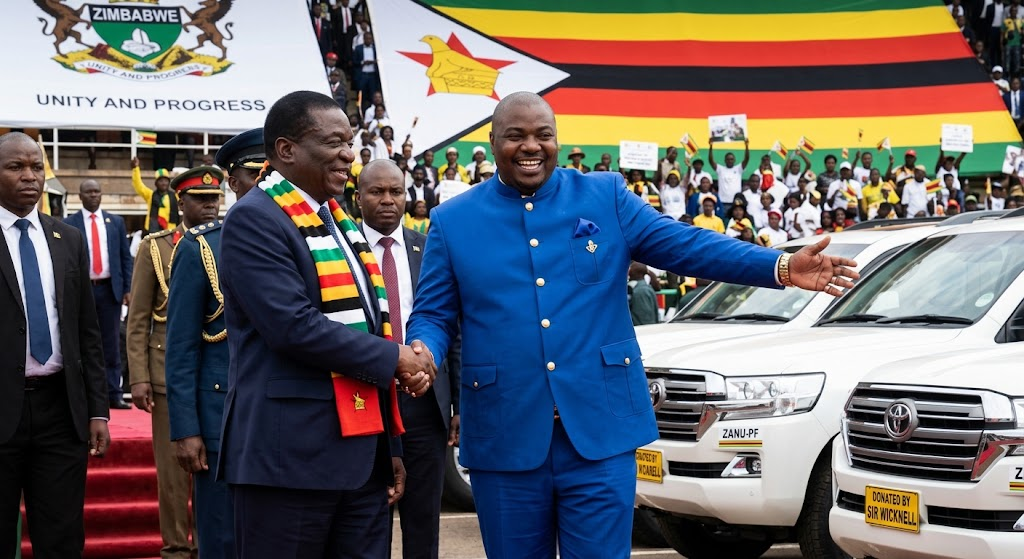
Chivayo’s legacy is likely to be debated for years because it contains several different stories that cannot be reduced to a single label.
There is the story of a young man who reportedly left school early, entered the workforce and pursued business opportunities despite difficult beginnings. There is the story of an entrepreneur whose company became associated with major energy and infrastructure contracts. There is the public figure who gave away luxury vehicles and money, promoted his Christian faith and cultivated a vast online following. And there is the businessman whose political relationships and dealings with public institutions attracted allegations and scrutiny that he disputed.
Each of these dimensions raises different questions.
For aspiring entrepreneurs, his journey raises questions about ambition, commercial opportunity, resilience and the practical skills needed to build a business. For policymakers, it raises questions about procurement, infrastructure delivery, investment and transparency. For the public, it raises questions about philanthropy, conspicuous consumption and the responsibilities that accompany extraordinary wealth.
His public generosity will remain part of the story, but the scale and long-term impact of that generosity should be assessed through verifiable evidence. Similarly, the scale of his business activities should be measured through documented contracts, completed projects and reliable financial information rather than lifestyle photographs or estimates circulating online.
His death does not settle the arguments about his career. Instead, it makes the need for an accurate historical account more apparent. His business record, legal outcomes, public statements and documented acts of generosity will provide a firmer basis for understanding him than either uncritical praise or unsubstantiated accusations.
Conclusion: A life that reflected the contradictions of modern African wealth
Wicknell Chivayo became a recognisable figure because he made his success visible. His luxury lifestyle, public gifts, political connections and business ambitions turned him into a subject of fascination across parts of Africa. His story also demonstrated how quickly the fortunes of a prominent entrepreneur can become connected to broader debates about public money, political access and accountability.
His death in the Marondera helicopter crash, alongside his wife Lucy Muteke and other people aboard the aircraft, ended that public journey suddenly. The cause of the crash remains a matter for the relevant authorities to establish.
What remains is the task of separating the documented facts of his life from the mythology that often surrounds extraordinary wealth. A fair account should acknowledge his entrepreneurial rise and public generosity, record the legal outcomes in his favour, and examine the controversies without presenting allegations as established guilt.
Ultimately, the historical significance of Chivayo’s life will depend not only on the wealth he displayed or the people he knew, but also on what reliable records establish about the businesses he built, the projects associated with his companies and the effects of his activities on the wider public.
Never Miss a Story: Join Our Newsletter