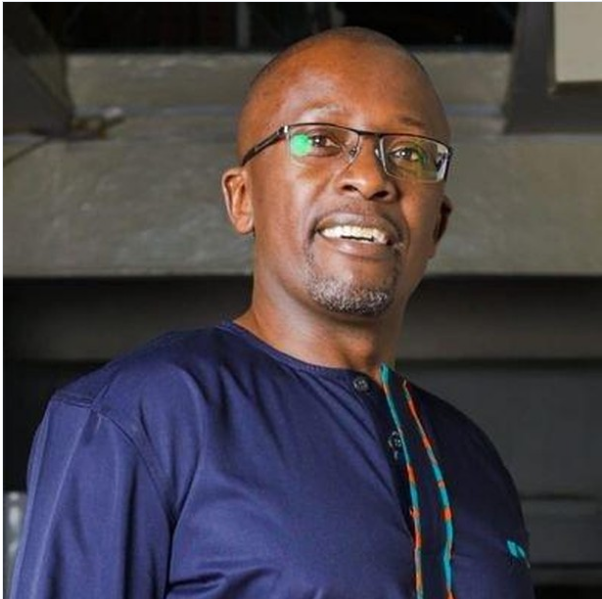
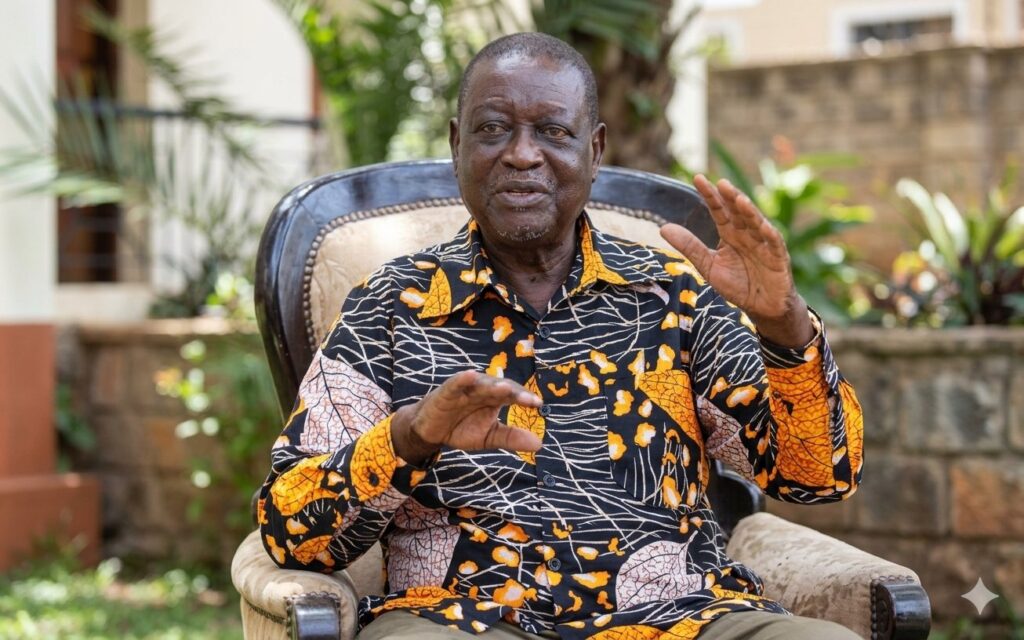
Dr Oburu Ng’ong’a Oginga is a veteran Kenyan politician, economist and author who has spent more than five decades in public life.
Born on 15 October 1943, Oburu is the eldest son of Kenya’s independence-era politician and first Vice President, Jaramogi Oginga Odinga. He is also the elder brother of the late former Prime Minister Raila Amolo Odinga and the brother of former Kisumu politician Ruth Odinga.
For many years, Oburu lived politically in the shadow of both his father and his younger brother Raila. While Raila became one of Kenya’s most recognisable presidential politicians, Oburu developed a somewhat different career—first as an economist, then as a councillor, Member of Parliament, Assistant Minister for Finance, East African legislator and, eventually, Senator for Siaya.
After Raila Odinga’s death in October 2025, Oburu became the caretaker and subsequently substantive leader of the Orange Democratic Movement (ODM), placing him at the centre of the party’s future and the wider political legacy of the Odinga family. ODM currently identifies him as its party leader as well as Senator for Siaya County.
Read Also: George Ruto Biography: Age, Education, Business, Aviation Career, and Family Background
Early Life and Family
Oburu was born in 1943 during the colonial period in what was then Nyanza Province.
He was born into one of the most politically significant families in Kenya’s modern history.
His father, Jaramogi Oginga Odinga, became one of the leading figures in Kenya’s independence struggle. After independence in 1963, Jaramogi became Kenya’s first Vice President under President Jomo Kenyatta.
Jaramogi subsequently fell out with Kenyatta and became one of the country’s most prominent opposition figures. His political career included detention, opposition politics and the formation of the Kenya People’s Union.
That political environment profoundly shaped Oburu’s childhood.
Oburu has described growing up under the enormous influence of his father in his autobiography, In the Shadow of My Father. The book is partly a personal story and partly a historical account of the Odinga family, Kisumu and Kenya’s political development.
The title itself is revealing.
For much of his life, Oburu was not simply Oburu Oginga. He was Jaramogi’s son and later Raila’s elder brother.
That family connection opened doors, but it also meant that his own political identity was constantly compared with those of the two men.
Growing Up During Kenya’s Political Struggles
Oburu’s formative years coincided with some of the most turbulent periods in Kenya’s transition from colonial rule to independence and then one-party dominance.
His father’s political activities meant that the Odinga family experienced both privilege and political pressure.
Jaramogi was an enormously influential politician, but his opposition to the Kenyatta government eventually resulted in political isolation and detention.
Oburu’s own autobiography describes the difficulties faced by the family and the challenges of growing up as the son of a major political figure.
The experiences helped shape Oburu’s outlook on politics, public service and survival.
Unlike Raila, who eventually became internationally known for his political activism and presidential campaigns, Oburu gravitated toward economics and public administration.
That decision would define much of the first half of his professional life.
Education in Moscow
One of the most distinctive chapters of Oburu Oginga’s life was his education in the Soviet Union.
In 1962, at about 18 years of age, he travelled to Moscow to study.
He attended the Soviet Secondary School in Moscow between 1962 and 1964, according to his official parliamentary biography. He subsequently studied economics at People’s Friendship University, now known as the Peoples’ Friendship University of Russia.
His university education was extensive.
According to Parliament:
- He earned a Bachelor of Science in Economics.
- He obtained a Master of Science in Economics between 1965 and 1967.
- He earned a PhD in Economics between 1968 and 1970.
The Moscow years were particularly significant because they exposed a young Oburu to a radically different political and economic system.
He returned to Kenya with advanced training in economics at a time when the country desperately needed highly educated African professionals to fill positions previously dominated by colonial administrators.
Read Also: Ndindi Nyoro Biography: Early Life, Education, Business, Investments and Political Career
Becoming an Economist
Oburu’s first major professional career was not in politics.
It was in economics.
After returning to Kenya, he entered public service and eventually worked as an economist in the Ministry of Planning and National Development.
Parliament records his service as an economist from 1981 to 1994.
This period is important because it demonstrates that Oburu’s political career did not begin simply because he was the son of Jaramogi.
He had already developed a professional career in government.
His economics background later became particularly useful when he entered Parliament and eventually served in the Ministry of Finance.
His First Political Office: Kisumu Councillor
Oburu’s first elected political position came much earlier than his parliamentary career.
He served as an elected councillor in Kisumu Municipality from 1974 to 1979, according to Parliament’s official record.
The position gave him his first direct experience in elected public office.
It also began a political career that would eventually span more than five decades.
Interestingly, Oburu’s political trajectory was initially less dramatic than that of his father or Raila.
He was becoming a politician through local government and professional public service rather than through the confrontational national opposition politics for which the Odinga family would later become famous.
Entering Parliament
Oburu’s national political career began in 1994, following the death of his father, Jaramogi Oginga Odinga.
He won the Bondo parliamentary seat, taking over the constituency associated with his father.
He remained Member of Parliament for Bondo from 1994 to 2013, giving him nearly two decades in the National Assembly.
This was an important period in Kenya’s political transformation.
During Oburu’s parliamentary career, Kenya moved from the final years of KANU’s dominance to multiparty politics, the return of competitive elections and eventually the constitutional reforms that culminated in the 2010 Constitution.
Oburu remained closely associated with the political tradition established by his father and later strengthened by Raila.
Working in the Ministry of Finance
Oburu’s economics background eventually brought him into the national government.
Following the disputed 2007 presidential election and the subsequent power-sharing agreement, Kenya established the Grand Coalition Government under President Mwai Kibaki and Prime Minister Raila Odinga.
Oburu was appointed Assistant Minister for Finance.
He served alongside Finance Minister Amos Kimunya, with official Treasury records listing Dr Oburu Oginga as Assistant Minister for Finance.
The appointment was significant for another reason.
Oburu was now working in a government where his younger brother, Raila, was Prime Minister.
But Oburu’s position was also consistent with his own professional background. Unlike many politicians who enter ministries without technical experience in the relevant field, Oburu had spent years studying and working in economics.
The Relationship Between Oburu and Raila
Oburu’s relationship with Raila has always attracted considerable public interest.
They were brothers, political allies and, at various points, colleagues in government and Parliament.
Yet they were not identical politically.
Raila became the charismatic mass politician—the man associated with rallies, reform movements, presidential elections and opposition politics.
Oburu was generally more institutional.
He was comfortable with Parliament, government administration, economics and party structures.
In an interview with The Standard, Oburu described the relationship as one based on mutual respect. He said that when he disagreed with Raila, he could tell him openly, and Raila could similarly challenge him.
That relationship became particularly important after Raila’s death because Oburu was suddenly required to help preserve a political organisation built around his younger brother.
The 2013 Political Transition
Oburu’s long run as elected MP for Bondo ended in the 2013 political era.
He subsequently served as a nominated Member of Parliament from 2013 to 2017. Parliament records him as a nominated MP during this period.
This was also the period when Kenya was operating under the new constitutional order established in 2010.
The country had transitioned to a devolved system of government, and the political landscape was changing.
For Oburu, the end of his Bondo parliamentary career did not mean the end of his political life.
Instead, another regional opportunity emerged.
East African Legislative Assembly
In 2017, Oburu was elected by the Kenyan Parliament to represent Kenya in the East African Legislative Assembly (EALA).
He served in the Fourth Assembly from 18 December 2017 to 18 December 2022.
His EALA career became one of the more important regional chapters of his political life.
In December 2017, he was elected to the EALA Commission, receiving 33 votes.
He was subsequently re-elected to the Commission in 2020.
The Commission plays an important administrative and institutional role in the functioning of the regional legislature.
Thus, Oburu’s career had expanded beyond Kenyan politics into East African regional politics.
Returning to Elective Politics
In the 2022 general election, Oburu returned to Kenyan elective politics.
He contested the Siaya County Senate seat on an ODM ticket.
He won and became Senator for Siaya.
The election was significant because it brought Oburu back into frontline Kenyan politics after five years in EALA.
It also placed him in the Senate alongside many of the political figures with whom the Odinga family had interacted over decades.
Parliament currently lists him as Senator for Siaya County and identifies his party as ODM.
Oburu and the Death of Raila Odinga
The greatest turning point in Oburu’s recent political life came in October 2025, when Raila Odinga died while receiving medical treatment in India.
Raila’s death created an enormous political vacuum.
For decades, ODM had been identified closely with Raila’s personality, political strategy and leadership.
The question immediately became: Who would lead ODM after Raila?
Oburu, as Raila’s elder brother and a veteran of the party’s political structures, emerged as a natural caretaker.
He was subsequently appointed interim leader of ODM.
The appointment was significant because Oburu was not simply a senior politician within the party. He was also the surviving senior male figure of the political generation that connected the original Odinga movement to the current ODM establishment.
Becoming ODM Party Leader
Oburu’s interim leadership eventually became permanent.
In March 2026, ODM formally ratified him as party leader.
The party’s current leadership profile identifies him as:
Hon. Dr Oburu Oginga — Party Leader and Senator for Siaya County.
His elevation represents one of the most consequential transitions in ODM’s history.
Raila had been the party’s central figure for years.
Oburu’s task is therefore considerably larger than simply managing the party’s administration. He is effectively responsible for helping determine whether ODM remains a major independent political force after the death of its founder and dominant leader.
Oburu as the Custodian of the Odinga Political Legacy
Oburu’s position today is unusual.
He is simultaneously:
- The eldest surviving son of Jaramogi Oginga Odinga.
- The elder brother of the late Raila Odinga.
- Senator for Siaya County.
- Leader of ODM.
- A former Member of Parliament.
- A former Assistant Minister for Finance.
- A former EALA legislator and Commissioner.
- An economist with doctoral training.
- The author of an autobiography documenting the Odinga family’s history.
That combination makes him an important custodian of the family’s political memory.
His role is not necessarily to reproduce Raila’s political style.
Indeed, Oburu has historically been a different kind of politician.
Raila was a mass mobiliser.
Oburu has generally been more of an institutional politician—a parliamentarian, economist, administrator and political strategist.
That distinction may become increasingly important as ODM enters its post-Raila era.
His Autobiography: In the Shadow of My Father
In 2021, Oburu published his autobiography:
In the Shadow of My Father: An Autobiography
The book was published by Ochoro Yamo Ltd and runs to 452 pages, with an index.
It was produced with historian and writer Bethuel Oduo.
The autobiography covers Oburu’s life from childhood through his political and professional career.
But it is more than an ordinary personal memoir.
It also documents aspects of:
- The Odinga family.
- Colonial Kenya.
- Kisumu’s history.
- Nairobi’s political history.
- Kenya’s independence period.
- The experiences of the Odinga family.
- Oburu’s education in Moscow.
- His career in government.
- His political experiences.
The title is particularly meaningful.
“In the Shadow of My Father” captures the central tension of Oburu’s life: building an identity of his own while carrying the enormous historical legacy of Jaramogi Oginga Odinga.
His Family Life
Oburu has generally kept his private family life away from the political spotlight.
However, he has publicly said that he is the father of seven children.
He has also spoken publicly about having two wives.
In 2025, during the state funeral of Raila Odinga, Oburu publicly introduced his two wives, identifying the first as Dr Ann Ayoo Oburu, a paediatrician, and the second as Judith Oburu, whom he described as an accountant working with NSSF.
Among his publicly known children is Jaoko Oburu, who has himself entered public life.
Oburu’s son Elijah Oburu has also been involved in politics.
The family connection therefore continues into another generation, although Oburu has generally been more protective of his children’s private lives than many other prominent Kenyan political families.
The Odinga Political Dynasty
It is impossible to understand Oburu without understanding the wider Odinga political family.
His father, Jaramogi, was one of Kenya’s founding political figures.
His younger brother Raila became one of the country’s most consequential opposition leaders and served as Prime Minister between 2008 and 2013.
His sister Ruth Odinga was also involved in elective politics.
Now Oburu himself heads ODM.
The political family’s influence has therefore extended across several generations.
But Oburu’s own career is distinct because he was never simply a presidential candidate or political heir.
His professional foundation was economics.
His career moved through local government, the civil service, Parliament, the Ministry of Finance, regional legislation and the Senate before ultimately bringing him to the leadership of ODM.
Oburu Oginga’s Political Style
Oburu’s political style has often differed from Raila’s.
He tends to be less theatrical and more institutional.
He has spent much of his career working within established political structures rather than positioning himself as the central figure of mass protest politics.
His economics background has also influenced his public image.
He has frequently approached political questions through the lens of government policy, public resources and economic management.
At the same time, decades in Kenyan politics have made him a seasoned political operator.
He understands both the internal mechanics of political parties and the importance of regional political alliances.
That experience is particularly valuable now that he is attempting to guide ODM through the post-Raila era.
Oburu’s Health and Public Life in 2026
In September 2026, false reports circulated on social media claiming that Oburu had died.
Africa Check investigated the claims and reported that they were false. It said Oburu had travelled to the United Kingdom for a medical check-up and remained alive.
Because his health has become a subject of public speculation, it is important not to repeat unverified claims about his medical condition.
As of the latest reliable information, he remains the Senator for Siaya and ODM party leader.
A Life Spanning Kenya’s Political Generations
Oburu Oginga’s life is remarkable because it spans almost the entire history of independent Kenya.
He was born before independence.
He grew up during the struggle for self-government.
He watched his father become Kenya’s first Vice President.
He witnessed his father’s fall-out with Jomo Kenyatta.
He studied in the Soviet Union during the Cold War.
He returned to Kenya and became an economist.
He entered local politics.
He became an MP during the era of KANU dominance and remained in Parliament through the return of multiparty politics.
He served in the Grand Coalition Government.
He represented Kenya in the East African Legislative Assembly.
He became Senator for Siaya.
He then assumed leadership of ODM following the death of his younger brother Raila.
Few Kenyan politicians can claim such continuity across so many political eras.
Timeline of Oburu Oginga’s Life
| Year | Event |
|---|---|
| 1943 | Born on 15 October |
| 1962–1964 | Studies at Soviet Secondary School in Moscow |
| 1965–1967 | Pursues MSc Economics at People’s Friendship University |
| 1968–1970 | Earns PhD in Economics |
| 1974–1979 | Kisumu Municipal Councillor |
| 1981–1994 | Economist, Ministry of Planning and National Development |
| 1994 | Enters Parliament as MP for Bondo |
| 1994–2013 | Represents Bondo in Parliament |
| 2008–2013 | Assistant Minister for Finance |
| 2013–2017 | Nominated Member of Parliament |
| 2017–2022 | Member of East African Legislative Assembly |
| 2017–2020 | Serves on EALA Commission |
| 2021 | Publishes In the Shadow of My Father |
| 2022 | Elected Senator for Siaya |
| 2025 | Becomes interim ODM leader following Raila Odinga’s death |
| 2026 | Ratified as ODM party leader |
The career dates above are primarily based on Parliament’s official profile and EALA records.
The Man Behind the Odinga Name
Oburu Oginga’s story is ultimately more complicated than the simple description “Raila Odinga’s elder brother.”
That description is accurate, but incomplete.
He is a man who spent his formative years in the shadow of one of Kenya’s most powerful political fathers, built a professional career as an economist, entered politics in his own right, spent nearly two decades in Parliament, served in government, represented Kenya at the regional level and eventually returned to elective politics.
His younger brother became the more famous politician.
But Oburu remained in politics.
And after Raila’s death, the political spotlight that had followed his younger brother for decades shifted dramatically toward him.
Today, at 82, Oburu Oginga occupies a position few members of Kenya’s political establishment can match: he is both a living link to Jaramogi Oginga Odinga’s generation and the political custodian of the institution Raila built.
His biggest challenge may therefore not be winning an election.
It may be answering a much larger question:
Can Oburu Oginga preserve the Odinga political legacy while transforming ODM from a party built around one extraordinary leader into a political institution capable of surviving him?
That is the next chapter of Oburu Oginga’s long political story
Never Miss a Story: Join Our Newsletter