
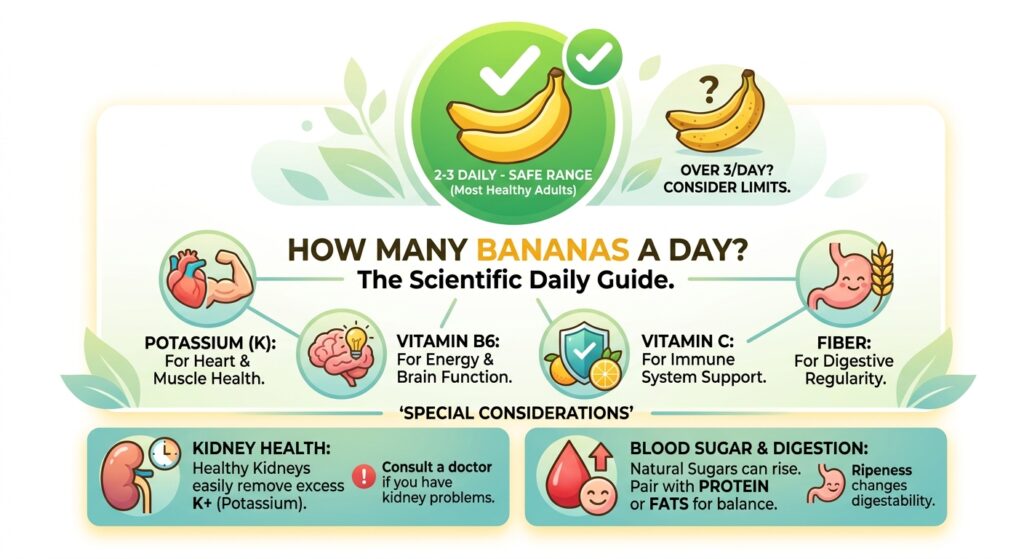
Bananas are convenient, naturally sweet, and packed with essential nutrients—but how much is too much?
Bananas are a staple in kitchens worldwide, prized for their portability, natural sweetness, and immediate energy boost. Whether blended into morning smoothies, sliced over oatmeal, or enjoyed as an on-the-go snack, they offer an effortless way to get vital vitamins and minerals.
However, as with any food, moderation is key. A common question among health-conscious consumers is whether it is possible to overdo it. For most healthy adults, eating two to three bananas a day is completely safe and fits comfortably into a balanced diet. But individual needs vary, and factors like kidney function, blood sugar management, and digestive sensitivity play a significant role in determining your ideal daily limit.
Nutritional Breakdown of a Medium Banana
A single medium-sized banana (approx. 118 grams) packs around 105 calories and is composed primarily of carbohydrates, fiber, and crucial micronutrients.
| Nutrient | Amount per Medium Banana | Approximate % Daily Value (DV) |
| Calories | 105 kcal | — |
| Carbohydrates | 27 g | 10% |
| Dietary Fiber | 3 g | 11% |
| Potassium | 422 mg | 9–10% |
| Vitamin B6 | 0.4 mg | 25–30% |
| Vitamin C | 10 mg | 11% |
| Manganese | 0.3 mg | 13% |
Beyond essential vitamins, bananas contain potent plant compounds and antioxidants—such as dopamine and catechin—that help combat oxidative stress and support cellular health.
Why 2 to 3 Bananas is the General Daily Cap
Eating two to three bananas daily delivers a substantial nutrient boost without overloading your calorie or carbohydrate intake.
The Potassium Myth
A persistent urban myth claims that eating too many bananas can lead to fatal potassium poisoning. For someone with healthy kidneys, this is practically impossible through diet alone. The daily adequate intake (AI) for potassium is 2,600 mg for women and 3,400 mg for men. Three medium bananas provide roughly 1,200 to 1,300 mg—well within normal limits. Healthy kidneys easily excrete excess potassium through urine.
Caloric Balance and Dietary Variety
The primary reason dietitians recommend capping daily consumption at two or three bananas is dietary diversity. Relying too heavily on a single fruit can lead to overconsuming calories and natural sugars while displacing other essential food groups—such as lean proteins, healthy fats, and vegetables—that deliver a wider spectrum of nutrients.
How Ripeness Alters Nutrition and Digestion
A banana’s nutritional profile and digestive impact evolve dramatically as it matures.
- Green (Underripe): High in resistant starch, a prebiotic fiber that feeds beneficial gut bacteria and digests slowly. Green bananas cause a minimal rise in blood sugar, placing them lower on the glycemic index (GI).
- Yellow (Firm to Ripe): As the fruit ripens, enzymes convert resistant starch into simple sugars (sucrose, fructose, and glucose). Yellow bananas are easier to digest and higher in antioxidants, though their glycemic impact is moderate.
- Spotted to Brown (Overripe): Simple sugars peak while resistant starch drops significantly. Overripe bananas are rapidly absorbed, making them ideal for pre-workout energy, though they cause a faster rise in blood glucose levels.
Who Should Exercise Caution?
While bananas are a healthy choice for the general population, specific health conditions require a more tailored approach.
1. Chronic Kidney Disease (CKD)
When kidney function declines, the body struggles to clear excess potassium from the bloodstream. This can trigger hyperkalemia—elevated blood potassium levels (>5.5 mEq/L). Hyperkalemia can lead to muscle weakness, numbness, and, in severe cases, dangerous cardiac arrhythmias.
Medical Caution: Individuals with kidney conditions or those taking potassium-sparing medications (such as ACE inhibitors or spironolactone) should consult a doctor or registered dietitian regarding safe daily fruit portions.
2. Diabetes and Pre-Diabetes
With roughly 27 grams of carbohydrates per medium banana, eating them alone can cause postprandial blood sugar spikes, particularly if the banana is soft and spotted.
- Pro-Tip: Pair bananas with protein or healthy fats—such as almond butter, unsalted nuts, or plain Greek yogurt. Protein and fat slow gastric emptying, blunting sharp blood sugar surges.
3. Irritable Bowel Syndrome (IBS)
Bananas contain FODMAPs (fermentable carbohydrates)—specifically fructans—which accumulate as the fruit ripens. For people with IBS or general digestive sensitivity, eating multiple ripe bananas can trigger gas, abdominal bloating, or diarrhea.
- Digestive Tip: Those sensitive to FODMAPs often tolerate firm, slightly green-tipped bananas better than soft, overripe ones.
The Bottom Line
For the vast majority of healthy adults, eating two to three bananas a day is a safe, nutritious, and convenient way to fuel your body. To maximize their health benefits, adjust the ripeness based on your digestive needs and pair ripe bananas with healthy fats or proteins for sustained, balanced energy throughout the day.
Never Miss a Story: Join Our Newsletter