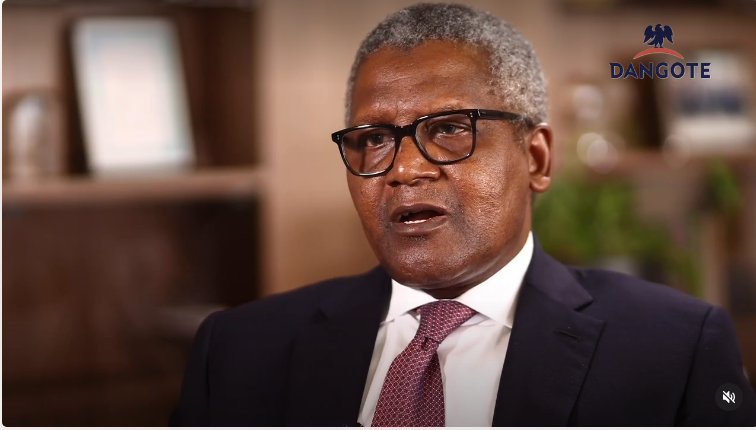
Aliko Dangote is not just Africa’s richest man; he is a symbol of African industrial ambition and a figure whose life story intertwines family legacy, business audacity, and a vision for continental transformation. As of 2026, Forbes estimates his net worth at $28.5 billion, making him the wealthiest person in Africa and the richest Black individual in the world . This article delves into everything a reader would want to know about him, from his family roots and personal life to the building of his colossal business empire and his plans for the future.
Family Roots and Early Life
Born on April 10, 1957, in Kano State, Nigeria, Aliko Mohammed Dangote was destined for commerce . He was named “Aliko” by his maternal grandfather, Sanusi Dantata, a name meaning “the victorious one who defends humanity” . He comes from a distinguished Hausa Muslim family with a deep history in trade. His maternal great-grandfather, Alhassan Abdullahi Dantata, was once the richest person in West Africa, establishing a powerful merchant dynasty .
His family background provided both inspiration and a financial springboard. His mother, Mariya Dantata, was a successful businesswoman and philanthropist, while his father, Mohammed Dangote, owned a transport company . After his father died in 1965, Dangote donated his inheritance to charity, and he was raised under the influence of his maternal grandfather and uncle, who were key paternal figures in his life .
Education and Personal Life
Dangote’s education blended traditional and formal systems. He attended a madrasa for his early religious education and completed his primary schooling at Sheikh Ali Kumasi Madrasa . He later attended Capital High School in Kano and graduated from Government College, Birnin Kudu, in 1978 . He then moved to Egypt to study at Al-Azhar University, where he earned a bachelor’s degree in business studies and administration .
In his personal life, Dangote has been married twice and is the father of four children—three daughters and an adopted son, Abdulrahman . He married his first wife, Zainab, in a traditional arrangement at the age of 20. They had two daughters, Maria and Halima, before their divorce . He later married Mariya Muhammad Rufai, with whom he had a daughter, Fatima; they divorced in 2017 . His daughters are now playing an increasingly important role in his business empire.
The Rise of a Business Empire
Dangote’s entrepreneurial journey began with a humble $3,000 loan from his uncle, which he used to start trading food products . He showed early business acumen, even selling boiled sugar sweets to classmates at age eight and saving the profits . In the late 1970s, he capitalized on the Nigerian Cement Armada era—a period of mass cement importation—by obtaining an import license and diversifying into the cement business. He even established a fleet of trucks to overcome logistical challenges and distribute his products .
In 1981, he formally established the Dangote Group, transforming his trading business into a conglomerate that soon included pasta, salt, sugar, and flour production . Over the decades, he systematically shifted from importing goods to manufacturing them locally, building a vast industrial empire. The acquisition of government assets like the Benue Cement Company in the early 2000s was a pivotal moment, creating the foundation for his dominance in the cement sector.
Dangote Cement: The Foundation of Wealth
Dangote Cement is the cornerstone of his fortune and the largest cement producer in sub-Saharan Africa. With an installed capacity of 55 million metric tons per year across 10 African countries, it has been a primary driver of his wealth. For example, a sharp rise in Dangote Cement shares following record profits in 2025 significantly boosted his net worth, increasing it by $4.6 billion in 2026 alone .
The $20 Billion Gamble: Dangote Refinery
The Dangote Petroleum Refinery is the project that will define his legacy. It is Africa’s largest, with a capacity of 650,000 barrels per day, and cost approximately $20 billion to build. The refinery, located on the Lekki peninsula in Lagos, began operations in early 2024, fundamentally altering Nigeria’s dysfunctional downstream petroleum sector . For years, Nigeria was Africa’s largest crude oil producer but relied almost entirely on costly imports of refined products. The Dangote Refinery has reduced this import dependence and even begun exporting products to markets in Europe, the UK, France, Spain, and the Netherlands . The refinery’s strategic importance has also been amplified by recent geopolitical tensions, such as the Iran war, which disrupted energy flows through the Strait of Hormuz .
Expansion Plans: The $100 Billion Vision
Dangote’s ambition extends far beyond current achievements. He has unveiled a **”Vision 2030″ plan to grow the Dangote Group into a $100 billion industrial powerhouse by the end of the decade** . The company currently generates about $20 billion in annual revenue and aims to increase that to $80 billion within three years and to $100 billion by 2030 . This audacious goal will require approximately $40 billion in fresh investment .
The strategy involves massive capacity increases across its core business lines:
- Refinery: Plans to more than double the refinery’s output to 1.4 million barrels per day by 2028 .
- Fertilizer: Doubling fertilizer production from 6 million to 12 million tonnes annually through expansion projects in Nigeria and Ethiopia .
- Cement: Targeting a production capacity of 80 million tonnes per year by 2030, up from the current 55 million .
To finance this expansion, the group is preparing what could be one of Africa’s largest-ever corporate fundraising drives, including a planned initial public offering (IPO) of the Dangote Refinery and a secondary London listing for Dangote Cement . The group has also agreed to replicate its refinery model in Kenya, a $17 billion project in the coastal town of Lamu .
The Succession Plan: A New Generation
Parallel to this industrial expansion is a deliberate leadership transition. While Aliko Dangote remains chairman, his three daughters are stepping into increasingly prominent executive roles, marking a significant shift for one of Africa’s largest family-owned businesses .
- Halima Dangote oversees the family’s international investment office (Dubai and London) and the family office governance. She is deeply involved in philanthropy as an executive director of the Aliko Dangote Foundation .
- Fatima Dangote is the executive director for the group’s oil and gas business, leading commercial operations for this critical sector .
- Mariya Dangote helps drive growth at the cement division and is involved in the group’s global expansion and international investor relations, including the planned London listing .
This all-female next-generation leadership is a rare transition for a major African business empire, and the founder appears to be addressing the transition early to ensure continuity and institutional stability .
Philanthropy and Legacy
Perhaps the most profound signal of the family’s future intentions is a recent commitment to dedicate one-third of Aliko Dangote’s fortune to philanthropic causes . With his net worth estimated at over $35 billion, this donation could amount to more than $12 billion, making it one of the largest philanthropic commitments ever announced by an African billionaire . His daughter Halima confirmed the plan, stating the family has formally signed a will to ensure the commitment endures across generations .
The funds will be channeled into the Aliko Dangote Foundation, established in 1994, which focuses on health, education, nutrition, and humanitarian relief . The foundation has worked alongside the Bill & Melinda Gates Foundation, contributing to efforts that helped eradicate wild poliovirus in Africa . In recognition of his philanthropic impact, TIME magazine named Dangote among the world’s most influential philanthropists in 2026 .
Controversies and Criticisms
Despite his achievements, Dangote has faced significant scrutiny and criticism. Some have questioned the sources of his wealth, suggesting he benefited disproportionately from Nigeria’s market following the transition to civil rule . A 2007 diplomatic cable published by WikiLeaks alleged he received preferential treatment in exchange for financial support during President Olusegun Obasanjo’s administration .
Additionally, Dangote’s name has appeared in leaks such as the Panama Papers, Paradise Papers, and Pandora Papers, linking him to shell companies residing in tax havens . He has also faced criticism over his close ties to political figures. He played a prominent role in financing Obasanjo’s re-election bid in 2003 and has served on economic advisory teams for Presidents Goodluck Jonathan and Muhammadu Buhari .
Dangote’s East African Refinery Plans: Kenya and Tanzania
The Kenya Refinery: The Chosen Location
The latest reports confirm that Dangote has selected Kenya as the host for his major East African refinery project, shifting focus from the initially proposed location in Tanzania.
Key details of the Kenya project:
- Location: The refinery will be built in Lamu, on Kenya’s coast. This location was chosen for its strategic advantages, including access to the deep-water Lamu Port and the Lamu Port-South Sudan-Ethiopia Transport (LAPSSET) Corridor, which is designed to connect Kenya with regional markets.
- Size & Capacity: The planned facility is a mega-project. It is expected to process approximately 700,000 barrels of crude oil per day, making it even larger by nameplate capacity than his flagship refinery in Nigeria.
- Investment & Timeline: The project is estimated to cost between $15.5 billion and $17 billion and is expected to take about four to five years to complete, with a groundbreaking anticipated before the end of 2026.
- Regional Partnership Model: A key feature is the offer of a combined 30% equity stake in the refinery to East African governments. Kenya is considering a 10% stake (worth about $500 million), while Ethiopia and Rwanda have also expressed interest in participating. This model is intended to secure ownership and fuel supply for the region. The project is expected to create about 60,000 jobs during construction.
Tanzania: The Shift and Ongoing Interest
While Tanzania was initially considered the frontrunner to host the refinery, Dangote’s group ultimately decided to move the project to Kenya based on commercial and technical considerations, such as port depth and market access.
Current status in Tanzania:
- High-Level Talks Held: In May 2026, Aliko Dangote met with Tanzanian President Samia Suluhu Hassan to discuss the proposed $17 billion refinery project. During these talks, he proposed a regional partnership model where East African countries, including Tanzania, could participate through shareholding arrangements.
- Interest in Investment: Although the physical location of the refinery has shifted to Kenya, the Tanzanian government has been actively reviving talks to ensure it remains involved. The Tanzanian government is likely still interested in the broader partnership and securing a stake, as the project is intended to benefit the wider East African region.
- Other Opportunities: During the same meeting, President Hassan also invited the Dangote Group to expand its investments in Tanzania, particularly in fertilizer production.
In short, while the major refinery is definitively planned for Kenya (Lamu), Tanzania remains a key partner in the broader regional initiative and is actively engaged in discussions to participate. The project has evolved from a potential host-country contest into a regional energy partnership model involving multiple East African nations.
Conclusion
Aliko Dangote’s life is a testament to the transformative power of private enterprise in Africa. From a modest trading start to building a multi-billion-dollar industrial empire, he has not only amassed immense personal wealth but has also fundamentally reshaped the economies of Nigeria and several other African nations. His cement plants, his sugar refineries, and now his massive oil refinery are more than just business ventures—they are the physical infrastructure of a continent in development. As he prepares the next generation to take the reins and commits a significant portion of his fortune to philanthropy, Dangote’s legacy is being crafted to extend far beyond the balance sheet, positioning him as a pivotal figure in Africa’s ongoing economic transformation.
Never Miss a Story: Join Our Newsletter