The 1994 Rwandan Genocide against the Tutsi stands as one of the most brutal and swift acts of mass slaughter in human history. In just one hundred days, from April to July 1994, an estimated 800,000 to 1,000,000 Tutsi and politically moderate Hutu were systematically murdered by Hutu extremists . The sheer speed and efficiency of the killings, often executed with machetes and clubs by neighbors against neighbors, revealed a horror that was not a spontaneous explosion of “ancient tribal hatreds,” but the culmination of a deeply constructed political crisis, fueled by colonial legacy, economic pressures, and international indifference. This article delves into the root causes of the genocide, tracing its origins from the colonial era through the civil war, analyzing the regional machinations involving Uganda and the Democratic Republic of Congo (then Zaire), and examining Rwanda’s subsequent journey of reconstruction, justice, and its complex present-day state.
The Genesis of Division: Colonialism and the “Invention” of Race
The Hutu-Tutsi distinction predates European colonialism, but it was neither rigid nor based on biological race. Historically, Hutu, Tutsi, and Twa were socio-economic and clan identifiers rather than fixed ethnicities. Tutsi were traditionally cattle herders who often held positions of power and influence, while Hutu were primarily agriculturalists. However, significant integration existed; one could change categories through marriage, wealth accumulation, or land acquisition, and intermarriage was common .
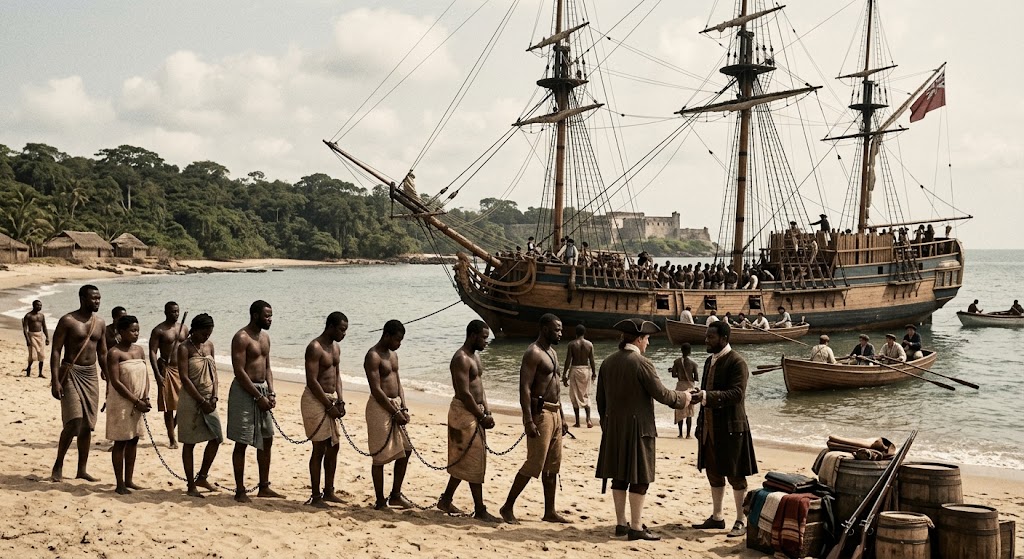
The arrival of German and, subsequently, Belgian colonizers at the turn of the 20th century fundamentally transformed these fluid identities into rigid, racialized categories to serve a “divide and rule” policy. The Belgians, who took control after World War I, adopted the racist theories of the time, positing that the taller, more slender Tutsi were a superior “Hamitic” race, more akin to Europeans and thus destined to rule. They issued ethnic identity cards, institutionalizing the division and embedding it in the state apparatus. This colonial preference favored Tutsis for administrative and educational opportunities, creating a deeply resentful Hutu majority who were systematically marginalized. The seeds of ethnic grievance were planted not by “ancient hatreds,” but by a colonial administration that weaponized identity for political control and resource extraction.
The Social Revolution and the Rise of Hutu Power
The deep-seated Hutu resentment erupted in 1959, just before Rwanda’s independence. The “Social Revolution” overthrew the Tutsi monarchy, leading to widespread violence and the forced exile of over 300,000 Tutsi to neighboring countries, including Uganda, Burundi, and the Congo. This event is crucial as it created a diaspora population that would later form the backbone of the rebel force that invaded Rwanda in 1990, triggering the final spiral toward genocide. When Rwanda gained independence in 1962, the Hutu-led government, under Grégoire Kayibanda and later Juvénal Habyarimana (who seized power in a 1973 coup), institutionalized anti-Tutsi discrimination. The identity cards remained, now used to enforce quotas in education, employment, and political representation, effectively barring Tutsis from participating in national life. This created a cycle of violence, with periodic massacres of Tutsis in Rwanda in response to incursions by Tutsi exiles from neighboring countries.
The Perfect Storm: Economic Crisis, Civil War, and the Arusha Accords
By the late 1980s, Rwanda faced a severe economic crisis. The collapse of coffee prices, the country’s primary export, coupled with a burgeoning population and resulting land pressures, created immense social strain . This economic hardship eroded President Habyarimana’s political support, even within his own Hutu power base. Simultaneously, the end of the Cold War brought international pressure on African autocrats to democratize. In Rwanda, this was a dangerous demand. Habyarimana’s regime, a one-party state dominated by his Hutu elite from the north, faced a losing proposition: open up the political system and risk losing power to a more united opposition.
It was in this context of instability that the Rwanda Patriotic Front (RPF), a political and military organization composed primarily of Tutsi refugees from Uganda, invaded Rwanda on October 1, 1990 . The RPF was a highly disciplined and experienced force, having fought alongside Yoweri Museveni’s National Resistance Army in the Ugandan Bush War that brought Museveni to power in 1986. This invasion initiated a devastating civil war. The RPF’s demands were not for Tutsi supremacy, but for the right of return and the dismantling of the apartheid-like system in Rwanda.
The Rwandan government, caught between a rebel army it could not decisively defeat and internal political pressures, was forced to the negotiating table. The resultant Arusha Accords, signed in 1993, were a power-sharing agreement that enraged the extremist Hutu faction around President Habyarimana. Known as the Akazu (“little house”), this clique of hardliners from the president’s home region saw the Accords as a surrender to the “Tutsi invaders.” They feared a loss of power, privilege, and future accountability for their crimes. To them, the peace process was an existential threat, and they prepared for a “final solution” to the Tutsi problem, effectively derailing the peace process from within.
The Genocide: Orchestration and Execution
The genocide was not a chaotic explosion of anger; it was a meticulously planned state-sponsored operation. Hardliners within the government, military, and ruling party formed the Interahamwe (“those who stand together”) and Impuzamugambi militias, arming them and training them in the art of killing. The propaganda machine was crucial. Radio Télévision Libre des Mille Collines (RTLM) broadcast vitriolic hate speech, referring to Tutsis as inyenzi (cockroaches) and urging Hutus to “cut the tall trees” . This dehumanization was a critical mobilizer, erasing the shared humanity between neighbors. As one killer recounted, “We no longer saw a human being when we turned up a Tutsi in the swamps” .
The trigger was the assassination of President Habyarimana on April 6, 1994, when his plane was shot down over Kigali. Within hours, the planned genocide began. Roadblocks appeared across the capital, and soldiers, police, and the militias systematically began murdering Tutsis and moderate Hutu political opponents . The government’s administrative hierarchy was co-opted into a killing machine. Local leaders were tasked with organizing the slaughter in their communities, with those who refused often being killed themselves. This “governance hierarchy” mobilized hundreds of thousands of ordinary Rwandans to participate . The state even broadened its definition of “enemy” to include moderate Hutu who opposed the extremists, demonstrating that the ideology was political as much as ethnic.
Regional Roles: Uganda and Congo
The genocide cannot be understood without analyzing the complex regional dynamics, particularly the roles of Uganda and Congo (then Zaire).
Uganda: The Birthplace of the RPF and a Crucial Ally
Uganda’s role is foundational to the narrative, as it served as the staging ground for the RPF invasion, which the Hutu extremist regime used to justify its genocidal plans. After coming to power in 1986, Yoweri Museveni’s Ugandan government incorporated many Rwandan Tutsi exiles into his military, including future Rwandan President Paul Kagame, who became the head of military intelligence in Uganda. When the RPF launched its attack in 1990, Museveni provided crucial support, including artillery, ammunition, and access to Ugandan military airfields. His motivation was pragmatic: he sought a stable buffer state to his south and was allied with fellow Tutsi exiles who had fought for him. During the genocide, Uganda provided a route for the RPF to receive supplies and, later, a safe haven. While Uganda did not participate directly in the genocide, its role in enabling the RPF’s military threat is undeniable. It was the creation of this rebel force that provided the casus belli for the Hutu extremists’ propaganda campaign, allowing them to frame the genocide as a necessary defense against a “Tutsi invasion” from Uganda.
Zaire/Congo: A Sanctuary for the Perpetrators and a Festering Wound
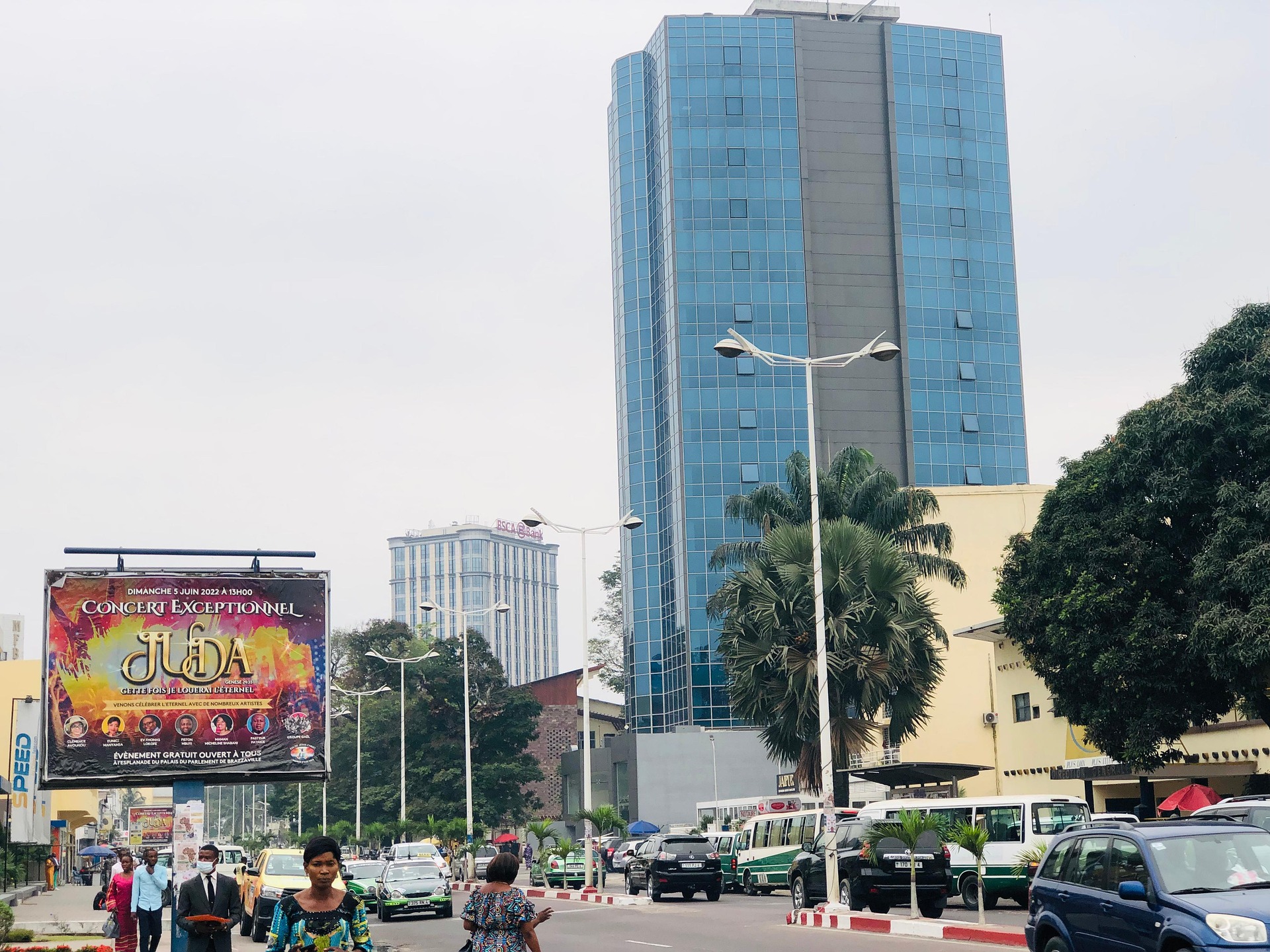
The role of Zaire under Mobutu Sese Seko was even more consequential, particularly in the aftermath of the genocide. When the RPF finally broke through and took Kigali in July 1994, the genocidal regime and its supporters fled. An estimated 2 million Hutu refugees, including the remnants of the Interahamwe, the Rwandan army (ex-FAR), and the architects of the genocide, poured across the border into eastern Zaire . Mobutu, a dictator who had long used ethnic conflict to destabilize his neighbors, welcomed them for political reasons. The refugee camps were quickly militarized and controlled by the very génocidaires who had orchestrated the massacre. They used these camps as rear bases to launch cross-border attacks into the new RPF-led government in Rwanda. This was an existential threat to the nascent Rwandan state. The international community’s failure to disarm the génocidaires, coupled with the forced repatriation of the refugees by the Rwandan government, led directly to the First (1996-1997) and Second (1998-2003) Congo Wars. Rwanda, backed by Uganda, invaded Zaire to dismantle the refugee camps and hunt down the perpetrators, triggering a regional conflict that would draw in multiple African nations and result in millions of deaths. This intervention, while framed as a security necessity, also had the effect of installing a friendly government in Kinshasa (Laurent-Désiré Kabila) and allowed Rwanda to secure access to the mineral wealth of eastern Congo. The role of the DRC, therefore, transformed from a haven for the genocide’s architects to a theater of conflict where the consequences of the genocide continued to play out for decades, with Rwanda’s military interventions perpetuating a cycle of instability in the Great Lakes region that continues to this day.
International Complicity and Failure
The genocide was allowed to happen largely because of the international community’s paralysis. The United Nations Assistance Mission for Rwanda (UNAMIR), led by Canadian General Roméo Dallaire, was understaffed and had a restrictive mandate. When Dallaire warned of a planned massacre, his request to seize weapons caches was denied. The most devastating moment of international failure came when, after the killing began, the UN Security Council voted to reduce UNAMIR’s force from 2,500 to a paltry 270, effectively abandoning the Rwandan people to their fate. Western powers, particularly the United States, refused to intervene militarily, haunted by the “Mogadishu Effect”—the fear of another military quagmire following the 1993 Black Hawk Down incident in Somalia . France, a close ally of the Habyarimana regime, provided arms and training to the Rwandan government during the genocide’s early stages, actively supporting a genocidal state even as the slaughter was underway. The international community’s collective inaction and, in some cases, complicity, is a stain on global history.
Rwanda’s Rebirth and the Present State
In the aftermath of the genocide, Rwanda faced the impossible task of burying its dead, healing its traumatized population, and rebuilding a shattered country. Under the leadership of Paul Kagame and the RPF, the country has undergone a radical and controversial transformation.
Justice and Reconciliation
The government initiated a dual approach to justice. The International Criminal Tribunal for Rwanda (ICTR) was established in Arusha, Tanzania, to prosecute the high-level planners and leaders of the genocide. However, the sheer scale of the crime meant that over 100,000 suspected perpetrators were languishing in Rwandan prisons. To address this, the government revived the Gacaca courts, a traditional communal justice system. In an adapted form, these local courts were tasked with trying lesser offenders, encouraging confessions, and fostering reconciliation at the village level. While controversial due to its lack of due process, the Gacaca system was instrumental in revealing the truth of what happened, facilitating community healing, and handling an impossible backlog of cases.
National Unity and Identity
One of the most profound changes has been the government’s policy of eradicating ethnic identity itself. The new constitution explicitly outlaws “divisionism” and the promotion of ethnic hatred. Rwandans are now officially identified simply as Rwandans. The state has led a massive campaign of national unity, emphasizing a shared history, a common language (Kinyarwanda), and a collective future. Ethnic identity cards were abolished, and a new generation is being raised in an environment where ethnicity is a taboo subject . While this has brought a remarkable degree of social stability and has prevented the resurgence of ethnic violence, critics argue it is a form of enforced denialism, suppressing legitimate discussion and creating a culture of silence where dissent is equated with genocide ideology.
Economic Development and Authoritarian Rule
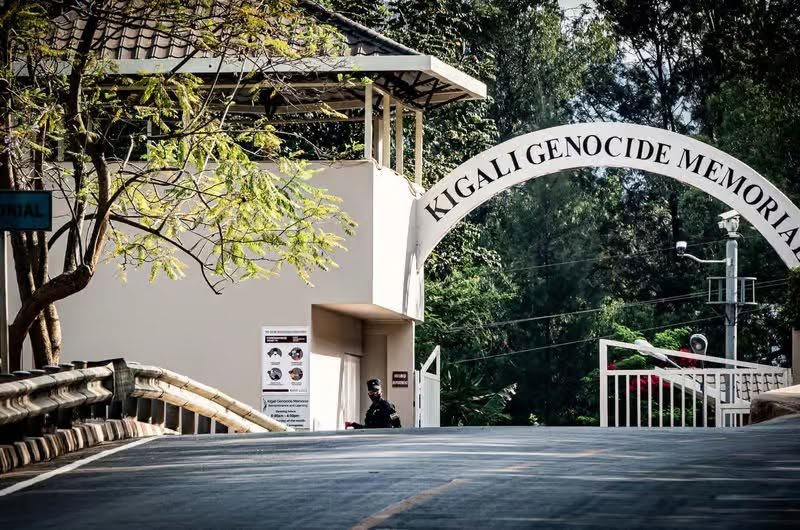
Rwanda has become a poster child for economic development in Africa. Under Kagame’s leadership, the country has experienced impressive GDP growth, driven by a focus on technology, services, and foreign investment. Kigali, the capital, has transformed into one of the cleanest and most orderly cities in Africa. The government has prioritized healthcare, education, and gender equality, with Rwanda having one of the highest proportions of women in parliament globally.
However, this development has come at a steep political price. Kagame’s rule is often described as authoritarian. Political opposition is severely restricted, and the government has been accused of stifling the press, suppressing dissent, and assassinating political opponents in exile. The state’s tight control is often justified by the need to prevent a return to the chaos and ethnic violence of 1994. The argument is one of stability versus freedom: Rwanda has traded its nascent democratic space for security and economic progress.
A Nation Forged in the Crucible of Hate
The 1994 Rwandan Genocide was a singular catastrophe, a deliberate and systematic destruction of a people. Its roots lie not in ancient tribalism but in the colonial construction of race, the subsequent marginalization of a minority, the desperation of an economic crisis, and the calculated machinations of a regime facing an existential threat from a civil war. The roles of Uganda as the launchpad for the RPF and Zaire/Congo as a sanctuary for the perpetrators underscore that the genocide was a regional tragedy, not an isolated incident. The international community’s abandonment of Rwanda remains a profound moral failure.
Today, Rwanda stands as a stark paradox. It is a country that has achieved remarkable economic progress, social stability, and a symbolic reunification, all while grappling with the weight of an unimaginable past. Yet, this progress is shepherded by an authoritarian state that tolerates little dissent and has become a key player in the ongoing instability of the neighboring Democratic Republic of Congo. The legacy of the genocide is not a closed chapter but an open wound that influences Rwanda’s foreign policy, its internal politics, and its very identity. The world must remember that the genocide was a failure of humanity, and the journey of “the land of a thousand hills” from the abyss of 1994 to its current state serves as both a lesson in resilience and a warning about the fragility of peace in a world where identity can be weaponized with devastating effect.
Never Miss a Story: Join Our Newsletter