


The Philosopher Who Owned Nothing Yet Humiliated Kings: The Extraordinary Life of Diogenes of Sinope
History remembers emperors for the empires they built, generals for the battles they won, and inventors for the machines they created. Yet few people have captivated generations quite like Diogenes...

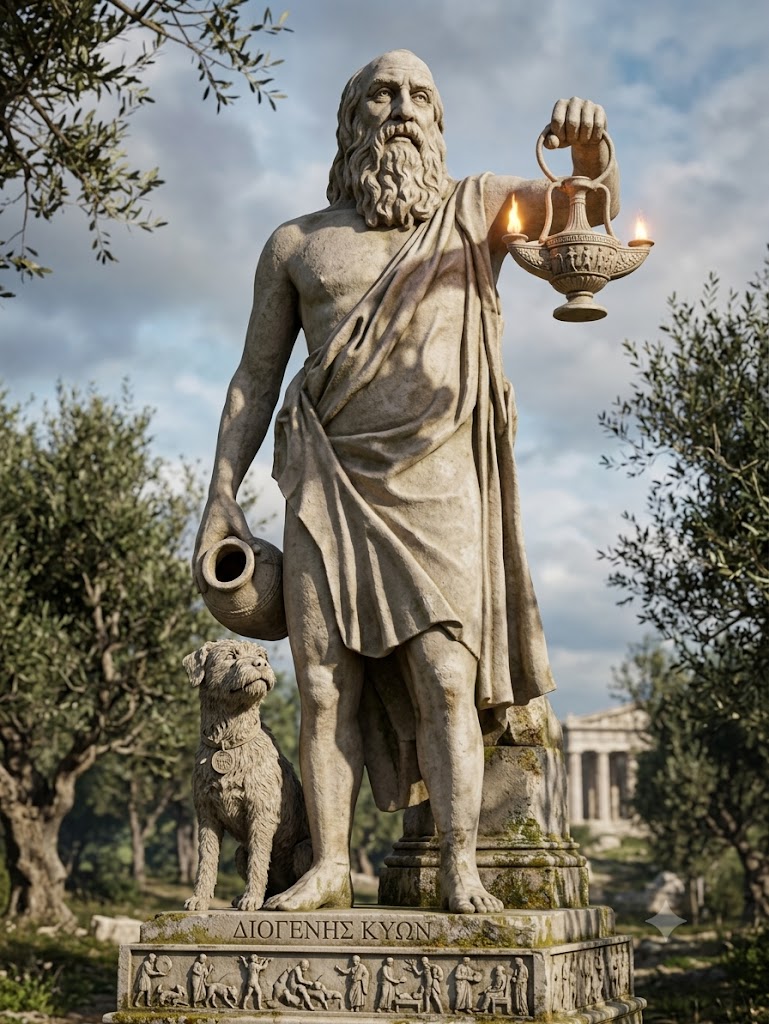
History remembers emperors for the empires they built, generals for the battles they won, and inventors for the machines they created. Yet few people have captivated generations quite like Diogenes of Sinope, a man who deliberately chose poverty over luxury, mocked the powerful to their faces, and became one of the most influential philosophers of all time without writing a single book.
Table Of Content
- Born Into Comfort—Then Lost Everything
- Athens: The Birthplace of a Radical Thinker
- Living Inside a Giant Jar
- Throwing Away His Cup
- The Lantern in Broad Daylight
- Fearlessly Mocking Society
- The Day He Met Alexander the Great
- The Philosophy of the Cynics
- A Citizen of the World
- His Last Days
- A Legacy That Refused to Die
- Lessons from Diogenes for the Modern World
- Conclusion
He lived with almost nothing. He slept in what ancient sources describe as a large ceramic storage jar. He owned so few possessions that when he saw a child drinking water with cupped hands, he reportedly threw away his drinking cup, declaring that even it was unnecessary.
To many Athenians, he appeared to be a homeless eccentric. To others, he was a fearless philosopher exposing the hypocrisy of society. More than 2,300 years after his death, Diogenes remains one of history’s most unforgettable personalities.
Born Into Comfort—Then Lost Everything
Diogenes was born around 412 or 404 BC in the Greek city of Sinope, a prosperous trading colony on the Black Sea in what is now northern Türkiye.
His father, according to ancient accounts, was involved in banking or minting coins. Diogenes therefore grew up in relative comfort and likely received a good education.
His life took a dramatic turn when he and his father became associated with a scandal involving the city’s currency. Ancient writers disagree on the exact details. Some suggest they were accused of debasing the coinage, while others believe the story was symbolic rather than literal.
Whatever the truth, Diogenes was forced into exile.
This punishment changed everything.
Instead of seeking another comfortable life elsewhere, he transformed his misfortune into a philosophy that rejected conventional success altogether.
Read Also: Gladys Aylward: The Small Woman Who Led a Hundred Children to Safety
Athens: The Birthplace of a Radical Thinker
After leaving Sinope, Diogenes arrived in Athens, the intellectual center of the Greek world.
The city was home to famous philosophers, politicians, playwrights, and artists. It was also a society that valued wealth, status, reputation, and public honor.
Diogenes rejected all of these.
He became associated with the teachings of Antisthenes, a student of Socrates. Antisthenes argued that virtue—not wealth or fame—was the true source of happiness.
According to later stories, Antisthenes initially tried to drive Diogenes away with a stick.
Diogenes refused to leave.
“Strike,” he is said to have replied, “for you will find no stick hard enough to drive me away while you continue speaking.”
Whether literally true or embellished over time, the story captures his determination.
Living Inside a Giant Jar
Perhaps the most famous image of Diogenes is that of him living inside a giant barrel.
In reality, barrels made of wood were uncommon in Greece at the time. Ancient texts instead describe him living inside a large ceramic storage vessel, known as a pithos. These jars were large enough to hold grain, wine, or oil—and, according to tradition, served as his shelter.
For Diogenes, this was not a sign of defeat.
It was a deliberate rejection of material possessions.
He believed that most people became slaves to the very things they owned.
The bigger the house, the greater the worries.
The more wealth accumulated, the more anxiety followed.
Freedom, he argued, came from needing less.
Throwing Away His Cup
One story beautifully illustrates his philosophy.
Diogenes owned a simple wooden cup.
One day he saw a young boy drinking water from his hands.
Immediately, Diogenes discarded his cup.
“I have been beaten in simplicity by a child,” he reportedly exclaimed.
Whether historically exact or not, the anecdote captures the essence of his worldview: if something is unnecessary, why keep it?
The Lantern in Broad Daylight
Among the most enduring stories is that of Diogenes wandering through Athens during daylight hours carrying a lit lantern.
When puzzled citizens asked what he was doing, he answered:
“I am looking for an honest man.”
The remark was not a literal search. It was a biting criticism of what he saw as widespread dishonesty, vanity, and moral compromise.
The image has endured as a symbol of the search for integrity in an imperfect world.
Fearlessly Mocking Society
Diogenes believed that many social customs existed only because people blindly accepted them.
He questioned conventions about wealth, reputation, fashion, politics, and even education.
He often challenged respected philosophers in public, exposing contradictions in their arguments through sharp wit and memorable demonstrations.
Unlike many thinkers of his era, he believed philosophy should be lived rather than merely discussed.
To him, a philosopher who preached virtue while pursuing luxury had missed the point.
Read Also: Elisabeth Elliot: The Woman Who Chose Forgiveness Over Revenge
The Day He Met Alexander the Great
No story captures Diogenes’ fearless independence better than his encounter with Alexander the Great.
Alexander, already one of history’s greatest conquerors, had heard of the unusual philosopher.
Curious, he sought him out.
He found Diogenes lying comfortably in the sunlight.
Alexander reportedly asked whether there was anything he could do for him.
Most people would have requested money, land, titles, or protection.
Diogenes simply replied:
“Yes. Stand out of my sunlight.”
The response stunned everyone present.
Here stood perhaps the most powerful man in the known world—and a man with virtually no possessions refused to flatter him.
Legend says Alexander later remarked:
“If I were not Alexander, I would wish to be Diogenes.”
Whether every word is historically exact is impossible to confirm, but the story perfectly captures why Diogenes became legendary. He demonstrated a freedom that even kings could admire.
The Philosophy of the Cynics
Diogenes became the most famous representative of the philosophical movement known as Cynicism.
Today, the word “cynical” often means distrusting others or expecting the worst. In ancient Greece, however, Cynicism meant something quite different.
The Cynics believed people should live according to nature rather than chasing luxury, wealth, or public approval.
They argued that happiness comes from:
- Self-sufficiency.
- Virtue.
- Simplicity.
- Freedom from unnecessary desires.
- Courage to challenge social hypocrisy.
For Diogenes, these ideas were not abstract theories—they were daily practice.
A Citizen of the World
When asked where he came from, Diogenes gave an answer that was revolutionary for its time:
“I am a citizen of the world.”
In an era when identity was tied closely to one’s city-state, this was a bold declaration.
Rather than defining himself by birthplace or political allegiance, he claimed membership in humanity itself. The idea anticipated later concepts of cosmopolitanism that continue to influence political and ethical thought.
His Last Days
Ancient accounts differ about how Diogenes died around 323 BC.
Some say he became ill after eating raw octopus.
Others claim he died after holding his breath.
Another tradition suggests he succumbed to an infected dog bite.
The true cause remains unknown.
What is consistent is the respect he earned despite his unconventional life.
He was buried outside the city, and later generations erected a monument featuring a dog—an animal that symbolized the Cynic movement because of its perceived independence and disregard for social pretensions.
Read Also: Nelson Mandela: The Prisoner Who Became a President
A Legacy That Refused to Die
Unlike many philosophers, Diogenes left no known writings.
Everything we know comes from later historians, especially the 3rd-century writer Diogenes Laërtius, who collected numerous anecdotes and sayings. Scholars caution that some stories are likely embellished, but together they paint a remarkably consistent portrait of a man committed to radical simplicity and fearless honesty.
His influence extended far beyond his lifetime. Later Stoic philosophers admired aspects of his independence, and his life has inspired writers, artists, and social critics for centuries. Even today, his questions remain relevant: How much do we truly need? Are we serving our possessions—or are they serving us? Why do we seek approval from strangers?
Lessons from Diogenes for the Modern World
In an age of consumerism, social media, and constant competition, Diogenes’ life offers thought-provoking lessons:
- Own fewer things, but value them more.
- Question customs instead of following them blindly.
- Measure success by character, not possessions.
- Speak truth to power, even when it is uncomfortable.
- Seek freedom through simplicity rather than endless accumulation.
His philosophy does not require living in a jar to appreciate. Instead, it invites us to examine what genuinely contributes to a meaningful life.
Conclusion
More than twenty-three centuries after his death, Diogenes of Sinope remains one of history’s most remarkable figures. He challenged kings without fear, mocked empty displays of status, and embraced a life so simple that it still astonishes modern readers. Whether carrying a lantern through the streets in search of an honest person or asking the world’s most powerful ruler to stop blocking the sun, he embodied a rare independence of spirit.
His life reminds us that genuine freedom may have less to do with what we possess than with what we can live without. In a world that often equates success with wealth and influence, Diogenes continues to ask a timeless question: What if the richest person is the one who needs the least?
Never Miss a Story: Join Our Newsletter