


Gladys Aylward: The Small Woman Who Led a Hundred Children to Safety
Few missionary stories capture the imagination quite like that of Gladys Aylward. A former housemaid rejected by the mission board, she traveled alone across a war-torn continent, became a Chinese...

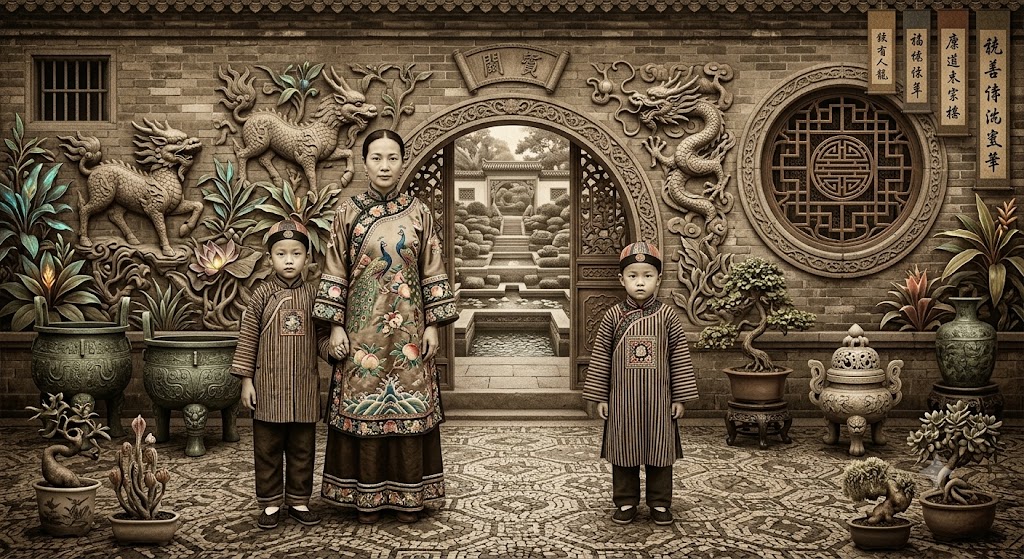
Few missionary stories capture the imagination quite like that of Gladys Aylward. A former housemaid rejected by the mission board, she traveled alone across a war-torn continent, became a Chinese citizen, and in 1940 led over one hundred orphaned children across the mountains of China to safety. Her life is a testament to the truth that God often chooses the unlikely—the “small women” of the world—to accomplish extraordinary things.
Table Of Content
Early Life: A Working-Class Dreamer
Gladys May Aylward was born on February 24, 1902, in Edmonton, North London, the daughter of Thomas John Aylward, a postman, and Rosina Florence . She grew up in a working-class family and left school at fourteen to work as a housemaid . There was nothing in her early years to suggest she would become one of the most celebrated missionaries of the twentieth century.
Her transformation began in her mid-twenties when she attended an evangelical meeting. She felt a profound calling to serve God—and specifically, to go to China . The conviction was so strong that she applied to the China Inland Mission for training. The result was devastating: after three months of study, she was told she was too deficient in education and too old to learn the Chinese language. The committee could not accept her .
It was a crushing rejection. Most people would have accepted the verdict and moved on to something else. Gladys did not.
The Journey: Across Siberia and Into the Unknown
If the mission board would not send her, she would go herself. Gladys heard about Jeannie Lawson, an elderly missionary in Yangcheng, Shanxi Province, who was looking for a younger woman to help her . She wrote to Mrs. Lawson, who accepted her—provided Gladys could pay for her own journey .
With her life savings and a few pounds in her pocket, Gladys boarded a train at Liverpool on October 15, 1932 . She carried a suitcase of clothes and another filled with tins of food, biscuits, tea, coffee, and hard-boiled eggs . Her journey was not by comfortable sea passage; she traveled overland on the Trans-Siberian Railway at a time when the Soviet Union and China were in an undeclared war .
The journey was treacherous. At the eastern edge of Russia, she was ordered off the train and her passport was taken. She managed to snatch it back and throw it behind her, telling the Russian interpreter that God had placed a barrier between them. Shivering, the man left . With the help of locals, she escaped to a Japanese vessel and eventually reached China . Against all odds, she arrived at Yangcheng and found Jeannie Lawson.
The Inn of the Eight Happinesses
The two women opened a guesthouse for mule drivers, which they named the “Inn of the Eight Happinesses”—later changed to the “Inn of the Sixth Happiness” in Hollywood adaptations . The name referenced a Chinese list of eight virtues: Love, Virtue, Gentleness, Tolerance, Loyalty, Truth, Beauty, and Devotion .
Local people were suspicious of foreigners at first. Gladys solved the problem by stepping out and seizing the lead mule of a passing train, forcing the drivers to follow into the courtyard . After the first few weeks, she no longer needed to “kidnap” customers—the inn became a preferred stopping place .
In the evenings, the two women shared Bible stories with the mule drivers. It was a simple but effective strategy: reach the travelers, and they would carry the stories across the province .
Becoming “Ai-weh-deh”
About a year after Gladys arrived, Jeannie Lawson fell and died . Gladys took over the mission, aided by Yang, a Chinese cook. She was now alone in a foreign land.
She began to immerse herself deeply in Chinese culture. She learned the rough Mandarin dialect of the region . She adopted the Chinese name Ai-weh-deh (艾偉德), meaning “Virtuous One”—a phonetic approximation of Aylward that the local people gave her . In 1936, she became a naturalized citizen of the Republic of China . She was no longer a foreigner; she had become one of them.
The local mandarin, a powerful official, recognized her dedication. He appointed her as a “foot inspector,” tasked with enforcing the government’s new law against the ancient custom of foot binding, which had crippled Chinese girls for centuries . It was a difficult and sometimes dangerous job, but Gladys met with considerable success .
She also intervened in a volatile prison riot. When armed soldiers feared to enter, the warden said, “You have been preaching that those who trust in Christ have nothing to fear.” Rather than let Christ down, Gladys walked into the courtyard and shouted, “Quiet! I cannot hear when everyone is shouting at once. Choose one or two spokesmen, and let me talk with them” . She insisted the prisoners be given work, so they could afford food for themselves. Her intervention led to prison reform .
The Orphanage
Gladys began taking in orphaned and abandoned children. The first was a malnourished five-year-old girl she purchased for ninepence . A year later, “Ninepence” came home with an abandoned boy, saying, “I will eat less, so that he can have something.” Thus Gladys acquired her second orphan, whom she called “Less” . Dozens more came into her care .
By the late 1930s, she had established an orphanage that cared for a growing number of children .
The War and the Great Escape
In the spring of 1938, the region was invaded by Japanese forces . Gladys learned that she was on the Japanese wanted list, with a bounty on her head, for her work with Chinese intelligence . She refused to leave, continuing to shelter children and report useful information to Chinese troops .
But as the fighting intensified, she knew she had to get the children to safety. In 1940, against the backdrop of civil war, Japanese invasion, and the threat of bandits, she led a group of orphans—sources vary on the exact number, with most accounts citing over 100 children—on a perilous journey to Sian (Xi’an) in neighboring Shensi province .
The journey was grueling. For twelve days, she shepherded the children—ranging in age from four to fifteen—over mountain terrain . Some nights they found shelter; other nights they spent on mountainsides. When they reached the Yellow River, there were no boats. The children said, “God can do anything. Ask him to get us across” . They all knelt and prayed, and then they sang. A Chinese officer heard the singing and arranged for a boat to take them across .
When Gladys finally delivered the children to safety, she collapsed. She was suffering from typhus, pneumonia, relapsing fever, malnutrition, shock, and exhaustion . She was gravely ill and almost delirious. It took months for her to recover .
Return to England and Final Years
After the war, Gladys continued her work. She started a church in Sian and worked elsewhere, including a settlement for lepers . But her health was permanently impaired by injuries received during the war. In 1947, she returned to England for an operation . She remained in England for a time, preaching and lecturing on her work .
She attempted to return to China, but after the Communist takeover, she was refused entry . She settled instead in Taiwan in the late 1940s, where she founded the Gladys Aylward Children’s Home . She worked there until near her death. She retired a few years before she passed away on January 3, 1970, at the age of 67 .
She was buried in a small cemetery on the campus of Christ’s College in Guandu, New Taipei, Taiwan .
The Hollywood Distortion
In 1958, a film based on her life was released: The Inn of the Sixth Happiness, starring the tall, blonde Swedish actress Ingrid Bergman . Gladys was a small woman, dark-haired, with a North London accent. She was mortified by the film and the liberties it took .
The struggles of her early life were disregarded in favor of a Hollywood plot device. Her dangerous, complicated journey across Russia and China was reduced to a few rude soldiers . The name of the inn was changed, her adopted children’s names were changed, and the film even portrayed a romantic relationship that did not exist .
Gladys had never kissed a man. Yet the film showed her leaving the orphans to reunite with a colonel with whom she had fallen in love. In reality, she had declined Colonel Linnan’s offer of marriage, believing it would take her away from the work God had given her among the children . She dedicated the rest of her life to the orphans in Taiwan.
Despite the inaccuracies, the film brought her story to a worldwide audience. But Gladys always insisted on the truth of her real story—a story far more remarkable than any Hollywood fiction .
Lessons from Her Life
Gladys Aylward’s story is ultimately not about a film, but about a woman who refused to accept the limitations others placed on her. Her life teaches us:
- The world’s “No” is not God’s final word. Rejected by the mission board, she found her own way.
- Courage is often born from desperation. She walked into a prison riot when armed soldiers feared to enter.
- Love is demonstrated through action. She carried children across mountains and refused to leave them.
- Faith is not the absence of fear. It is moving forward despite the fear.
- God often uses the unlikely. A parlor maid from London became one of the most celebrated missionaries of the twentieth century.
Toward the end of her life, Gladys wrote: “My heart is full of praise that one so insignificant, uneducated, and ordinary in every way could be used to his glory for the blessing of his people in poor persecuted China” .
Legacy
Today, Gladys Aylward’s legacy endures. Her ministry in Taipei continues to develop and is now called Bethany Children’s Home . A London secondary school was renamed the Gladys Aylward School (now Aylward Academy) shortly after her death, and a blue commemorative plaque marks her house .
Numerous books, short stories, and films have been developed about her life. Her story continues to inspire Christians and non-Christians alike—a reminder that one person, with unwavering commitment and faith, can change the world.
Never Miss a Story: Join Our Newsletter