The Mystery of Why Humans Dream
For as long as humanity has recorded its history, dreams have captivated us. Ancient Mesopotamian kings inscribed their dreams on wax tablets, Egyptians and Greeks viewed them as divine omens, and...

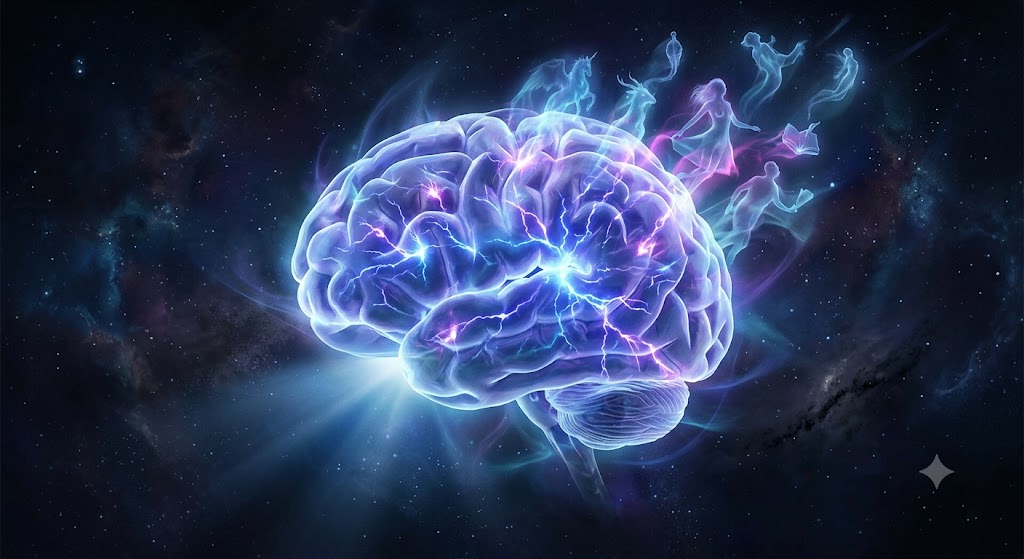
For as long as humanity has recorded its history, dreams have captivated us. Ancient Mesopotamian kings inscribed their dreams on wax tablets, Egyptians and Greeks viewed them as divine omens, and the second-century dream interpreter Artemidorus Daldianus compiled a five-volume encyclopedia on the subject. Despite millennia of fascination, the question remains stubbornly open: why do we dream?
Table Of Content
The answer, it turns out, is not a single explanation but a constellation of competing theories, each illuminating a different facet of this mysterious cognitive phenomenon.
The Case for “Meaningless Noise”
One of the most provocative positions holds that dreams serve no evolutionary function at all—they are merely the brain’s noise, a byproduct of more essential sleep processes.
The neurobiologist Owen Flanagan famously described dreams as “spandrels” —a term evolutionary biologists use for features that serve no survival or reproductive purpose. In his view, dreams are “unmusical fingers wandering over the piano keys,” mental static generated by brainstem activity during sleep.
This perspective gained scientific traction with the activation-synthesis hypothesis, proposed in 1977 by Hobson and McCarley. The theory posits that dreams arise when the sleeping brain attempts to synthesise random neural signals emanating from the brainstem into a coherent narrative. The cortex, ever the storyteller, imposes meaning on chaos—but that meaning is fundamentally accidental.
As one listener to a BBC programme on dreams put it: “The fact that we remember the dreams which we wake with suggests a connection between being able to remember and being awake… Memories are accessed randomly during sleep and then the storyline module does its best to make a narrative of these unrelated memories” .
Memory Processing: Dreams as the Brain’s Night Shift
A more widely supported theory positions dreams as integral to memory consolidation and processing. This view has gained substantial empirical backing from neuroscience.
Research has established that during sleep, the brain “replays” recent experiences at a neural level. Multi-unit recordings in animals show that sequences of brain activity first seen during exploration are reiterated during rest and sleep—first observed in the hippocampal memory system, then demonstrated across multiple cortical areas.
In humans, this reactivation has been experimentally linked to dream content. After extensively playing a downhill skiing arcade game, a third of participants’ sleep-onset dreams contained task-related imagery (“I keep seeing all the places where I fall—like, hit the walls”). More compellingly, participants who reported maze-task-related dreams during a nap showed strongly enhanced memory performance for the virtual environment.
However, dreams rarely replicate waking events exactly. Analysis comparing hundreds of dream reports with waking diaries found that while 51% contained elements from recent experience, only 2% were direct replicas. Instead, fragments—a character, a theme, an emotion—are woven into new narratives, stripped of their original context.
A dream report from one study captures this perfectly:
Waking memory: “When I left Starbucks… we had so many leftover pastries and muffins to throw away or take home. I couldn’t decide which muffins to take…”
Corresponding dream: “My dad and I leave to go shopping… One of the stores is filled with muffins, muffins, muffins from floor to ceiling, all different kinds, I can’t decide which one I want…”
Emotional Regulation: Dreams as Overnight Therapy
Another prominent theory suggests dreams help us process and regulate emotions, particularly threatening or unresolved ones.
The neurobiological evidence is striking. During REM sleep—the stage most associated with vivid dreaming—there is increased activity in the limbic system, particularly the amygdala, which processes emotions. Simultaneously, the prefrontal cortex, responsible for rational thought and impulse control, shows reduced activity. This combination may explain why dreams are often emotionally intense yet bizarre and illogical.
The threat simulation theory proposes that dreams evolved to rehearse responses to dangers, allowing us to practice threat avoidance in a safe environment. Prisoners’ dreams during and after the Second World War—including Polish survivors of Auschwitz—showed fascinating patterns: war-related threatening dreams were more common after the war than during imprisonment, while dreams of family and freedom were more frequent during imprisonment.
The Social Dreaming Hypothesis: Dreams Are Meant for Others
Perhaps the most radical recent proposal flips the question entirely. What if the function of dreaming does not occur during sleep at all, but upon waking, when dreams are shared with others?
Professor Mark Blagrove of Swansea University and his collaborator Julia Lockheart have pioneered this theory. Their research found that:
- People higher in empathy tend to share dreams more often and listen more attentively to others’ dreams.
- When friends or romantic partners discussed dreams together, the listener’s empathy for the dreamer increased significantly.
- Dream-sharing has been shown to increase marital intimacy more than sharing everyday events.
Blagrove’s argument is evolutionary: complex speech emerged approximately 150,000–200,000 years ago, enabling dream-sharing for the first time. Dreams, with their intensely emotional and personal content, became a uniquely powerful vehicle for self-disclosure and social bonding—what scholars call “human self-domestication,” the evolutionary process that favoured reduced aggression and increased cooperation.
He puts it provocatively: “The next time you wake up with a dream fresh in your mind, try to tell it to someone else as quickly as you can. It could be that the dream is meant for them, rather than for you. Like blushing, dreaming might be evolution’s way of forcing you to disclose yourself to others” .
The Neurobiology: How Dreams Are Generated
Whether or not dreams serve a function, neuroscience has made significant progress in understanding how they are produced.
The discovery of REM sleep in the 1950s by Kleitman and Aserinsky revolutionised dream research, linking rapid eye movements and desynchronised brain activity to vivid dreaming. Yet dreams also occur in non-REM (NREM) sleep—though they tend to be shorter, less vivid, less emotional, and more related to daily concerns.
High-density EEG studies involving over 1,000 awakenings have identified a “posterior hot zone” in the brain—regions near the back of the cortex—where activation correlates with dreaming. Within this zone, localised high-frequency activity correlates with specific dream contents: faces, spatial settings, speech, and perceived movement.
Crucially, dreaming appears possible as long as some brain areas remain locally activated, regardless of the global sleep state. This explains why dreams occur in both REM and NREM sleep, and why certain brain lesions can abolish dreaming entirely.
The Unresolved Mystery
Despite all this research, no consensus exists. The question remains philosophically and scientifically open:
- Is dreaming just evolutionary noise, a spandrel we project meaning onto?
- Does it consolidate memories and regulate emotions during sleep?
- Or is its true function social—to bind communities together through shared vulnerability?
Perhaps the answer is all of the above, layered across evolutionary timescales and individual lives. As one listener reflected on the mystery of dreams: “When someone comes up with a definitive answer… will we not have a sense of disappointment in the loss of a little mystery in our lives?”
Never Miss a Story: Join Our Newsletter