



The Hormuz Toll Gambit: How the U.S.-Iran Maritime Dispute Threatens the Doha Peace Process
The dispute over the Strait of Hormuz has become the central geopolitical chess match of the war, serving as Iran’s primary economic leverage and a major friction point in the Qatar-mediated peace...

The dispute over the Strait of Hormuz has become the central geopolitical chess match of the war, serving as Iran’s primary economic leverage and a major friction point in the Qatar-mediated peace talks.
Table Of Content
The crisis began immediately following the initial U.S.-Israeli strikes on February 28, 2026. What started as a physical blockade by Iran has evolved into a high-stakes legal and regulatory battle over who controls and profits from the world’s most critical energy corridor.
1. The Core of the Toll Dispute: A “New Navigational Order”
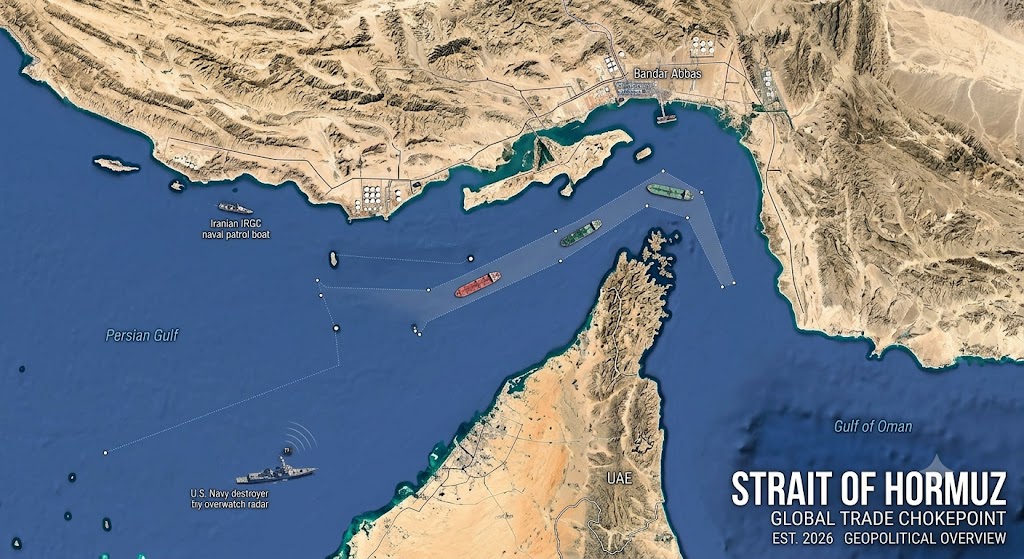
Historically, international shipping utilized the Strait of Hormuz under established freedom of navigation principles, traversing a two-mile-wide transit corridor that spans Omani and Iranian territorial waters. Iran is now actively attempting to upend this status quo, seeking to formalize long-term, post-war administrative authority.
- The “Route of Authority” vs. The Omani Bypass: Iran established a regulatory body—the Persian Gulf Strait Authority—demanding that all commercial vessels transit via an Iranian-designated northern corridor close to its coastline. Shippers are required to submit crew manifests, cargo details, and destinations directly to the Islamic Revolutionary Guard Corps (IRGC) Navy.
- The Toll Extortion Deadlock: Tehran has moved to levy transit fees and tolls on commercial vessels. The U.S. has flatly rejected this, with Treasury Secretary Scott Bessent declaring that Washington will not tolerate an Iranian tolling system, labeling it an attempt to “extort global maritime trade.”
- The Sanctions Trap for Shipowners: The toll dispute has created a severe legal paradox for international maritime firms. Because the IRGC manages the vetting and collection process, paying these tolls to secure safe passage constitutes a direct violation of U.S. and EU anti-terrorism sanctions. Shippers are caught between the physical threat of Iranian drone strikes and severe Western legal penalties.
- The Contested MoU Language: Under the temporary June 17 Memorandum of Understanding (MoU), both sides agreed to a 60-day pause on fees to allow for peace talks. However, the agreement is collapsing under conflicting interpretations. The U.S. claims the strait must remain entirely toll-free, while Iran points to vague clauses tasking them with “safe passage arrangements” to justify their enforcement of the northern route.
2. Impact on Global Oil Transit and Energy Markets
Because roughly 25% of global seaborne oil and 20% of liquefied natural gas (LNG) pass through this 24-mile-wide chokepoint, the conflict has caused the most severe global energy disruption since the 1970s.
The Physical Toll & Shipping Realities
- The Initial Collapse: Following coordinated IRGC actions—utilizing swarms of speedboats, missile strikes, satellite/GNSS spoofing, and sea mines—tanker traffic plummeted to near zero shortly after the war began. In April, the International Maritime Organization (IMO) reported that over 2,000 ships and 20,000 mariners were effectively stranded inside the Persian Gulf.
- The Fragile, Split Recovery: While traffic has clawed back from zero due to the interim ceasefire, it remains highly volatile and well below the pre-war average of 130+ daily crossings. Currently, the maritime layout is fragmented:
- The U.S./Oman Route: Many vessels attempt a southern route through Omani territorial waters, backed by a U.S. Navy overwatch operation using drone monitoring. However, the IRGC has actively patrolled the edges of this corridor with up to 60 speedboats at a time, declaring any uncoordinated route “unacceptable and dangerous.”
- Running Dark: A significant portion of transiting tankers choose to turn off their automatic transponders and “run dark” through the strait to avoid targeting or tracking by either side.
Global Economic Fallout
- Historic Price Spikes: March 2026 recorded the largest single-month increase in crude oil prices in history. Though prices briefly dipped toward pre-war baselines during early June ceasefire optimism, subsequent localized drone strikes on tankers have kept market premiums high.
- SOCIETAL IMPACT: The crippling of the supply chain has driven massive spikes in global war-risk shipping insurance. According to economic assessments, the resulting inflation in fuel, logistics, and food costs has cost the average American household roughly $1,000 in added expenses since February.
- Collateral Disruptions: Beyond crude oil and LNG, the gridlock has severely choked off the export of other critical regional commodities, including aluminum, chemical fertilizers, and a substantial portion of the world’s commercial helium supply.
The ongoing state funeral for Ayatollah Khamenei has paused formal diplomatic efforts to untangle this node in Doha. Energy analysts widely agree that even if a broader peace deal is struck, the pre-war era of frictionless transit through Hormuz is likely gone, replaced by a permanent Iranian demand for oversight
Never Miss a Story: Join Our Newsletter