



U.S.-Iran Latest: Talks Pause for Slain Ayatollah’s Funeral After Trump and Mediators Claim Progress
TEHRAN — Diplomatic efforts to formally end the U.S.-Iran war hit a temporary pause on Friday as Iran prepares for a massive, six-day state funeral for its slain supreme leader, Ayatollah Ali...

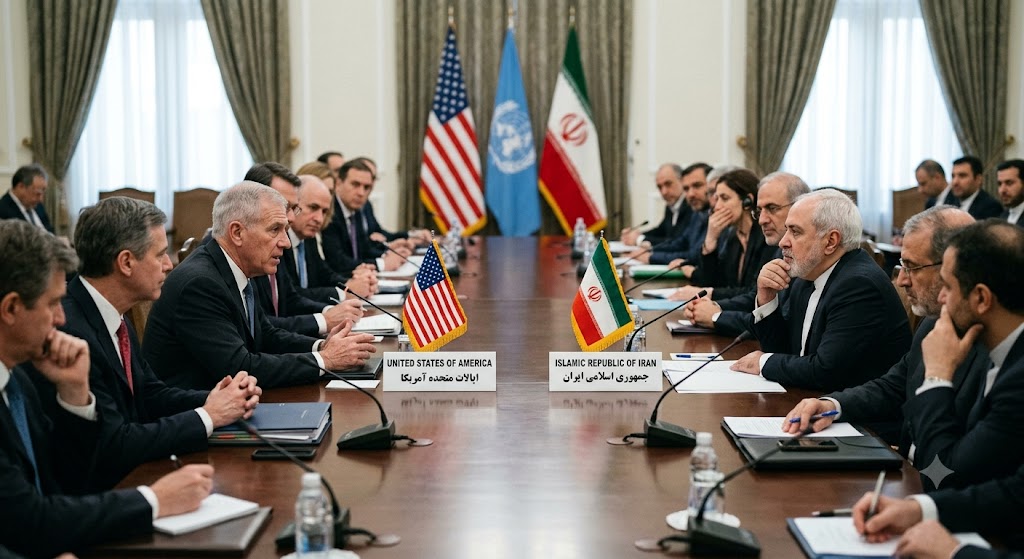
TEHRAN — Diplomatic efforts to formally end the U.S.-Iran war hit a temporary pause on Friday as Iran prepares for a massive, six-day state funeral for its slain supreme leader, Ayatollah Ali Khamenei.
Mediators from Qatar and Pakistan confirmed that indirect peace talks in Doha will halt until the conclusion of the funeral ceremonies, which are scheduled to run from July 4 through July 9. Iranian state media reported that Khamenei’s body arrived early Friday morning at the Imam Khomeini Grand Mosalla religious complex in Tehran. Authorities anticipate a staggering turnout of 15 to 20 million people, alongside delegations from roughly 30 countries.
The funeral represents a massive security and political moment for the Islamic Republic. It remains highly uncertain whether Khamenei’s son and newly appointed successor, Mojtaba Khamenei—who has completely avoided the public eye since taking power—will make his first open appearance.
Mixed Signals in the Search for Peace
Before the pause, negotiators had been working under a strict 60-day deadline established by a June 17 memorandum of understanding (MoU). While President Donald Trump struck an optimistic chord this week, asserting that “the denuclearization of Iran is moving along well,” regional analysts warn that the most volatile disputes have merely been swept under the rug.
Expert consensus suggests that the 60-day window will almost certainly need to be extended. According to regional intelligence and defense analysts, the two sides have barely touched the structural core of the conflict:
- The Nuclear Stockpile: While a tentative framework might restrict Iranian enrichment for 10 to 15 years, the fate of Iran’s 900-pound stockpile of highly enriched uranium remains unresolved. The U.S. demands its complete removal, but Iran has given no indication it will concede. Furthermore, satellite tracking shows continued construction at “Pickaxe Mountain,” a deeply buried nuclear site south of Natanz, suggesting Tehran is keeping its options open.
- The Strait of Hormuz: Control over the world’s most vital oil chokepoint remains a dead end. Hamidreza Haji-Babai, the deputy speaker of Iran’s parliament, publicly doubled down on Thursday, insisting the U.S. must respect Iranian and Islamic Revolutionary Guard Corps (IRGC) authority over the waterway. The U.S. has flatly rejected Iran’s attempts to implement transit tolls.
Meanwhile, commercial shipping through the strait is seeing a fragile, partial recovery. Last week, 258 ships braved the channel—up from 138 the week prior—following brief Iranian strikes on two commercial vessels in late June. However, daily traffic remains a fraction of pre-war levels.
Rhetoric Flairs as Regional Fault Lines Shift
The diplomatic friction was highly visible on social media. Iranian Foreign Minister Abbas Araghchi openly blasted the U.S. military presence on X (formerly Twitter), questioning whether U.S. Central Command (CENTCOM) brings “security or insecurity to our region.” Araghchi added that regional peace “can only be sustained when comprehensive and inclusive, with no outside interference.”
The regional fallout is also reshaping dynamics in neighboring Lebanon. Visiting Beirut for the first time, Syrian Foreign Minister Asaad al-Shaibani met with Lebanese officials to clarify rumors of a Syrian military intervention. Despite pressure from Washington for Syria to help neutralize Hezbollah, Shaibani explicitly reassured Lebanese leaders that Damascus has no intention of cross-border military action. Syria’s new leadership under President Ahmed al-Sharaa remains deeply hostile to Hezbollah—a sharp break from the Assad era—and has actively cut off the group’s former supply lines.
With the diplomatic machinery on hold for the next week, the region watches Tehran. The sheer scale of the upcoming funeral, combined with the mystery surrounding Iran’s new supreme leader, will likely set the tone for whether the Doha talks resume with genuine momentum or fracture entirely.
Never Miss a Story: Join Our Newsletter