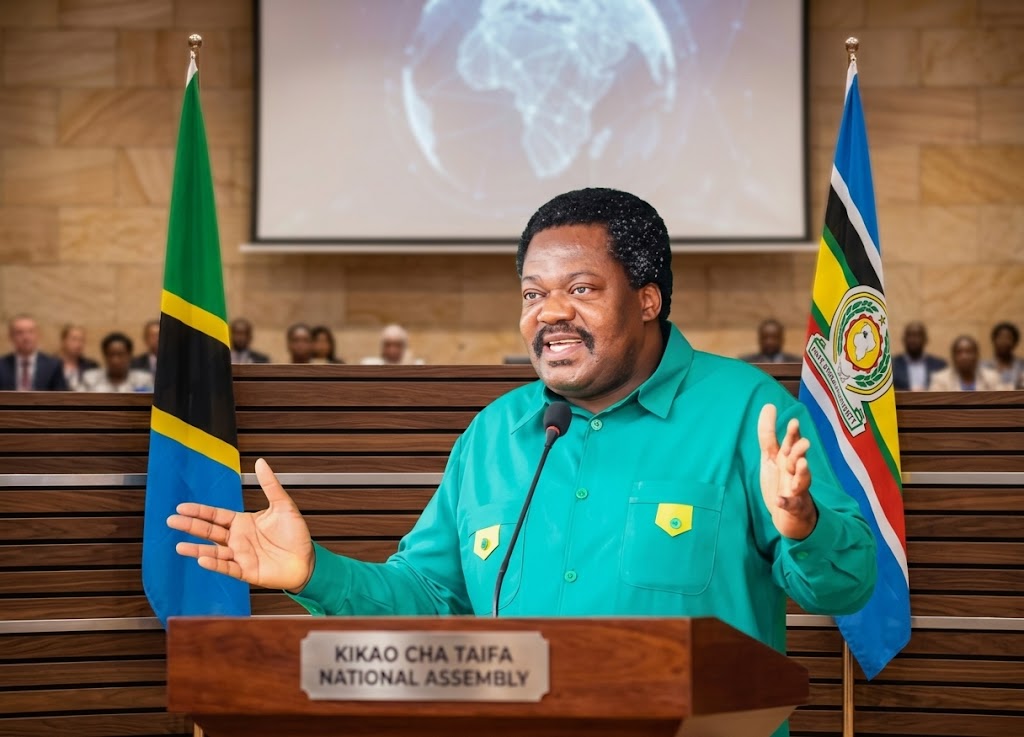
Tanzania’s Vice President, Dr. Emmanuel John Nchimbi, has formally tendered his resignation from office and announced his complete retirement from active politics and public service, effective September 4, 2026. In a official public notice issued from the Office of the Vice President in Dodoma on August 25, 2026, Dr. Nchimbi formally notified President Samia Suluhu Hassan of his decision to step down, bringing an unexpected conclusion to his tenure in the country’s second-highest executive office.
The sudden departure, marks a significant political shift within the ruling Chama Cha Mapinduzi (CCM) leadership, clearing a path for President Hassan to undertake a broader realignment of her executive team.
Constitutional Architecture and Legal Mechanisms
In his official resignation letter, Dr. Nchimbi invoked explicit constitutional provisions governing the vacancy and appointment of the vice-presidential seat. Specifically, he cited Article 50(2)(c) read together with Article 149(2) of the Constitution of the United Republic of Tanzania (1977).
- Seamless Succession: Under Article 50(2)(c), a vacancy in the vice-presidential office does not trigger a national election. Instead, it empowers the sitting President to nominate a replacement to serve out the remaining term.
- Parliamentary Ratification: The presidential nominee must be submitted to the National Assembly (Bunge) for confirmation by a majority vote of all Members of Parliament before taking the oath of office.
- Union Balance Mandate: Article 47 of the Tanzanian Constitution strictly dictates that the President and Vice President must not originate from the same part of the Union. Because President Samia Suluhu Hassan hails from the semi-autonomous archipelago of Zanzibar, her nominee for Vice President must strictly be a citizen from Mainland Tanzania.
Read Also: Nelson Mandela: The Prisoner Who Became a President
Reflecting on his departure, Dr. Nchimbi framed the move as the fulfillment of a solemn undertaking given to the Head of State a year prior.
“On August 27, 2025, I promised Her Excellency President Dr. Samia Suluhu Hassan that I would assist her and our country to the best of my ability and with utter faithfulness,” Dr. Nchimbi stated in his resignation notice. “I also assured her that whenever she sees the need for another Vice President, I will vacate the position. I am fully satisfied, without any doubt, that Her Excellency the President desires change, and thus I have decided to fulfil my promise.”
As reported by Nairobi Law Monthly and Citizen Digital, Dr. Nchimbi expressed gratitude to President Hassan and CCM for their trust while reassuring Tanzanians that he would continue to serve the nation as a private, patriotic citizen.
The Political Legacy of Dr. Emmanuel Nchimbi
Born on December 24, 1971, in the Mbeya Region, Dr. Emmanuel John Nchimbi built a distinguished three-decade career across state administration, party management, and international diplomacy. The son of former Regional Police Commander Mzee John Nchimbi, he entered public life through CCM’s vibrant youth organ, the Umoja wa Vijana wa CCM (UVCCM), rising to become its national chairman in 1998 while working at the National Environment Management Council.
| Career Era | Key Offices & Milestones |
| Early Leadership (1998–2005) | Chairman of UVCCM; environmental officer; key strategist in youth mobilization for CCM. |
| Parliamentary Tenure (2005–2015) | MP for Songea Town, securing landslide victories in both the 2005 (67.6%) and 2010 (59.9%) General Elections. |
| Cabinet Appointments (2006–2013) | Served under President Jakaya Kikwete as Deputy Minister for Information, Culture & Sports; Deputy Minister for Defence; Deputy Minister for Labour; Minister for Information; and Minister for Home Affairs. |
| Diplomatic & Party Posts | Ambassador of Tanzania to Brazil and Egypt; Secretary-General of CCM. |
| Academic Attainment | Earned a Bachelor’s degree, an MBA in Banking and Finance, and a Doctorate (PhD) from Mzumbe University. |
Nchimbi’s tenure as Vice President began in November 2025 following his nomination as President Hassan’s running mate. His complete withdrawal from active politics brings a decisive end to one of CCM’s most recognizable veteran careers.
Factional and Institutional Analysis
Dr. Nchimbi’s departure highlights several key strategic dynamics within Tanzania’s governance framework:
- Reinforcing Executive Deference: By framing his exit around a pre-existing pledge of loyalty to President Hassan, Nchimbi adheres to traditional CCM norms of executive deference. This prevents public rifts or factional friction from spilling into the open.
- Clear Runway for Policy Realignment: President Hassan gains complete latitude to restructure her senior executive circle, aligning cabinet priorities with economic modernization, infrastructure delivery, and international trade goals
- Internal CCM Balancing: High-level transitions within CCM typically serve as calibration points, ensuring that key regional bases, party wings, and generational factions remain aligned ahead of upcoming governance cycles.
Comprehensive Analysis of Potential Successors
With the Vice Presidency opening on September 4, 2026, attention turns to the National Assembly in Dodoma. President Hassan must select a prominent political figure from Mainland Tanzania who commands respect across both the parliamentary floor and CCM’s internal organs.
Top Potential Nominees
1. Dr. Doto Biteko (Deputy Prime Minister & Minister for Energy)
A prominent administrator from Geita Region, Dr. Biteko has managed key portfolios including Mining and Energy. Overseeing flagship strategic projects—such as the Julius Nyerere Hydropower Project and regional oil/gas developments—has elevated his national profile. As Deputy Prime Minister, he already executes executive coordination, making him a seamless fit for the Vice Presidency.
2. Dr. Mwigulu Nchemba (Prime Minister & Former Finance Minister)
A heavyweight economist and experienced lawmaker, Dr. Nchemba brings technical authority and deep roots within the CCM political apparatus. Shifting him from the premiership to the Vice Presidency would centralize national fiscal and development strategy inside the state house, though it would require President Hassan to execute a simultaneous appointment for Prime Minister.
3. Kassim Majaliwa (Former Prime Minister)
Having served as Prime Minister for a decade (2015–2025), Majaliwa represents administrative stability and procedural expertise. Possessing deep networks across Mainland constituencies and total familiarity with government machinery, his appointment would reassure institutional stakeholders and guarantee swift confirmation in Bunge.
4. January Makamba (Former Minister for Foreign Affairs)
Representing CCM’s reform-minded, modernizing wing, Makamba brings substantial international diplomatic capital and communication strength. Selecting a figure from the younger generation of leadership could reinforce President Hassan’s agenda of global engagement and economic open door policies.
5. Daniel Chongolo (Minister for Agriculture & Former CCM Secretary-General)
As former Secretary-General of CCM, Chongolo commands extensive grassroots support and understands the party’s organizational machinery intimately. His current leadership in the agricultural sector directly connects him to Tanzania’s primary economic engine, making him an attractive candidate for rural mobilization and party cohesion.
Read Also: Edwin Sifuna and Barack Obama: Striking Parallels Between Two Charismatic Political Leaders
Succession Matrix: Candidate Comparison
| Nominee | Current / Past Office | Regional Roots | Primary Strategic Advantage | Confirmation Feasibility |
| Dr. Doto Biteko | Deputy Prime Minister | Lake Zone (Geita) | Infrastructure management; executive administrative experience. | High: Highly regarded in Parliament. |
| Dr. Mwigulu Nchemba | Prime Minister | Central Mainland (Singida) | Economic policy authority; strong party grassroots backing. | High: Established parliamentary veteran. |
| Kassim Majaliwa | Former Prime Minister | Southern Mainland (Lindi) | Institutional continuity; deep legislative connections. | Very High: Unanimous party respect. |
| January Makamba | Former Foreign Minister | Coastal Mainland (Tanga) | Diplomatic reach; strong appeal to youth and urban cadres. | Moderate-High: Modernizing focus. |
| Daniel Chongolo | Minister for Agriculture | Eastern Mainland | Deep party organizational mastery; rural economic focus. | High: Strong backing among CCM delegates. |
Next Steps in the Executive Handoff
As the effective resignation date of September 4, 2026 approaches, the political process will move swiftly:
- Formal Transmittal: The Office of the President will formally communicate the resignation to the Speaker of the National Assembly.
- Presidential Nomination: President Samia Suluhu Hassan will submit her formal nomination for Vice President to Bunge.
- Parliamentary Vote: Members of Parliament will convene in Dodoma to vote on the nomination via secret ballot, requiring an absolute majority for confirmation.
- Swearing-In Ceremony: Upon confirmation, the newly appointed Vice President will take the oath of office at State House, Dodoma, assuming official duties immediately.
This constitutional transition highlights the resilience of Tanzania’s governance structures, ensuring administrative stability as the nation enters its next phase of executive leadership.
Never Miss a Story: Join Our Newsletter