The United States has made two major geopolitical moves that could reshape its relationship with Europe, Russia and some of the world’s biggest energy-consuming countries.
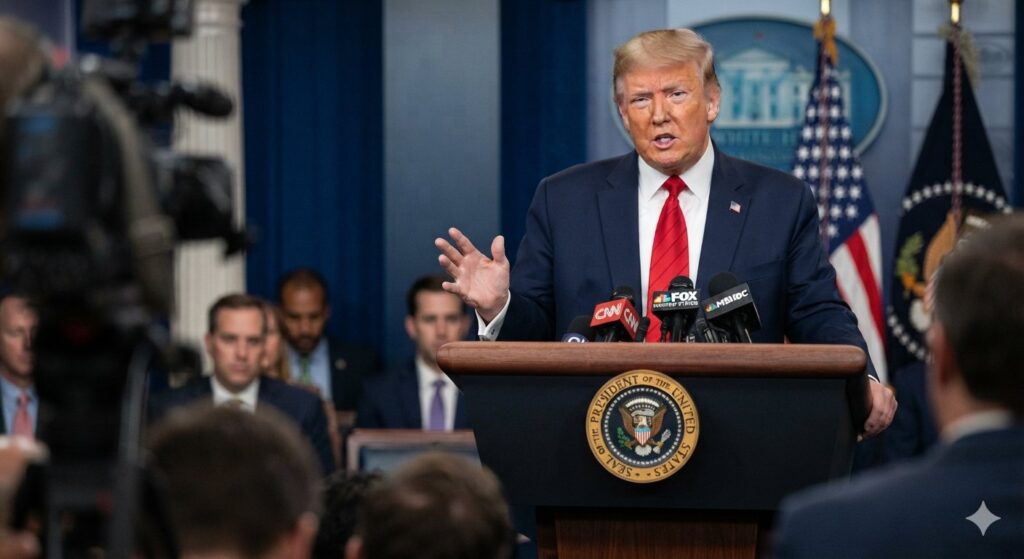
On Friday, September 18, 2026, President Donald Trump announced a new security agreement involving the United States, Denmark and Greenland that would allow Washington to significantly expand its military presence on the strategically important Arctic island.
On the same day, Trump signed sweeping new legislation imposing additional sanctions on Russia and giving his administration the power to impose tariffs of up to 100 percent on major buyers of Russian oil and gas.
Taken together, the developments underline Washington’s growing focus on strategic security, energy and the Arctic.
What Has Happened in Greenland?
Trump described the Greenland agreement as giving the United States “permanent control” over security and other security-related needs on the island.
According to the agreement announced by the three parties, the United States will be able to develop a significantly larger military presence in Greenland, while American adversaries will be prevented from establishing military bases or making certain sensitive investments there without Washington’s approval.
Greenland is strategically important because of its location between North America and Europe. It is also rich in mineral resources and sits along important Arctic routes.
The United States already operates the Pituffik Space Base in northwest Greenland, formerly known as Thule Air Base. The new arrangement would provide a framework for expanding America’s military footprint on the island.
However, Trump’s description of the deal as giving Washington “permanent control” should not be confused with a transfer of sovereignty.
Greenland Is Not Becoming American
This is one of the most important points surrounding the announcement.
Denmark and Greenland have stressed that Greenland remains within the Kingdom of Denmark and that its sovereignty and territorial integrity are preserved.
Greenland’s Prime Minister Jens-Frederik Nielsen said the agreement recognizes the sovereignty and territorial integrity of the Kingdom as well as the Greenlandic people’s right to self-determination. Denmark has similarly insisted that the arrangement respects its sovereignty.
The agreement is also not yet a fully operational treaty. The three governments are expected to sign the pact during next week’s United Nations General Assembly, after which it will require approval by the Danish and Greenlandic parliaments. Key details, including the precise scope of America’s military presence, have not yet been made public.
That means the phrase “US control of Greenland” needs to be treated carefully.
What has been announced is an expanded and potentially long-term American security role, not an announced transfer of Greenland from Denmark to the United States.
Why Greenland Matters to America
Greenland’s importance goes beyond its enormous size.
The island occupies a critical position in the Arctic and North Atlantic, placing it close to the air and maritime routes connecting North America and Europe.
It is also part of a region where the United States and its NATO allies are increasingly concerned about Russian military activity and China’s growing economic and strategic interest.
For Washington, therefore, Greenland is simultaneously a military, geographic and economic asset.
The new agreement seeks to ensure that America’s rivals cannot establish a comparable strategic foothold on the island.
NATO has welcomed the agreement, saying it could strengthen security, stability and cooperation in the Arctic and North Atlantic.
Then Came the Russia Sanctions
While the Greenland announcement was unfolding, Trump signed another consequential measure into law.
The Lindsey O. Graham Sanctioning Russia and Iran Act of 2026 expands sanctions against Russian officials, financial institutions and networks connected to Russia’s energy exports.
The legislation also targets Russia’s so-called “shadow fleet” of tankers that has helped Moscow continue exporting oil despite existing Western restrictions.
But perhaps the most consequential provision concerns countries that continue purchasing Russian energy.
The law gives Trump authority to impose tariffs of up to 100 percent on the largest purchasers of Russian oil and natural gas. Reuters reported that the legislation gives the president significant discretion over which countries would face such measures and how the powers would be used.
China and India are particularly important because they are among the largest buyers of Russian crude.
The law therefore has implications far beyond Russia itself.
India and China Could Feel the Pressure
If Washington eventually uses the new tariff powers against major Russian-energy buyers, countries such as India and China could find themselves caught between their energy relationships with Moscow and their trade relationships with the United States.
That does not mean a 100 percent tariff has automatically been imposed on India or China.
The legislation gives Trump the authority to impose such tariffs; it does not mean every provision will immediately be activated.
That distinction matters because the economic consequences could be substantial.
Higher tariffs on major trading partners could affect energy costs, global trade flows and the prices of goods entering the American market.
Reuters noted that the legislation creates uncertainty for the global economy because the tariff powers could potentially remain significant beyond Trump’s current presidency.
Two Moves, One Bigger Geopolitical Picture
The Greenland agreement and Russia sanctions are separate developments, but they point toward a broader strategic direction.
In Greenland, Washington is seeking a stronger long-term security position in a strategically vital region.
Against Russia, it is strengthening the economic tools available to pressure Moscow and countries that continue buying Russian energy.
The two developments also intersect with the increasingly important Arctic geopolitical contest.
As Arctic ice retreats and access to shipping routes and mineral resources becomes more strategically significant, the region is attracting greater attention from the United States, Russia, China, Canada and European countries.
Greenland sits directly inside that emerging strategic equation.
What Happens Next?
The Greenland agreement is expected to move toward formal signing during the United Nations General Assembly next week, followed by parliamentary processes in Denmark and Greenland. The precise terms of the agreement will become particularly important once the full text is available.
On Russia, the next major question will be whether and how Trump uses the new tariff powers.
The legislation gives Washington a much stronger potential weapon against countries purchasing Russian energy, but its actual economic impact will depend on implementation.
For the rest of the world, the developments will be closely watched.
Greenland has moved from being an obscure Arctic territory into the centre of global strategic competition. Russia’s energy exports remain a major component of the international economy. And the United States is now positioning itself to exert greater influence over both fronts.
The coming weeks could therefore reveal whether these announcements become lasting shifts in global security and trade — or the beginning of another round of diplomatic and economic negotia
Never Miss a Story: Join Our Newsletter