




Tata Chemicals Magadi Land Dispute: What the Kajiado Fight Reveals About Kenya’s Mineral Wealth
The escalating confrontation between the Kenyan government, Kajiado County and Tata Chemicals Magadi Limited has opened a much bigger debate than whether one company should continue mining soda ash...

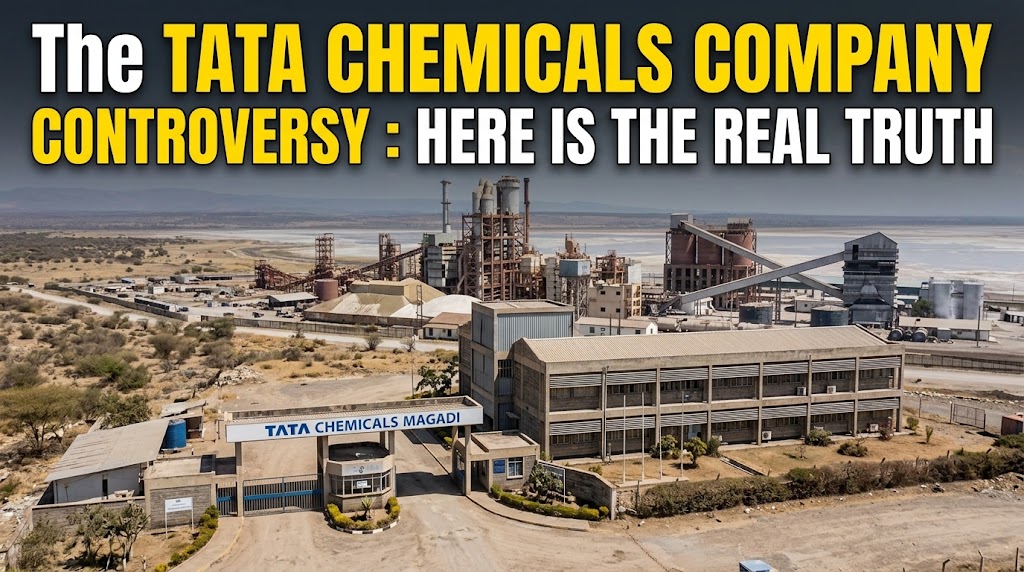
The escalating confrontation between the Kenyan government, Kajiado County and Tata Chemicals Magadi Limited has opened a much bigger debate than whether one company should continue mining soda ash at Lake Magadi.
Table Of Content
- Why Tata Chemicals Magadi is at the centre of the dispute
- The land dispute goes back years
- What happened to the Sh17.45 billion claim?
- Kajiado now claims Tata owes Sh13 billion
- A court previously stopped Kajiado from interfering with Tata’s operations
- Then came the government’s July suspension
- Ruto’s September directive changed the dispute
- Government and Tata then opened a new dialogue
- What does this mean for landowners and property buyers?
- The bigger question: who benefits from Kenya’s natural resources?
- What happens next?
At the centre of the dispute are land rights, mineral extraction, county revenue, royalties, community benefits, local manufacturing and the question of how much value Kenya should derive from its natural resources.
The confrontation intensified in July 2026 when the Ministry of Mining, Blue Economy and Maritime Affairs suspended Tata Chemicals Magadi’s mining operations. It escalated further on September 3 when President William Ruto ordered the company to leave Kenya, arguing that its century-old presence at Lake Magadi had not generated sufficient industrial and economic benefits for the local community.
Yet, days later, the government and Tata Chemicals agreed to establish a high-level technical committee to examine the unresolved issues.
That development means the story is still evolving.
Why Tata Chemicals Magadi is at the centre of the dispute
Tata Chemicals Magadi operates at Lake Magadi in Kajiado County, where natural soda ash is extracted from trona deposits.
Commercial soda ash production in the area dates back more than a century, with mining activities beginning in 1911. Tata Chemicals acquired the Magadi operation in 2005.
Soda ash is an important industrial mineral used in products including glass, detergents and various chemical applications. The Lake Magadi operation has consequently been an important part of Kenya’s mining and export economy.
But the government now wants more than extraction and export.
President Ruto has argued that Kenya should move further up the value chain by encouraging processing and manufacturing inside the country rather than exporting mineral products while importing finished goods.
The President has said future investment around Magadi should include facilities such as glass manufacturing and chemical processing.
This has transformed the Tata dispute into a wider debate about local value addition in Kenya’s mining sector.
The land dispute goes back years
The land component of the conflict is particularly complicated because it involves historical leases and long-running court proceedings.
Court records show that Tata Chemicals Magadi has relied on historical lease arrangements involving land at Lake Magadi and Lake Natron. A 2025 Environment and Land Court ruling recorded the company’s position that it had leasehold interests arising from a March 20, 1928 lease and a further lease dated December 9, 2004.
The dispute with Kajiado County has included disagreements over which portions of land are subject to county land rates and whether the county could impose certain royalties on soda ash.
This distinction is important because land rates and mineral royalties are not the same thing, and the legal authority to impose them has been contested in court.
What happened to the Sh17.45 billion claim?
This is one of the most important parts of the story.
Kajiado County had previously demanded approximately Sh17.45 billion from Tata Chemicals in alleged land rates and royalties covering the 2013–2018 period.
However, the Court of Appeal dealt with that particular demand in a judgment delivered on October 24, 2025.
The appellate court found that the demand had not been lawfully determined under the applicable legal framework and quashed the demand. It also addressed the county’s attempted levy of royalties on soda ash.
Therefore, the Sh17.45 billion figure should not be reported today as an amount that a court has confirmed Tata owes Kajiado County.
There is, however, a separate and more recent county claim.
Kajiado now claims Tata owes Sh13 billion
Kajiado Governor Joseph Ole Lenku recently claimed that Tata Chemicals owes the county approximately Sh13 billion in land rates.
Lenku made the claim during a Citizen TV interview on September 13, 2026, saying the county had pursued the matter through the courts and that the company had occupied a substantial area in Kajiado without paying what the county considers to be the required land rates.
The Sh13 billion figure is therefore the governor’s current claim, rather than a final judicial determination that Tata owes that amount.
That distinction matters because the broader land and rates dispute remains legally complicated.
A court previously stopped Kajiado from interfering with Tata’s operations
The courts have also previously intervened when attempts were made to shut down Tata’s Magadi operations over the rates dispute.
In January 2025, the Environment and Land Court at Kajiado issued an injunction restraining the county government and others from trespassing on, closing, blocking or otherwise interfering with Tata’s premises and business operations pending determination of the case.
The ruling followed a dispute involving a demand of Sh358.748 million in land rates for 2023 relating to a specific property.
The case illustrates why the present confrontation cannot simply be reduced to a political demand for payment or an instruction for the company to leave.
There are legal proceedings, historical leases and competing interpretations of the applicable legislation.
Then came the government’s July suspension
On July 28, 2026, the Ministry of Mining ordered Tata Chemicals Magadi to suspend its mining operations.
The government cited regulatory and compliance concerns, including issues relating to mineral beneficiation, value addition, royalties and reporting.
Tata Chemicals subsequently said it had provided the government with the requested information and documentation.
In an August 17 statement, the company said mining operations had remained suspended since July 28 in compliance with the government directive and that it was awaiting further instructions from the ministry. Tata also maintained that it had demonstrated compliance with applicable regulatory requirements.
That is the company’s position and should be distinguished from the government’s allegations or regulatory findings.
Ruto’s September directive changed the dispute
The confrontation reached another level on September 3.
President William Ruto ordered Tata Chemicals to end its operations in Kenya, arguing that the company had operated at Magadi for more than a century without generating sufficient local industrial benefits.
The President said Kenya should seek investors prepared to establish manufacturing facilities in Kajiado, including glass and chemical industries.
He also argued that the country should obtain greater value from its mineral resources instead of simply extracting and exporting them.
Tata Chemicals responded by saying it respected the authority of the Kenyan government and remained committed to resolving the outstanding issues through legal and regulatory engagement.
The company reiterated that it had submitted the information requested by the ministry and considered itself compliant with applicable regulatory requirements.
Government and Tata then opened a new dialogue
Perhaps the most interesting development came shortly afterwards.
On September 8, Mining Cabinet Secretary Hassan Joho met Tata Chemicals executives.
The meeting resulted in an agreement to establish a high-level technical committee jointly involving the government and Tata Chemicals.
The committee is expected to examine five broad areas:
- Mineral beneficiation and in-country value addition
- Community benefits and royalty obligations
- Unresolved land matters
- Opening the area to multiple mineral-extraction activities
- Outstanding matters between Tata Chemicals and Kajiado County Government
The committee will be jointly led by the Principal Secretary for Mining and the CEO of Tata Chemicals Magadi and will submit its findings to the Cabinet Secretary.
This creates an important new dimension to the story.
While the President has publicly ordered Tata to leave, the Ministry is simultaneously engaging the company through a formal technical process to examine the unresolved issues.
What does this mean for landowners and property buyers?
For Kenyans interested in land investment in Kajiado and other rapidly developing areas, the Tata dispute offers an important lesson.
Land is not simply about acreage.
A buyer may look at a large parcel, a low price and proximity to a major road and conclude that the property represents a good investment.
But the legal history of the land can be equally important.
Before purchasing land, investors should establish:
- Who holds the registered title?
- What is the history of the title?
- Are there historical leases or claims affecting the property?
- Are there pending court cases?
- Are there county rates or other charges attached to the property?
- Are there restrictions on the use of the land?
- Does the land sit within an area affected by mining, infrastructure or other government projects?
- Are there community or environmental obligations affecting the proposed development?
The Tata case demonstrates why land due diligence in Kenya must go beyond looking at a title deed.
The bigger question: who benefits from Kenya’s natural resources?
The Magadi dispute ultimately raises a fundamental question about Kenya’s economic development.
When a valuable natural resource is found in a particular community, who should benefit from it?
The national government has regulatory responsibilities. County governments have their own constitutional functions and revenue interests. Investors provide capital, technology and employment. Host communities expect jobs, infrastructure, environmental protection and a share of the economic benefits.
Finding the balance between these interests is not always straightforward.
The government is now pushing the argument that mineral extraction should generate more local manufacturing, employment and value addition.
Tata, meanwhile, maintains that it has complied with regulatory requirements and wants to resolve the dispute through established legal and regulatory channels.
The technical committee now has the task of examining the outstanding questions.
What happens next?
Several questions remain unanswered.
Will Tata Chemicals eventually resume operations?
Will the government proceed with its plan to bring in another investor?
Will a new operator be required to establish glass and chemical manufacturing facilities in Kajiado?
How will the historical land arrangements be interpreted?
What will happen to the county’s current Sh13 billion land-rates claim?
And perhaps most importantly, what will happen to the employees, contractors, suppliers and communities whose livelihoods are connected to the Magadi operation?
These questions cannot be answered merely by the political statements surrounding the dispute.
They will depend on the outcome of the technical review, applicable mining and land laws, ongoing legal processes and negotiations between the government, county authorities, Tata Chemicals and other stakeholders.
For now, the Tata Chemicals Magadi land dispute is no longer simply a fight over land rates.
It has become a national conversation about who controls Kenya’s mineral wealth, how investors should operate, what host communities should receive, and whether Kenya should demand greater value addition from the natural resources extracted from its soil.
The outcome could influence how future mining agreements are negotiated across the country.
Never Miss a Story: Join Our Newsletter