




Kenya Dairy Board Confirms Temporary Milk Shortage
NAIROBI, Kenya — September 2, 2026 — The Kenya Dairy Board (KDB) has confirmed nationwide milk supply constraints, citing a sharp drop in formal deliveries to processors driven by unfavorable...

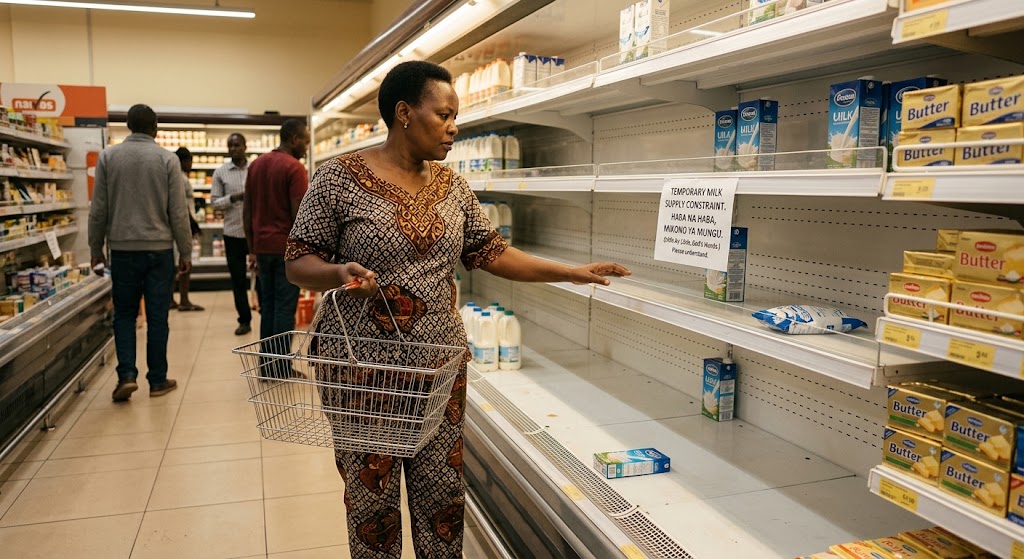
NAIROBI, Kenya — September 2, 2026 — The Kenya Dairy Board (KDB) has confirmed nationwide milk supply constraints, citing a sharp drop in formal deliveries to processors driven by unfavorable seasonal weather and elevated farm production costs.
Table Of Content
According to official data released by the dairy regulator, formal milk intake fell by 3.7 percent—from 84.4 million liters in June 2026 down to 81.3 million liters in July. Preliminary monitoring for August indicates a further decline in intake as dry and cold spells persist across key milk-producing zones.
Despite empty supermarket shelves in parts of Nairobi and surrounding urban areas, the regulator has assured the public that the shortage is temporary.
“Milk continues to be available in the market, despite temporary supply constraints being experienced in some parts of the country,” said KDB Managing Director Dr. William Maritim. “Consumers and stakeholders are therefore reassured that the current situation is temporary.”
Retail Disruption and Price Pressures
Market surveillance conducted by the board revealed inconsistent stocks across major retail outlets, with pasteurized fresh milk bearing the brunt of the shortfall. Long-life varieties, including Extended Shelf Life (ESL) and Ultra-High Temperature (UHT) milk, have remained comparatively more accessible to consumers.
In several retail markets, consumers have reported price hikes of Ksh 3 to Ksh 5 on 500-milliliter packets, alongside temporary purchase limits set by supermarkets to manage inventory.
Pasture Deficits and Fuel Costs Drive Squeeze
Industry stakeholders attribute the supply contraction primarily to prolonged cold, dry weather that has severely depleted pasture and fodder reserves in high-yield dairy belts such as Kericho, Central Kenya, and the Rift Valley.
“What the cooperative societies are collecting now is below 60 percent,” noted Moses Rotich, Chairman of the Kericho Dairy Cooperative Union. “The short rainfall has reduced the production of fodder, and high fuel costs mean farmers who rely on diesel-powered tractors cannot conserve feed efficiently.”
Government Interventions and Rain Forecast
The Kenya Dairy Board expects production levels to rebound with the onset of the October–November–December (OND) short rains. Met Department forecasts indicate improved rainfall that should restore pasture growth and fodder reserves.
To cushion the sector against future climate shocks, the Ministry of Agriculture and Livestock Development is accelerating structural support programs. Key initiatives currently underway include:
- Milk Aggregation Infrastructure: Procurement and distribution of commercial milk coolers to rural cooperatives to minimize post-harvest losses.
- Genetics and Herd Improvement: Provision of subsidized sexed semen to boost milk yields and improve herd genetics nationwide.
The regulator stated it will continue tracking formal deliveries and retail pricing to ensure market stability while seasonal recovery takes effect.
Never Miss a Story: Join Our Newsletter