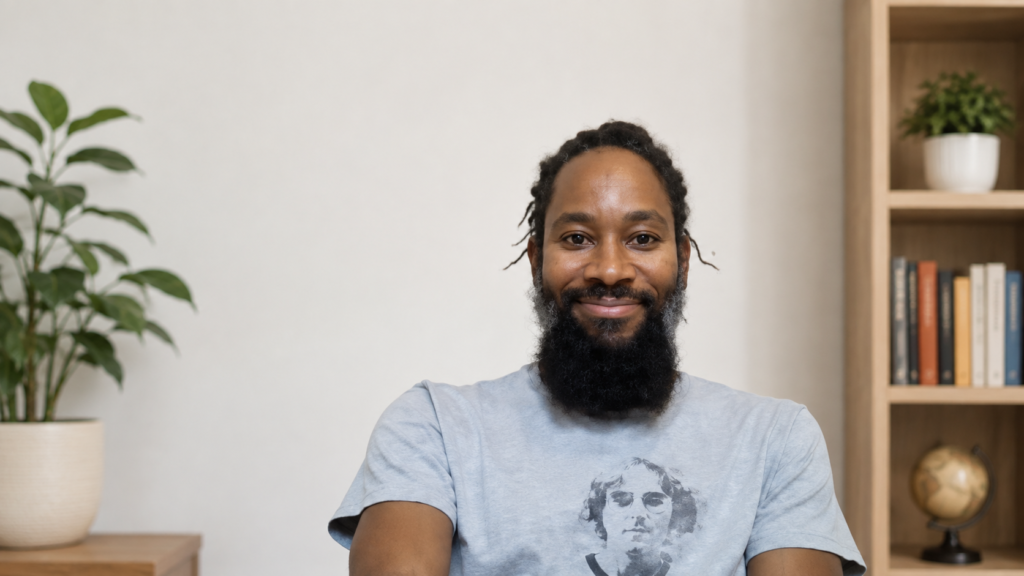
Former Cambridge professor Jason Arday has been found dead at his south London home, just days after resigning from the university amid a widening controversy over plagiarism allegations and questions about claims in his academic and personal history. Police have described his death as unexpected but not suspicious.
The death of Jason Arday, 41, has brought a dramatic and deeply troubling end to one of the most extraordinary stories in British academia.
Arday became an international symbol of educational perseverance when he was appointed Professor of Sociology of Education at the University of Cambridge in 2023, becoming the youngest Black professor in the university’s history.
Three years later, his academic career had collapsed amid allegations of plagiarism, questions over his qualifications and professional affiliations, and scrutiny of a number of extraordinary claims about his sporting and charitable achievements.
Then, on August 5, he resigned from Cambridge.
Nine days later, on August 14, he was found unresponsive at his home in Battersea, south London.
The Metropolitan Police said a 41-year-old man was pronounced dead at the scene. His next of kin were informed and supported by officers. Police said the death was being treated as unexpected but was not believed to be suspicious, with a file to be prepared for the coroner. They have not publicly confirmed suicide as the cause of death.
That distinction is important.
While the circumstances have inevitably prompted speculation about whether Arday took his own life following the intense controversy, there is currently no official confirmation that his death was suicide.
From an extraordinary childhood to Cambridge
Arday’s biography was central to the remarkable story surrounding his rise.
According to his own account and the biography accompanying his memoir, Great and Unfortunate Things, Arday was diagnosed with autism and global developmental delay as a young child.
He has said that he remained non-verbal until he was 11 and did not learn to read and write until he was 18.
His mother, Giff, became a major figure in his story, refusing to accept the limitations that doctors and educators had placed on her son.
Against that background, Arday eventually entered higher education and built an academic career focused heavily on race, education and inequality.
His rise was extraordinary.
By 2023, at just 37, he had reached one of Britain’s most prestigious universities.
Cambridge presented him as a pioneering figure and he became its youngest-ever Black professor. His story was celebrated well beyond academia because it appeared to demonstrate the possibility of overcoming profound childhood disadvantage.
His memoir was scheduled for publication by Simon & Schuster later in August 2026 and tells essentially that story of transformation—from a child who struggled to communicate and learn to read and write into a Cambridge professor.
But behind the inspirational public narrative, questions about his academic record had already begun to emerge.
The plagiarism allegations
The most serious controversy concerned Arday’s doctoral thesis.
Arday obtained his PhD from Liverpool John Moores University in 2015.
According to reporting by The Telegraph, more than 100 passages in his doctoral thesis appeared similar to material in an earlier thesis by Paula Zwozdiak-Myers, a Brunel University student.
Arday rejected allegations that he had deliberately plagiarised.
There is an important complication here.
Liverpool John Moores University had previously investigated the plagiarism allegations and did not uphold a finding of plagiarism. The university reportedly concluded that the similarities were probably the result of what it described as “honest and reasonable error.”
Arday subsequently maintained that academic misconduct investigations had cleared him.
That means it would be inaccurate to report simply that “Cambridge discovered Arday had plagiarised his PhD.”
Cambridge had not reached such a finding.
Rather, allegations had been made, an earlier investigation had not upheld them, and Cambridge later opened a fresh investigation after receiving what it described as new information concerning Arday’s academic qualifications and honorary appointments.
The allegations went beyond plagiarism
The controversy expanded rapidly.
Questions were raised about several universities and academic positions that Arday had reportedly listed in biographies.
His biography stated that he had been a visiting professor at Ohio State University and the University of Glasgow.
Both institutions denied that he had held the positions described.
Questions were also raised about his relationship with Durham University and claims concerning a master’s degree at Birkbeck, University of London. Birkbeck reportedly told the Guardian that it could not find records of Arday having studied there.
Another claim concerned a book that Arday had supposedly published with Palgrave Macmillan.
The publisher confirmed that it had received a proposal from him, but the book was never published.
None of these allegations should automatically be characterised as proof that Arday deliberately fabricated his CV. But collectively, they created serious questions about the accuracy of information associated with his professional biography.
Extraordinary claims about sport
The scrutiny then moved into another area: Arday’s sporting achievements.
He had spoken publicly about running extraordinary distances for charity.
One claim was that he had completed 30 marathons in 35 days.
Another claim concerned a 600-mile running challenge.
Questions were raised about the chronology and feasibility of some of these accounts.
There was also scrutiny of claims that he had played football for Crystal Palace as an under-18 player.
Crystal Palace reportedly said it had no records from the relevant period, although the club also noted that its records from the late 1990s and early 2000s were incomplete.
Arday was reportedly known to have played for Lewisham Borough at a lower level of English non-league football.
Again, these questions are not the same thing as a formal finding that every claim was fabricated.
But they contributed to a rapidly growing cloud of doubt around the public biography that had helped make Arday such an inspirational figure.
The £5 million fundraising claim
Another striking claim concerned charitable fundraising.
Arday had reportedly said in interviews that he had raised approximately £5 million for charity over two decades.
At other times, the figure was reported as £5.5 million.
When questioned about the amount, Arday explained that the money had been raised with the assistance of fundraising collectives over many years.
Questions were subsequently raised about how the figure could be substantiated.
There were also questions about claims concerning overseas charitable activities.
Arday had said that he had travelled to parts of South America and West Africa with WaterAid-related activities to install water points.
WaterAid told the Guardian that it did not send volunteers abroad in that way and did not encourage or facilitate self-funded overseas visits.
Arday’s memoir reportedly refers to travelling to Brazil to install a well but does not identify WaterAid as being involved.
Then came the allegations of harassment and racism
This is where the story becomes even more complicated.
Arday was not simply facing academic criticism.
He also said he had experienced serious racist abuse and threats.
Cambridge had previously acknowledged that his emails had required screening because of the volume and nature of hostile communications.
Arday described receiving threats and claimed that his family had been targeted.
He also spoke of an incident involving a severed pig’s head allegedly delivered to his parents’ home.
He said there had been police involvement.
However, the Guardian subsequently investigated some of these claims and reported significant discrepancies.
The newspaper reported that the Metropolitan Police had told it that no investigation matching Arday’s account of the alleged pig-head incident had taken place.
The newspaper also reported that Arday had described encounters with masked men carrying knives at his faculty building, but that these incidents were not captured on CCTV and had not been reported to colleagues at the time.
This does not mean that Arday never experienced racism or abuse.
Indeed, the existence of racist abuse directed at him has been acknowledged by Cambridge and reported by multiple outlets.
Rather, it demonstrates why the controversy became so difficult to separate into simple categories of “victim” and “fraud”.
Some allegations against him were disputed.
Some claims about his experiences were themselves questioned.
And simultaneously, there was evidence that he had been subjected to racist hostility.
Both things can be true.
Cambridge initially defended him
Perhaps one of the most significant developments was Cambridge’s changing position.
When the allegations first emerged, the university strongly defended Arday.
The university had previously described the campaign against him as an attack on his credibility.
But as additional claims and questions accumulated, the situation changed.
On August 5, Cambridge announced that it was launching an investigation following what it called “new information” about Arday’s academic qualifications and honorary appointments.
The university also said separate complaints concerning academic misconduct remained ongoing.
It stressed that any investigation had to be conducted fairly and according to university policies and employment law.
Jesus College, where Arday was a fellow, announced its own process.
Within hours, Arday resigned.
Arday’s resignation
His resignation letter provides perhaps the clearest insight into the pressure he believed he was experiencing.
Writing on August 5, Arday said that the public scrutiny and personal attacks had become overwhelming.
He said the accusations and public commentary had taken a profound toll on him and his loved ones.
He said he had reached a point where the personal cost had become too great and that he wanted to reclaim some peace and privacy for himself and his family.
He insisted that his resignation should not be interpreted as an admission of the allegations surrounding him.
Instead, he described it as the decision of someone who had reached the limits of what a person could reasonably be expected to endure.
The timing would become tragically significant.
Nine days later, he was dead
Arday was found dead on Friday, August 14.
The police statement was deliberately cautious.
He was 41.
Officers said his death was unexpected but not suspicious.
The matter was being investigated and a report would be prepared for the coroner.
At the time of publication, authorities had not publicly established that he died by suicide.
That is why responsible reporting should resist turning the timing of his death into a confirmed explanation for it.
The sequence is undoubtedly striking:
August 5: Arday resigns from Cambridge.
August 12: Cambridge’s vice-chancellor issues a statement confirming plans for an independent inquiry into the circumstances surrounding his appointment.
August 14: Arday is found dead at his home in south London.
The chronology raises obvious questions.
But chronology alone cannot establish causation.
His family blames a campaign of misinformation
After his death, Arday’s family issued a statement through his publisher.
They said he had been subjected to a sustained campaign of abuse for more than three years, dating from his appointment at Cambridge.
They said the campaign of misinformation had become too much for him.
The family described him as a gentle person and asked the media to stop what they characterised as continuing harassment of him and his relatives.
London Mayor Sadiq Khan also described Arday as the victim of what he called a public shaming and campaign of abuse.
But these statements represent the family’s and others’ interpretation of the circumstances surrounding Arday’s death.
They should not be presented as an official determination of the cause of death.
Cambridge now faces uncomfortable questions
Arday’s death leaves Cambridge with a difficult institutional question.
How did a man with such an extraordinary public biography rise to one of the most prestigious academic positions in Britain?
And if some of the questions now being raised about his qualifications and professional history are substantiated, how did those discrepancies survive the appointment process?
Cambridge has already indicated that it will examine the circumstances surrounding his appointment.
The university’s vice-chancellor has also said the institution will conduct an independent inquiry.
That investigation may therefore become almost as important as the original allegations.
The issue is not simply whether Arday was guilty or innocent of particular allegations.
It is also whether Cambridge’s procedures for checking senior academic appointments were sufficiently rigorous.
The Financial Times reported that Cambridge would review its senior academic appointment process following the controversy.
A tragedy that cannot be reduced to a single narrative
There are now competing narratives surrounding Jason Arday.
One portrays him as a pioneering Black academic subjected to an extraordinarily aggressive campaign of public humiliation and racial hostility.
Another portrays him as an academic whose spectacular rise was built around claims that could not withstand serious scrutiny.
There is also a third possibility: that the reality was considerably more complicated than either narrative.
The available evidence already suggests that.
Arday’s previous plagiarism investigation did not uphold the allegations.
At the same time, serious new questions were subsequently raised about his academic work and biography.
He acknowledged making some academic “mistakes” while strongly rejecting the wider portrayal of himself as a liar or academic fraud.
And there is documented evidence that he experienced racist abuse while some of his own claims were also challenged or contradicted.
The temptation after a sudden death is to select whichever narrative best fits one’s existing beliefs.
That would be a mistake.
What we know — and what we do not
What is established:
- Jason Arday was 41.
- He became Cambridge’s youngest Black professor in 2023.
- He resigned from Cambridge on August 5, 2026.
- Cambridge had announced an investigation into his academic qualifications and honorary appointments.
- He had faced plagiarism allegations which he denied.
- His PhD had previously been investigated by Liverpool John Moores University, which did not uphold the plagiarism allegations.
- Additional questions had emerged about his academic affiliations, sporting achievements, charitable work and other claims.
- He was found dead at his south London home on August 14.
- Police have described the death as unexpected but not suspicious.
- His family says a prolonged campaign of abuse and misinformation contributed to what happened.
What remains unconfirmed:
- The official cause of death.
- Whether Arday died by suicide.
- Whether the Cambridge investigation would ultimately have substantiated any of the allegations against him.
- Whether the controversy directly caused or contributed to his death.
Those distinctions matter enormously.
The final irony
There is something particularly poignant about the timing of Arday’s death.
His memoir, Great and Unfortunate Things, was scheduled for publication by Simon & Schuster on August 27.
The book tells the story of a child who was once believed by some to have severe limitations and who eventually reached the summit of British academia.
It was supposed to be a story about overcoming barriers.
Instead, Arday’s death has turned the book—and his entire public biography—into something much more complicated.
His life now sits at the intersection of several difficult questions:
Can an inspirational story become so powerful that institutions stop questioning it?
Can legitimate scrutiny become a destructive public campaign?
Can both academic accountability and racial discrimination exist in the same story?
And what responsibility do universities, journalists and online audiences have when a public figure comes under intense scrutiny?
Those questions will outlive the immediate headlines.
For now, however, one fact should remain at the centre of the story: Jason Arday is dead, and the official circumstances of his death have not yet been fully established.
Until the coroner and authorities provide those answers, claims that he “committed suicide because of the plagiarism scandal” remain speculation rather than established fact.
Newsly will update this story as further information becomes available.
Never Miss a Story: Join Our Newsletter