


Dr. Johann Ludwig Krapf: The Missionary Who Opened East Africa
Few missionaries combined exploration, linguistics, and tireless evangelism quite like Johann Ludwig Krapf. A German Lutheran who became the founding father of the Anglican Church of Kenya, he was...

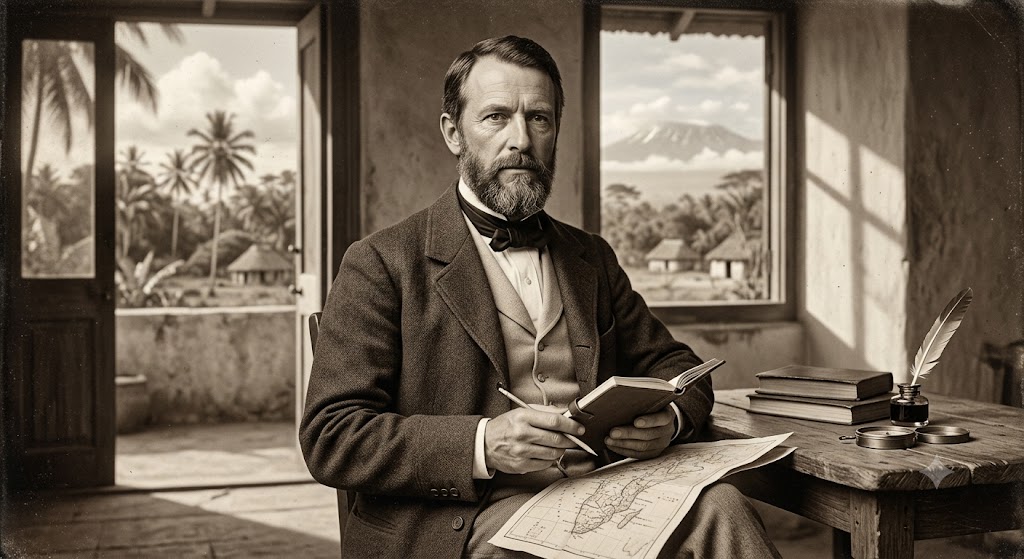
Few missionaries combined exploration, linguistics, and tireless evangelism quite like Johann Ludwig Krapf. A German Lutheran who became the founding father of the Anglican Church of Kenya, he was among the first Europeans to see the snow-capped peaks of Mount Kenya and Kilimanjaro, pioneered the linguistic study of Swahili and other East African languages, and translated portions of the Bible into multiple African dialects . His life was marked by profound personal tragedy, yet he never wavered in his conviction to bring the Gospel to the peoples of East Africa.
Table Of Content
Early Life: A Gift for Languages
Johann Ludwig Krapf was born on January 11, 1810, into a prosperous Lutheran farming family in Derendingen, near Tübingen, in southwest Germany . From his earliest school days, he displayed an extraordinary gift for languages, studying Latin, Greek, French, and Italian before he had even finished his formal education .
At the age of 17, he joined the Basel Mission Seminary, but doubts about his missionary vocation led him to discontinue his studies . He instead read theology at the University of Tübingen, graduating in 1834 . While working as an assistant village pastor, he met a Basel missionary who rekindled his calling to serve overseas . That encounter changed the course of his life.
Read Also: Nelson Mandela: The Prisoner Who Became a President
Ethiopia: The First Mission Field
In 1836, Krapf was invited by the Anglican Church Missionary Society (CMS) to join their work in Ethiopia . The Basel Mission seconded him to the Anglicans, and from 1837 to 1842 he labored in this ancient Christian land . He prepared himself meticulously, learning ancient Ge’ez and the Amharic language of the highlands.
Landing at Tadjura, Krapf followed the trade route to Shewa, where he presented himself to its ruler, Meridazmach Sahle Selassie, and later accompanied the ruler on a military campaign in southern Shewa . His pietist background, however, did little to help him understand or appreciate traditional Ethiopian Christianity, with its emphasis on saints, liturgy, and the use of Ge’ez—a language no longer spoken .
Krapf centered his interest on the Oromo people (then known as the Galla), who were largely traditional believers . He learned their language and began translating parts of the New Testament into it. In 1842, he received a doctorate from the University of Tübingen for his research into Ethiopian languages . That same year, however, all Western missionaries were expelled from Ethiopia, ending his work there . In association with his colleague Carl Wilhelm Isenberg, he published a memoir of his time in Ethiopia, Journals of Isenberg and Krapf, in 1843 .
Tragedy in Mombasa
Krapf spent some time in Alexandria, Egypt, where he married Rosina Dietrich, a Swiss woman . From there, he set off for East Africa, hoping to reach the Oromo from what is now the Kenyan coast. Most of the East African coastline was then part of the Zanzibar sultanate, and Sultan Sayyid Said gave him a permit to start a missionary station at the coastal city of Mombasa .
The arrival was marked by profound tragedy. Soon after reaching Mombasa, his wife Rosina contracted malaria and died in July 1844 . Their infant daughter died just ten days later . Krapf was too ill to attend his wife’s funeral . He buried both of them on the African coast and pressed on, his grief fueling his work rather than paralyzing it.
He moved to the higher grounds of Rabai on the coastal hills and established his station, New Rabai (Rabai Mpya) . It was here that he wrote the first dictionary and grammar of the Swahili language, laying the foundation for all subsequent linguistic work in the region . He also began studying other African languages, drafting dictionaries and translating sections of the Bible. Working with a Muslim judge named Ali bin Modehin, he translated the Book of Genesis into Swahili, followed by the New Testament and the Book of Common Prayer .
Exploring the Interior: The Mountains of Snow
In 1846, Krapf was joined by Johannes Rebmann, another southwest German Lutheran serving with the CMS . Together, they set off to explore the interior of East Africa. In 1848, Rebmann became the first European to see Kilimanjaro, and on December 3, 1849, Krapf became the first European to see Mount Kenya .
Krapf spotted the mountain from the town of Kitui, approximately 90 miles away, through a break in the clouds . He asked his guide, Chief Kivoi of the Akamba, for the mountain’s name and was told “Kirinyaga.” Due to pronunciation differences, Krapf wrote it as “Mt. Kenya”—the name that would eventually be given to the entire country .
The reports of snow-capped equatorial mountains were ridiculed by European experts . Krapf returned to the region in 1851 to gather more evidence, but his expedition was disrupted by raiding parties, and he did not see the mountain again . It would be decades before other explorers confirmed his discoveries.
Krapf and Rebmann also gathered reports of a vast inland lake, which would later be identified as Lake Victoria . Their accounts of this “great lake” stimulated the scientific exploration of the sources and drainage system of the Nile .
Read Also: Elisabeth Elliot: The Woman Who Chose Forgiveness Over Revenge
Later Years and Lasting Legacy
Krapf’s deteriorating health forced him to return to Germany in 1853 . He brought with him several old Swahili manuscripts, including copies of the Book of the Battle of Tambuka, the earliest known Swahili manuscript . In Korntal, he continued his linguistic studies and advisory work for Christian missions .
He remained active until his death. In 1866, he helped an Ethiopian scholar prepare the four Gospels in Tigre for publication . He continued working on editions of the Bible in Amharic and Ge’ez . In 1870, he prepared the Gospel of Luke in Oromo with the help of a Galla man, and Genesis was published in Oromo in 1872 .
In 1867, despite his advanced age, he accompanied the British expedition to Ethiopia . On November 26, 1881, Johann Ludwig Krapf died while at prayer on his knees in Korntal, Germany . He was 71 years old .
Lessons from His Life
Johann Ludwig Krapf’s story is not simply one of exploration and linguistic achievement. It is a testament to unshakable faith in the face of overwhelming personal tragedy. His life teaches us:
- Grief does not have to end a life’s purpose. He buried his wife and child and pressed on with his work.
- Language is the bridge to the human heart. He understood that to reach a people, you must first speak their language.
- Perseverance is more important than immediate success. He was ridiculed, robbed, and expelled, yet he never gave up.
- Faith often requires walking alone. His grand vision of a “chain” of mission stations was never fully realized, but he remained faithful to his calling.
Legacy
Today, Krapf’s legacy is deeply woven into the fabric of East African Christianity and culture. The Anglican Church of Kenya counts him as its founding father . His house at New Rabai is now part of the Rabai Museum, one of the National Museums of Kenya . The German Embassy in Nairobi is housed in the “Ludwig-Krapf-House” . In his home town of Tübingen-Derendingen, an elementary school bears his name . He gave the nation of Kenya its name, and his linguistic works remain foundational to the study of East African languages
Read Also: Gladys Aylward: The Small Woman Who Led a Hundred Children to Safety
Never Miss a Story: Join Our Newsletter