Male Seahorses Get Pregnant: Nature’s Most Extraordinary Role Reversal
In the animal kingdom, the rules of reproduction are usually straightforward: females carry the young, give birth, and nurture the next generation. But in the enchanted world of seahorses, everything...

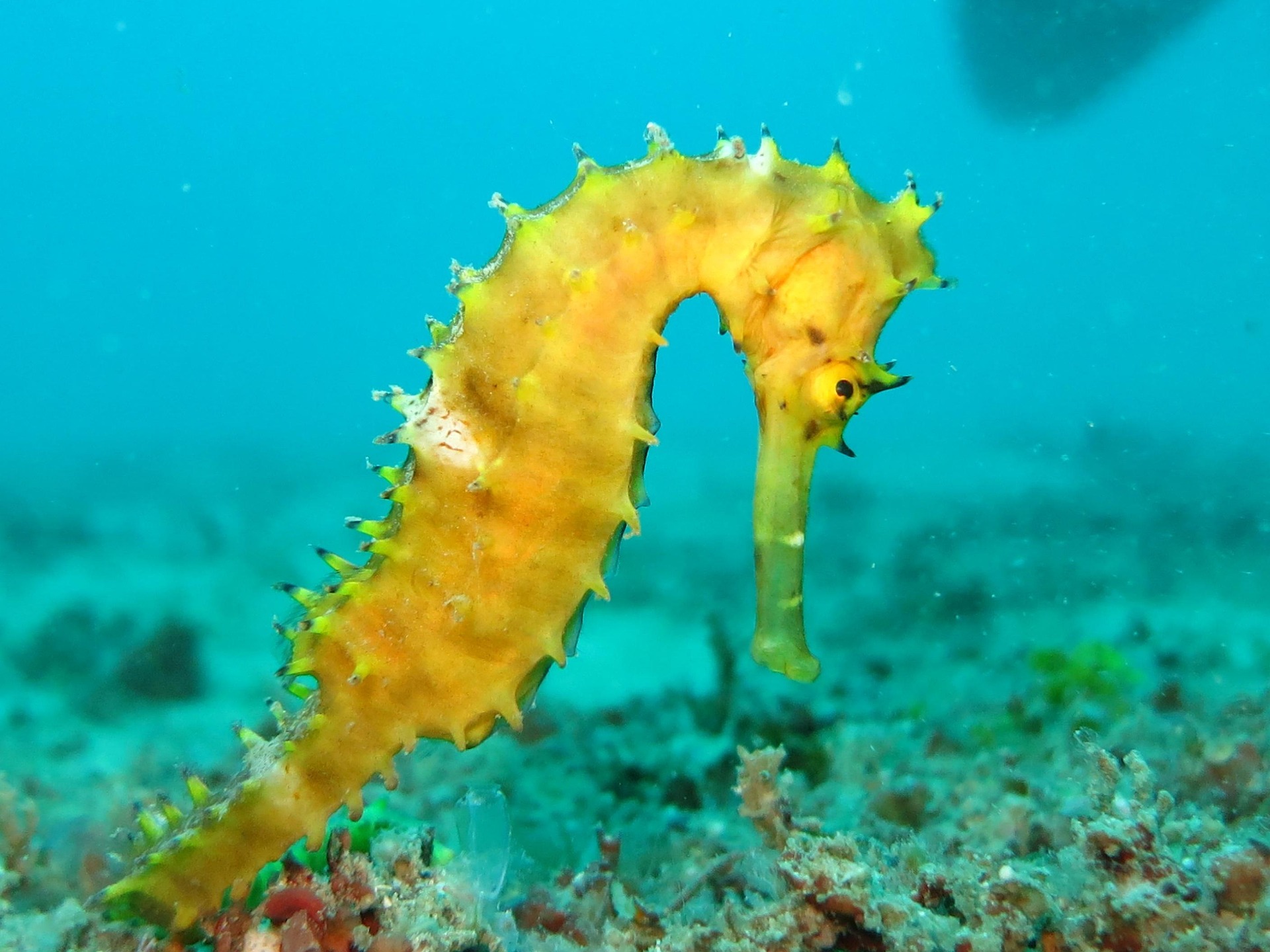
In the animal kingdom, the rules of reproduction are usually straightforward: females carry the young, give birth, and nurture the next generation. But in the enchanted world of seahorses, everything is turned upside down. Here, it is the males who become pregnant, carrying their developing offspring in a specialized pouch until they are ready to be born into the ocean. This remarkable role reversal is one of nature’s most captivating adaptations, challenging our assumptions about gender roles in the animal world and leaving scientists and nature lovers alike in awe.
Table Of Content
- The Curious Seahorse: A Fish Like No Other
- The Courtship: A Dance of Love and Synchronization
- The Transfer: A Perfectly Choreographed Exchange
- Pregnancy: The Male Takes Over
- A Long Gestation
- The Birth: A Spectacular Delivery
- Why Male Pregnancy?
- A Perfectly Executed Evolutionary Strategy
- The Significance of Seahorse Pregnancy
- Conclusion: A Beautiful Reversal
The Curious Seahorse: A Fish Like No Other
Before diving into the mechanics of male pregnancy, it’s important to understand just how unusual seahorses are. Belonging to the genus Hippocampus—from the Greek words for “horse” (hippos) and “sea monster” (kampos)—these fish are already biological oddities. They have prehensile tails like monkeys, snouts like anteaters, eyes that move independently like chameleons, and bony plates instead of scales. They swim upright, a rare trait among fish, and move by fluttering a small dorsal fin up to 50 times per second.
But their most extraordinary feature remains their reproductive system. Of the roughly 50 species of seahorses, and their close relatives the pipefish and sea dragons, it is the males that undergo pregnancy. This is a trait so unusual that it is found in no other animal group on Earth.
The Courtship: A Dance of Love and Synchronization
The journey to male pregnancy begins with an elaborate courtship ritual that is as beautiful as it is crucial. Seahorses are monogamous for at least one breeding cycle, and often for life. Every morning, pairs perform a “greeting dance” that can last up to an hour, changing colors and swimming together in synchronized patterns. This daily ritual reinforces their pair bond and ensures they are in sync with each other’s reproductive cycles.
When the female is ready to mate—her body swollen with mature eggs—she signals her readiness to the male. What follows is a mesmerizing display of coordination and trust. The pair will rise slowly through the water column, sometimes spiraling upward together, their snouts touching and tails intertwined. This dance can last for hours, building anticipation and ensuring that both partners are perfectly aligned for the critical moment.
The Transfer: A Perfectly Choreographed Exchange
The actual act of egg transfer is a feat of precision. The female seahorse possesses an organ called an ovipositor, a tube-like extension that she inserts into the male’s brood pouch through a small opening. The brood pouch is located on the male’s abdomen or tail, depending on the species, and is remarkably similar to a marsupial’s pouch.
In a moment of exquisite timing that often lasts only a few seconds, the female deposits anywhere from 50 to over 1,500 eggs directly into the male’s pouch. The number varies by species and by the age and health of the pair. Larger species like the big-bellied seahorse can carry well over 1,000 eggs, while smaller species may carry fewer than 100. This transfer is so rapid and precise that researchers often capture it only on high-speed cameras. Once the transfer is complete, the female withdraws, and the male immediately seals the pouch with a muscular flap.
Pregnancy: The Male Takes Over
At this point, an incredible transformation occurs. The male seahorse is now pregnant, and his body undergoes profound changes to support the developing embryos. Inside his brood pouch, the eggs are fertilized by his sperm—a process that happens within the pouch after the transfer. The pouch acts as a fully functional womb, providing everything the embryos need to survive.
The male’s placenta, a highly vascularized tissue lining the pouch, becomes his ticket to successful fatherhood. This organ-like structure creates a connection between the male’s blood supply and the developing embryos. In species like the pot-bellied seahorse, the male’s body forms intimate connections with each individual embryo, creating what scientists call a “chorionic” system—remarkably similar to the placentas of mammals, though evolved entirely independently.
Through this connection, the male provides:
- Oxygen and nutrients to the developing young
- Waste removal, filtering out the embryos’ metabolic byproducts
- Immunological protection, helping the embryos resist disease
- Osmoregulation, maintaining the right balance of salt and water inside the pouch
The male also regulates the temperature and acidity of the pouch environment, ensuring optimal conditions for development. The pouch even contains antimicrobial compounds that protect the developing embryos from harmful bacteria. In some species, the male’s body changes color and takes on a fuller, rounder appearance as the pregnancy progresses.
A Long Gestation
Pregnancy in seahorses is not a short affair. Depending on the species and water temperature, gestation can last anywhere from 10 days to 6 weeks. The larger the species, generally, the longer the gestation. During this time, the male carries the developing young, his belly growing visibly rounder and heavier.
He must continue feeding himself while carrying his brood, but the physical demands of pregnancy are significant. The pouch’s position can affect his hydrodynamics, making swimming slightly less efficient. However, seahorses are not powerful swimmers anyway; they are ambush predators that rely on camouflage and stealth to catch tiny crustaceans. The pregnant male simply continues his usual strategy of staying anchored to seagrass or coral with his prehensile tail, waiting for unsuspecting prey to drift by.
Throughout the pregnancy, the male and female often maintain their bond. The female, having depleted her energy on producing eggs, focuses on replenishing her reserves. She visits the male regularly, performing daily greeting rituals that reinforce their partnership and allow her to “check in” on the progress of her offspring.
The Birth: A Spectacular Delivery
When the time comes, the male seahorse experiences something akin to labor. Muscular contractions ripple through his pouch, causing it to open and contract rhythmically. The contractions are strong and visible, lasting anywhere from a few minutes to several hours. With each contraction, tiny fully-formed seahorses—called fry—are expelled into the ocean.
The birth is an exhausting spectacle. The male will often writhe and contort his body, using his tail to anchor himself to vegetation while he pushes the young out. The fry are miniature versions of the parents, no more than a centimeter long, fully independent from the moment they are born. They have no parental care whatsoever; their survival depends entirely on their instincts and luck.
For the male, the physical toll is considerable. After birth, he needs time to recover, to regain his strength, and to prepare his pouch for the next batch of eggs. In some cases, females can have eggs ready almost immediately, and the pair may mate again within hours of the male giving birth. This rapid cycling allows seahorses to produce multiple broods per year, a strategy that increases their chances of passing on their genes.
Why Male Pregnancy?
The evolutionary reasoning behind male pregnancy in seahorses is one of nature’s great puzzles, but scientists have developed compelling theories. The leading explanation is rooted in reproductive efficiency.
Seahorses are slow, poor swimmers that make easy targets for predators. Finding a mate is challenging and energetically costly. By having the male carry the pregnancy, the female can quickly transfer her eggs and return to the business of producing more eggs. In contrast, if the female were the one to carry the developing embryos, she would be burdened with the weight and energetic cost of pregnancy, significantly reducing her ability to produce the next batch of eggs.
This division of labor allows for a rapid reproductive cycle. The female can produce a new clutch of eggs in as little as 5 to 10 days after the transfer, while the male completes the lengthy gestation. The pair can then mate again, producing multiple broods in a single breeding season. It is a strategy that maximizes reproductive output when opportunities to mate are rare.
Additionally, the male’s ability to provide a safe, oxygen-rich environment inside his pouch ensures that the embryos have the best possible chance of survival. The pouch protects the young from predators and harsh environmental conditions, and the male’s immune system provides protection against disease. This paternal investment increases the offspring’s fitness and ensures that the male’s genes are passed on successfully.
A Perfectly Executed Evolutionary Strategy
The seahorse’s reproductive strategy is not a random curiosity; it is a beautifully tailored adaptation to their specific ecological niche. The seahorse’s role reversal is an elegant solution to the challenges of living in a complex, competitive marine environment.
This system has proven so successful that it has persisted for millions of years. Seahorses and their relatives are ancient creatures, with fossils dating back over 50 million years. Their unique reproductive strategy has allowed them to colonize tropical and temperate waters worldwide, from the shallow seagrass beds of the Caribbean to the coral reefs of the Indo-Pacific.
The closest relatives of seahorses—pipefish and sea dragons—also share this trait, with varying degrees of paternal care. In some species, the male’s role is less developed, carrying eggs only on the outside of his body. In others, like the seahorse, the pouch is fully enclosed and placenta-like, representing the most advanced form of male pregnancy in the animal kingdom.
The Significance of Seahorse Pregnancy
Beyond the sheer wonder of nature’s creativity, seahorse pregnancy holds profound significance for our understanding of biology and evolution.
For researchers, the seahorse offers a unique opportunity to study the evolution of pregnancy itself. The development of the seahorse placenta, which evolved independently of mammalian placentas, provides insight into the convergent evolution of this vital organ. Understanding how the seahorse’s pouch provides nutrients, oxygen, and immune protection could have implications for regenerative medicine and our understanding of the immune system.
For conservationists, the seahorse’s unique reproductive strategy highlights the species’ vulnerability. Seahorses are threatened by habitat destruction, pollution, and the aquarium trade, and millions are harvested annually for traditional medicine. Their unusual reproductive system means that their populations are particularly susceptible to overfishing; removing enough males or females can disrupt the pair bonds and reduce breeding success.
For the rest of us, the male seahorse’s pregnancy is a powerful reminder that nature operates by its own rules. It challenges our anthropocentric view of biology and shows that there are countless ways to solve the problems of life. It is a story that inspires wonder, provokes thought, and reminds us of the incredible diversity of life on our planet.
Conclusion: A Beautiful Reversal
The male seahorse’s pregnancy is one of nature’s most captivating marvels. It is a story of devoted fathers, intricate dances, and a biological system that defies expectations. This tiny, graceful fish challenges everything we thought we knew about gender roles in the animal kingdom, offering a glimpse into the endless creativity of evolution.
From the preliminary courtship dances to the final, breathtaking birth, the seahorse’s journey is a testament to the beauty and complexity of life. It teaches us that biology has no fixed rules, only solutions shaped by millions of years of adaptation. And it reminds us that in the vast, mysterious ocean, there is always more waiting to be discovered—more marvels, more surprises, and more reasons to protect the incredible diversity of life that calls the sea home.
Never Miss a Story: Join Our Newsletter