Martin Luther King Jr.: The Radical Prophet We Have Sanctified and Sanitized
The Reverend Dr. Martin Luther King Jr. is among the most celebrated figures in American history—a Nobel laureate, the only non-president with a national holiday, and a man whose birthday is...

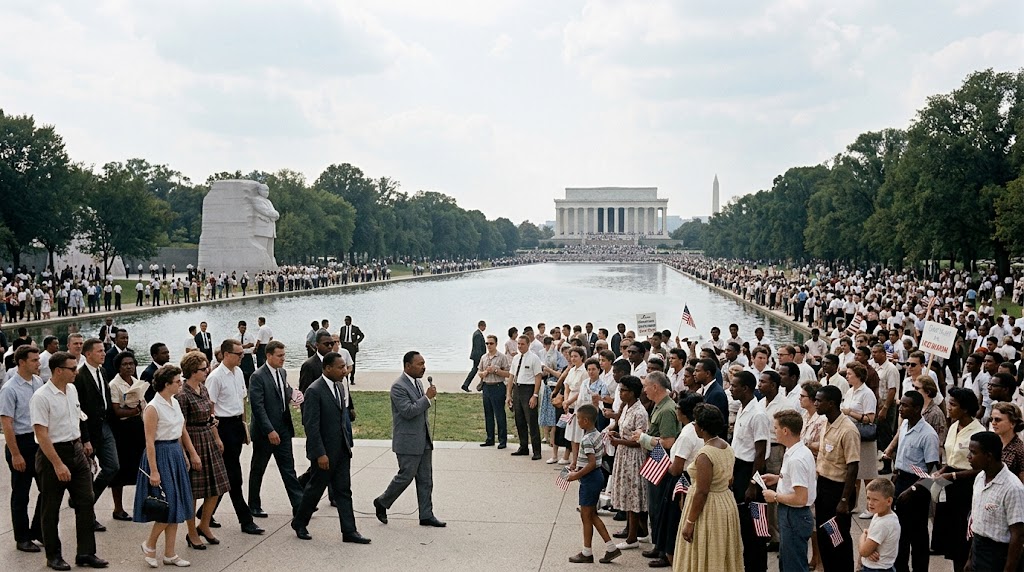
The Reverend Dr. Martin Luther King Jr. is among the most celebrated figures in American history—a Nobel laureate, the only non-president with a national holiday, and a man whose birthday is commemorated across the United States. His face adorns memorials, his speeches are quoted by politicians across the ideological spectrum, and his “I Have a Dream” address has become a sacred text of American civic religion . Yet for all this veneration, King remains profoundly misunderstood. The man who was gunned down on a Memphis motel balcony in April 1968 at the age of thirty-nine has been transformed into a comfortable icon, stripped of his radicalism, his complexity, and his prophetic fury .
Table Of Content
- The Making of a Prophet: From Atlanta to the World
- The Philosophy of Nonviolence: Agape in Action
- The Campaigns: Birmingham, Selma, and the National Stage
- The Radical Turn: Poverty, War, and the “Three Evils”
- The FBI Campaign: Surveillance, Smear, and Destruction
- The Assassination: Memphis and the “Mountaintop”
- The Battle Over Memory: Contesting King’s Legacy
- Conclusion: The Unfinished Work
As his daughter, Dr. Bernice King, has warned: “There’s a great misunderstanding of my father because we’ve just studied a little portion of him that fits or aligns with the work we’re doing” . This essay seeks to recover the full King—not the sanitized symbol, but the radical prophet who challenged not only segregation but the very foundations of American capitalism, militarism, and racial hierarchy. It was a campaign that made him the target of the most intensive government surveillance operation ever directed at a private citizen—an operation whose records have only recently been released, revealing the full extent of the state’s determination to destroy him .
The Making of a Prophet: From Atlanta to the World
King was born on January 15, 1929, in Atlanta, Georgia, into a family deeply rooted in the African American Baptist tradition. His father, the Reverend Martin Luther King Sr., was senior pastor at Ebenezer Baptist Church, and it was this “vibrant and confident tradition of African-American Christianity that fashioned King’s childhood, inspired his sense of identity and purpose, and sustained his great convictions” . As a boy, he witnessed the daily humiliations of Jim Crow segregation and the violence of racial hatred .
Initially named Michael after his father, both were renamed Martin following a trip to Germany, where King Sr. was inspired by the Protestant Reformer . The younger King was a precocious student, entering Morehouse College at the age of fifteen. There, he came to view religion not as an otherworldly escape but as a “powerful catalyst for social change” . He went on to earn a divinity degree from Crozer Theological Seminary and a doctorate in systematic theology from Boston University, where he was exposed to a range of intellectual influences that would shape his mature thought .
At Boston University, King encountered personalist philosophy—the idea that personality is the ultimate reality and that every human being possesses inherent dignity. He studied the social gospel theology of Walter Rauschenbusch, which held that Christianity demanded not just individual salvation but the transformation of social structures. And he grappled with the “pessimistic assessment of human nature” offered by Reinhold Niebuhr, who believed that humans, when acting in concert, were “naturally prone to immorality” . Living in the shadow of Nazism and Stalinism, King did not share the faith of most mainstream liberals in the “gradual improvement of humankind and human society.” His theology was marked by a profound realism about human sinfulness .
At the same time, King was drawn to the philosophy of nonviolent resistance developed by Mahatma Gandhi. In 1959, he traveled to India, where he reflected: “Today we no longer have a choice between violence and nonviolence; it is either nonviolence or nonexistence” . The fusion of these influences—Christian love, Niebuhrian realism, and Gandhian tactics—would become the foundation of King’s philosophy of nonviolent direct action.
The Philosophy of Nonviolence: Agape in Action
Central to King’s thought was the concept of agape—a Greek word for love that he understood as “disinterested love,” love that “makes no distinction between friend and enemy” and arises from “the need of one’s neighbor” . Agape, for King, was “love seeking to preserve and create community” . It was not a sentimental emotion but a moral imperative, a way of engaging with opponents that refused to dehumanize them even as it resisted their injustice .
This conception of love was inseparable from King’s philosophy of nonviolent resistance, which he outlined in his first book, Stride Toward Freedom, and elaborated throughout his career. King delineated what he called the basic tenets of nonviolence, explaining that it was “firmly founded upon a philosophical basis” . Nonviolent resistance, King insisted, was something of a misnomer—it was “passive only in the sense that it admits of no physical aggression toward opponents.” It eschewed both “external and internal violence: physical retaliation and violence of spirit” . The goal was not to defeat or humiliate opponents but to “defeat the system of injustice” while leaving open the possibility of reconciliation .
King identified three basic options available to oppressed people: acquiescence, violent retaliation, or nonviolent resistance. Acquiescence was morally unacceptable; violence was both immoral and impractical . Nonviolent resistance, by contrast, offered a way to “educate and transform a people” through the redemptive power of suffering . As he would later write, nonviolent resistance “teaches Negroes not to be covered by violence to person or to spirit” .
The Montgomery bus boycott of 1955-1956 was the proving ground for King’s philosophy. Following Rosa Parks’ arrest for refusing to give up her bus seat to a white man, King helped organize a 381-day boycott that eventually led to the desegregation of Montgomery’s buses . The success of the boycott catapulted King to national prominence and led to the formation of the Southern Christian Leadership Conference (SCLC) in 1957, an organization “formed to provide leadership for the burgeoning civil rights movement” . King’s leadership during the boycott demonstrated how “painstaking indoctrination of the masses in what might have been a highly flammable situation developed amazing spiritual strength and resultant self-control and thereby averted retaliatory flare-ups that could have dissipated the gains of the movement” .
The Campaigns: Birmingham, Selma, and the National Stage
Throughout the 1960s, King and the SCLC organized nonviolent campaigns across the South, each designed to expose the brutality of segregation and force federal intervention. The Birmingham Campaign of 1963 was perhaps the most effective. King, along with Fred Shuttleworth and others, led demonstrations that met with brutal repression—police dogs, fire hoses, and mass arrests. The images of violence against peaceful protestors, broadcast around the world, brought “national and international attention to the civil rights movement” .
While incarcerated in Birmingham, King penned his famous “Letter from Birmingham City Jail,” “outlining the moral basis for the civil rights movement” . The letter was a masterful defense of civil disobedience, arguing that there are two types of laws: just and unjust. “One has a moral responsibility to disobey unjust laws,” King wrote. The letter also responded to white clergymen who had criticized the protests as “untimely,” making the case that “justice for black people cannot be achieved without radical changes in the structure of our society” .
In August 1963, King helped organize the March on Washington, where he delivered his iconic “I Have a Dream” speech. Standing before the Lincoln Memorial, before more than 200,000 people, King articulated a vision of a nation where people would be judged “not by the color of their skin, but by the content of their character” . The speech was quintessentially American, “inspired by the Bible, the Declaration of Independence, the US Constitution, and Abraham Lincoln’s Emancipation Proclamation and the Gettysburg Address” .
Yet even as he spoke these words, King was already moving toward a more radical vision. In 1964, he received the Nobel Peace Prize, and President Lyndon Johnson signed the Civil Rights Act, which banned discrimination in employment and public accommodations . But King knew that legal equality was not enough. In 1965, he helped organize the Selma to Montgomery marches, which led to the passage of the Voting Rights Act—another legislative victory that struck at the heart of Southern segregation .
The Radical Turn: Poverty, War, and the “Three Evils”
By the mid-1960s, King had concluded that the civil rights movement had achieved its legislative goals but had not addressed the deeper structures of American inequality. He expanded his focus to include poverty and the Vietnam War, linking racial injustice to what he called the “three evils of society”: racism, militarism, and poverty . His turn toward economic justice and international anti-war activism made him a target of the FBI’s intensified surveillance and of critics who believed he had overstepped his mandate .
King’s thinking on economic justice had deepened. In his 1967 book, Where Do We Go From Here: Chaos or Community?, he wrote: “In the treatment of poverty nationally, one fact stands out: there are twice as many white poor as Negro poor in the United States. Therefore I will not dwell on the experiences of poverty that derive from racial discrimination, but will discuss the poverty that affects white and Negro alike” . Yet he was never naive enough to divorce race and class entirely. King had long argued for “special, compensatory measures” to address the legacy of slavery and Jim Crow. In Why We Can’t Wait, he proposed a “broad-based and gigantic Bill of Rights for the Disadvantaged” akin to the GI Bill, targeting both African Americans and poor whites as “veterans of the long siege of denial” .
King’s critique of the Vietnam War was equally pointed. In a 1967 speech at Riverside Church in New York, he called the United States “the greatest purveyor of violence in the world today.” This position drew widespread criticism, including from the White House and from civil rights allies who feared it would undermine the movement’s gains. But for King, the war was inseparable from the struggle for justice at home. He saw that “the bombs we were dropping on Vietnam were also landing on the poor communities of America” .
King’s radicalism was rooted in a worldview that was “truly complex” . He was not a conventional liberal. While he shared liberals’ policy commitments—anti-poverty legislation, civil rights, and respect for international institutions—his understanding of human nature was shaped by the “neo-fundamentalist black church” tradition that emphasized original sin . This theological realism made him skeptical of liberal progressivism and attuned to the intransigence of white resistance. He knew that “the Almighty God himself is not the God just standing out saying through Hosea, ‘I love you, Israel.’ He’s also the God that stands up before the nations and said, ‘Be still and know that I am God, that if you don’t obey me, I will break the backbone of your power and slap you out of the orbits of your international and national relationships'” .
The FBI Campaign: Surveillance, Smear, and Destruction
King’s radicalism made him the target of the most sustained government surveillance campaign in American history. J. Edgar Hoover’s FBI had been wiretapping King’s telephone lines, bugging his hotel rooms, and using informants to gather information against him since the early 1960s . The goal was not merely to monitor King but “to discredit, dismantle and destroy” both him and the movement he led .
In July 2025, the Trump administration released an estimated 240,000 pages of FBI records related to King, despite opposition from his family and the Southern Christian Leadership Conference . The records had been under a court-imposed seal since 1977 and were initially intended to remain sealed until 2027 . King’s two living children, Martin III and Bernice, were given advance access and urged that “these files must be viewed within their full historical context” .
The records include details of the CIA’s fixation on King’s “pivot to international anti-war and anti-poverty movements” in the years before he was killed . They also contain leads the FBI received after King’s assassination. King’s family has long contended that James Earl Ray, the man convicted of assassinating King, “was not solely responsible, if at all” . In their statement, the King children described the FBI operation as “invasive, predatory, and deeply disturbing,” calling it “designed to neutralize those who dared to challenge the status quo” .
The release of these records has been controversial. Civil rights activist Reverend Al Sharpton called it “a desperate attempt to distract people from the firestorm engulfing Trump,” while Alveda King, Martin Luther King Jr.’s niece and a conservative supporter of Trump, expressed gratitude for the “transparency” . But the records confirm what has long been known: the FBI’s campaign against King was not incidental to the civil rights movement but central to it. The state viewed King not as a hero but as a threat.
The Assassination: Memphis and the “Mountaintop”
On April 4, 1968, King was assassinated on the balcony outside his room at the Lorraine Motel in Memphis, Tennessee. He had traveled to Memphis to support striking sanitation workers, a campaign that reflected his growing focus on economic justice . The night before, he delivered his final speech, “I’ve Been to the Mountaintop,” in which he seemed to anticipate his own death: “I may not get there with you. But I want you to know tonight that we, as a people, will get to the Promised Land” .
King was thirty-nine years old. His funeral in Atlanta was attended by thousands of mourners who marched behind a mule-drawn wagon bearing his coffin . The outpouring of grief was immense, and within a decade, efforts were underway to establish a national holiday in his honor.
The Battle Over Memory: Contesting King’s Legacy
The establishment of Martin Luther King Jr. Day was a hard-won victory. Creating “the first national holiday to honor an African American was a formidable achievement and an act of resistance against conservative and segregationist opposition” . Congressional efforts to commemorate King began shortly after his assassination, but the political battles slowed progress and “crucially defined how his legacy would be received” .
The struggle over the holiday was also a struggle over memory. While Coretta Scott King’s “mission to honor her husband’s commitment to nonviolence was upheld, conservative politicians sought to use the holiday to advance a whitewashed, nationalistic, and even reactionary vision of King’s life and thought” . This sanitization of King has had “dangerous consequences for democracy,” according to scholar Dr. Hajar Yazdiha .
The stakes are not merely academic. “Our collective memories are the stories that make up our national identity, our understandings of who we are as a nation and as a people,” Yazdiha argues. “The way we tell the story teaches us who the heroes and villains are, both in the past and today” . When King is reduced to a dreamer who wanted people to be judged by character alone, his radical critique of poverty, militarism, and systemic racism is erased. When his philosophy of nonviolence is stripped of its theological and political content, it becomes a bland call for civility rather than a transformative force.
Over the years, conservatives have vocally claimed King’s legacy. William Bradford Reynolds, who served as Ronald Reagan’s assistant attorney general for civil rights, argued that “the initial affirmative action message of racial unification—so eloquently delivered by Dr. Martin Luther King, Jr.—was effectively drowned out by the all too persistent drumbeat of racial polarization” . Ward Connerly, the conservative activist who spearheaded California’s Proposition 209 barring affirmative action, claimed his group was “going to fight to get the nation back on the journey that Dr. King laid out” .
The problem with this version of history, as scholars have noted, “is that it ignores much of what King said” . King did not oppose affirmative action; he called for “special, compensatory measures” to address centuries of exploitation. He was not a colorblind universalist; he was a radical who understood the deep entanglement of race and class in American history.
Bernice King points to the misreading of her father in the American education system, especially “the neatly tied and rose-tinted tales of the civil rights movement in textbooks” . She notes that King’s own remarks have been used in recent years “to restrict education in the US, with laws passed in 44 states prohibiting racial education”—a deep irony for a man who devoted his life to exposing injustice .
Conclusion: The Unfinished Work
Martin Luther King Jr. was not a comfortable figure. He was a radical prophet who challenged not only segregation but the entire structure of American inequality. He was a theologian who believed in original sin and the redemptive power of suffering. He was a political thinker whose ideology was “truly complex,” “constantly in flux” . He was a man who was hated by the state, surveilled by the FBI, and ultimately assassinated for his refusal to back down.
To remember King honestly is not to celebrate a sanitized dreamer but to engage with the full scope of his critique. It is to acknowledge that he was a fierce campaigner “against militarism, poverty and racism” . It is to recognize that he called for “radical changes in the structure of our society” . It is to understand that his “I Have a Dream” speech was not a call for colorblindness but a vision of a transformed America.
As Bernice King has observed, the fight for justice is “the long and bitter—but beautiful—struggle for a new world” . Her father’s legacy is not a monument to be venerated but a challenge to be taken up. The question is whether we will rise to meet it.
In his final sermon, King spoke of reaching the mountaintop and seeing the Promised Land. “I may not get there with you,” he said. “But I want you to know tonight that we, as a people, will get to the Promised Land.” The journey is not over. The work is unfinished. And Martin Luther King Jr., in all his complexity, remains a guide—not to a past we have safely buried, but to a future we have not yet dared to build.
Never Miss a Story: Join Our Newsletter