David Livingstone: The Many Lives of a Victorian Icon
David Livingstone—the name conjures images of Victorian heroism, the thundering spray of Victoria Falls, and a solitary figure emerging from the African interior to meet the journalist who would make...

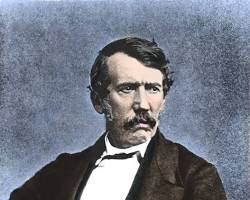
David Livingstone—the name conjures images of Victorian heroism, the thundering spray of Victoria Falls, and a solitary figure emerging from the African interior to meet the journalist who would make him immortal. But the man himself was far more complex than the saintly legend crafted in the decades after his death. He was a mill worker who became a medical doctor, a missionary who converted almost no one, an explorer who failed to find what he sought, and an anti-slavery crusader whose writings helped reshape the moral conscience of an empire. His life defies easy categorization, and his legacy continues to provoke fierce debate more than 150 years after his death .
Table Of Content
- The Making of a Missionary: From Blantyre Mill to Africa’s Interior
- The Practical Benevolence: Missionary Work and the Three Cs
- The Great Explorations: Mapping a Continent
- The Final Quest: Finding the Nile’s Source
- The Faithful Followers: A Testament of Loyalty
- The Anti-Slavery Crusader: “This Open Sore of the World”
- The Contested Legacy: A Figure of Moral Liminality
- The Many Lives of Livingstone
- A Modern Perspective: Livingstone Today
- Conclusion: Beyond the Legend
The Making of a Missionary: From Blantyre Mill to Africa’s Interior
Livingstone was born on March 19, 1813, in Blantyre, Scotland, into a world of industrial poverty that would forge his character as surely as any theological training. He was the second of seven children in a family that lived in a single room within a tenement building for cotton mill workers . At age ten, he joined his father and brother in the mills, working twelve-to-fourteen-hour days as a “piecer”—tying broken cotton threads on spinning machines. The work was monotonous and exhausting, but Livingstone possessed an unusual determination. He propped textbooks against the spinning machinery, studying Latin and other subjects amid the deafening industrial noise, a feat of concentration that foreshadowed the resilience that would later carry him across Africa .
His family was devoutly Christian. His father, Neil Livingstone, was a Sunday school teacher and teetotaler who distributed religious tracts on his rounds as a traveling tea salesman. The elder Livingstone feared that science books undermined Christianity and attempted to restrict his son’s reading to theology alone. But David’s curiosity about nature and geology proved irrepressible . In 1832, he read Thomas Dick’s Philosophy of a Future State, which provided him with the intellectual framework to reconcile faith and science—a synthesis that would define his entire career. Apart from the Bible, this book was perhaps his greatest philosophical influence .
At age twenty-one, Livingstone encountered a pamphlet by Karl Gützlaff, a German missionary, appealing for medical missionaries to be sent to China. The concept electrified him: here was a way to combine his scientific interests, his medical ambitions, and his Christian calling. He convinced his father to support this path and, like many Scottish students of modest means, worked at the mill during holidays to fund his education . He studied medicine and chemistry at Anderson’s University in Glasgow, attended theology lectures from the anti-slavery campaigner Richard Wardlaw, and even found a local Catholic priest to tutor him in Latin—a linguistic necessity for medical studies .
In 1837, he applied to the London Missionary Society (LMS). His initial application received no reply, but after two interviews in August 1838, he was accepted as a probationary candidate. His tutors found him “worthy but remote from brilliant,” possessing “sense and quiet vigour” rather than intellectual flash . He continued his medical training at Charing Cross Hospital Medical School, qualifying as a Licentiate of the Faculty of Physicians and Surgeons of Glasgow on November 16, 1840 . On November 20, he was ordained as a minister .
Livingstone had originally hoped to go to China, but the First Opium War made the LMS cautious about sending recruits there. Fate intervened in the form of Robert Moffat, a veteran missionary who had spent decades at Kuruman in South Africa. Moffat was in England to publicize his mission’s work, and Livingstone questioned him repeatedly about Africa. As Moffat later recalled: “By and by he asked me whether I thought he would do for Africa. I said I believed he would, if he would not go to an old station, but would advance to unoccupied ground, specifying the vast plain to the north, where I had sometimes seen, in the morning sun, the smoke of a thousand villages, where no missionary had ever been” .
This vision of expanding missionary work into the unknown interior would consume Livingstone for the rest of his life. On December 8, 1840, he set sail from London, not for China, but for Africa .
The Practical Benevolence: Missionary Work and the Three Cs
Livingstone arrived in Cape Town on March 15, 1841, and immediately began to develop the modus operandi that would distinguish him from other missionaries. He traveled with few Europeans—he was never a team player—and immersed himself in local languages and life. He offered medical services, provided advice on irrigation and agriculture, taught, and preached. His visit to Moffat’s Kuruman settlement was a disappointment; it seemed too small, too settled. Livingstone wanted to throw as wide a net as possible .
At a public meeting on June 1, 1840, before leaving England, Livingstone had heard Sir Thomas Fowell Buxton of the Society for the Extinction of the Slave Trade propose a plan to resolve the problem of slavery in Africa: open the country to “legitimate trade” in commodities other than human beings. Buxton passionately believed in bringing the Three Cs to the continent: Christianity, Commerce, and Civilization . This was a eureka moment for Livingstone—here was the framework that would guide his life’s work.
He believed that if he could open central Africa to legitimate trade, it would supplant the horrific slave trade. Missionaries would preach the Gospel; commerce would provide economic alternatives; civilization would follow. As he later wrote, the source of the Nile was “valuable only as a means of opening my mouth with power among men” to remedy the “immense evil” of slavery .
Yet for all his dedication, Livingstone was a remarkably ineffective missionary by conventional standards. He is known to have converted only one African to Christianity—a Bakwain chief who was a friend . The LMS grew increasingly uncomfortable with his emphasis on exploration over evangelism. In 1847, he wrote to the society: “I think I would rather cross the African continent again than undertake to write about it” . The LMS eventually informed him that his expeditions were not the kind of gospel work it expected, and he resigned in 1857 .
In January 1845, Livingstone married Mary Moffat, the missionary’s daughter—a marriage that would be marked by long separations and personal tragedy . Mary traveled with him for brief periods, despite pregnancies and her mother’s objections. In 1852, Livingstone sent Mary and their four children back to England, essentially leaving them to rely on the benevolence of the LMS and friends. He would not see them for four and a half years .
The Great Explorations: Mapping a Continent
Between 1849 and 1856, Livingstone undertook the journeys that would make him famous. He traveled across the Kalahari Desert to Lake Ngami, sighted the upper Zambezi River, and began his monumental transcontinental trek. In 1852, he started a four-year expedition to find a route from the upper Zambezi to the coast—a journey that would fill huge gaps in Western knowledge of central and southern Africa .
In 1855, while following the Zambezi eastward, Livingstone became the first European to see Mosi-oa-Tunya—”the smoke that thunders”—a waterfall of immense power and beauty. He renamed it Victoria Falls, after his queen. “Scenes so lovely must have been gazed upon by angels in their flight,” he wrote . It was the only site in Africa that he named with English words.
He reached the mouth of the Zambezi at Quilimane on the Indian Ocean on May 20, 1856, becoming the first European to cross the width of southern Africa . But he had inadvertently missed the Kebrabasa Rapids—a six-hundred-foot drop—when he cut across a loop of the Zambezi. He was therefore unaware that the river was not navigable by steamboat. This misconception would have disastrous consequences for his next expedition .
Livingstone returned to England in December 1856 to find himself a national hero. His book, Missionary Travels and Researches in South Africa, written in six months, became an immediate best-seller, with seven editions published in rapid succession. For the first time in his life, Livingstone was wealthy . He lectured extensively about Africa’s commercial possibilities and successfully convinced the British government to sponsor an expedition up the Zambezi to gain knowledge of natural resources and encourage trade as an alternative to the slave trade. He was given a consulship with a salary of £500 and returned to Africa on May 14, 1858 .
The Zambezi expedition (1858-1864) was a disaster. Livingstone did not get along with his British team, including his brother Charles. The steamboats sent from England—the Pioneer and the Lady Nyassa—could not navigate the rapids. There were encounters with slavers. In 1862, Mary Livingstone joined her husband; several months later, she contracted malaria and died at Shupanga, Mozambique. A bereaved but determined Livingstone continued exploring Lake Nyassa (now Lake Malawi), which he discovered on September 16, 1859 . The expedition was recalled by the British government in the summer of 1863.
Livingstone’s response to this failure was characteristic. He had paid for the Lady Nyassa out of his own pocket. Rather than sell it to Portuguese slave traders, he decided to sail it to India. The 2,500-mile crossing of the Indian Ocean, from Zanzibar to Bombay, was accomplished in May and June 1864. The £2,300 he received for the ship was quickly lost in the financial collapse of the bank in which he invested the money. He had risked his life and the lives of his companions, and gained nothing .
The Final Quest: Finding the Nile’s Source
Back in England in 1864, the controversy over the source of the Nile—the great geographical mystery of the age—was attracting enormous attention. Livingstone gradually convinced himself that an expedition that combined geographical objectives with an anti-slavery crusade would attract financial support. The government, however, contributed only a third of the resources he needed; the rest came from his friend James Young, the inventor of paraffin .
Livingstone returned to Africa via Bombay, picking up the African friends he had left there. On March 16, 1866, he landed on the east coast near the mouth of the Ruvuma River with a hand-picked party of about thirty Africans. His goal was to pass the southern end of Lake Nyassa and head north toward the region south of Lake Tanganyika, where he believed the Nile’s source would likely be found. “The mere animal pleasure of traveling in a wild unexplored country is very great,” he wrote in his journal. “Africa is a wonderful country for appetite” .
Livingstone failed, however, to approach the geographical problems logically. He rejected Sir Roderick Murchison’s advice to determine first whether a river at the north end of Lake Tanganyika flowed northward—a preliminary step that would have narrowed his search. He ultimately came to believe that the Lualaba River was the Nile’s source; it is actually one of the sources of the Congo .
As months stretched into years with no word from him, the outside world grew anxious. The New York Herald sent the journalist Henry Morton Stanley to find the missing explorer. Stanley finally located Livingstone at Ujiji on the shores of Lake Tanganyika in November 1871, uttering the famous words: “Doctor Livingstone, I presume?” .
With supplies from Stanley, Livingstone continued his search, traveling around the Lake Bangweolo region. His health had been poor for many years—he suffered from malaria, dysentery, and the lingering effects of a lion mauling he had sustained decades earlier. Weak and in intense pain, he had to be carried in a litter . He died on May 1, 1873, in the village of Chitambo, in modern-day Zambia. His attendants found him kneeling beside his bed in the posture of prayer . He was sixty years old.
The Faithful Followers: A Testament of Loyalty
What happened next is perhaps the most remarkable testament to Livingstone’s legacy. His African attendants—led by Chuma and Susi, men who had served him loyally for years—made a profound decision. They buried his heart beneath a tree in Africa, then embalmed his body and carried it on an incredible journey to the coast, a distance of some 1,500 miles . This was no simple undertaking. They traveled for ten months through difficult terrain, facing personal danger and preserving the body for transport. They arrived in February 1874 .
Livingstone’s body was brought back to England and buried in Westminster Abbey on April 18, 1874, as a national hero. Henry Morton Stanley was one of the pallbearers . The brass plaque on his grave includes reference to his effort “to abolish the desolating slave trade of Central Africa” .
The Anti-Slavery Crusader: “This Open Sore of the World”
Livingstone’s most enduring moral legacy is his campaign against the East African slave trade. He had encountered slavery throughout his travels and was horrified by its brutality. He estimated that for every slave sold, four others died in the process—a level of human destruction that haunted him . In his journals, he described slavery as “this open sore of the world” .
His written accounts, published in newspapers and books, opened the eyes of the world to the horrors of the slave trade in the interior of Africa. In a letter to the editor of the New York Herald, he wrote: “And if my disclosures regarding the terrible Ujijian slavery should lead to the suppression of the east coast slave trade, I shall regard that as a greater matter by far than the discovery of all the Nile sources together” .
His appeals had concrete effects. He was instrumental in persuading the British government to pressure the Sultan of Zanzibar, and one month after Livingstone’s death, a treaty was signed halting the slave trade in that realm. The infamous slave market of Zanzibar was closed forever . The legend board on the site of the former slave market in Zanzibar records: “The trade in men, women and children was stopped by decree from the Sultan of Zanzibar following the appeal made by Dr David Livingstone in 1857 to the men of the English Universities of Oxford and Cambridge to liberate Africa from slavery” .
The Contested Legacy: A Figure of Moral Liminality
Yet for all his genuine opposition to slavery, Livingstone’s legacy is profoundly contested. He was “a missionary, an explorer, a medic, an anti-slavery campaigner and Victorian celebrity whose death prompted displays of public mourning reminiscent of Princess Diana” . Today, scholars speak of his “moral liminality”—a term that refers to being “in-between categories of a moral nature,” blurring the boundaries between heroes and villains .
Livingstone “profited from the slave trade but became a missionary and abolitionist later in life” . This does not mean he was a slaver—his opposition to slavery is well-documented—but his early career was entangled with an economy built on exploitation. His financial support sometimes came from investors who had connections to the slave trade, a reality that complicates a simple heroic narrative.
More significantly, Livingstone’s explorations contributed to what historians call the “Scramble for Africa.” “There’s no doubt that a lot of the information he gathered fed into imperialism and was useful because knowledge does always lead to power,” notes Professor John MacKenzie . “Once he was gone and conveniently off the scene he then became a kind of ancestor figure, a saintly figure who could be used by others for their own ends in order to promote the development of colonies” .
Dr. John Lwanda, originally from Malawi, offers a balanced assessment: “David Livingstone’s influence in Malawi has been good and bad. Malawians overwhelmingly like David Livingstone. He brought Christianity; he introduced Malawi to the outside world. One of the bad things that he did, when he opened up that part of Africa it led to the scramble for Africa and in the case of Malawi we were left with a small sliver of land, the rest was taken away from us” .
As the African News Agency reports, “There are people who link Livingstone’s explorations to colonialism by the European powers. Bayani admits that it is difficult to separate Livingstone from the colonial project ‘even though the explorer’s intentions were noble'” . The colonial project “definitely benefitted from his writing to embark on the scramble for Africa” .
The Many Lives of Livingstone
Justin D. Livingstone, a scholar who has written a “metabiography” of the explorer, observes that “no single or unified image of Livingstone emerges” from the extensive biographical tradition . “Rather, he has been represented in diverse ways and put to work in a variety of socio-political contexts” . Livingstone emerges “as a site of competing meanings: the Victorian hero has himself become a colonised space” .
The debates over his legacy are fundamentally debates about how we understand empire, mission, and the moral categories we use to judge historical figures. He was an anti-slavery crusader whose work facilitated colonial expansion. He was a missionary who converted almost no one but whose reports inspired generations of missionaries. He was a nationalist icon for Scotland who lived most of his life abroad and whose fame transcended national boundaries .
Dr. Joanna Lewis, a historian at the London School of Economics, notes that “he used to be very much a marmite subject. Either you loved him or you loathed him. You loved him because he was a great explorer, a humanitarian and he was a great Scotsman or you loathed him because you blamed him and other missionaries and explorers for bringing colonial rule to Africa. So he’s been quite a divisive figure. But we have I think a more balanced view now, as we acknowledge that to understand that encounter with Africa in the 19th Century that was so significant for that continent, that figures like David Livingstone have to be looked at, there’s no getting away from them” .
A Modern Perspective: Livingstone Today
The David Livingstone Birthplace Centre in Blantyre continues to attract visitors, including many from Africa. “It’s clear that for a lot of our African visitors,” says property manager Karen Carruthers, “it’s almost like coming home in a way because they know so much about Livingstone” . The people-to-people links between Scotland and Malawi, which continue to flourish today, have connections with the explorer’s ground-breaking travels .
Contemporary activists draw inspiration from his example. Edgar Kapiza Bayani, a Malawian climate activist, notes that “we can be a David Livingstone by exposing the injustices, coining fair solutions and being that voice that exposes injustice and hold authorities accountable” . For him, Livingstone’s legacy is not about imperial heroism but about the courage to speak truth to power.
In April 2013, scholars from Africa and around the world gathered in the Zambian town that bears Livingstone’s name for a conference entitled “Imperial Obsessions—David Livingstone, Africa and world history: a life and legacy reconsidered” . The goal was to exchange both new and old ideas about this most contested of figures.
Conclusion: Beyond the Legend
David Livingstone was not a simple hero. He was a man of profound contradictions who lived at a time when the moral categories we now take for granted did not exist. He genuinely abhorred slavery and dedicated his life to its abolition. He also facilitated the colonial project that would bring new forms of exploitation to Africa. He was a devout Christian whose missionary work was often subordinate to his exploration. He was a poor leader of European expeditions but inspired extraordinary loyalty from his African followers.
In one of his last letters, Livingstone wrote: “All I can say in my loneliness is, may Heaven’s rich blessing come down on every one—American, English, Turk—who will help heal this open sore of the world” . That “open sore” was slavery, but the phrase captures something more: the suffering that human beings inflict on one another, a suffering Livingstone witnessed with his own eyes and spent his life trying to end.
The Victorians wept in the streets when they learned of his death, seeing in him a martyr who had sacrificed everything for a noble cause . Today, we see a more complicated figure: a man who was both product and critic of his time, whose actions had consequences he could not have foreseen, and whose legacy continues to generate debate precisely because he embodied so many of the contradictions of the age he lived in.
His followers buried his heart beneath a tree in Africa, and his body in Westminster Abbey. That division is appropriate: Livingstone belonged to both worlds, and his legacy continues to be claimed by both. He was, in the end, not a saint to be worshiped or a villain to be condemned, but a human being of extraordinary determination and genuine compassion, whose flaws were inseparable from his virtues, and whose story reveals much about the complex encounter between Europe and Africa in the nineteenth century.
Never Miss a Story: Join Our Newsletter