Woman Loses Life Savings After Falling for AI Romance Scam Posing as Dubai Prince
A Filipino domestic worker lost an entire year’s worth of savings after being deceived by an AI-generated romance scam in which fraudsters impersonated Dubai’s Crown Prince, Sheikh Hamdan...

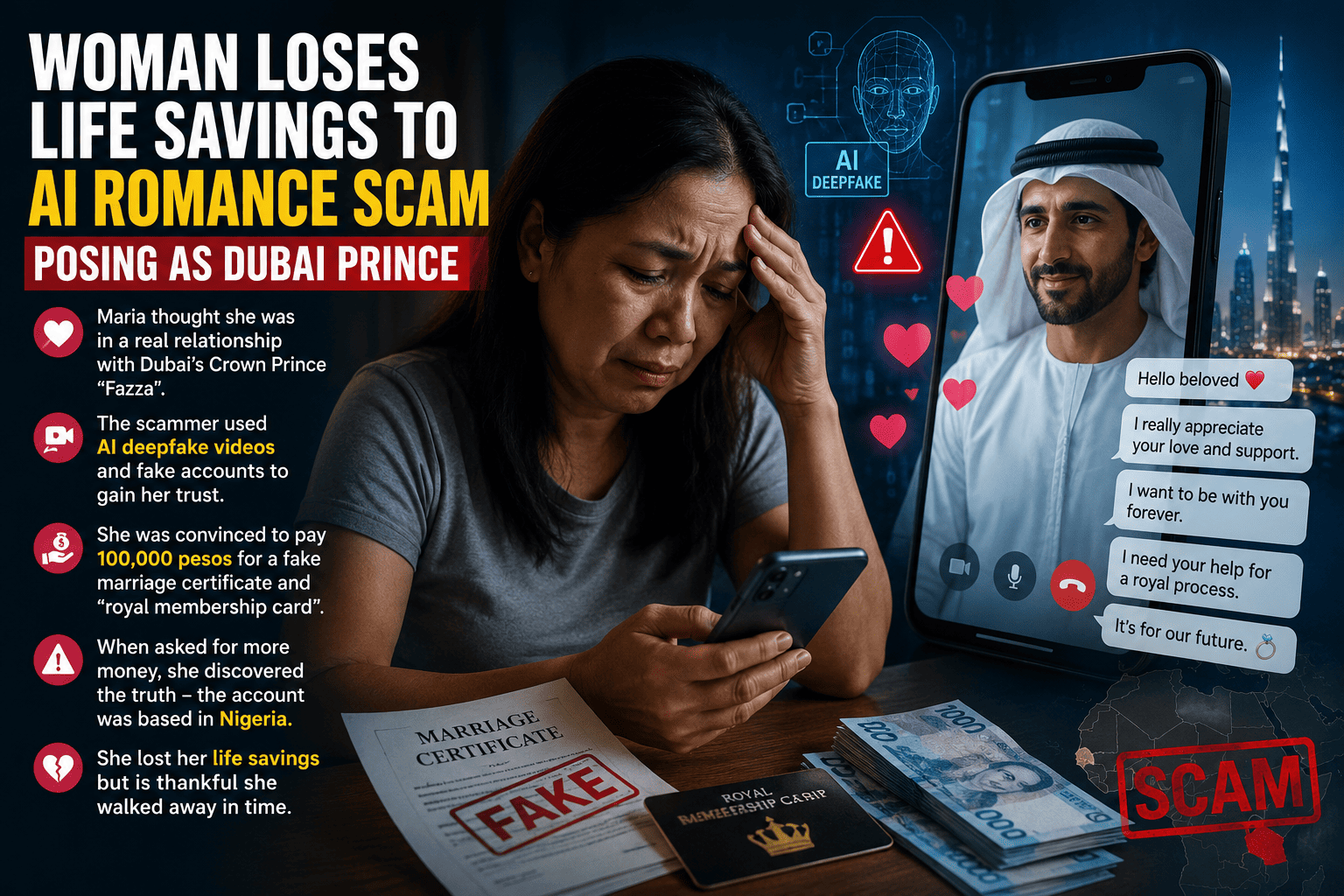
A Filipino domestic worker lost an entire year’s worth of savings after being deceived by an AI-generated romance scam in which fraudsters impersonated Dubai’s Crown Prince, Sheikh Hamdan bin Mohammed, popularly known as “Fazza.”
Table Of Content
The woman, identified only as Maria to protect her identity, believed she had found love after meeting someone claiming to be the prince on a dating platform. Their conversations soon moved to WhatsApp, where the scammer showered her with affectionate messages and frequent video calls.
What made the deception especially convincing was the use of advanced AI deepfake technology. During live video calls, Maria saw what appeared to be the prince speaking directly to her. His facial expressions and lip movements matched the conversation, creating a remarkably realistic illusion, even though the voice itself did not sound like the real royal.
“He kept messaging me even while I was asleep,” Maria recalled. “It felt like there was a love spell connecting our minds.”
Trusting the man she believed she loved, Maria was persuaded to send 100,000 Philippine pesos (approximately US$1,625). The scammer claimed the money was needed to process a marriage certificate and a “royal membership card” that would supposedly help her secure employment in Dubai.
The deception unraveled when the fake prince requested an additional 60,000 pesos to book a hotel for their first meeting. Suspicious, Maria investigated his Facebook profile and discovered it was linked to Nigeria rather than the United Arab Emirates. She immediately ended all communication, sending one final message: “Go to hell, scammer.”
Although devastated financially, Maria considers herself fortunate that she recognized the fraud before losing even more money.
A Growing Global Scam
Maria’s experience is part of a growing wave of online romance scams in which criminals exploit the image of Sheikh Hamdan. With more than 17 million followers on Instagram and a strong global reputation, the Dubai royal has become a frequent target for identity thieves.
Fraudsters create convincing social media profiles, Facebook groups, and messaging accounts using manipulated photos, AI-generated videos, and even authentic poems written by the prince to gain victims’ trust. Some posts invite users to continue conversations on WhatsApp or Telegram, where the scammers begin building romantic relationships.
Many unsuspecting users respond with affectionate comments and emojis, while others warn that the accounts are fraudulent.
Awareness campaigns have since emerged online, including social media pages dedicated to exposing fake prince scams. A Change.org petition has also urged Sheikh Hamdan’s office to increase public awareness, noting that victims are often asked to send large sums of money for fake marriage certificates, donations, or other fabricated royal services. Payments are frequently routed through foreign bank accounts or cryptocurrencies, making them difficult to trace.
AI Is Making Romance Scams More Convincing
Experts warn that artificial intelligence is rapidly transforming online fraud. Modern AI tools can generate highly realistic real-time video deepfakes, allowing scammers to convincingly imitate the appearance and facial movements of well-known public figures during live conversations.
According to researchers, distinguishing between genuine and AI-generated video calls is becoming increasingly difficult.
The case highlights a broader global trend. The Global Anti-Scam Alliance estimates that consumers worldwide lost approximately US$442 billion to scams in the past year, with romance fraud accounting for a significant share of those losses.
How to Protect Yourself
Experts recommend several precautions to avoid becoming a victim of online romance scams:
- Be cautious of anyone professing love unusually quickly.
- Never send money to someone you have only met online.
- Verify identities through multiple independent sources.
- Be skeptical of video calls alone, as AI technology can now generate convincing deepfakes.
- If someone requests money for visas, marriage certificates, gifts, or travel expenses, treat it as a major warning sign.
As AI technology continues to evolve, digital literacy and healthy skepticism are becoming essential tools for staying safe online.
Never Miss a Story: Join Our Newsletter