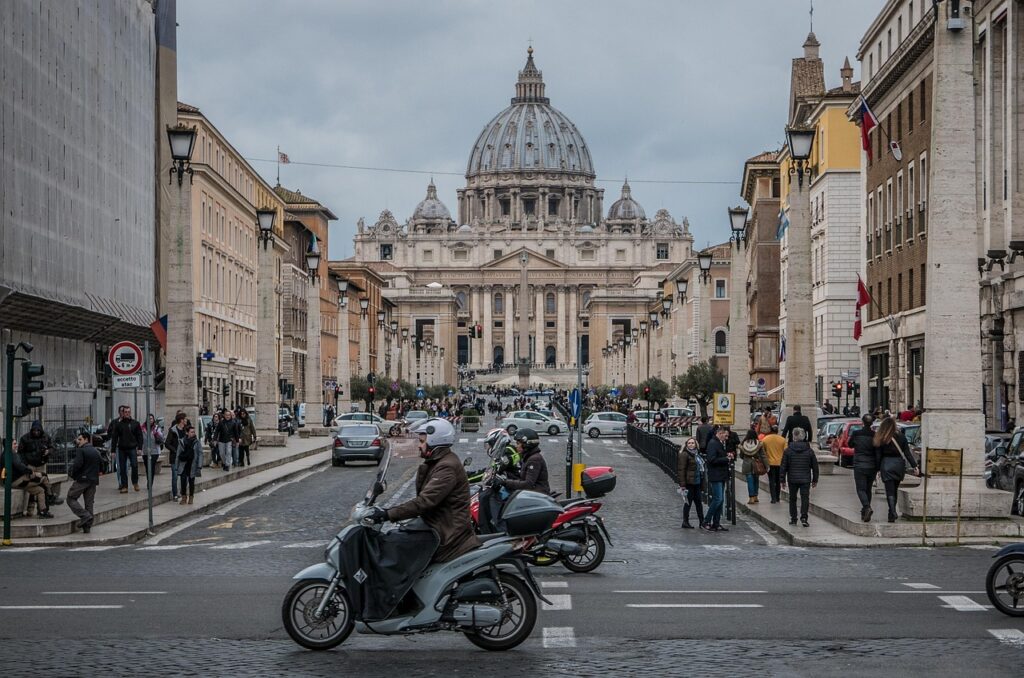
Once again, black smoke rose above the Vatican on Thursday morning, signaling another inconclusive vote in the papal conclave 2025. As cardinals remain deadlocked over who should succeed the late Pope Francis I, uncertainty continues to cloud one of the most sacred rituals of the Catholic Church. With ideological divides and geopolitical considerations playing a significant role, this conclave is taking longer than many had anticipated—revealing deeper tensions within the global Church.
The Sacred Ritual: How a Pope Is Elected
The election of a new pope is guided by centuries-old tradition and strict protocol. It begins with the gathering of the College of Cardinals—this time, 133 members under the age of 80—who meet in absolute secrecy within the Sistine Chapel. After a mass and solemn oaths of confidentiality, the cardinals begin voting in a series of ballots, usually two in the morning and two in the afternoon.
A two-thirds majority is required to elect a new pope. Each round of voting concludes with the burning of ballots in a stove, whose smoke—black or white—emerges through a chimney on the roof of the chapel. Black smoke, as seen so far, means no consensus has been reached. White smoke signals a successful election, followed by the historic words Habemus Papam and the public appearance of the new pontiff.
Read Also: The Papal Lineage of Through Apostolic Succession
The Delay: Why It’s Taking Longer This Time
This conclave is now stretching into its second day without a resolution, and speculation is mounting. Several factors contribute to the delay:
1. Ideological Divides Within the Church
Pope Francis, who died earlier this year, left behind a legacy of progressive reform—emphasizing inclusivity, interfaith dialogue, and climate action. He appointed 108 of the current voting cardinals, theoretically stacking the conclave with like-minded individuals. However, even among his appointees, there are differences in vision, especially on how far reform should go.
The current front-runners reflect this divide:
- Luis Antonio Tagle of the Philippines, a symbol of the global South and a staunch Francis ally.
- Pietro Parolin, the Italian Secretary of State, known for his diplomatic skill and moderate reformism.
- Robert Sarah of Guinea, who represents a more conservative and traditionalist wing.
This split has prevented any single candidate from reaching the required 89 votes (two-thirds of 133).
2. Regional and Cultural Representation
Another layer of complexity is the geopolitical and cultural composition of the Church. There is growing pressure to elect a pope from the global South, particularly Africa or Asia, where Catholicism is expanding most rapidly. However, the European bloc still holds significant sway, and some believe it is time for an Italian pope after decades of foreign pontiffs.
This tug-of-war between regions is prolonging consensus-building, as cardinals weigh the symbolic and strategic implications of their choice.
3. The Shadow of Pope Francis
While Pope Francis transformed the papacy into a more humble and globally-conscious institution, some cardinals fear his reforms went too far, or were implemented too fast. This has led to quiet resistance against candidates who are seen as his ideological heirs. The challenge is to find a successor who respects Francis’s legacy while potentially offering a more stabilizing or centrist vision.
Read Also:ope Francis legacy: Impact, Achievements, and a Modern Papacy
A Glimpse at the Process
As of Thursday afternoon, cardinals are set to vote in two more sessions. If a pope is elected in the first afternoon vote, white smoke could rise around 5:30 p.m. Rome time. If not, the outcome of a second vote—expected around 7 p.m.—may determine whether the conclave will continue into Friday.
Despite the strict secrecy, Vatican observers and journalists gathered in St. Peter’s Square are parsing every detail, from the timing of the smoke to body language among officials, for clues. The process remains, in many ways, opaque to the public, though meticulously choreographed within the walls of the Sistine Chapel.
A Church at a Crossroads
The delay in electing a new pope is not simply a procedural hurdle—it reflects the deep soul-searching underway within the Catholic Church. The next pope will face urgent global challenges: the rise of secularism, declining church attendance in the West, clerical abuse scandals, climate crisis, war, and poverty. He will also inherit a Church that is both fractured and globalized, searching for unity without uniformity.
Whether the new pontiff leans toward continuity or change, the conclave’s prolonged deadlock suggests that the path to consensus is far from easy. Yet it is precisely in these moments of struggle that the weight of history becomes apparent. The Church, ever ancient and ever evolving, is preparing to speak through white smoke—when it finally does.
As the papal conclave 2025 enters a critical phase, the world watches and waits for the appearance of white smoke that will announce the next spiritual leader of over a billion Catholics. Whether the new pope continues the progressive path of Pope Francis or steers the Church in a different direction, this prolonged selection process underscores the weight of the decision and the challenges facing the Church in a rapidly changing world.
Never Miss a Story: Join Our Newsletter