
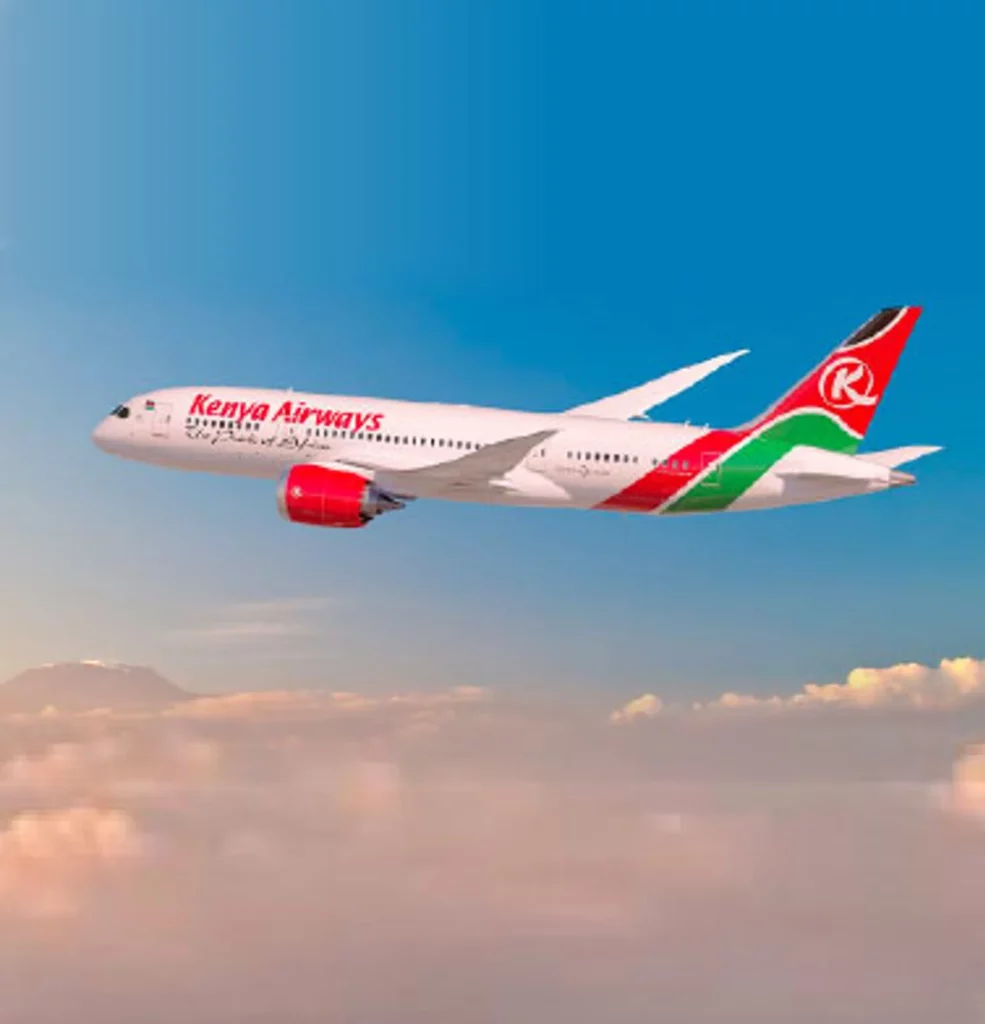
Kenya Airways (KQ), long regarded as the Pride of Africa, has once again slipped into turbulence. After posting a promising profit in 2023—the first in more than a decade—the airline has now recorded a steep half-year loss. What went wrong, and can the flag carrier regain altitude?
From Profit to Loss in Just a Year
In the first half of 2025, Kenya Airways posted a net loss of KSh 12.15 billion, a sharp contrast to the KSh 513 million profit it made during the same period in 2024. The turnaround is especially disappointing given that the airline celebrated a full-year profit of KSh 5.4 billion in 2023, raising hopes of a sustainable recovery.
Aircraft Grounding Hits Operations
The main culprit behind KQ’s financial woes is aircraft unavailability. Three of its nine Boeing 787-8 Dreamliners were grounded due to engine shortages and global supply chain delays. With a third of its long-haul fleet stuck on the ground, the airline’s capacity to meet demand shrank dramatically.
This translated into a 19% revenue drop, from KSh 91.49 billion in 2024 to KSh 74.5 billion in 2025. While costs also fell by about 10.5%, the reduction was not enough to cushion the blow from lost revenue.
Passengers and Cargo Take a Hit
The grounding had a ripple effect on passengers and cargo alike.
- Passenger numbers fell by 14%, leaving many routes under strain.
- Cargo volumes declined by 8%, affecting the airline’s freight operations.
Customers felt the pinch through delays and cancellations. According to CEO Allan Kilavuka, the airline’s tight scheduling means that even a small disruption can snowball into wider operational headaches.
The Cost of Keeping Planes in the Sky
Behind the scenes, KQ is grappling with the rising cost of aircraft maintenance. An engine overhaul can now take over 120 days, up from a few weeks, thanks to supply chain bottlenecks and global demand pressures. Worse still, the cost of a single overhaul is about US $15 million (KSh 2 billion)—a bill the airline is struggling to meet consistently.
Looking Ahead: Recovery Plans
Not all is doom and gloom. In July 2025, one of the grounded Dreamliners returned to service, with the other two expected back by the end of the year. The airline is also working to raise at least US $500 million (KSh 64.5 billion) in fresh capital from shareholders to shore up its financial health.
Kilavuka insists the loss is temporary, pointing out that aviation is a cyclical industry. With African travel demand steadily rising, KQ hopes to ride the wave once its fleet is fully restored.
A Test of Resilience
Kenya Airways finds itself back on shaky ground, but this is not new territory for the airline. Its latest setback is a reminder that success in aviation depends not only on passenger numbers but also on operational efficiency and fleet readiness.
If KQ can get its grounded aircraft back in the skies and secure much-needed investment, the Pride of Africa may yet soar again. For now, however, the airline—and its loyal customers—must endure some turbulence before smoother skies return.
Never Miss a Story: Join Our Newsletter