
The Hidden Economics and Technology Behind Oil Refineries
Across Africa, the discovery of oil often sparks hope for energy independence and economic transformation. Yet a puzzling reality remains: many countries that produce crude oil still import large amounts of refined fuel. When tensions rise in the Middle East—the world’s largest oil-producing region—fuel prices in African countries often surge, even in nations with their own petroleum reserves.
Why does this happen? The answer lies in the complex, expensive, and highly technical world of oil refining.
Oil in the Ground Is Not Fuel in the Tank
Crude oil is not directly usable. What comes out of the ground is a thick, dark mixture of hydrocarbons containing dozens of different compounds. Before it can power a car or airplane, it must be separated and chemically transformed into useful products such as:
- Petrol (gasoline)
- Diesel
- Jet fuel
- Liquefied petroleum gas (LPG)
- Lubricants
- Bitumen for roads
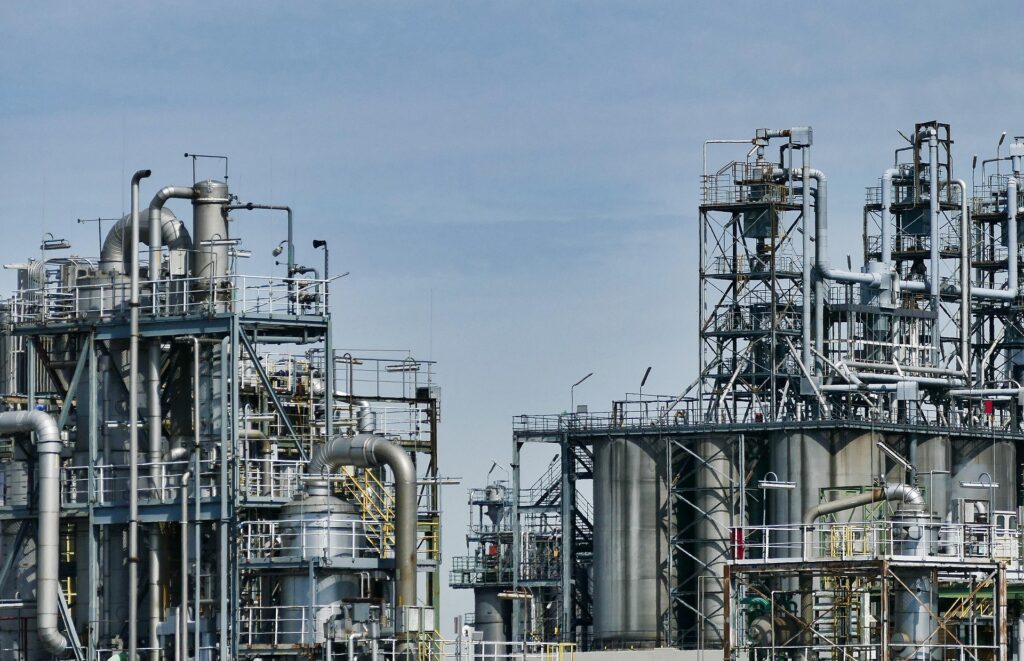
This process happens inside massive industrial complexes known as refineries.
Inside a refinery, crude oil is heated to extremely high temperatures and passed through towers where it separates into components based on boiling points. But separation is only the first step. Many fractions must then undergo chemical processes such as catalytic cracking, hydrocracking, and desulfurization to meet modern fuel standards.
These operations require advanced catalysts, sophisticated control systems, and precision engineering. Running them safely demands highly trained engineers and constant monitoring.
The Billion-Dollar Barrier
One of the biggest obstacles to refinery development is cost.
Building a modern refinery is among the most expensive industrial projects in the world. Depending on size and complexity, a refinery can cost anywhere between $5 billion and $20 billion. Financing such projects is difficult for many developing economies, which must weigh them against competing priorities such as infrastructure, education, and healthcare.
A dramatic example is the Dangote Refinery in Nigeria. With an estimated cost of about $19 billion, it is one of the largest single-train refineries ever built. Designed to process about 650,000 barrels of crude oil per day, it could dramatically reduce Africa’s reliance on imported fuels if it operates at full capacity.
But projects of this scale require enormous capital, technical partnerships, and years of construction.
The Scale Problem
Refineries must run continuously to be profitable. Shutting them down or operating below capacity dramatically increases costs.
Many African oil fields simply do not produce enough crude oil to keep a large refinery running efficiently. In such cases, exporting crude oil and importing refined fuel often becomes the cheaper option.
For instance, oil discovered in Turkana County is exported rather than refined domestically. The country once operated the Mombasa Oil Refinery in Mombasa, but it was shut down in 2013 after becoming too small and inefficient compared with modern mega-refineries abroad.
Large refining hubs in countries such as India and Netherlands process crude oil from around the world far more cheaply because they operate at enormous scale.
Technology Controlled by a Few Global Players
Oil refining also depends on specialized technologies controlled by a relatively small number of global engineering firms.
Companies such as:
- Honeywell UOP
- Technip Energies
- Bechtel
design the sophisticated units that convert crude oil into high-quality fuels. These technologies involve proprietary catalysts, complex chemical processes, and highly automated control systems.
For many countries, accessing and maintaining this expertise can be difficult and expensive.
When Oil Producers Still Import Petrol
Perhaps the most striking example of this paradox is Nigeria itself. Despite being Africa’s largest oil producer, the country has historically imported much of its refined fuel.
Nigeria built several state-owned refineries decades ago, including the Port Harcourt Refinery, Warri Refinery, and Kaduna Refinery. Together they were designed to process about 445,000 barrels per day.
However, years of poor maintenance, aging equipment, pipeline vandalism, and corruption meant that these facilities often operated far below capacity. At times they were completely shut down, forcing the country to import petrol despite exporting millions of barrels of crude oil.
Fuel subsidies added another complication. Keeping petrol prices artificially low encouraged a lucrative fuel-import business that further undermined local refining.
Environmental and Safety Challenges
Modern refineries must also meet strict environmental standards. They generate sulfur emissions, wastewater, and other pollutants that require sophisticated treatment systems.
Building facilities to manage these risks—such as sulfur recovery units, emission-control systems, and wastewater treatment plants—adds billions more to the cost of construction and operation.
Without these systems, refineries can pose serious environmental and safety risks.
A Structural Issue in the Global Oil Economy
The shortage of refineries in many developing countries is not simply a technical problem; it is also part of a broader global economic structure. For decades, many resource-rich nations have been integrated into the global economy primarily as exporters of raw materials.
In this model, crude oil is exported to industrial economies where it is refined into higher-value products, which are then sold back to importing nations.
Breaking out of this pattern requires large investments, industrial capacity, skilled labor, and stable policies—conditions that take time to build.
The Road Ahead
Africa produces roughly 8–10 percent of the world’s crude oil, yet the continent imports a majority of its refined fuel. That imbalance may gradually change as new refineries come online and energy demand continues to grow.
Projects like Nigeria’s Dangote refinery signal a shift toward greater regional refining capacity. If successful, such facilities could reshape fuel markets across West and Central Africa and reduce dependence on imported petroleum products.
Until then, many African economies will remain vulnerable to global shocks. When geopolitical tensions disrupt supply in the Middle East, fuel prices ripple across the world—including in countries that sit atop their own oil reserves.
The paradox of oil wealth without fuel independence is therefore less mysterious than it first appears. Beneath it lies a web of economics, technology, and infrastructure that makes refining one of the most complex industries on earth.
Never Miss a Story: Join Our Newsletter