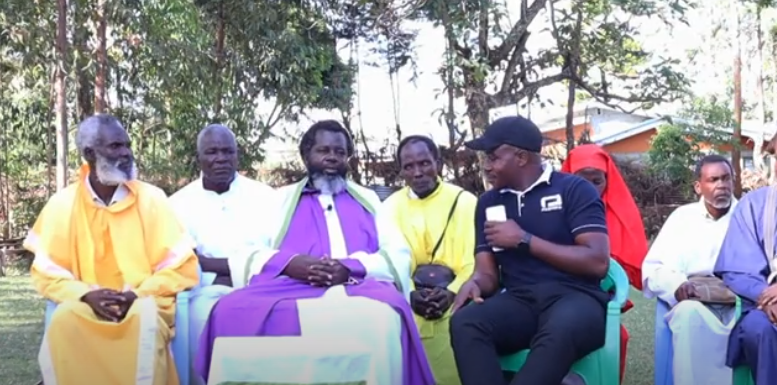
On any given Sunday in Bungoma, it’s not unusual to hear a preacher claim divine titles that would shock orthodox Christians. One man calls himself “Yesu wa Tongaren”, another—until his death—insisted he was God incarnate, known as Jehovah Wanyonyi. Decades earlier, Elijah Masinde founded Dini ya Musambwa, a faith mixing Christianity, prophecy, and anti-colonial protest.
To outsiders, these movements seem bizarre, even laughable. Yet they are not isolated spectacles. They are part of a wider surge of unconventional churches sweeping across Western Kenya, reshaping faith and community life in ways too large to ignore. Mainstream denominations—Catholic, Quaker, SDA—still exist in force, but their dominance is visibly contested.
The real question is: why here, and why now?
The Old Guard: Still Strong, But No Longer Alone
Western Kenya has historically been a religious stronghold.
- Friends (Quakers): Arrived in 1902 through the Kaimosi mission. Today, Friends Church Kenya has about 146,000 members spread across 25 Yearly Meetings, most concentrated in Vihiga and Kakamega.
- Catholics: The Catholic Diocese of Kakamega alone counts nearly 1 million adherents, making Catholicism one of the region’s strongest pillars.
- Seventh-day Adventists (SDA): The West Kenya Union Conference reports ~602,000 baptized members as of mid-2024, with schools and hospitals reinforcing its reach.
- Dini ya Musambwa: A home-grown faith, born in the 1940s, fusing prophecy with anti-colonial rebellion, remains symbolically powerful in Bungoma and Busia.
These institutions are not vanishing, but their share of the spiritual market is now contested by a swarm of charismatic and independent ministries—often controversial, sometimes flamboyant.
Bungoma’s “Messiahs” and the Rise of Unorthodox Prophets
1. Yesu wa Tongaren (Eliud Wekesa)
- A self-proclaimed Messiah from Tongaren, Bungoma, claiming he is the Christ returned. He enforces unique dress codes and has gained a social media following.
- Arrested in 2023 on cultism and money-laundering suspicions but released for lack of evidence.
2. Jehovah Wanyonyi (Michael Mwaboyi)
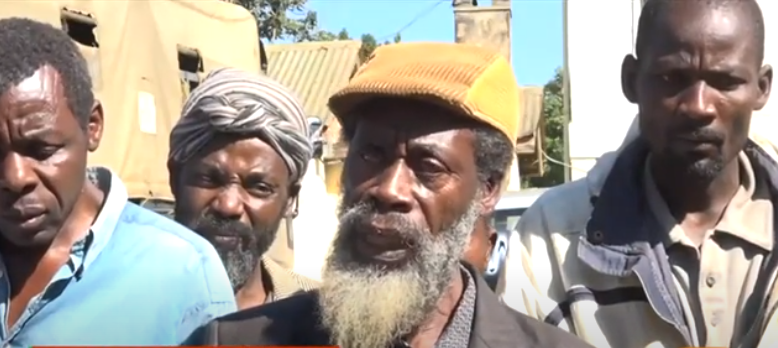
- Although he passed away in 2015, he left a lasting legacy. Wanyonyi proclaimed himself Almighty God, claimed to cure AIDS, and threatened Kenya if not paid billions. His cult—Lost Israelites of Kenya—persisted with around 1,000 followers.
3. Nabii Yohana (“John the Baptist” V)
- Ronald Nakalila Wanyama claims to be the reincarnated John the Baptist. Based in Bungoma, he allegedly has dozens of wives (some accounts say 46) and hundreds of children (over 100), and even authored a 93-book “Bible.”
4. Prophetess Mary Sinaida Akatsa
- From Vihiga, she founded the Jerusalem Church of Christ and made headlines predicting Jesus’ appearance; she’s known for disciplining congregants harshly (e.g., whipping latecomers).
5. Prophet Elijah Masinde (Dini ya Musambwa)
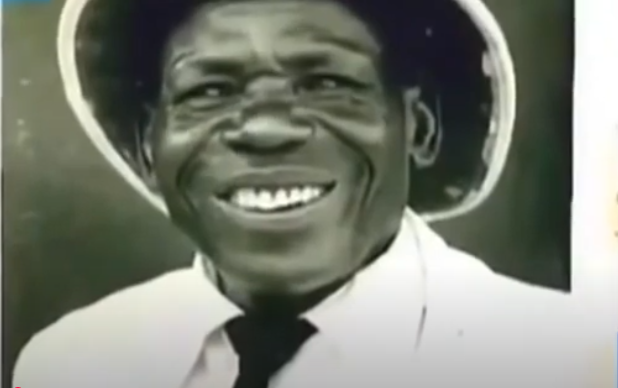
- A historical figure from the 1940s–1960s, he founded Dini ya Musambwa, blending anti-colonial protest with prophecy. Though from decades past, his legacy still influences religious innovation in Bungoma.
6. Alfred Ndeta (“Mungu wa Kakamega”)
- From Kakamega, he calls himself the “third God,” claims he descended from heaven, and says he never uses a toilet or bath. He’s reportedly building his own “heaven” on earth and sees others—including Yesu wa Tongaren and Jehovah Wanyonyi—as his escorts.
7. Judith Nafula (“Virgin Mary wa Busia”)
- A woman from Busia who proclaims herself to be the Virgin Mary. Details are few, but she has generated local attention for these claims.
Summary Table
| Name | Claim | Region | Notable Traits |
|---|---|---|---|
| Yesu wa Tongaren | Jesus Christ reincarnate | Bungoma | Arrested and released; popular on social media |
| Jehovah Wanyonyi | Almighty God, healer of AIDS | Uasin Gishu/Bungoma | Deceased (2015); cult persists |
| Nabii Yohana | Reincarnated John the Baptist | Bungoma | Massive family; wrote own “Bible” |
| Mary Sinaida Akatsa | Prophetess, predicted Jesus’ arrival | Vihiga | Known for strict discipline |
| Prophet Elijah Masinde | Founder of Dini ya Musambwa | Bungoma (historic) | Anti-colonial prophet; enduring local legacy |
| Alfred Ndeta (“Mungu wa Kakamega”) | Self-styled “third God” | Kakamega | Eerie claims; building “heaven” on earth |
| Judith Nafula (“Virgin Mary wa Busia”) | Self-declared Virgin Mary | Busia | Healing & miracle-oriented church |
Context and Trends
These figures represent a longstanding pattern in Western Kenya of self-proclaimed prophets, prophets-with-claims of divinity, or prophets blending culture and Christianity. What makes this wave distinct is its spread across several counties and amplification via social media and local notoriety.
To dismiss these movements as mere eccentricities is to miss the deeper forces driving them. Bungoma’s prophets embody a region-wide trend: the proliferation of independent churches and sects that thrive outside traditional Christianity.
Why Western Kenya Breeds New Churches
1. A Long Tradition of Religious Experimentation
Western Kenya has always been fertile ground for spiritual innovation. The early 20th century saw the birth of Legio Maria, African Israel Church Nineveh (AINC), Roho Israel, Nomiya Church and others. These groups emerged from dissatisfaction with missionary dominance, mixing local culture with Christianity. Today’s prophets simply continue that legacy, updating it for the age of smartphones.
2. Poverty and Economic Anxiety
According to the Kenya National Bureau of Statistics, counties in Western post poverty rates of 30–40%, higher than the national average. Land fragmentation, joblessness, and the high cost of living leave many searching for hope. In such conditions, a preacher promising miraculous healing or sudden financial “breakthroughs” becomes a powerful magnet.
3. High Trust in Clergy, Low Trust in Institutions
Kenya’s Afrobarometer (2022) found 43.7% of citizens trust religious leaders “a lot”, compared to far lower confidence in politicians or local councils. This makes clergy uniquely influential. At the same time, widespread disillusionment with healthcare, jobs, and governance creates a vacuum. Prophets step into that vacuum with bold claims.
4. The Digital Megaphone
By late 2024, Kenya’s smartphone penetration stood at 72.6%. In Bungoma, even a small church can livestream to thousands via Facebook Live or TikTok. The stranger the claim, the faster it spreads. “Yesu wa Tongaren” became a household name not because of his congregation’s size but because of viral video clips.
5. Weak Oversight
Kenya has over 40,000 registered religious societies, part of a universe of 100,000 registered organizations. Regulation is thin. After the 2023 Shakahola tragedy, tighter oversight was proposed, but reforms remain stuck in debate. In this lax environment, anyone with charisma and a microphone can start a church.
6. Politics and Patronage
Kenyan politicians frequently grace pulpits during campaigns, using churches as platforms for mobilization. Even fringe outfits gain legitimacy when elected leaders attend their harambees. This intertwining of politics and faith fuels the mushrooming of sects.
7. Cultural Resonance of Spirit Beliefs
Among Luhya communities, belief in witchcraft, curses, and spiritual warfare is deeply embedded. Churches that offer rituals against misfortune—be it prayers, exorcisms, or prophetic healings—speak directly to these anxieties. Mainstream denominations, which often avoid these themes, lose ground to groups that dramatize them.
Impacts: How the New Sects Reshape Life
Community and Welfare
Independent churches often double as welfare nets, organizing funeral funds, youth fellowships, and even rotating savings groups. In places where state safety nets are thin, they provide social support that mainstream churches, with their heavy bureaucracies, can be slower to deliver.
Politics
From campaign rallies to Sunday harambees, sects provide ready-made crowds and loyalty blocs. Politicians know this, which is why they routinely show up—even at controversial gatherings.
Economy
Churches are mini-industries. Crusades and services hire boda bodas, sound systems, tent suppliers, and food vendors. Digital tithing through M-Pesa has normalized giving small amounts frequently, providing a steady cash flow.
Youth and Gender
For young people and women, sects often provide leadership opportunities unavailable in hierarchical mainstream churches. From choir leadership to prophecy, fringe movements offer platforms that feel empowering, even if sometimes exploitative.
Risks
The dangers are real: financial exploitation through endless “seed offerings,” discouragement from hospital care in favor of “faith healing,” authoritarian control by charismatic leaders, and even violent confrontations over land or succession.
Why Traditional Churches Seem to Wane
Despite their large numbers, mainstream churches are losing visibility. Why?
- Rigid structures: Decision-making is slow, innovation limited. Small sects pivot overnight with new programs, livestreams, or youth-friendly services.
- Abstract messaging: A Catholic homily on virtue may not resonate with someone battling witchcraft fears or unemployment. Prophets who “speak fire” to everyday problems sound more relevant.
- Participation gap: In big churches, members often sit as passive congregants. In sects, newcomers can quickly become choir members, ushers, or online evangelists—an active role that is emotionally rewarding.
By the Numbers (Kenya-wide)
| Indicator | Value | Source |
|---|---|---|
| Christians in Kenya | 85.5% of population | KNBS 2019 |
| Registered religious societies | ~40,000 (out of 100,000 societies) | Parliament Brief 2023 |
| SDA members, West Kenya Union | ~602,000 | SDA Union 2024 |
| Quaker members (Friends Church Kenya) | ~146,000 | Friends Church 2024 |
| Smartphone penetration | 72.6% (Sept 2024) | Communications Authority |
| Trust “a lot” in clergy | 43.7% | Afrobarometer 2022 |
| Poverty headcount, Western counties | 30–40% | KIHBS 2015/16 |
Bungoma as Case Study
- Bungoma: Home to “Yesu wa Tongaren” and “Jehovah Wanyonyi,” now shorthand for eccentric prophets. Media amplifies their reach.
- Vihiga & Kakamega: Quaker and SDA strongholds, but also dotted with Roho and AINC churches. A crowded faith marketplace.
- Busia/Nyanza Border: Visible Legio Maria processions and shrines keep public religion alive in striking forms.
What the Future Holds
- Regulation Battles: The state is under pressure to tighten oversight without violating religious freedom. Expect heated debates.
- Always-On Church: With cheap data, fringe prophets will continue livestreaming, creating “24/7” virtual churches.
- Hybridization: Mainstream churches are slowly adapting—SDA choirs on TikTok, Catholic charismatic rallies, Quaker youth fellowships with contemporary music. The line between “proper” and “sect” is blurring.
Why Bungoma Keeps Producing “Messiahs”
Bungoma’s unorthodox prophets are not mere curiosities. They are the product of real social, economic, and cultural pressures. Poverty, weak institutions, cultural spirituality, and digital megaphones have made Western Kenya a laboratory for religious innovation—sometimes inspiring, often dangerous.
Mainstream churches may appear to wane, but the truth is more complex: they are being outpaced by nimbler, bolder, and more controversial movements. Unless the deep drivers—poverty, disillusionment, lack of relevant pastoral care—are addressed, the next “Yesu wa Tongaren” is not just likely. He is inevitable.
Never Miss a Story: Join Our Newsletter