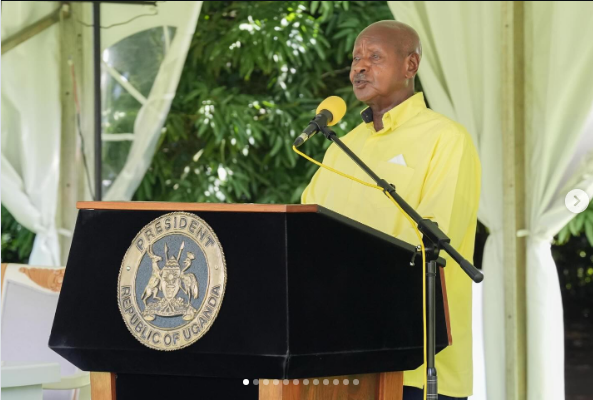
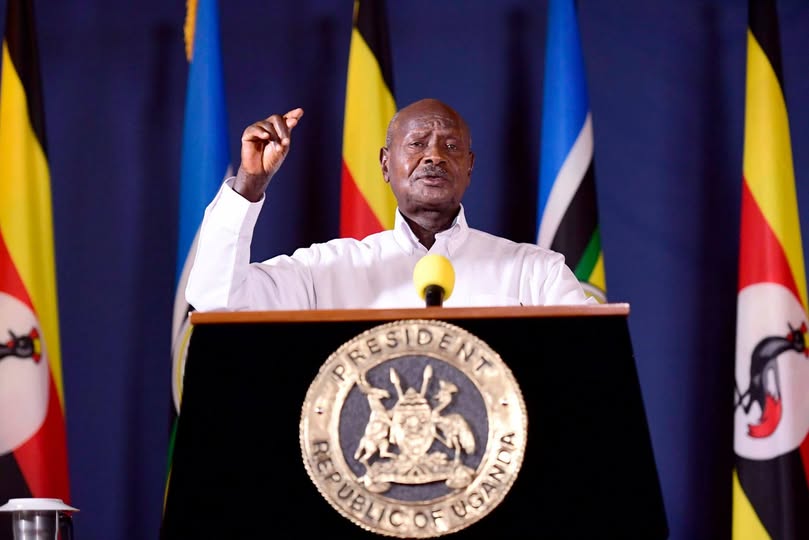
Uganda’s Election 2026 has delivered a result that few found surprising but many find troubling. President Yoweri Museveni’s victory has extended his rule to nearly 40 years, making him one of the world’s longest-serving leaders. Yet the real significance of this election lies less in who won than in what it revealed: a political system increasingly defined by control, militarization, and an unresolved succession that threatens to shape Uganda’s future more than any ballot.
As Museveni begins another term at the age of 81, the country confronts an uncomfortable reality. Uganda is no longer debating whether democracy is maturing; it is debating whether it is receding.
Read Also: Uganda Election 2026: Museveni vs Bobi Wine and the Battle for the Nation’s Future
An Election Under Siege
The election period was marked by widespread disruption. Internet and social media shutdowns were imposed as voting approached, limiting independent reporting and election monitoring. Security forces were deployed heavily in urban centers, particularly Kampala and opposition strongholds. According to official security statements, more than 2,000 opposition supporters were detained in the immediate aftermath of the vote, and dozens were reported killed during post-election crackdowns.
Opposition leader Robert Kyagulanyi, known as Bobi Wine, rejected the results outright, citing voter intimidation, ballot interference, and systemic bias within the Electoral Commission. His campaign faced arrests, blocked rallies, and constant surveillance. International observers, while cautious in their language, raised serious concerns about the lack of a level playing field.
Museveni’s National Resistance Movement (NRM) secured a commanding majority, officially winning over 70 percent of the vote. Yet turnout was notably low, especially among younger voters—an indication not of apathy, but of growing disbelief that elections can meaningfully alter political outcomes.
Uganda’s Election 2026: Electoral Democracy or Managed Rule?
Uganda’s political structure increasingly fits the description of an “electoral authoritarian” state: elections occur regularly, opposition parties exist, and democratic institutions are formally intact, but power remains tightly controlled.
Over the years, constitutional safeguards have been dismantled. Presidential term limits were removed in 2005. Age limits were scrapped in 2017 after violent scenes in Parliament. These changes were not incidental; they were decisive steps that entrenched Museveni’s continued rule.
The 2026 election followed this trajectory. The state’s security apparatus—particularly the military—played a central role in maintaining order, but also in shaping the political environment. Civil society groups and independent media operate under constant pressure, while courts rarely challenge executive authority on politically sensitive matters.
In this context, elections serve less as mechanisms for change and more as instruments of continuity.
The “Last Term” Claim: History Breeds Doubt
Museveni’s assertion that this could be his final term has been met with widespread skepticism. Similar signals have been sent before, only to be overtaken by constitutional amendments or political “necessities.”
There is no legal or institutional mechanism that obliges him to step down. Any transition will depend entirely on his personal decision and the calculations of the ruling elite. Factors such as health, internal party cohesion, and military loyalty will weigh far more heavily than public expectation.
For many Ugandans, the question is not whether Museveni intends to leave, but whether he intends to leave control.
The Succession Question and the Rise of Muhoozi
At the center of this uncertainty stands Gen. Muhoozi Kainerugaba, Museveni’s son and Uganda’s most powerful military figure. As Chief of Defence Forces, Muhoozi commands an institution that has become inseparable from politics.
His public statements, political signaling, and rapid rise through military ranks have fueled speculation that he is being positioned as a successor. Supporters within the NRM argue that he represents continuity and stability. Critics warn that his ascension would formalize dynastic rule and further militarize governance.
Muhoozi’s path to power, however, is not guaranteed. Uganda’s population is overwhelmingly young, urban frustrations are growing, and resentment toward long-standing elite dominance runs deep. While the military may secure elite transitions, it cannot easily manufacture popular legitimacy.
A Muhoozi presidency could therefore consolidate state power while simultaneously deepening political polarization.
Post-Museveni Uganda: Three Possible Futures
Uganda now stands before three plausible trajectories.
The first is managed continuity—Museveni eventually exits, but power remains within the NRM, possibly under Muhoozi or another loyalist. Governance changes little, and political space remains constrained.
The second is elite fragmentation, where unresolved succession battles within the ruling class trigger instability. This scenario poses risks not only for Uganda, but for regional security in East Africa.
The third is gradual democratic reawakening, driven by sustained civic pressure, youth mobilization, and institutional reform. While currently unlikely in the short term, this path reflects the aspirations of millions of Ugandans who feel locked out of political decision-making.
A Country Waiting for Its Future
Uganda’s Election 2026 has settled the immediate question of leadership but left the deeper questions unresolved. How long can stability be maintained without accountability? Can succession be managed without undermining legitimacy? And what happens when a system built around one man must finally operate without him?
Museveni’s legacy will ultimately be judged not by the length of his rule, but by whether Uganda emerges from it with stronger institutions—or a deeper democratic deficit.
For now, Uganda waits—its ballots counted, its future still undecided.
Never Miss a Story: Join Our Newsletter