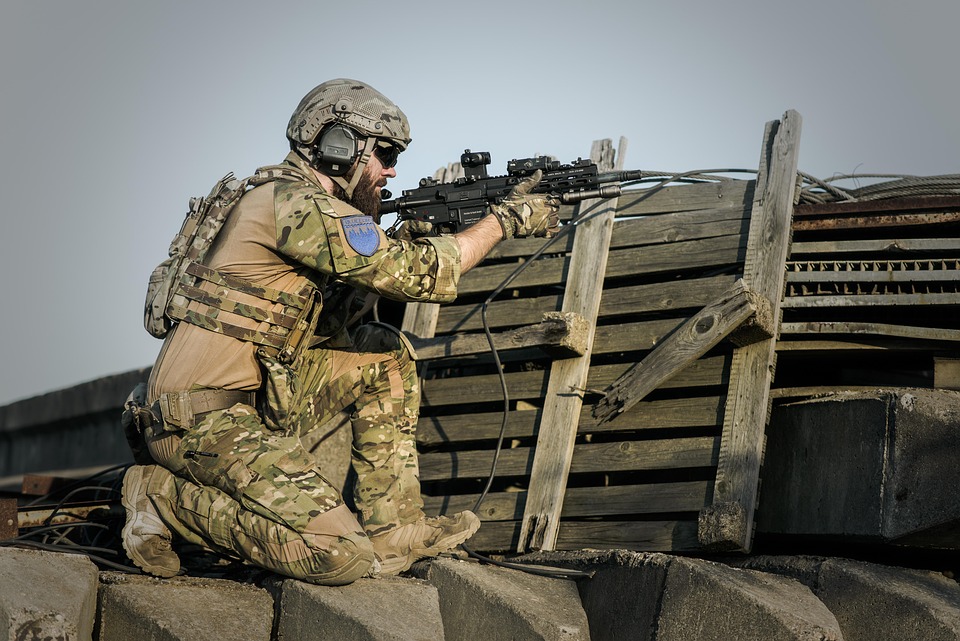
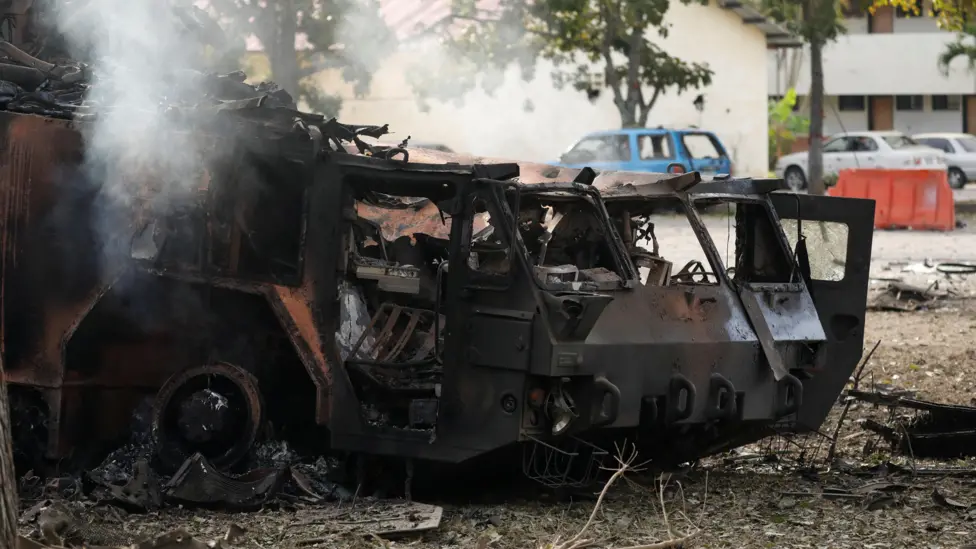
On January 3, 2026, the United States launched a dramatic military invasion of Venezuela, involving airstrikes against key strategic sites in Caracas and the capture of Venezuelan President Nicolás Maduro and his wife, First Lady Cilia Flores. According to official accounts, Maduro was removed from power in an overnight operation and transported aboard a U.S. warship, while President Donald Trump announced that Washington would “run Venezuela” temporarily to facilitate a transition and overhaul of governance and economic systems.
The rapid escalation marks the most consequential U.S. military intervention in Latin America in decades, reminiscent in scale and ambition of the 1989 invasion of Panama and the early stages of the Iraq War. World leaders ranging from Brazil’s Luiz Inácio Lula da Silva to China and members of the European Union have condemned the operation as a violation of international law and Venezuelan sovereignty, while some Latin American partners emphasize the need for peace and dialogue over unilateral force.
This unprecedented move — widely described as the U.S. invasion of Venezuela — has thrust global attention onto not just the geopolitical consequences, but also the broader structural shifts reshaping international power, economics, and the future of sanctions as a policy tool.
U.S. Invasion of Venezuela: More Than Regime Change
To understand the significance of the U.S. military strike and capture of Maduro, it’s essential to look beyond the surface of conventional narratives — regime change, dictatorship versus democracy, oil interests — and situate the invasion within deeper tectonic shifts in global systems of economic governance.
Yes, Venezuela sits atop the largest proven oil reserves in the world — roughly 303 billion barrels — making it strategically attractive in an era of energy uncertainty and geopolitical competition.
But conflating the invasion solely with oil grabs oversimplifies its implications. To grasp what’s truly at stake, we need to recognize that this invasion may be more about the future of economic sovereignty, the erosion of sanctions as a global enforcement tool, and the struggle over alternative financial networks.
In other words, this is not just about Venezuela oil reserves or the personal fate of one leader. It is also about who gets to define the rules of the 21st-century global economic order.
The Broader Context: Sanctions, Parallel Systems, and US Power
For more than a decade, Venezuela has existed under heavy economic pressure from the United States, including comprehensive sanctions and repeated targeting of the Maduro regime’s access to global finance. Early in this decade, those measures were designed — in part — to force political change by drying up revenue streams tied to oil exports and international loans.
What was less anticipated, however, was how Venezuela improvised its way into new economic circuits — barter agreements with non-Western partners, creative banking work-arounds, and resource-for-credit arrangements that skirted U.S. financial choke points. These networks were imperfect and often expensive, but they worked well enough to keep the economy functioning — an emergent proof-of-concept for sanction-resistant economic activity.
From the perspective of Washington and other capitals reliant on U.S. financial primacy, this was not just a political nuisance; it was a potential precedent — a model that other sanctioned states might emulate to blunt the leverage of Western monetary tools. If nations facing punitive sanctions can develop resilience by integrating alternative clearing systems, non-dollar trade corridors, and bilateral trade networks, the credibility of sanctions as a coercive tool diminishes.
Put simply, what Venezuela demonstrated — out of necessity — was that the global economic order is not as monolithic as once assumed. This invention of parallel financial and trade systems posed a challenge: if other states adopt similar strategies, the United States’ ability to influence global actors through sanctions alone weakens substantially.
In this light, understanding the U.S. invasion of Venezuela also means seeing it as a strategic attempt to prevent Venezuela from becoming the template for a post-sanctions world order — a world where economic sovereignty can exist outside the traditional American and Western financial architecture.
Oil Isn’t Just Oil — It’s Economic Leverage in Transition
Detractors will point to Venezuela’s oil as the obvious motive — and there is no doubt that energy resources remain strategically significant. But in a period of accelerating energy transition, where renewable energy adoption intersects with fossil fuel volatility, the value of securing stable access to oil stocks is not solely about long-term production.
Instead, secondary oil producers like Venezuela are becoming crucial in stabilizing volatile markets, acting as buffers during global supply shocks. Whoever controls that leverage has outsized influence in pricing dynamics, investment flows in the transition, and how swiftly peaker nations adjust to renewable competition.
Thus, securing Venezuela can be seen as an attempt to shape energy market stability — influence that ripples through inflationary expectations, investment in alternative energies, and global strategic relationships.
International Law, Sovereignty, and the New Precedent
One of the most contentious aspects of the U.S. invasion is its legality. Many legal scholars and international leaders argue that the military strike and capture of an incumbent head of state violates the UN Charter and basic norms of sovereignty, especially absent a clear resolution from the United Nations Security Council.
Critics argue that such a precedent emboldens unilateral action by powerful states, at the expense of multilateral frameworks designed to maintain peace and prevent aggression. This concern resonates especially in the global South, where many nations — from Africa to Southeast Asia — view the U.S. invasion of Venezuela as a dangerous precedent of extraterritorial military intervention.
Indeed, political formations in countries like South Africa have already condemned the invasion as “imperial aggression,” calling it an outright violation of international law and a potential threat to global peace and stability.
Viewed through this broader lens, the conflict in Venezuela becomes a test case for whether the post–World War II rules-based order can withstand the pressures of great-power competition and unilateral military assertiveness.
Regional Stability and Latin America’s Strategic Autonomy
Latin America has long sought to chart a path of autonomous regional integration — through mechanisms like Mercosur, Petrocaribe, and other cooperation frameworks — balancing relations with the U.S., China, and regional partners. The U.S. invasion challenges that autonomy by reviving a security-focused paradigm that many hoped had receded in favor of economic integration and diplomacy.
Brazil’s condemnation, Mexico’s call for peace, and European emphasis on multilateral responses all highlight deep regional discomfort with this shift. The invasion risks chilling collaborative projects in energy, migration, and trade that were gaining traction during the past decade.
The Future of Sanctions, Sovereignty, and Global Order
At its core, the U.S. invasion of Venezuela highlights two conflicting visions of world order:
- One where powerful states enforce compliance through sanctions backed by military might.
- Another where states explore alternative economic networks that limit coercive leverage and expand sovereignty.
If the former reasserts dominance — by re-integrating Venezuela into Western financial and energy systems — it will signal that sanctions remain an effective tool of foreign policy and that deviations will be countered forcefully. If the latter persists — if Venezuela’s parallel systems survive or evolve — it may inspire other actors to seek autonomy from dominant global circuits.
Either outcome will shape how sanctions are used, how alliances are formed, and how economic sovereignty is defined for decades to come.
A Turning Point in Global Power Dynamics
The dramatic events of January 3, 2026 — the U.S. invasion of Venezuela, airstrikes on Caracas, and capture of President Nicolás Maduro — are undeniably a major geopolitical event. But their deeper significance lies not only in immediate political outcomes, but in the structural contest over economic models, financial sovereignty, and the durability of sanctions as a tool of international influence.
This crisis is not only a battle for control of a nation. It is a battle for the architecture of the global economic order — a conflict whose reverberations will be felt far beyond South America.
Never Miss a Story: Join Our Newsletter