The Royal Matriarch: Queen Victoria’s Enduring Legacy as the “Grandmother of Europe”
When Queen Victoria ascended to the British throne in 1837, the British Empire was expanding rapidly across the globe. Yet Victoria’s most profound and lasting impact on history would not come...

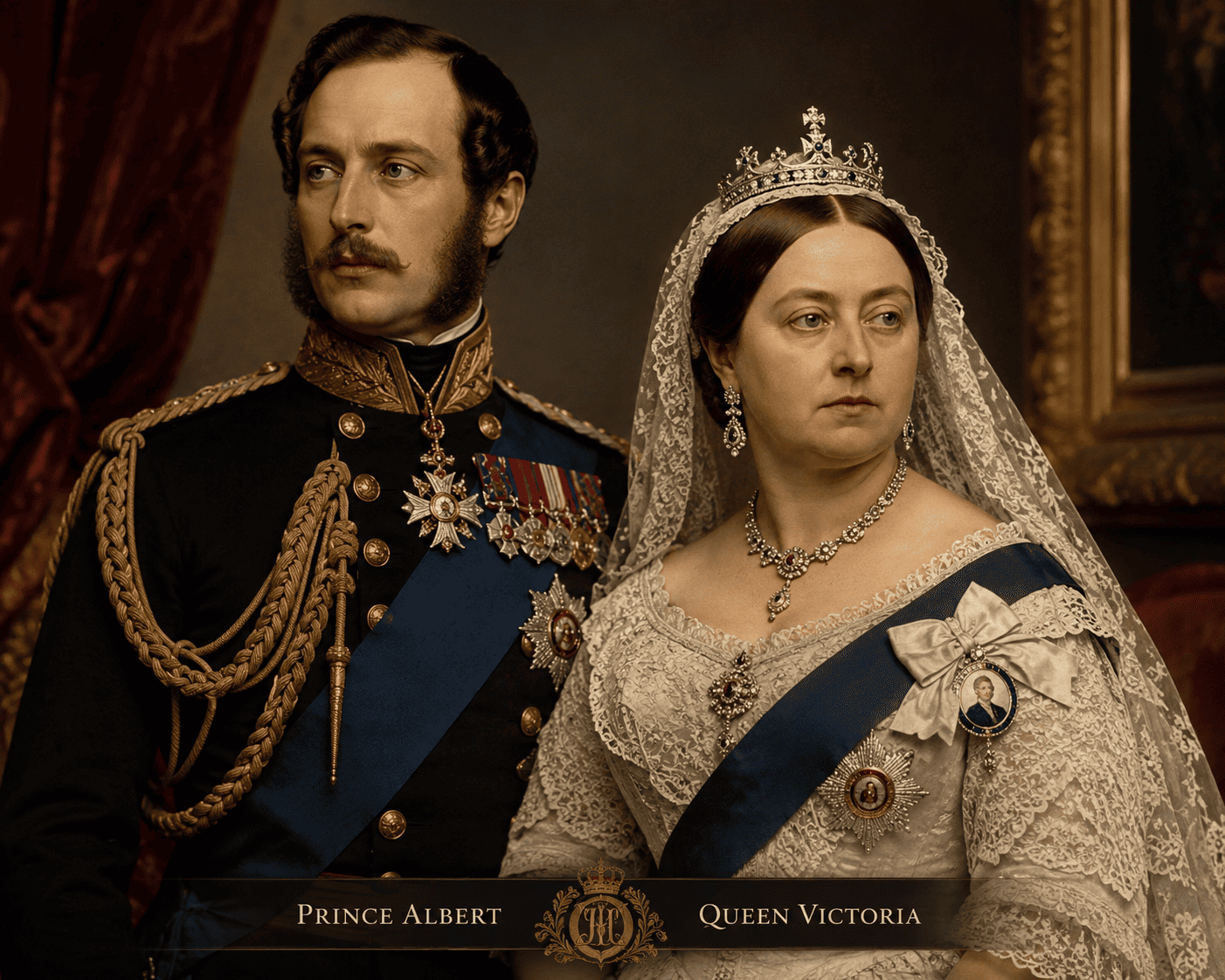
When Queen Victoria ascended to the British throne in 1837, the British Empire was expanding rapidly across the globe. Yet Victoria’s most profound and lasting impact on history would not come through naval supremacy or colonial conquest, but through something far more intimate: her children’s marriages. By the time of her death in 1901, Victoria had strategically placed her descendants across the thrones of Europe, earning the iconic title “Grandmother of Europe”—a moniker that would prove remarkably prescient.
Table Of Content
- The Visionaries Behind the Strategy
- Prince Albert’s Liberal Dream
- The Numbers Game
- The Key Alliances: How the Royal Seed Spread
- 1. The Prussian/German Connection
- 2. The Russian Tragedy
- 3. The Spanish Crown
- 4. The Scandinavian Branches
- 5. The Greek and Norwegian Connections
- The Family Tree Visualized
- The Great Royal Gathering: King Edward VII’s Funeral, 1910
- The Grieving Cousins
- The Cousinhood Letters
- The Dark Side: The Royal Disease
- Hemophilia: The Genetic Time Bomb
- Prince Leopold: Victoria’s Own Tragedy
- The Russian Catastrophe
- Rasputin’s Rise and the Fall of the Romanovs
- The Spanish Connection
- The World War I Collapse
- When Family Became Foe
- Kaiser Wilhelm’s Lament
- The Consequences
- The Modern Footprint: Victoria’s Enduring Legacy
- The Survivors
- The Belgian Exception
- The Genetic Tapestry
- Reflections on the Grandmother Strategy
- Was It a Success?
- The Irony of History
- The Matriarch’s Enduring Shadow
The Visionaries Behind the Strategy
Prince Albert’s Liberal Dream
Prince Albert of Saxe-Coburg and Gotha, Victoria’s beloved husband, was the true architect of the grand matrimonial scheme. Albert, a German prince himself, possessed a vision of a peaceful, unified Europe governed by constitutional monarchies. He believed that by seeding European thrones with Victoria’s children, Britain could:
- Export liberal constitutional values across the continent
- Create a royal kinship network that would prevent devastating wars
- Secure British geopolitical dominance through familial ties
- Stabilize monarchies facing rising republican sentiment
Victoria, deeply devoted to Albert, embraced this vision wholeheartedly. Together, they transformed their nursery into a diplomatic engine room.
The Numbers Game
Between 1840 and 1857, Victoria gave birth to nine children:
| Name | Birth Year | Gender |
|---|---|---|
| Victoria (Vicky) | 1840 | Daughter |
| Albert Edward (Bertie) | 1841 | Son |
| Alice | 1843 | Daughter |
| Alfred | 1844 | Son |
| Helena | 1846 | Daughter |
| Louise | 1848 | Daughter |
| Arthur | 1850 | Son |
| Leopold | 1853 | Son |
| Beatrice | 1857 | Daughter |
This abundance of royal offspring provided the raw material for Albert and Victoria’s continental ambitions.
The Key Alliances: How the Royal Seed Spread
1. The Prussian/German Connection
Vicky (Victoria, Princess Royal) married Prince Frederick William of Prussia in 1858. This was Albert’s crowning achievement—his most beloved daughter would become Empress of Germany.
“Vicky’s marriage was meant to be the bridge between British liberalism and Prussian militarism.”
The Legacy:
- Vicky’s husband became Kaiser Frederick III (though he reigned only 99 days before dying of cancer)
- Their son became Kaiser Wilhelm II, who would rule Germany during World War I
- Through this line, Victoria’s blood entered the Hohenzollern dynasty
2. The Russian Tragedy
Princess Alice, Victoria’s third child, married into the Grand Ducal house of Hesse. While seemingly a minor German match, this marriage would have catastrophic consequences:
- Alice’s daughter Alix married Tsar Nicholas II of Russia
- Alix became Tsarina Alexandra, the last Empress of Russia
- Their son Alexei, heir to the throne, inherited hemophilia
This lineage would ultimately contribute to the fall of the Romanov dynasty—a tragic irony given Victoria’s hopes for stability.
3. The Spanish Crown
Princess Beatrice, Victoria’s youngest daughter, initially remained by her mother’s side as a companion. But her daughter:
- Victoria Eugenie married King Alfonso XIII of Spain
- This implanted Victoria’s lineage into the Spanish Bourbon dynasty
- Victoria Eugenie also carried the hemophilia gene into the Spanish royal family
4. The Scandinavian Branches
- Princess Helena married Prince Christian of Schleswig-Holstein
- Princess Louise married the Marquess of Lorne (though this produced no heirs)
- Prince Arthur married Princess Louise Margaret of Prussia, connecting to multiple European houses
5. The Greek and Norwegian Connections
Victoria’s grandchildren extended her influence even further:
- Princess Maud (daughter of King Edward VII) became Queen of Norway
- Princess Sophie (daughter of Princess Vicky) married into the Greek royal family
The Family Tree Visualized
text
                    QUEEN VICTORIA (1819-1901) + PRINCE ALBERT (1819-1861)
                                    |
        ┌──────────────────────────┼──────────────────────────┐
        │                          │                          │
   VICTORIA, PRINCESS       ALBERT EDWARD                PRINCESS ALICE
   ROYAL (1840-1901)         (1841-1910)                 (1843-1878)
   m. Kaiser Frederick III   m. Alexandra of Denmark     m. Grand Duke Louis IV
        │                          │                          │
   KAISER WILHELM II        KING GEORGE V              TSARINA ALEXANDRA
   (1859-1941)              (1865-1936)                (1872-1918)
   Emperor of Germany       King of Britain            m. Tsar Nicholas II
        │                          │                          │
        │                    │       │                  TSAREVICH ALEXEI
        │                    │       │                  (1904-1918)
        │              KING EDWARD VIII
        │              KING GEORGE VI
        │              QUEEN ELIZABETH II
        │              KING CHARLES III
        │
        └──────────────────────────────────────────────────────┐
                                                               │
                                                 PRINCESS BEATRICE
                                                 (1857-1944)
                                                 m. Prince Henry of Battenberg
                                                      │
                                                 VICTORIA EUGENIE
                                                 (1887-1969)
                                                 m. King Alfonso XIII of Spain
                                                      │
                                                 SPANISH ROYAL LINE
The Great Royal Gathering: King Edward VII’s Funeral, 1910
The immense scope of Victoria’s maternal empire became devastatingly clear on May 20, 1910, when her eldest son, King Edward VII, was laid to rest. The funeral procession in London featured a gathering unprecedented in royal history:
The Grieving Cousins
Walking behind the coffin were:
| Monarch | Relation to Victoria | Throne |
|---|---|---|
| King George V | Grandson | United Kingdom |
| Kaiser Wilhelm II | Grandson | Germany |
| King Haakon VII | Grandson (by marriage) | Norway |
| King George I of Greece | Grandson (by marriage) | Greece |
| King Alfonso XIII | Grandson (by marriage) | Spain |
| King Frederick VIII | Cousin (by marriage) | Denmark |
| King Manuel II | Distant relation | Portugal |
The Cousinhood Letters
The attending monarchs had all grown up corresponding with “Grandmama Queen.” Many had spent childhood summers at Osborne House on the Isle of Wight or Balmoral Castle in Scotland. They shared memories of:
- Christmas celebrations at Windsor Castle with the formidable matriarch
- Letters of counsel from Victoria on matters of state and love
- Family portraits sent across Europe to maintain connections
- Mutual visits between their courts, maintaining the family network
One observer noted: “It was less a funeral procession than a family reunion—if a remarkably somber one.”
The Dark Side: The Royal Disease
Hemophilia: The Genetic Time Bomb
Queen Victoria was a carrier of hemophilia B (also known as the “Royal Disease”), a genetic disorder that prevents blood from clotting properly. This condition was passed through her daughters to royal houses across Europe.
The Mechanism:
- Hemophilia is X-linked recessive
- Females carry the gene (one affected X chromosome, one healthy X)
- Males with the affected X chromosome develop the disease
- Victoria’s daughters had a 50% chance of being carriers
Prince Leopold: Victoria’s Own Tragedy
Victoria’s youngest son, Prince Leopold, was the first to manifest the disease. He:
- Suffered from frequent bleeding episodes throughout childhood
- Required constant medical supervision
- Died at age 30 from a brain hemorrhage after a fall
His death devastated Victoria and served as a warning of the genetic danger she was disseminating.
The Russian Catastrophe
The most consequential impact of hemophilia occurred in Russia through Victoria’s granddaughter, Tsarina Alexandra:
- Alexandra inherited the hemophilia gene from her mother, Princess Alice
- She passed it to her only son, Tsarevich Alexei
- Alexei’s condition was kept a state secret
- His frequent bleeding crises drove Alexandra to desperation
Rasputin’s Rise and the Fall of the Romanovs
The Tsarina’s desperation to save her son led her to Grigori Rasputin, a Siberian mystic who appeared able to stop Alexei’s bleeding episodes. The consequences were catastrophic:
- Rasputin’s influence over the imperial family grew unchecked
- He was perceived as controlling state appointments
- Scandals involving Rasputin damaged the monarchy’s reputation
- When World War I began, Rasputin’s influence became a liability
“If the Tsarina had not carried Victoria’s gene, Rasputin would never have gained access to the throne.”
The resulting instability contributed to:
- The February Revolution of 1917
- Nicholas II’s abdication
- The execution of the Romanov family in 1918
The Spanish Connection
Victoria Eugenie, Queen of Spain, also carried the hemophilia gene:
- Her son, Alfonso, Prince of Asturias, had the disease
- He was forced to renounce his succession rights
- This contributed to dynastic instability in Spain
The World War I Collapse
When Family Became Foe
The “Grandmother of Europe” strategy reached its ultimate failure in 1914, when Victoria’s grandchildren found themselves on opposing sides of World War I:
| Monarch | Side | Relation to Victoria |
|---|---|---|
| King George V | Allied Powers (Britain) | Grandson |
| Tsar Nicholas II | Allied Powers (Russia) | Grandson (by marriage) |
| King George I of Greece | Initially Neutral | Grandson (by marriage) |
| Kaiser Wilhelm II | Central Powers (Germany) | Grandson |
Kaiser Wilhelm’s Lament
Wilhelm II famously remarked: “If Grandmama were still alive, she would never have allowed her grandsons to go to war with one another.”
This statement reveals the fundamental miscalculation of the strategy:
- Personal relationships could not overcome geopolitical realities
- National interests proved more powerful than familial bonds
- Alliance systems superseded kinship ties
The Consequences
World War I effectively dismantled Victoria’s European network:
- The British royal family changed its name from Saxe-Coburg-Gotha to Windsor
- Nicholas II and his family were executed in 1918
- Kaiser Wilhelm II abdicated and went into exile
- The German, Austrian, and Russian empires collapsed
- Several monarchies were abolished across Europe
The Modern Footprint: Victoria’s Enduring Legacy
The Survivors
Despite the cataclysms of the 20th century, Victoria’s genetic legacy proved remarkably resilient. Today, every single sitting monarch in Europe descends from Queen Victoria:
| Current Monarch | Country | Relation to Victoria |
|---|---|---|
| King Charles III | United Kingdom | Great-great-grandson |
| King Felipe VI | Spain | Great-great-grandson |
| King Carl XVI Gustaf | Sweden | Great-great-grandson |
| King Harald V | Norway | Great-great-grandson |
| King Frederik X | Denmark | Great-great-grandson |
| Grand Duke Henri | Luxembourg | Descendant |
| King Willem-Alexander | Netherlands | Descendant |
The Belgian Exception
Remarkably, even Belgium’s King Philippe descends from Victoria through Princess Louise, Duchess of Saxe-Coburg and Gotha.
The Genetic Tapestry
Victoria’s descendants now number in the thousands across Europe’s noble houses. The genetic impact includes:
- Physical characteristics: Some descendants still display Victoria’s small stature or features
- Medical conditions: Hemophilia has been traced in modern royal families
- Personality traits: Some historians suggest Victoria’s strong will appears in modern monarchs
Reflections on the Grandmother Strategy
Was It a Success?
The question of whether Victoria’s strategy succeeded remains complex:
Arguments for Success:
- Created unprecedented royal networks across Europe
- Established British influence in continental courts
- Ensured Victoria’s genetic legacy persists today
- Produced a period of relative peace in the late 19th century
Arguments for Failure:
- Failed to prevent World War I
- Spread hemophilia across royal houses
- Created competing claims to thrones
- Contributed to the collapse of several monarchies
The Irony of History
Perhaps the greatest irony is that Victoria’s strategy of family-based diplomacy created the very conditions for its own collapse:
- The royal network fostered nationalism rather than unity
- Competing family interests created diplomatic tensions
- The hemophilia gene destabilized key monarchies
- Family members became rivals rather than allies
The Matriarch’s Enduring Shadow
When Queen Victoria died in 1901, she left behind an empire that spanned the globe. Yet her “grandmother” legacy has outlasted the British Empire itself. The genetic map of European royalty bears her indelible mark, and the dynasties she helped forge continue to reign in many of Europe’s most important nations.
Victoria transformed the nursery into a diplomatic weapon, using her children as chess pieces in a grand geopolitical game. While her strategy ultimately failed to prevent the catastrophic wars of the 20th century, it succeeded in creating something more lasting: a family network that transcended borders, survived revolutions, and continues to shape European history.
The “Grandmother of Europe” may have seen her dreams of peaceful continental unity shattered by World War I, but her blood continues to flow through the veins of modern monarchs. In that sense, Victoria’s most enduring empire was not the one built on conquest, but the one built on family—a legacy that remains, quite literally, in the very DNA of European royalty today.
Never Miss a Story: Join Our Newsletter