
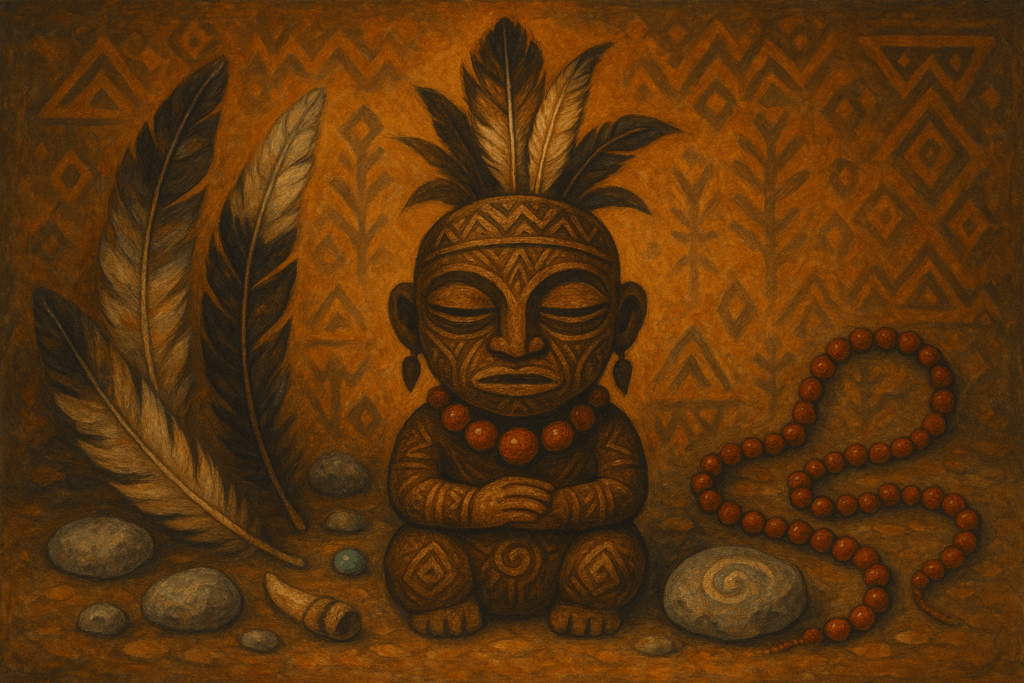
The mystery around fetishes lies in the complex blend of psychology, culture, spirituality, and personal experience. In its broadest sense, a fetish is an object, practice, or body part that holds special meaning or power—often associated with desire, reverence, or supernatural influence. The way fetishes manifest can vary greatly depending on context—whether in a psychological, sexual, religious, or cultural dimension.
Let’s unpack the mystery and manifestation of fetishes from different perspectives:
1. Psychological and Sexual Fetishes
In psychology, especially in the field of sexuality, a fetish refers to a persistent sexual focus on a non-living object or a specific body part not typically viewed as sexual (e.g., feet, shoes, leather, latex). This is called fetishism.
How they manifest:
- Usually begins in childhood or adolescence.
- The object or focus becomes tied to arousal through repeated associations.
- It may become necessary for sexual satisfaction, or just heighten the experience.
The mystery:
Why some people develop a fetish while others don’t is still not fully understood. It may involve:
- Early imprinting (associating arousal with an object or scene).
- Neurological wiring (the brain’s pleasure and sensory circuits overlap).
- Repression or trauma (the mind channels desire into a symbol or object).
Read Also: Ten Most Remote Indigenous Tribes in the World
2. Cultural and Spiritual Fetishes
In anthropological and traditional spiritual systems, especially in African, Native American, and Oceanic traditions, a fetish is often a sacred object believed to hold supernatural power, used for protection, healing, or control.
Examples include:
- Carved idols, charms, amulets.
- Bones, feathers, or stones consecrated through ritual.
- Nkisi figures in Central African spirituality (which may “house” spirits).
How they manifest:
- Through ritual consecration and belief.
- Believed to carry life force or spiritual energy.
- Used in magic, divination, or invoking ancestral power.
The mystery:
Such objects often evoke awe or fear, and their power is not in the object itself but in the collective belief and ritual use. The mystique comes from:
- Their secretive crafting.
- Hidden knowledge passed through initiates.
- The results people attribute to them—good or bad.
3. Modern Symbolic Fetishes
In contemporary society, the term “fetish” can also take on a metaphorical role—when we give undue importance to an object or idea, treating it with exaggerated reverence or dependence.
Examples:
- Money fetish: treating wealth as a sacred goal.
- Brand fetish: obsessing over luxury logos as status symbols.
How they manifest:
- In advertising and consumer behavior.
- In political or ideological symbols.
The mystery:
These “fetishes” are often unconscious. People may not realize how much emotional or psychological energy they invest in these symbols.
Summary Table
| Type of Fetish | Domain | Manifestation | Underlying Mystery |
|---|---|---|---|
| Sexual Fetish | Psychology | Arousal from nonsexual objects or parts | Brain wiring, early experiences |
| Spiritual Fetish | Religion/Culture | Empowered sacred object | Ritual, belief, ancestral power |
| Symbolic Fetish | Society/Philosophy | Overvalued material or idea | Psychological projection, societal influence |
The mystery around fetishes lies in what they reveal about human consciousness—our ability to invest meaning, power, or desire into the material world. Whether it’s a foot, a figurine, or a flag, a fetish reflects the strange and symbolic nature of the human psyche. They manifest when we link strong emotion (desire, fear, reverence) to a specific object or idea—turning the ordinary into something extraordinary.
Never Miss a Story: Join Our Newsletter