
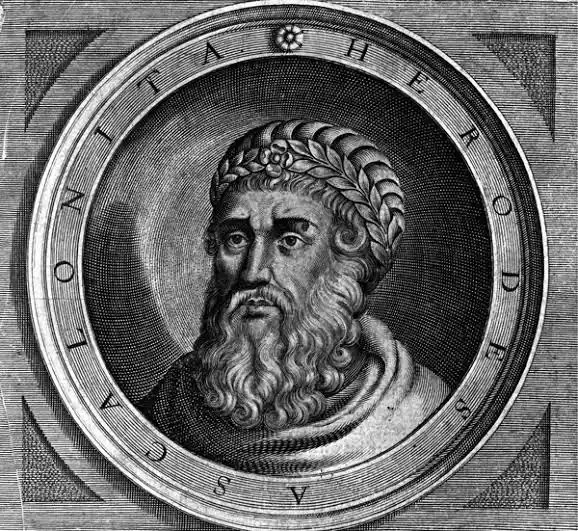
Few dynasties in ancient history balanced power, politics, and survival as precariously as the Herodian dynasty. Born from Edomite roots and legitimized under Roman favor, the Herods ruled Judea during one of the most turbulent centuries in Jewish and Mediterranean history. Their story bridges the fall of the Hasmoneans, the rise of Rome’s eastern empire, and the early years of Christianity.
This article traces the dynasty’s full arc — from its founder, Antipater the Idumaean, to its last scion, Herod Agrippa II — and explains how family ambition, Roman politics, and religious tension shaped their reign.
I. Origins: The Idumaean Foundation
The Herodian dynasty began not with a king but with a clever political operator — Antipater the Idumaean, the father of Herod the Great. The Idumaeans were descendants of the ancient Edomites, living south of Judea. In the 2nd century BC, the Hasmonean ruler John Hyrcanus I conquered Idumaea and forced its inhabitants to convert to Judaism. Antipater’s family thus became nominally Jewish, though ethnically distinct from the Judeans.
Antipater rose under the late Hasmonean kings as a skilled administrator and diplomat. He supported Hyrcanus II, one of the feuding Hasmonean brothers, in a bitter civil war against Aristobulus II. When Roman general Pompey the Great intervened in Judean politics around 63 BC, Antipater shrewdly aligned himself with Rome. By 47 BC, Julius Caesar rewarded his loyalty, appointing him procurator of Judea — effectively the Roman-backed ruler behind the scenes.
Antipater’s assassination in 44 BC, amid chaos following Caesar’s own death, left his son Herod as his heir — and the real founder of the dynasty’s royal line.
II. Herod the Great: The Builder King (37–4 BC)
Herod the Great, the most famous of the dynasty, was a master of survival. Ambitious, ruthless, and politically astute, he navigated the shifting allegiances of Rome’s civil wars, first supporting Mark Antony and later currying favor with Octavian (Augustus) after Antony’s defeat.
In 40 BC, the Roman Senate officially proclaimed Herod King of the Jews, though he had to fight for his throne. By 37 BC, after bloody campaigns against remnants of the Hasmonean line, Herod secured full control of Judea as Rome’s client-king.
Achievements and Reign
Herod’s rule was marked by monumental building projects and political maneuvering designed to impress Rome and pacify his subjects:
- Reconstruction of the Second Temple in Jerusalem — a project of immense religious and architectural significance.
- Construction of Caesarea Maritima, a grand port city dedicated to Emperor Augustus.
- Fortresses such as Masada and Herodium, symbolizing his paranoia and military foresight.
- Cultural integration: blending Roman architecture with Jewish religious observance.
Yet Herod’s reign was also notorious for its brutality. He executed several of his wives and sons on suspicion of treason, including Mariamne I, a Hasmonean princess he had married to legitimize his rule. Roman Emperor Augustus reportedly quipped, “It is better to be Herod’s pig than his son.”
Herod died in 4 BC, leaving behind a divided kingdom — and a dynasty destined for fragmentation.
III. Division of the Kingdom: Herod’s Sons and Successors
After Herod’s death, Rome refused to allow another unified Judean kingdom. Instead, Augustus divided the realm among Herod’s sons, creating a patchwork of tetrarchies and principalities.
| Successor | Title & Territory | Reign | Key Events |
|---|---|---|---|
| Herod Archelaus | Ethnarch of Judea, Samaria, Idumea | 4 BC – AD 6 | Ruled poorly; complaints led Rome to depose him. Judea became a Roman province. |
| Herod Antipas | Tetrarch of Galilee and Perea | 4 BC – AD 39 | Noted for executing John the Baptist; appears in the trial of Jesus. Built Tiberias. |
| Philip the Tetrarch (Herod Philip II) | Tetrarch of Iturea, Trachonitis, Batanea | 4 BC – ~AD 34 | A mild ruler who developed new cities; his lands later added to Syrian province. |
Archelaus: The Failed Heir
Herod Archelaus inherited the core of his father’s kingdom — Judea itself. But his oppressive rule and disregard for Jewish law provoked revolts. After numerous complaints, Emperor Augustus deposed him in AD 6, turning Judea into a Roman province under a prefect. This shift paved the way for direct Roman governance — the system that would later include Pontius Pilate.
Antipas: The Political Survivor
Herod Antipas, ruling Galilee and Perea, lasted much longer. His reign overlapped with the ministries of John the Baptist and Jesus of Nazareth, making him one of the New Testament’s most recognizable Herods. Antipas built the city of Tiberias on the Sea of Galilee and maintained a delicate balance between Rome and local tradition.
But his downfall came from ambition. When he sought the title of “king” from Emperor Caligula, his nephew Agrippa I accused him of conspiracy. Caligula exiled Antipas to Gaul in AD 39.
Philip: The Quiet Ruler
Herod Philip II (often simply called Philip the Tetrarch) governed the northern territories with relative peace. He was known for fair administration and urban development — including the founding of Caesarea Philippi. He died childless around AD 34, and his domain briefly fell under Syrian control.
IV. The Herodian Revival: Agrippa I and His Children
Though Herod’s sons lost much of their father’s power, the dynasty revived under Herod Agrippa I, a grandson of Herod the Great and Mariamne I. Educated in Rome and a close friend of Emperors Caligula and Claudius, Agrippa leveraged imperial favor to restore much of his grandfather’s kingdom.
Agrippa I (AD 41–44)
Claudius granted Agrippa I rule over Judea, Samaria, and Galilee, effectively reuniting the Herodian territories. His reign was brief but significant:
- He sought to appease Jewish leaders, enforcing some religious laws neglected by earlier Herods.
- Expanded Jerusalem’s fortifications.
- According to the Book of Acts (12:1–23), he persecuted early Christians and died suddenly — interpreted by some as divine judgment.
Agrippa’s death in AD 44 ended the last period of full Herodian control over Judea. Rome resumed direct rule, but the family line continued in smaller principalities.
Agrippa II and the End of the Dynasty
Agrippa I’s son, Herod Agrippa II, inherited a smaller realm — first Chalcis, then parts of the northern territories. Like his father, he was raised in Rome and remained loyal to the empire.
Agrippa II is best remembered for his role during the early Christian era. The Book of Acts describes his encounter with the Apostle Paul, where Paul defends his faith before the king (Acts 25–26).
During the First Jewish Revolt (AD 66–73), Agrippa sided with Rome, urging the rebels to surrender — a stance that alienated him from his people. After Jerusalem’s destruction in AD 70, he continued ruling under Roman oversight until around AD 92–100, dying childless. With him, the Herodian dynasty came to an end.
V. Family Tree Overview
Below is a condensed genealogical outline showing the main succession from founder to the final ruler:
Antipater the Idumaean
   └── Herod the Great (King of Judea, 37–4 BC)
         ├── Herod Archelaus (Ethnarch, 4 BC–AD 6)
         ├── Herod Antipas (Tetrarch, 4 BC–AD 39)
         ├── Philip the Tetrarch (4 BC–AD 34)
         ├── [other children and marriages]
         │
         └── Grandchildren:
              ├── Herod Agrippa I (King of Judea, AD 41–44)
              │     └── Herod Agrippa II (Tetrarch/King, AD 48–~92)
              └── Herod of Chalcis (King of Chalcis, AD 41–48)
VI. Power, Politics, and Identity
The Herods were political chameleons. Their survival depended on mastering Roman patronage while managing Jewish legitimacy. Yet those two identities constantly clashed.
- To Rome, the Herods were client kings — useful intermediaries between empire and province.
- To their Jewish subjects, they were often outsiders: Idumaean converts ruling by foreign mandate.
This tension shaped nearly every Herodian decision — from Herod the Great’s rebuilding of the Temple (a bid for religious approval) to Antipas’s careful diplomacy and Agrippa I’s pious posturing.
Even their personal lives reflected political calculation: Herod’s many marriages were aimed at securing alliances with the Hasmoneans, Nabataeans, and other neighboring dynasties.
VII. Legacy
By the time Agrippa II died, Judea had changed forever. The Jewish Temple lay in ruins, Roman legions occupied the land, and Christianity was spreading through the empire — partly shaped by encounters with the Herodian line.
The Herods left behind:
- Architectural legacies — the Western Wall (a remnant of Herod’s Temple), Masada, and Caesarea remain enduring monuments.
- Cultural footprints — their rule is interwoven with the narratives of Jesus, John the Baptist, and Paul.
- Political lessons — their dynasty exemplifies how client kingships functioned under Roman imperialism: powerful yet fragile, privileged yet expendable.
In many ways, the Herods were symbols of transition — the last kings of Judea and the first governors of a Romanized Palestine.
VIII. Summary Table: From Founder to Final Ruler
| Ruler | Relation | Reign | Domain | Historical Significance |
|---|---|---|---|---|
| Antipater the Idumaean | Founder | c. 47–44 BC | Judea (as procurator) | Established Herodian power under Rome |
| Herod the Great | Son | 37–4 BC | King of Judea | Builder of the Second Temple; ruthless ruler |
| Herod Archelaus | Son | 4 BC–AD 6 | Judea, Samaria, Idumea | Deposed by Rome; Judea becomes a province |
| Herod Antipas | Son | 4 BC–AD 39 | Galilee, Perea | Ruler during Jesus’ time; exiled by Caligula |
| Philip the Tetrarch | Son | 4 BC–AD 34 | Northern territories | Peaceful rule, urban development |
| Herod Agrippa I | Grandson | AD 41–44 | Reunited Judea | Last Herod to rule the full kingdom |
| Herod of Chalcis | Relative | AD 41–48 | Chalcis | Controlled a small principality |
| Herod Agrippa II | Great-grandson | AD 48–~92 | Northern regions | Last Herodian ruler; ally of Rome |
IX. Conclusion
The Herodian dynasty began with an outsider’s ambition and ended with an insider’s loyalty. From Antipater’s rise through diplomacy to Herod the Great’s kingdom, and finally Agrippa II’s Roman allegiance, the family embodied both the possibilities and perils of ruling between two worlds.
Their century-long saga was one of adaptation, ambition, and ultimately absorption into Rome’s imperial machinery. Yet their mark on history endures — not only in stone and scripture but as a case study in how dynasties born from compromise can both shape and be undone by the empires they serve.
Appendix: Origins and Biblical Connections
Who Were the Edomites?
The Edomites were descendants of Esau, the twin brother of Jacob (Israel), according to the Hebrew Bible (Genesis 25–36).
While Jacob’s descendants became the Israelites, Esau’s descendants settled in the rugged hill country southeast of the Dead Sea — the land known as Edom.
Key Facts About the Edomites
- Location: Edom stretched from the southern borders of Judah down toward the Gulf of Aqaba — roughly modern southern Jordan.
- Language and Culture: They spoke a dialect closely related to Hebrew and shared many customs with the Israelites.
- Relations with Israel: Often hostile. The Old Testament records centuries of tension — Edom refused Israel passage during the Exodus (Numbers 20:14–21), and David later subjugated them (2 Samuel 8:13–14).
- Conquest and Assimilation: In the 2nd century BC, the Hasmonean ruler John Hyrcanus I conquered Edom (then called Idumaea) and forced its people to adopt Judaism, including circumcision. From that point on, the Idumaeans were legally “Jews” but were often viewed by native Judeans as converts rather than true Israelites.
- Significance for the Herods: The Herodian family descended from these Idumaean converts. That heritage explains both their partial integration into Jewish life and the lingering suspicion they faced. To the Romans, the Herods were Jewish kings; to many Jews, they were Edomite outsiders ruling under a foreign empire.
Which Herod Is Which in the Bible?
Because several rulers shared the name Herod, biblical readers often mix them up.
Here’s a quick reference guide showing which Herod appears where and why.
| Herod | Biblical Period / Reference | Role in Scripture | Historical Identity |
|---|---|---|---|
| Herod the Great | Gospel of Matthew 2 | Ruler when Jesus was born. Ordered the Massacre of the Innocents in Bethlehem after the visit of the Magi. | Founder of the dynasty (37–4 BC). King of Judea under Rome. |
| Herod Archelaus | Matthew 2:22 | Mentioned briefly when Joseph returns from Egypt with the infant Jesus — Joseph avoids Judea because Archelaus is ruling. | Herod the Great’s son; ethnarch of Judea, Samaria, Idumea (4 BC–AD 6). Deposed by Rome. |
| Herod Antipas | Gospels of Mark 6, Matthew 14, Luke 3, 9, 23 | Ordered the execution of John the Baptist; mocked Jesus during His trial (Luke 23:7–12). | Another son of Herod the Great; tetrarch of Galilee and Perea (4 BC–AD 39). |
| Philip the Tetrarch | Luke 3:1 | Mentioned as a regional ruler during John the Baptist’s ministry. | Herod’s son; governed Iturea and Trachonitis. Known for fair rule. |
| Herod Agrippa I | Acts 12 | Imprisoned Peter, executed James the Apostle, and died suddenly after accepting divine honors. | Grandson of Herod the Great (AD 41–44). Last Herod to rule all Judea. |
| Herod Agrippa II | Acts 25–26 | Heard Paul’s defense alongside his sister Bernice. Famously said, “Almost thou persuadest me to be a Christian.” | Son of Agrippa I (AD 48–~92). The last Herodian ruler. |
| Herod of Chalcis | Not directly named in Scripture | Contemporary of Agrippa I; had authority over the Temple in Jerusalem for a time. | Another branch of the family ruling a small Syrian territory (AD 41–48). |
Summary of Biblical Roles
- At Jesus’ birth: Herod the Great
- At Jesus’ upbringing: Archelaus (his rule caused Joseph to move to Galilee)
- During Jesus’ ministry and execution: Herod Antipas
- In the early church period: Herod Agrippa I (Acts 12)
- During Paul’s imprisonment: Herod Agrippa II (Acts 25–26)
Why the Herods Mattered Biblically
The Herods were Rome’s chosen instruments to govern Judea and its neighboring territories.
They controlled the priesthood, appointed high priests, and influenced the Temple — directly shaping the religious and political climate of New Testament events.
- Herod the Great’s Temple formed the backdrop for much of Jesus’ life and teaching.
- Herod Antipas’s court symbolized the moral corruption Jesus and John the Baptist confronted.
- Agrippa I’s persecution of early Christians marked one of the first state-sanctioned attacks on the new faith.
- Agrippa II’s audience with Paul shows Christianity reaching the highest levels of Judean political society — even the dynasty that had once killed its founder’s followers.
The Legacy in Biblical Memory
Though reviled for cruelty, the Herods also served as historical anchors for the Gospel and Acts narratives. Their reigns provide the chronological framework for the life of Jesus and the spread of Christianity.
Ironically, while their dynasty crumbled under Rome, the faith they tried to suppress endured — reshaping the empire that had once propped them up.
Never Miss a Story: Join Our Newsletter