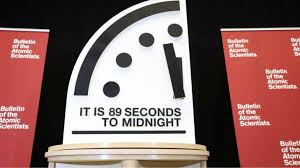
The Doomsday Clock is one of the most striking symbols of global risk and humanity’s vulnerability. Created in 1947 by the Bulletin of the Atomic Scientists, the clock is not a literal timepiece but a metaphorical measure of how close the world is to catastrophic destruction, often represented as “midnight.”
Origins and Purpose
The clock was introduced shortly after World War II, following the atomic bombings of Hiroshima and Nagasaki. The scientists behind it wanted a way to communicate the danger of nuclear weapons to the public. Over the decades, the Doomsday Clock has evolved to reflect other existential threats, including climate change, emerging technologies, and global political instability.
How the Clock Works
The Doomsday Clock is expressed in “minutes to midnight.” Midnight represents the moment of global catastrophe.
- Closer to midnight = greater danger to humanity
- Further from midnight = safer conditions
The Bulletin of the Atomic Scientists annually assesses international events — like nuclear tests, political conflicts, environmental disasters, and technological risks — to decide whether to move the clock closer to or further from midnight.
Notable Moments in History
- 1947: The clock was set at 7 minutes to midnight, reflecting early nuclear fears.
- 1953: Moved to 2 minutes to midnight after the U.S. and USSR tested hydrogen bombs.
- 1991: Reset to 17 minutes to midnight after the Cold War ended and nuclear arms reduction treaties were signed.
- 2020: Set to 100 seconds to midnight due to nuclear threats, climate change, and disruptive technologies.
- 2023: Remained at 90 seconds to midnight, signaling ongoing geopolitical and environmental risks.
Why It Matters
While symbolic, the Doomsday Clock raises public awareness about global threats. Governments, organizations, and citizens use it as a reminder that cooperation, diplomacy, and responsible technological development are crucial for survival. The clock is not a prediction but a warning — a call to action for humanity to reduce risk.
Modern Threats Highlighted by the Clock
- Nuclear Weapons: Tensions between global powers remain a primary concern.
- Climate Change: Environmental degradation and global warming threaten societies worldwide.
- Technological Risks: Advances in artificial intelligence, cyberwarfare, and biotechnology have introduced new potential hazards.
- Political Instability: Conflicts, broken treaties, and rising authoritarianism can escalate global risks.
The Doomsday Clock remains a powerful reminder that human choices have consequences. Each year, it prompts reflection: Are we doing enough to prevent catastrophic events? As the clock ticks closer to midnight, its message becomes increasingly urgent — the future of humanity depends on informed action, collaboration, and responsibility.
Never Miss a Story: Join Our Newsletter