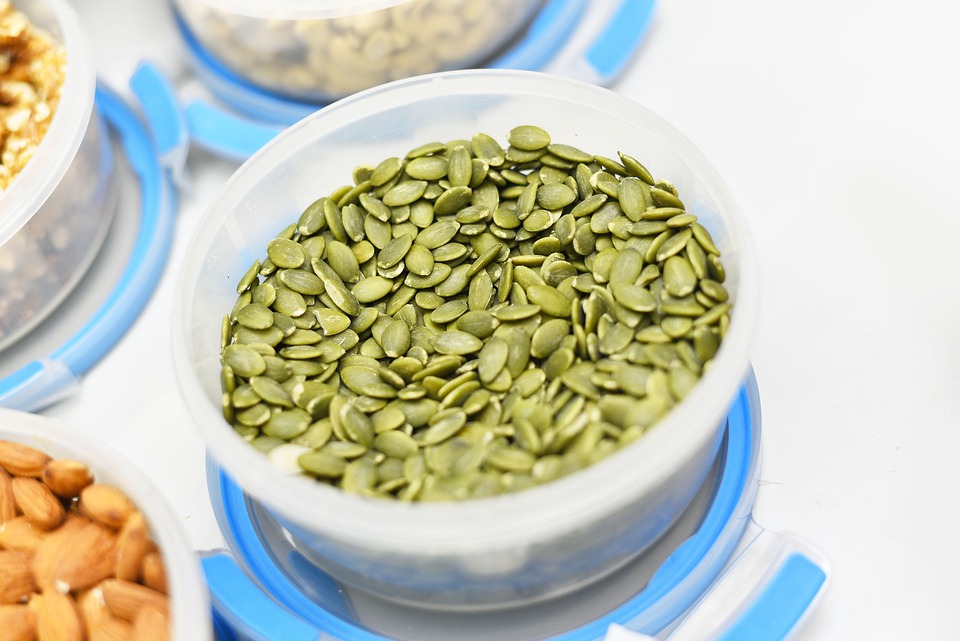
In a dusty granary behind her mud-walled house, 64-year-old farmer Mama Achieng’ holds a small tin full of shimmering white maize kernels. “These are not just seeds,” she says softly. “They are stories from my grandmother. If they disappear, part of us disappears too.”
Across Kenya, her sentiment is echoed by thousands of smallholder farmers. But as genetically modified (GM) crops and commercial hybrids push into fields, questions loom: Will indigenous seed varieties — often called original seeds — survive? Or are we quietly marching toward their extinction? Will GMOs erase Kenya’s original foods?
Seeds under siege
The Food and Agriculture Organization (FAO) estimates that 75% of plant genetic diversity has been lost globally in the past century. Farmers once grew hundreds of maize, millet, and sorghum varieties; now, they rely on a handful of commercial lines.
In Kenya, the informal seed system — where farmers save, exchange, and replant seeds — still supplies about 80% of smallholder needs. But this lifeline is under pressure. Since 2020, Kenya has commercialized Bt cotton and is considering approvals for other GM crops. Seed companies are also expanding their hybrid maize footprint, which locks farmers into seasonal purchases.
Dr. Margaret Kirui, a plant geneticist at the Kenya Agricultural and Livestock Research Organization (KALRO), warns: “If current trends continue unchecked, original seeds may retreat from the mainstream within a generation. They will not vanish entirely, but they will become rare — available only in gene banks or niche community seed banks.”
The countdown clock: 2040–2060?
Pinpointing when indigenous seeds could disappear is complex. But experts suggest that by 2040–2060, traditional crops may be scarce in Kenya’s markets if no safeguards are enforced.
At the Genetic Resources Research Institute (GeRRI) in Kikuyu, Kenya’s national genebank, more than 50,000 seed accessions are preserved in cold storage. “We are an insurance policy,” says Dr. Samuel Njoroge, a senior researcher at GeRRI. “But seeds locked away in vaults are not enough. Diversity must live in the field, with farmers.”
The GMO promise — and its pitfalls
Proponents argue that genetically modified seeds bring tangible benefits. Bt cotton, for example, has reduced pesticide use and boosted yields for some Kenyan farmers. GM maize trials show potential for drought tolerance and pest resistance — a valuable tool in an era of climate change.
But the picture is complicated. Heavy reliance on uniform GM traits can breed resistant pests and herbicide-tolerant weeds, a trend already documented in parts of the U.S. and Brazil. Farmers may also face economic dependency, since patented seeds cannot be legally saved for replanting.
“GMOs are not evil,” says Professor James Nyongesa, an agricultural economist at the University of Nairobi. “They are a tool. The danger comes when we abandon local varieties and put all our eggs in one corporate basket.”
Life in the field: voices from farmers
In Kitale, maize farmer Paul Wekesa explains why he still plants indigenous lines alongside commercial hybrids:
“The hybrid maize gives me higher yield when rains are good. But my local maize withstands drought, and it tastes better. If I stop planting it, my children will never know that taste.”
In Machakos, cotton farmer Grace Ndunge has a different story:
“Bt cotton reduced pests, yes. But I cannot afford the seed every season. With traditional cotton, I always kept part of the harvest to plant. Now I depend on shops.”
Such testimonies reveal a deeper issue: seeds are not just about yields, but sovereignty, resilience, and culture.
Side effects of losing original seeds
The erosion of indigenous varieties brings multiple risks:
- Biodiversity collapse. Monocultures make food systems fragile. A single pest outbreak could devastate uniform GM crops.
- Soil and ecological imbalance. Some GM crops drive higher chemical use, which depletes soils.
- Cultural erosion. Certain varieties of millet or sorghum tied to rituals and cuisines risk extinction.
- Health and nutrition gaps. Indigenous foods often carry unique micronutrients that commercial lines lack.
- Economic dependency. Farmers tied to patented seeds must buy annually, reducing autonomy.
Kenya’s crossroads
Kenya is no stranger to seed controversy. In 2012, GM maize imports sparked a heated national debate, culminating in a temporary ban. Court cases have since challenged approvals, pitting farmer groups against government agencies and biotech firms.
Despite the debates, adoption is advancing. In Western Kenya, seed companies market hybrids aggressively. In cotton-growing zones, Bt cotton is already reshaping planting practices.
Yet in pockets of Siaya, Kitui, and Meru, community seed banks are springing up. They act as living libraries where farmers deposit, withdraw, and multiply traditional seeds.
“We are custodians,” says Mama Achieng’. “These seeds are not mine alone — they belong to the future.”
The way forward: coexistence, not replacement
Experts argue that Kenya does not face a binary choice. Instead, it must build coexistence strategies:
- Legal recognition of farmer seed systems. Current seed laws favor certified commercial seeds. Reforms could protect farmer rights to save and exchange.
- Strengthening seed banks. Community seed banks and GeRRI need more funding and farmer outreach.
- Participatory breeding. Collaborative programs can cross-breed resilience from landraces with yield from modern lines.
- Ecological stewardship. GM crops must be monitored for resistance evolution; refugia planting (maintaining non-GM plots nearby) can help.
Dr. Kirui of KALRO puts it bluntly: “GMOs may help us feed the nation, but without indigenous diversity, we lose our insurance against the unknown.”
Data box: GMOs vs. Original Seeds
| Feature | Original / Farmer Seeds | GM / Hybrid Seeds |
|---|---|---|
| Diversity | High, locally adapted | Low, uniform lines |
| Ownership | Farmer-saved, exchanged | Corporate patents |
| Cost | Low (saved annually) | High (annual purchase) |
| Climate resilience | Strong (local adaptation) | Strong for engineered traits, weaker if climate shifts beyond design |
| Cultural role | Deeply embedded in food, rituals | Minimal |
The debate over GMOs is not just about science. It is about who controls Kenya’s food future. Indigenous seeds carry centuries of adaptation, stories, and survival strategies. GMOs carry modern tools, profit potential, and scientific breakthroughs.
If policy tilts entirely toward GMOs, original foods may become a museum relic by mid-century. If Kenya chooses coexistence, both can thrive — one feeding the present, the other safeguarding the future.
As Mama Achieng’ clutches her tin of maize, her words linger: “A seed is life. If we lose our seeds, we lose our life.”
Never Miss a Story: Join Our Newsletter