When we read the Gospels, we often focus on the teachings and miracles of Jesus of Nazareth, but the landscape through which He traveled profoundly shaped His ministry. Understanding the geography and administrative divisions of first-century Israel—Galilee, Samaria, and Judea—reveals why some journeys were fraught with tension, why certain towns became central to His mission, and why His interactions with different peoples were so revolutionary.
The Provinces and Regions of Roman Palestine
In the first century AD, the region we now call Israel and the West Bank was divided into several Roman-controlled areas:
- Judea – the southern province, home to Jerusalem and the Temple, the epicenter of Jewish religious and political life. Rome governed Judea directly through procurators, such as Pontius Pilate, but local Jewish leaders—the Sanhedrin—retained religious authority.
- Galilee – the northern province, a semi-autonomous tetrarchy ruled by Herod Antipas, a client king under Roman authority. Galilee included key towns such as Capernaum, Nazareth, Bethsaida, and Magdala. Its relative autonomy gave Jesus a strategic base for teaching, traveling, and performing miracles.
- Samaria – the central region, culturally and religiously distinct. Samaria was not a formal Roman province. Administratively, it was treated as a sub-region of Judea and largely governed through local councils, with oversight from Roman authorities. Samaritans lived mainly around Mount Gerizim and towns like Shechem, practicing a version of Israelite religion distinct from Judea’s Temple-centered worship.
- Perea and Decapolis – regions east of the Jordan River, influenced by Greek and Roman culture, often governed by client rulers or Roman officials.
Traveling Through a Land of Tension
For Jews, traveling from Judea to Galilee meant a choice:
- Shortest route: Through Samaria, roughly 70–75 miles (110–120 km), taking three days on foot.
- Longer route: A detour east via the Jordan Valley and Perea, avoiding Samaritan villages, adding 20–30 extra miles.
The tension arose from centuries of enmity between Jews and Samaritans. The Samaritan community traced its lineage to the northern Israelites who survived the Assyrian conquest (722 BC), but they had distinct religious practices:
- Worship on Mount Gerizim rather than in Jerusalem
- Acceptance of only the Pentateuch (first five books of Moses)
Many Jews avoided contact with Samaritans due to ritual concerns and historical mistrust, making Jesus’ decision to travel through Samaria and engage its people socially radical.
Mount Gerizim: The Sacred Heart of Samaria
Mount Gerizim, near Shechem (modern Nablus), was central to Samaritan faith. According to their interpretation of the Torah:
- It was the mountain from which God commanded blessings to be proclaimed (Deuteronomy 11, Joshua 8).
- The Samaritan Pentateuch directs Israelite worship to Gerizim, not Jerusalem.
- Around the 4th century BC, Samaritans built a temple on the mountain, destroyed by John Hyrcanus in 128 BC.
Even today, Mount Gerizim remains the site of Samaritan Passover celebrations, preserving traditions that predate the Roman conquest.
Administrative Realities Under Rome
The Roman administrative divisions shaped daily life and politics:
| Region | Roman Status | Governance |
|---|---|---|
| Judea | Province | Direct Roman rule via procurators; Sanhedrin handles religious matters |
| Galilee | Tetrarchy | Ruled by Herod Antipas under Rome; semi-autonomous |
| Samaria | Sub-region of Judea | Local councils under Roman supervision; mostly culturally distinct |
| Perea / Decapolis | Client regions | Semi-autonomous, Greek/Roman influence |
This structure explains why Jesus could operate relatively freely in Galilee, why Judea was politically sensitive, and why Samaria was culturally hostile but not militarily dangerous.
The Samaritans Today
Despite their small numbers—around 850–900 people—the Samaritans survive as one of the oldest living communities of the ancient Israelites. They remain concentrated in:
- Mount Gerizim near Nablus – the spiritual heart
- Holon, Israel – modern urban settlement
Their religion emphasizes the Samaritan Pentateuch, ritual observance on Mount Gerizim, and priestly leadership. Some modern figures have brought the Samaritans to broader attention:
- Benyamim Tsedaka, scholar and spokesperson
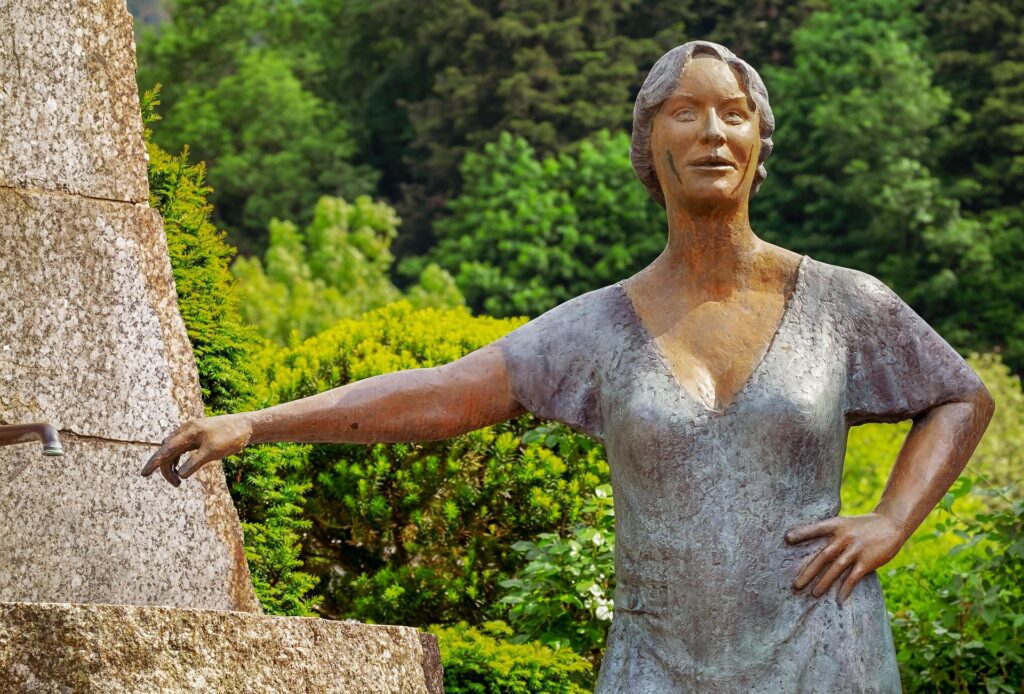
- Sofi Tsedaka, actress and cultural ambassador
- High Priests, who maintain ritual and spiritual leadership
Though politically neutral and numerically small, the Samaritans are living witnesses to a world that shaped the New Testament.
Why Geography and Culture Matter
Understanding the geography and politics of Galilee, Samaria, and Judea allows readers to appreciate why:
- Jesus traveled certain routes and avoided others
- Encounters like the Samaritan woman were socially shocking
- Galilee was a practical base for ministry
- Samaria remained a distinct, tension-filled region
In other words, the story of Jesus is deeply embedded in the land, where mountains, towns, and borders weren’t just scenery—they were part of the narrative.
Conclusion
From the mountains of Samaria to the towns of Galilee and the streets of Jerusalem, the landscape of first-century Palestine shaped history, religion, and human interaction. Today, the Samaritans still climb Mount Gerizim and maintain ancient rites, reminding us that some communities endure where others vanish. Their story is a bridge from biblical history to modern life, connecting geography, culture, and faith in a world that still echoes the footsteps of Jesus.
Never Miss a Story: Join Our Newsletter