Early Life and Family Roots
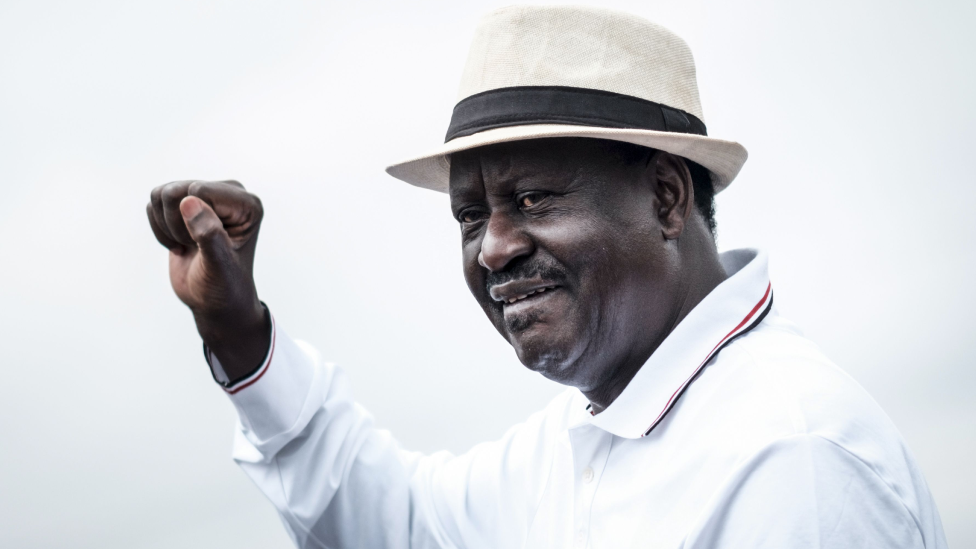
Raila Amolo Odinga was born on January 7, 1945, in Maseno, near Kisumu, in Kenya’s western highlands. He was the son of Jaramogi Oginga Odinga, one of Kenya’s foremost independence heroes and the country’s first Vice President, and Mary Juma Odinga, a devoted homemaker.
Growing up in a family deeply embedded in Kenya’s political awakening, Raila’s childhood was shaped by discussions of justice, freedom, and national destiny. His father’s principled opposition to authoritarianism left a lasting imprint on him — forging in the young boy a fearless commitment to democracy and social reform.
Education and Early Career
Raila’s education began at Kisumu Union Primary School, followed by Maranda Primary and Maranda High School. He proved a bright and determined student. In 1962, he earned a scholarship to study in the German Democratic Republic (East Germany).
At the Technical University of Magdeburg, he pursued a degree in Mechanical Engineering, graduating in 1970. The years in Germany not only honed his technical skills but also exposed him to progressive ideals — equality, social justice, and participatory governance — that would later influence his political philosophy.
Upon returning to Kenya, Raila worked briefly as a lecturer at the University of Nairobi before founding East African Spectre Ltd, one of the region’s earliest firms specializing in the manufacture of liquefied petroleum gas cylinders. His early foray into business reflected both entrepreneurial drive and a keen interest in industrial development.
Political Awakening and Detention
Raila’s political consciousness deepened under President Daniel arap Moi’s one-party regime. In 1982, following a failed coup attempt against the government, he was arrested and accused of treason — charges that saw him detained without trial for nearly seven years.
Those years of solitary confinement and uncertainty became a crucible that tested his resilience. When finally released, he emerged unbowed, his determination sharpened by the injustice he had endured. Raila would later describe that period as the defining test of his life — one that transformed him from an engineer into a lifelong fighter for democracy.
He was detained again in 1988 and 1989 for his continued advocacy of multiparty politics. In 1991, facing mounting threats, he fled into exile in Norway, where he continued to rally international attention toward Kenya’s struggle for political reform.
Return to Kenya and the Dawn of Multiparty Politics
The legalization of multiparty democracy in 1991 opened a new chapter. Raila returned home to join his father’s Forum for the Restoration of Democracy (FORD) movement, which sought to dismantle decades of one-party rule.
After his father’s death in 1994, internal divisions splintered the movement, leading Raila to form the National Development Party (NDP). His organizational energy and magnetic populism soon revived his political fortunes, positioning him as a key national figure by the late 1990s.
Ministerial Roles and Grand Coalition Government
In 2001, Raila joined President Daniel arap Moi’s government as Minister for Energy, marking a surprising but strategic alliance aimed at broadening democratic space. He later served as Minister for Roads, Public Works, and Housing under President Mwai Kibaki, where he spearheaded infrastructure reforms and advocated for devolution of power.
His most defining political role came after the 2007 general election, one of the most contested in Kenya’s history. Widespread post-election violence claimed over 1,300 lives and displaced hundreds of thousands. A power-sharing agreement brokered by former UN Secretary-General Kofi Annan led to the creation of a Grand Coalition Government in which Raila served as Prime Minister from 2008 to 2013.
During this period, he played a pivotal role in steering the 2010 Constitution, a transformative document that entrenched devolved government, strengthened the judiciary, and expanded citizens’ rights — arguably his greatest political legacy.
The Handshake and Later Political Pursuits
Though Raila contested five presidential elections — 1997, 2007, 2013, 2017, and 2022 — he never clinched the presidency. Yet, each contest reaffirmed his influence and staying power.
In 2018, his unexpected reconciliation with President Uhuru Kenyatta, famously dubbed “The Handshake,” eased political tensions and paved the way for a new spirit of national dialogue. The move was both praised as statesmanlike and criticized by some allies who viewed it as a betrayal of opposition ideals.
Later that year, Raila was appointed the African Union High Representative for Infrastructure Development, extending his influence across the continent and reaffirming his passion for connectivity and Pan-African unity.
Personal Life
Raila married Ida Oyoo Odinga in 1973, a union that produced four children — Fidel (deceased), Rosemary, Raila Jr., and Winnie. Ida, a respected educationist and activist, has been a constant source of support throughout his turbulent career.
Outside politics, Raila is known for his love of football — a lifelong supporter of Gor Mahia Football Club — and for his deep faith, often citing divine purpose as his guiding light through adversity.
Legacy
Raila Odinga’s life is a tapestry woven from courage, sacrifice, and the unrelenting pursuit of justice. To his supporters, he symbolizes Kenya’s conscience — the man who refused to bow to oppression. To his critics, he represents a stubborn idealist unwilling to concede defeat.
Yet, beyond politics, his story embodies Kenya’s struggle to define itself — between old wounds and new possibilities, between power and principle.
As history records his journey, Raila Amolo Odinga remains not merely a political figure but a living chapter in Kenya’s democratic evolution — a reminder that true reform often comes not from victory, but from perseverance.
Never Miss a Story: Join Our Newsletter