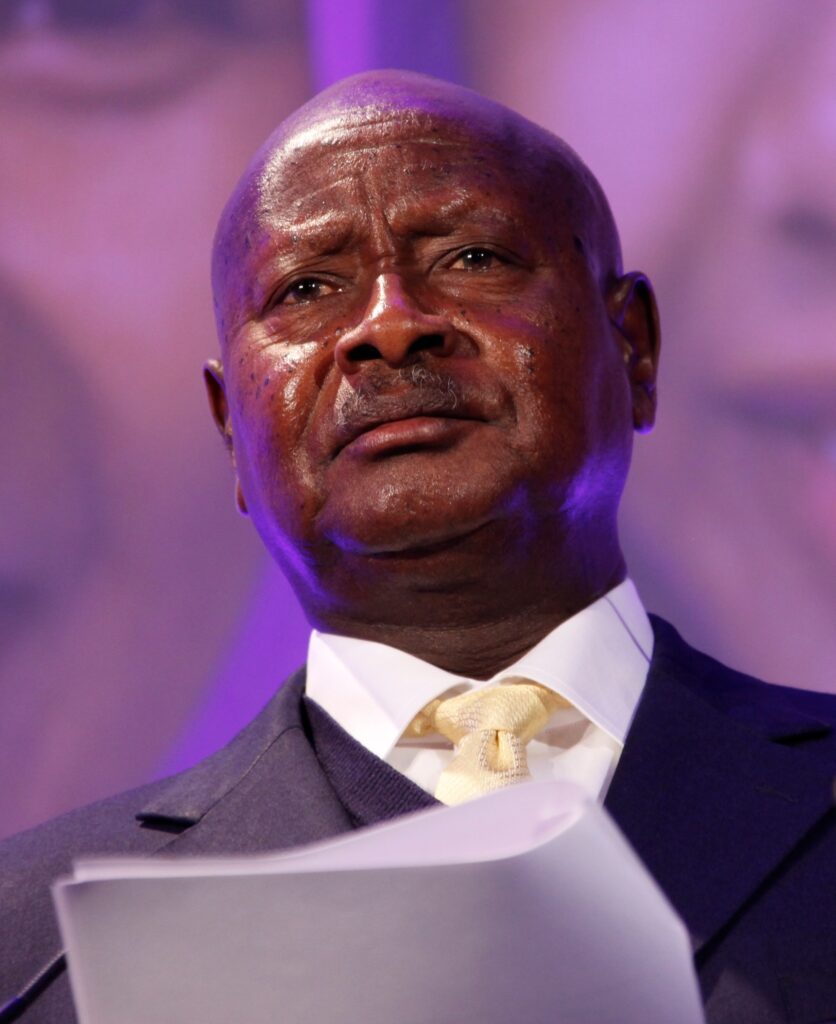
Ugandan President Yoweri Museveni has stirred a wave of diplomatic tension in East Africa after declaring that Uganda is being unfairly denied access to the Indian Ocean—warning that such exclusion could spark future wars in the region.
Speaking during a live radio interview in Mbale City last weekend, the veteran leader said that although Uganda is landlocked, it has an inherent right to access the ocean, which he described as belonging “to all Africans.” His remarks have since triggered strong debate across Kenya, Tanzania, and the wider East African Community (EAC).
“That ocean belongs to me. I am entitled to that ocean,” Museveni said. “In the future, we’re going to have wars if people keep behaving as if they own it alone.”
Museveni likened Uganda’s position to that of a tenant living on an upper floor of a building, complaining that the “ground-floor neighbours” — in this case, coastal states such as Kenya and Tanzania — are hoarding shared facilities like the compound and gate.
Rhetoric Raises Diplomatic Questions
The statement has drawn concern from regional observers who fear the comments could strain long-standing trade and diplomatic relations between Uganda and its coastal neighbors.
Kenya, Uganda’s main trade corridor partner, has yet to issue an official response. However, senior diplomatic sources in Nairobi described the remarks as “unfortunate and unhelpful,” suggesting that Museveni’s words could undermine regional cooperation efforts under the East African Community framework.
“This is not the kind of language we expect from a founding member of the EAC,” one Kenyan official said on condition of anonymity. “We understand Uganda’s logistical frustrations, but threats of war are not a way to resolve them.”
Underlying Frustrations Over Trade Routes
Uganda, like other landlocked countries, relies heavily on Kenya’s Port of Mombasa for imports and exports. The country also uses the Northern Corridor, a transport route linking Mombasa to Kampala, Kigali, and beyond. Delays, congestion, and increasing logistical costs have long been sore points between the two nations.
Analysts believe Museveni’s statement reflects mounting frustration over infrastructure dependence rather than an actual threat of military conflict.
“Museveni is voicing a deeper issue—Uganda’s strategic vulnerability,” said Dr. Peter Mugisha, an economist at Makerere University. “When you depend on another country’s port for your survival, you lack leverage. His comments are symbolic, not literal, but they reveal a long-standing geopolitical anxiety.”
International Law and Access Rights
Under international law, particularly the United Nations Convention on the Law of the Sea (UNCLOS), landlocked states do not have direct maritime rights but are entitled to freedom of transit through coastal states for trade purposes. These arrangements are typically negotiated through bilateral or regional agreements.
Legal experts argue that Museveni’s assertion that the Indian Ocean “belongs” to Uganda stretches the limits of that framework.
“Access is one thing; sovereignty is another,” said Nairobi-based maritime lawyer Grace Njoroge. “Uganda’s right is to passage, not possession. The president’s comments may be politically charged rather than legally grounded.”
Regional Implications
Museveni’s words have sparked online debate, with some Ugandans defending his position as a call for “economic justice,” while others worry it could isolate the country diplomatically.
In Kenya, many social media users have dismissed the remarks as “political theatre,” with others warning that such rhetoric could undermine investor confidence and cross-border trade.
Meanwhile, Tanzanian commentators have reminded Uganda that it already has access to the Indian Ocean through the Central Corridor and the Port of Dar es Salaam, which has seen increased Ugandan traffic in recent years.
Domestic and Political Context
Museveni’s fiery rhetoric comes amid speculation that he is preparing for another election cycle. The long-serving leader, in power since 1986, has a history of blending nationalist and pan-African themes to rally domestic support.
Some observers see his Indian Ocean remarks as part of that strategy — casting Uganda as a victim of structural unfairness while projecting strength and defiance.
“Every time the political temperature rises at home, Museveni shifts the narrative to sovereignty and national pride,” noted political analyst Josephine Alupo. “This is a classic play from his script.”
Looking Ahead
The East African Community has not yet commented formally, though sources in Arusha indicate that the secretariat may convene a special consultation to defuse potential misunderstandings among member states.
Whether Museveni’s comments signal a serious policy shift or a moment of rhetorical provocation remains to be seen. But one thing is clear: the Ugandan leader has reignited a debate about how landlocked nations can claim a fair share of regional prosperity without destabilizing their neighbours.
As East Africa continues to push for economic integration through shared ports, pipelines, and railways, Museveni’s warning has thrown a new spotlight on an old question — who really owns the ocean?
Never Miss a Story: Join Our Newsletter