




Kenya Railways Plans Electric Trains in Major Nairobi Mobility Upgrade
Kenya Railways has announced plans to introduce electric trains on the Nairobi commuter rail network in a sweeping KSh65 billion upgrade aimed at transforming urban transport across the capital and...

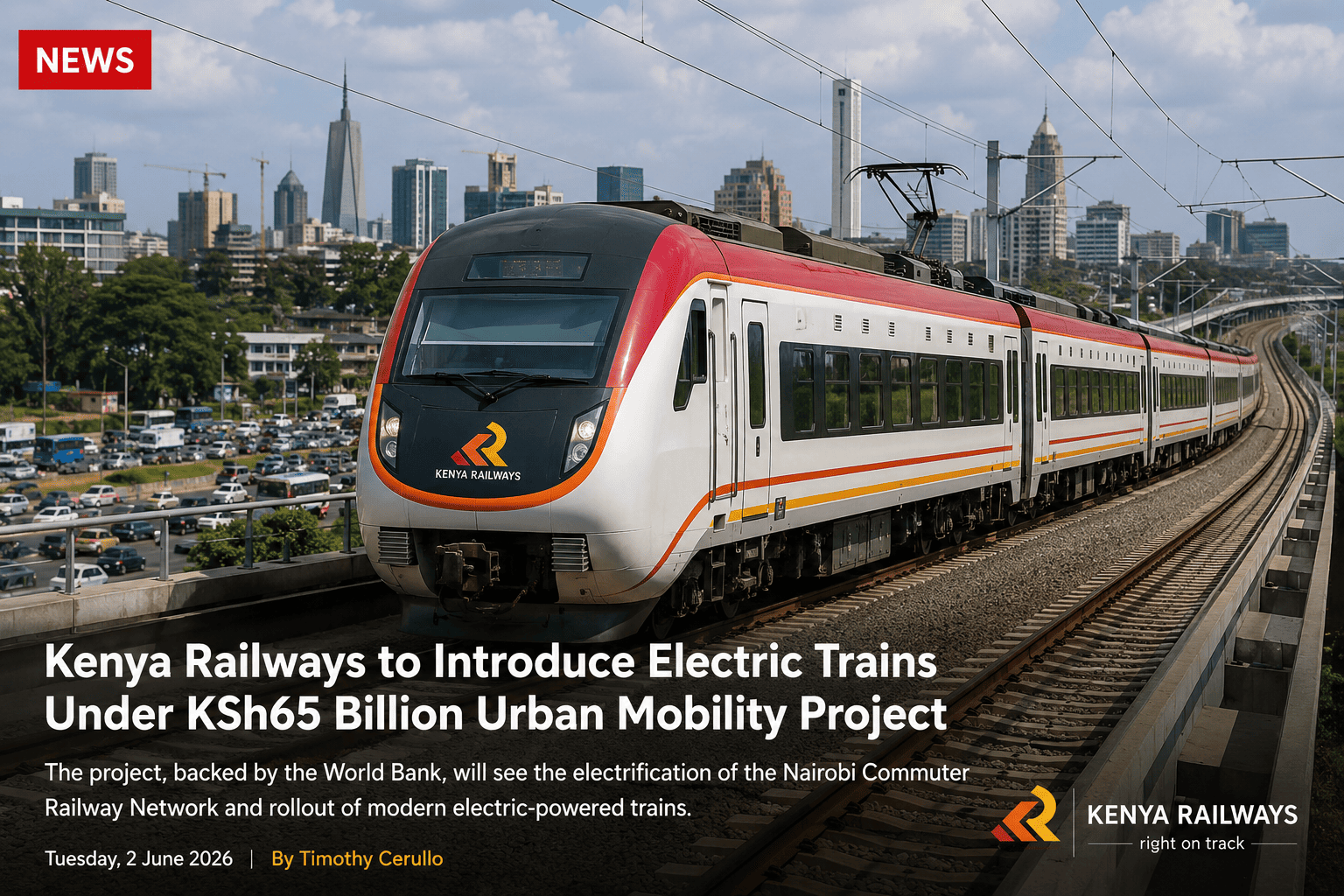
Kenya Railways has announced plans to introduce electric trains on the Nairobi commuter rail network in a sweeping KSh65 billion upgrade aimed at transforming urban transport across the capital and its satellite towns.
Table Of Content
The project, dubbed the Kenya Urban Mobility Improvement Project (KUMIP), is backed by the World Bank and is expected to redefine how millions of commuters move within the Nairobi Metropolitan Area.
At the heart of the plan is the electrification of the Nairobi Commuter Railway Network—an upgrade that will pave the way for faster, cleaner, and higher-capacity electric-powered trains.
“The government of Kenya, in partnership with the World Bank, intends to finance the implementation of the Kenya Urban Mobility Improvement Project (KUMIP),” Kenya Railways said.
“The project objective is to improve urban mobility within the Nairobi Metropolitan Area and land use planning along the identified commuter corridors.”
Regional Reach and Expanded Connectivity
The upgraded rail system will extend its impact beyond Nairobi County into Kiambu, Machakos, Kajiado and Murang’a, easing access to key urban centres such as Ruiru, Thika, Kikuyu, Ngong, Kitengela and Syokimau.
Kenya Railways also confirmed plans to procure Diesel Electric Multiple Units (DEMUs) to complement the electric fleet and support ongoing expansion efforts.
Faster, Cleaner, More Efficient
The introduction of electric trains is expected to significantly cut travel times while increasing passenger capacity. It also marks a major shift toward environmentally sustainable transport, with reduced carbon emissions compared to traditional diesel locomotives.
Beyond Trains: A Full Transport Ecosystem
The project goes beyond rolling stock, incorporating the development of access roads to railway stations and multimodal transport hubs designed to seamlessly connect rail and road networks.
To support long-term operations, Kenya Railways plans to establish maintenance workshops and build local capacity for manufacturing railway components and spare parts.
Among the key infrastructure projects is the construction of the Likoni Road railway bridge and its approach roads, aimed at improving traffic flow and connectivity within the city.
Additional investments will include a concrete sleeper manufacturing plant and specialised maintenance equipment to enhance operational efficiency.
Driving Urban Growth
Officials say the initiative will catalyse transit-oriented development around railway stations, encouraging more structured urban expansion and reducing congestion along major commuter corridors.
The project is now moving into its implementation phase, with Kenya Railways inviting private sector players to a consultative meeting scheduled for June 24, 2026, at the Railway Training Institute in South B, Nairobi.
Never Miss a Story: Join Our Newsletter