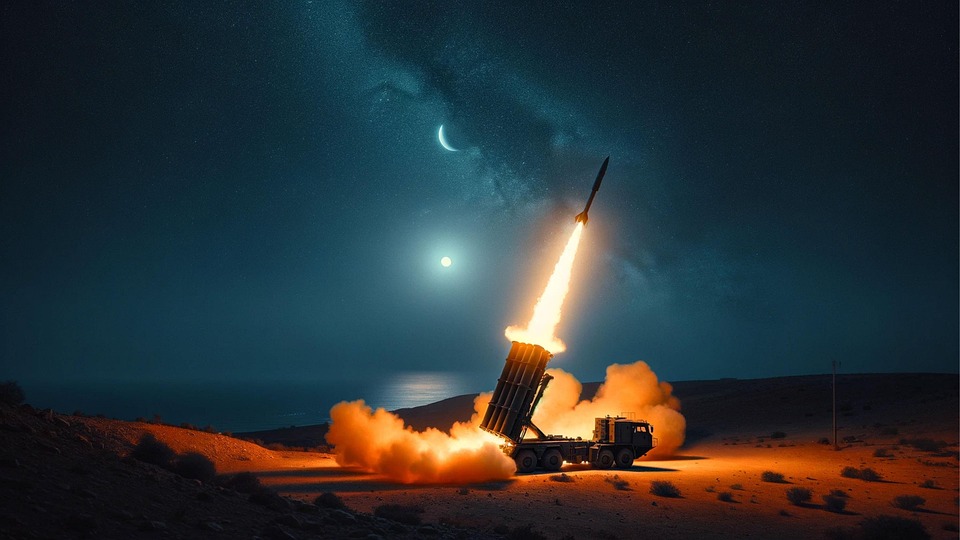
Kenya is poised to bolster its national defense capabilities through a landmark military procurement deal with Israel, which will see the delivery of the advanced SPYDER air defense missile system. The move signals Nairobi’s commitment to enhancing its aerial defense posture amid rising regional security threats and evolving geopolitical dynamics in East Africa.
A Strategic Defence Upgrade
The SPYDER (Surface-to-air PYthon and DERby) system is developed by Rafael Advanced Defense Systems in partnership with Israel Aerospace Industries (IAI). It is designed to intercept a wide range of airborne threats including fighter aircraft, helicopters, drones, and precision-guided munitions. The system uses Python-5 and Derby missiles, both known for their “lock-on before” and “lock-on after” launch capabilities, giving them high precision and versatility.
For Kenya, the acquisition represents a significant upgrade to its current ground-based air defense framework. The Kenya Defence Forces (KDF), though experienced in ground combat and counterterrorism operations, have in recent years expressed the need to modernize aerial threat response—particularly given the growing sophistication of aerial incursions, drone threats, and asymmetric warfare tactics by non-state actors such as Al-Shabaab.
Read Also: KDF officers to dig deeper into pockets as lunch subsidy program ends Monday
Why Israel?
Israel has long been a global leader in missile defense technology, born out of decades of navigating a complex security environment. Its systems—including the famed Iron Dome and SPYDER—have proven reliability in live conflict zones. Kenya’s defense relationship with Israel has grown steadily over the past decade, underpinned by security cooperation agreements, intelligence sharing, and counter-terrorism training programs.
The SPYDER deal builds on this foundation and reflects Nairobi’s increasing pivot towards tech-heavy defense partnerships. While the exact value of the agreement has not been publicly disclosed, defense analysts estimate the package to be worth tens of millions of dollars, inclusive of training, logistical support, and system integration.
Regional Implications and Security Drivers
Kenya’s decision to acquire the SPYDER system comes at a time of increased security volatility in the Horn of Africa. Cross-border tensions, insurgencies, maritime insecurity in the Indian Ocean, and the proliferation of unmanned aerial systems (UAS) among rebel groups have all contributed to Nairobi’s recalibration of its defense priorities.
The country is also positioning itself as a regional security anchor. With the African Union’s peacekeeping footprint evolving and Somalia’s fragile recovery still in flux, Kenya’s military investments are increasingly viewed through a regional lens. The SPYDER system is not only a tool for national defense but also a strategic asset that reinforces Kenya’s role in continental security architecture.
Integration and Deployment
According to defense insiders, the SPYDER units will be deployed in phases, with high-value infrastructure and major urban centers such as Nairobi and Mombasa likely to be prioritized. Integration into Kenya’s existing command-and-control systems is already underway, with Israeli advisors working closely with KDF technical teams.
A senior Kenyan defense official, speaking anonymously, noted:
“This system is a game-changer. It places Kenya ahead of many countries in Sub-Saharan Africa in terms of air defense preparedness. The deterrence value alone is enormous.”
The SPYDER’s radar coverage and fast response times will also be crucial for protecting critical national assets, including airports, military installations, and energy infrastructure.
Diplomatic and Political Overtones
While the procurement is largely framed as a defensive measure, it does carry diplomatic significance. Kenya’s deepening ties with Israel could ruffle feathers among certain Arab and Muslim-majority nations, particularly those sympathetic to the Palestinian cause. However, Nairobi has maintained a pragmatic foreign policy, balancing strategic partnerships with non-alignment on contentious international issues.
Israel, on the other hand, continues to expand its influence in Africa—offering technological solutions in agriculture, cybersecurity, and now, defense. The SPYDER deal further cements this outreach, placing Kenya among a select few African countries with access to top-tier Israeli military hardware.
The Kenya-Israel defense deal for the SPYDER missile system marks a turning point in Nairobi’s military modernization strategy. As Kenya braces for the complex security challenges of the 21st century, the acquisition not only enhances its immediate defense capabilities but also signals its intent to play a larger role in regional and continental security.
Never Miss a Story: Join Our Newsletter